 ProMapRanker
Best Wealth Management Apps in 2026

Key takeaways
- Betterment is our pick for most hands-off investors because it offers goal-based portfolios, tax-loss harvesting and a low starting cost.
- Wealthfront suits investors who want strong tax optimisation and automated planning with a flat percentage fee.
- Schwab Intelligent Portfolios suits fee-sensitive investors, with no advisory fee, though a cash allocation applies.
- Empower suits investors with larger balances who want a free dashboard plus access to human advisors.
- Fees vary a lot by balance and plan, so compare the percentage fee, any flat fee and fund costs together before you choose.
Quick comparison
| Pick | Great for | Pricing starts at | Free tier | |
|---|---|---|---|---|
 Betterment | Hands-off goal investing | $5 per month | Free trial | Visit |
 Wealthfront | Tax optimisation | 0.25% per year | No | Visit |
 Empower | Dashboard plus human advice | Free dashboard | Yes | Visit |
 Fidelity Go | Starting from zero | Free | Yes | Visit |
 Schwab Intelligent Portfolios | No advisory fee | Free | No | Visit |
 Vanguard Digital Advisor | Low-cost index portfolios | 0.15% per year | No | Visit |
 SoFi Invest | Simple automated investing | 0.25% per year | No | Visit |
 Acorns | Small regular investing | $4 per month | Free trial | Visit |
The best wealth management apps
We compared official fee pages, feature pages and public reviews for the apps below, and we focused on fees, minimums, tax tools, planning features and advisor access. Disclaimer: this is not financial advice, investing carries risk, fees vary by plan and balance, and past returns do not predict future results. These are the best wealth management platforms we found for different kinds of investors.
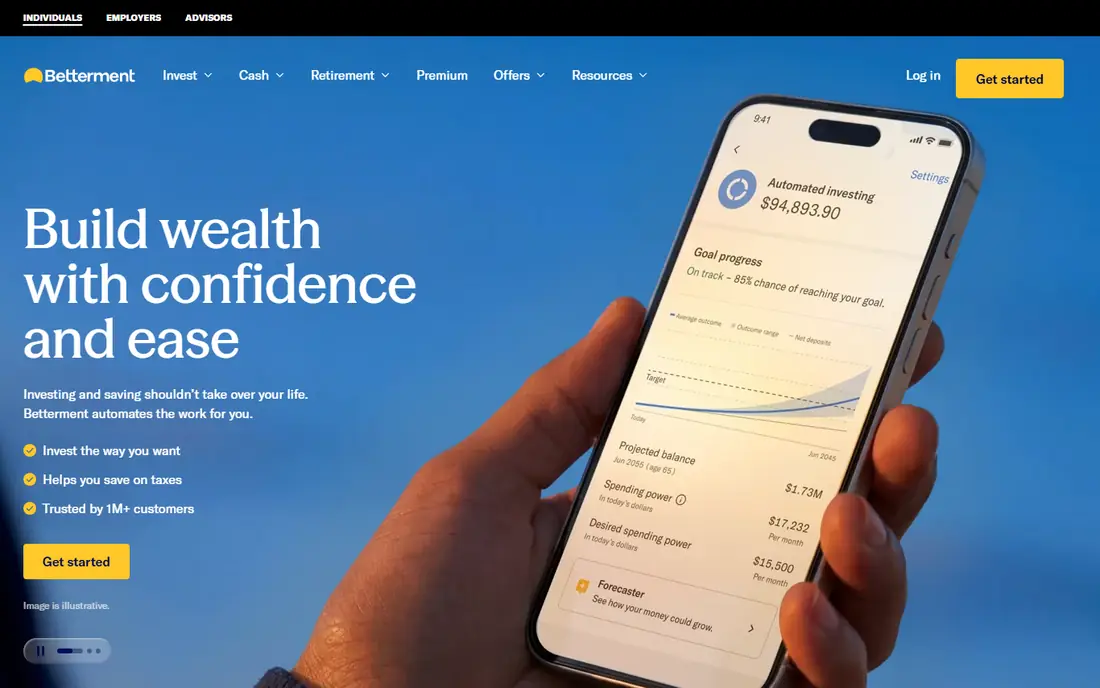
Betterment is built for investors who want to set a goal and let the portfolio run. You pick a goal, such as retirement or a house deposit, choose a risk level, and Betterment builds a diversified portfolio, rebalances it and reinvests dividends. Tax-loss harvesting, which sells losing positions to offset gains where rules allow, is part of the appeal for taxable accounts.
The fee model needs a read. Smaller balances pay $5 per month in recent listings, while larger balances pay 0.25 percent per year, and the Premium plan, at 0.65 percent per year in recent listings, adds unlimited advisor access but needs a $100,000 minimum. For a hands-off investor who wants clear goals and automation, Betterment is the best wealth management app in this list for most cases.
- Goal-based portfolios and automatic rebalancing
- Tax-loss harvesting
- Premium plan adds human advisor access
- Premium advisor plan needs a high minimum
- Fee rises to a percentage on larger balances
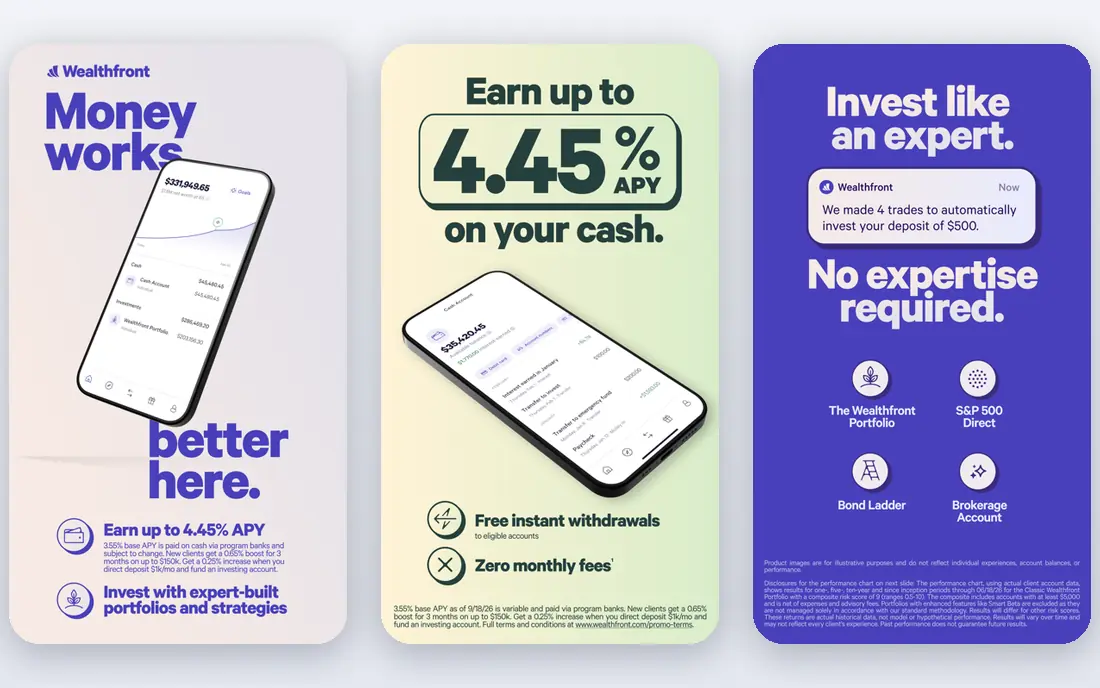
Wealthfront suits investors who care most about tax efficiency and automation. The robo-advisor builds a diversified portfolio, rebalances it and runs tax-loss harvesting daily in taxable accounts, which can matter over many years. Planning tools help you model retirement, college and home goals, and the fee is a flat 0.25 percent per year in recent listings.
The limit is human help. Wealthfront does not offer a dedicated human advisor plan in the way Betterment Premium or Empower do, so investors who want regular advisor calls may prefer another platform. If you are comfortable with a fully automated service and want tax tools at a clear price, Wealthfront is one of the best wealth management services here.
- Flat 0.25 percent annual fee
- Daily tax-loss harvesting in taxable accounts
- Planning tools for goals and retirement
- No human advisor access
- Account minimum of $500 in recent listings
Empower, formerly Personal Capital, starts with a free dashboard that pulls bank, investment and retirement accounts into one net worth view. Spending, cash flow, investment fees and retirement projections sit beside each other, which helps an investor see the whole picture before choosing advice. That free tool alone is useful, even if you never pay for management.
Managed advice is a different tier. Personal Strategy plans charge around 0.89 percent per year in recent listings for balances from $100,000, with lower rates on larger bands, and they add a dedicated advisor team. Free dashboard users should also expect sales calls about the managed service, which some users find pushy. For larger investors who want both a dashboard and human advice, Empower is a strong best wealth management platform pick.
- Free dashboard for net worth, spending and investments
- Human advisors on managed plans
- Retirement planning tools
- Managed advice needs a $100,000 minimum
- Advisory fee is higher than robo-only rivals
Fidelity Go is the easiest way for a Fidelity customer to start automated investing. You can open an account with no minimum, invest from $10 in recent listings, and pay no advisory fee on balances under $25,000. Above that level, the fee is 0.35 percent per year in recent listings, which is still competitive for a managed service.
Coaching access sits at higher balances, so a small investor gets automation rather than regular advisor calls. That trade-off is fair at the price, and Fidelity's wider account range, from taxable accounts to IRAs and HSAs, makes it easy to keep everything in one place. For a new investor, Fidelity Go is one of the best wealth management apps for starting small.
- No advisory fee under $25,000 in recent listings
- Low $10 to invest
- Strong Fidelity account range
- Advisory fee applies above $25,000
- Human coaching needs a higher balance
Schwab Intelligent Portfolios stands out because it charges no advisory fee. The robo-advisor builds a diversified portfolio, rebalances it and monitors it, while Schwab earns from fund costs and the cash portion of the portfolio. That model suits fee-sensitive investors who want automation without a percentage charge.
The catch is cash. Portfolios hold a cash allocation that earns interest but does not grow like stocks or bonds, which can lower long-term returns in strong markets. A Premium version, at $30 per month plus a setup fee in recent listings, adds access to certified financial planners and needs a $25,000 minimum. If a zero advisory fee matters most to you, Schwab is a credible best wealth management service option, provided you understand the cash trade-off.
- No advisory fee
- Large Schwab account range
- Premium add-on offers certified planner access
- Required cash allocation can drag returns
- Premium plan adds a monthly fee and a higher minimum
Vanguard Digital Advisor suits cost-focused index investors. The service builds a portfolio from Vanguard index funds, rebalances it and charges a net advisory fee around 0.15 percent per year in recent listings, which is lower than most robo rivals. A $100 minimum in recent listings also makes it easy to start.
Human advice is limited, and tax-loss harvesting is less central than at Wealthfront or Betterment. Investors who want a dedicated advisor should look at Vanguard Personal Advisor, which charges more and needs a higher minimum. For a low-cost, index-based automated service, Vanguard Digital Advisor is one of the top wealth management software options in this list.
- Low net advisory fee around 0.15 percent per year
- All-index Vanguard portfolios
- Low $100 minimum in recent listings
- Limited human advisor access
- Tax-loss harvesting is limited compared with Wealthfront
SoFi Invest offers automated investing inside the wider SoFi app, where banking, lending and investing sit together. Automated portfolios charge 0.25 percent per year in recent listings, with a low minimum that suits a first-time investor. Some listings also mention a single short advisor session, which can help a new investor check their plan.
Tax-loss harvesting and planning depth are thinner than at Wealthfront or Betterment, so a taxable investor with a large balance may prefer a more tax-focused tool. For a younger investor who already uses SoFi for banking and wants investing in the same app, SoFi Invest is a simple best wealth management app choice.
- Simple automated portfolios
- Low $50 minimum in recent listings
- One short advisor session in some listings
- Tax tools are thinner than Wealthfront
- Wider SoFi product range can distract from investing
Acorns takes a different path: it rounds up everyday purchases and invests the spare change, plus any regular deposits you set. That habit-building design suits people who struggle to start investing, because the amounts feel small and automatic. Portfolios are diversified, and higher tiers add retirement and family accounts.
The flat fee, from $4 per month in recent listings, can be a high percentage on a very small balance, so check the maths once your balance grows. Acorns also offers less planning depth and advisor access than Betterment or Empower. For a beginner who wants to build a regular investing habit, Acorns is a useful best wealth management app, even if it is not the cheapest at scale.
- Round-ups turn spare change into investments
- Simple portfolios
- Low barrier to starting
- Flat monthly fee can be high on tiny balances
- Human advice is limited
How we picked these
We compared official fee pages, feature pages and public reviews for each app, and we checked that each one is live and actively sold in October 2026. We favoured apps that offer clear fees, diversified portfolios, planning tools and a path to human advice, and we mixed robo-only services with hybrid advisor services. Fees and minimums shown are from recent listings, and they vary by plan and balance, so check the provider's current fee page before you invest. This article is not financial advice.
What to check before you choose a wealth app
Start with total cost, not just the headline fee. Add the advisory percentage or flat fee, the fund expense ratios inside the portfolio, and any account or trading charges. A low advisory fee can still cost more if the funds inside it are expensive, while a higher advisory fee may include tax tools and advice that save money elsewhere. Work out the total on your own balance, not a sample balance.
Next, match the service to how much help you want. A fully automated robo-advisor suits an investor who is happy to set goals and leave the portfolio alone. A hybrid service suits an investor who wants regular advisor calls, tax planning or estate help, but it usually needs a higher minimum and charges more. Be honest about which kind of investor you are, because paying for advice you never use is wasted money.
Finally, check tax and account fit. Tax-loss harvesting matters most in taxable accounts, not in IRAs, where it offers little benefit. Check which account types each app supports, from taxable and IRA accounts to 529 and trust accounts, and whether it supports your employer's retirement accounts. A service that cannot hold the accounts you actually use will leave part of your money outside the plan.
Frequently asked questions
What is the best wealth management app for beginners?
Fidelity Go and Acorns suit beginners because both start with low minimums and simple portfolios. Betterment also suits beginners who want goal-based investing and automation. The best choice depends on whether you want to start with spare change, a small lump sum, or a clear retirement goal.
What are the best wealth management services for human advice?
Empower and Betterment Premium offer human advisor access, with Empower needing a $100,000 minimum and Betterment Premium needing the same in recent listings. Schwab Intelligent Portfolios Premium also offers planner access for a monthly fee. Hybrid services cost more than robo-only services, so compare the fee against how often you will actually use the advisor.
How much do wealth management apps charge?
Fees vary. Robo-advisors in this list charge from free under certain balances to 0.25 percent per year, while hybrid services charge up to around 0.89 percent per year on smaller managed balances. Flat-fee apps, such as Acorns and lower-balance Betterment, charge a few dollars per month. Always add fund costs to the advisory fee to get the total.
Is investing through an app safe?
Apps in this list are run by regulated broker-dealers or advisors, and client assets are usually held with a custodian and covered by SIPC protection up to legal limits for missing securities, which is not the same as protection against market loss. Investing still carries risk, and your balance can fall. Check the provider's disclosures and keep your login security strong.
What is the best wealth management platform for tax-loss harvesting?
Wealthfront and Betterment are known for tax-loss harvesting in taxable accounts, with Wealthfront running it daily. Schwab offers tax-loss harvesting only on its Premium plan in recent listings. Tax-loss harvesting helps most in taxable accounts with gains to offset, and it offers little benefit inside an IRA.
Do I need a wealth management app if I already have a brokerage account?
Not always. If you enjoy picking funds and rebalancing yourself, a brokerage account may be enough. A wealth app adds automation, goal planning, tax tools and, on some plans, advice. That help is worth the fee for investors who want a hands-off plan, but it is not required for every investor.
Sources
See where you really rank - block by block
ProMapRanker scans Google Maps across a grid of your service area. Simple monthly plans from $19, white-label on every plan.
Start freeKeep reading
 wayback machine alternatives
Wayback Machine Alternatives in 2026
We compared wayback machine alternatives for saving pages, citing sources, and researching old sites, from free snapshot tools to library archives and more.
Read → supabase alternatives
Supabase Alternatives in 2026
Compare the best Supabase alternatives for auth, databases, storage, and realtime, with pricing, hosting, and data models to help you choose well in 2026.
Read → square alternatives
Square Alternatives in 2026
We compared square alternatives for shops, restaurants, and mobile sellers, from Shopify POS and Clover to Helcim, Stripe, and low-cost card readers in 2026.
Read →