 ProMapRanker
Best Seismic Alternatives in 2026

Key takeaways
- Showpad is the most direct mid-market replacement, with a unified content library, training, and field-friendly presentation tools.
- Mindtickle leads on sales readiness, with structured training, certification, and AI roleplay for large rep teams.
- Allego is best when video coaching and call review drive ramp and performance, especially for distributed teams.
- Spekit and Guru suit smaller teams that need answers inside daily tools, rather than a full enterprise enablement suite.
- Most enterprise enablement pricing is quote-based, so plan for a longer evaluation and a pilot with real reps and real content.
Quick comparison
| Pick | Great for | Pricing starts at | Free tier | |
|---|---|---|---|---|
 Showpad | Mid-market content and training | See website | No | Visit |
 Mindtickle | Sales readiness and certification | See website | No | Visit |
 Allego | Video coaching and call review | See website | No | Visit |
 Bigtincan | Mobile-first field enablement | See website | No | Visit |
 Spekit | In-app guidance inside daily tools | See website | Free trial | Visit |
 Guru | AI knowledge search for teams | See website | Yes | Visit |
 SalesHood | Broad mid-market enablement | See website | No | Visit |
 Dock | Digital sales rooms for mid-market | See website | Free trial | Visit |
 Mediafly | Content plus revenue intelligence | See website | No | Visit |
The best seismic alternatives
Seismic is an enterprise enablement platform known for content management, governance, and analytics, especially in regulated industries. Note that Seismic completed a merger with Highspot in August 2026, so Highspot now sells as part of Seismic, which is why it does not appear as a separate pick here. The tools below offer different strengths, from field presentation to coaching and in-app guidance. Our pick for most mid-market teams is Showpad, for its balance of content, training, and usability.
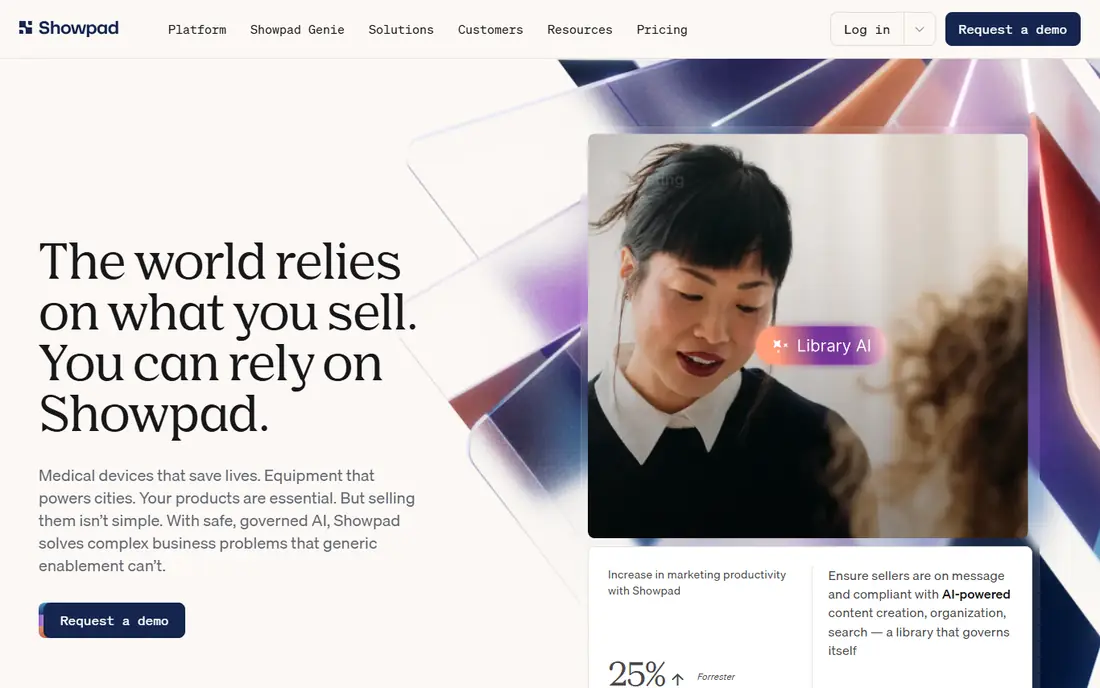
Showpad combines a content library, sales training, and buyer engagement tools in one platform, with presentation features that work well for field sellers meeting customers in person. Reps can find the current version of a deck, share it with a buyer, and see engagement, while managers track which content actually gets used. That combination makes it a practical Seismic replacement for teams of 100 to 500 reps.
The catch is scale and price. Showpad is quote-based and implementation typically takes weeks, so small teams may find it heavy. It also merged with Bigtincan under Vector Capital ownership, so buyers should confirm the current product roadmap during evaluation. For mid-market teams that found Seismic heavy, Showpad is the most balanced alternative.
- Unified content library
- Rep training included
- Strong field presentation tools
- Quote-based pricing
- Implementation takes weeks
- Enterprise features can exceed small-team needs
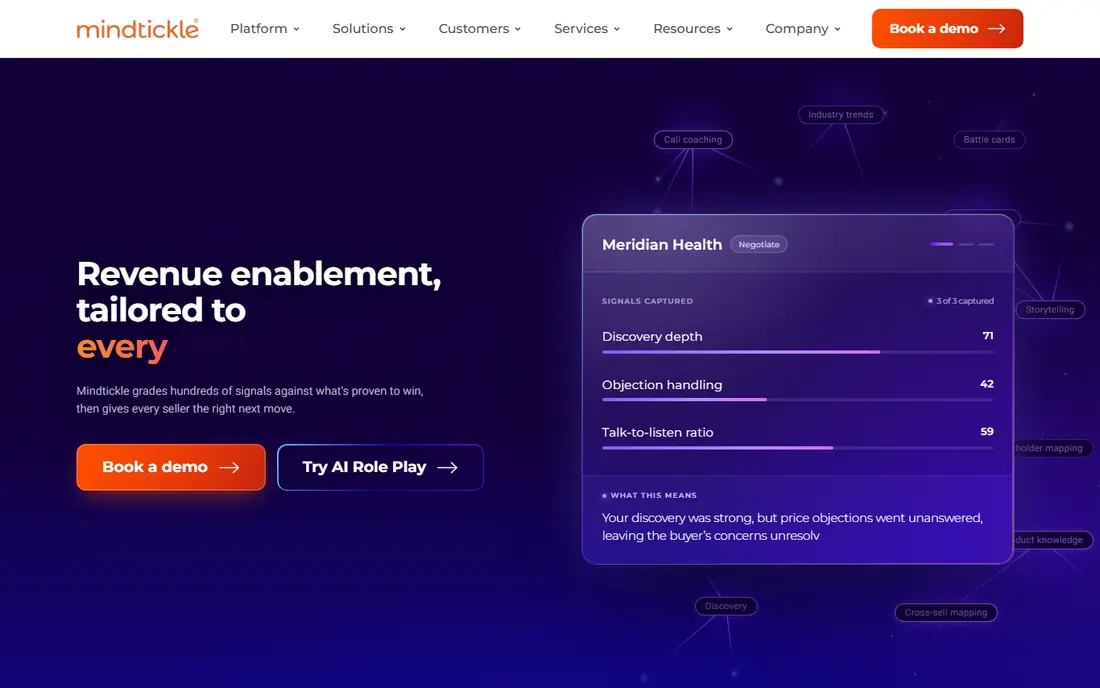
Mindtickle is a sales readiness platform built around onboarding, training, certification, and coaching for large rep cohorts. AI roleplay lets reps practice pitches and objections, with skill scoring that shows managers who is ready and who needs help. Readiness analytics tie practice and certification to outcomes, which helps enablement leaders prove impact.
The trade is focus. Mindtickle leads on readiness but is less of a pure content governance system than Seismic, so firms with huge regulated libraries may need a companion content tool. Pricing is quote-based and enterprise-scale. If ramp time and certification are your main problems, Mindtickle is the strongest pick here.
- Structured training and certification
- AI roleplay and skill scoring
- Readiness analytics
- Quote-based enterprise pricing
- Implementation takes weeks
- Content governance is less central than Seismic
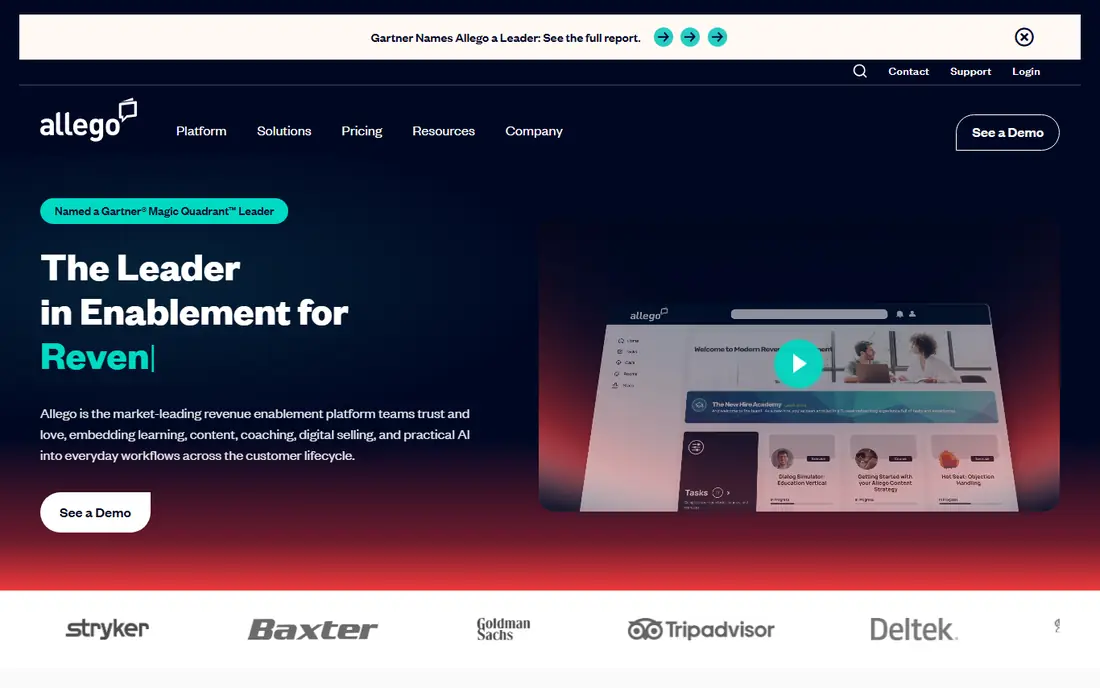
Allego centers enablement on video: reps record pitches, managers give timed feedback, and AI tools assist with coaching and call review. That video loop helps distributed teams learn from each other and helps managers coach at scale without sitting in on every call. Content sharing and learning paths round out the platform.
Pricing is quote-based and usually multiyear, so budget accordingly. Allego also fits best when coaching is a core habit, not an afterthought. If your team learns by watching, recording, and reviewing, Allego will feel natural. If content governance is your main pain, Showpad or Mediafly may fit better.
- Video-based learning and coaching
- AI-assisted feedback
- Conversation intelligence
- Quote-based pricing
- Per-user costs add up
- Best for coaching-led teams
Bigtincan offers a unified enablement suite with content, learning, and automation, designed for field and route sellers who work on mobile devices during customer conversations. Offline access and mobile presentation matter here, since field reps cannot always rely on a stable connection. Enterprise analytics track content use and rep activity.
Buyers should note the ownership change: Bigtincan merged with Showpad under Vector Capital, with both sold under the Showpad name in some contexts. Confirm which product you are actually buying and its roadmap. For mobile-first field teams, Bigtincan remains a strong, practical option.
- Mobile-first content access
- Learning and automation in one suite
- Enterprise analytics
- Quote-based pricing
- Now merged with Showpad under shared ownership
- Setup takes planning
Spekit puts enablement content where reps already work, surfacing playbooks, talk tracks, and process guidance inside Salesforce, Outreach, Slack, and similar tools. That in-app approach helps adoption, since reps do not need to open a separate library to find an answer. Implementation is typically faster than a full enterprise suite, often in weeks rather than months.
The limit is scope. Spekit is a guidance and adoption tool, not a full content management and governance platform. If your library is large and regulated, you may still need a content system alongside it. For teams whose enablement stalls because reps cannot find answers, Spekit is a focused, effective fix.
- Surfaces content inside Salesforce and other tools
- Fast implementation
- Per-seat pricing
- Not a full content governance suite
- Guidance depth depends on content quality
- Smaller scope than Seismic
Guru is an AI knowledge platform that helps teams find trusted answers quickly, with verification workflows so experts confirm that key facts stay current. Sales reps can ask a question in Slack, email, or their browser and get a verified answer without digging through folders. A free tier lets small teams start without a sales call.
The honest limit is category. Guru is not a full enablement platform: it has no native coaching, certification, or digital sales rooms. It works best as a knowledge layer alongside a content or coaching tool, or as a lightweight option for small teams. If findability is your main failure, Guru is excellent. If you need full enablement, pair it with a larger platform.
- AI search across team knowledge
- Free tier available
- Verification workflows for trusted answers
- Knowledge tool, not a full enablement platform
- No native coaching or sales rooms
- Value depends on content upkeep
SalesHood combines content management, coaching, and peer learning for mid-market teams that want broad coverage without enterprise overhead. AI coaching on pitch videos helps managers scale feedback, and collaborative learning lets reps share what works. That breadth suits teams that need several enablement jobs done reasonably well, rather than one job done perfectly.
The trade is vendor scale. SalesHood is smaller than Seismic or Showpad, so buyers should check integrations, support, and roadmap fit during a pilot. Pricing is quote-based. For mid-market teams that want one platform for content, coaching, and learning, SalesHood is a pragmatic alternative.
- Content, coaching, and peer learning in one platform
- AI coaching on pitch videos
- Mid-market fit
- Quote-based pricing
- Smaller vendor than Seismic or Showpad
- Implementation still needs planning
Dock is an AI-native revenue enablement platform built around digital sales rooms, where buyers can access content, business cases, and next steps in one shared space. It also offers content management, onboarding hubs, and AI agents grounded in your playbooks. Launch can take days to weeks for mid-market teams, which is faster than many enterprise rollouts.
The limit is depth. Dock excels at buyer-facing rooms and deal collaboration, but it is not a full enterprise content governance system like Seismic. Teams with huge regulated libraries should test governance features carefully. If your main gap is buyer engagement and deal momentum, Dock is a modern, fast option.
- AI-native sales rooms
- Content management and onboarding hubs
- Fast launch for mid-market teams
- Newer vendor than enterprise rivals
- Sales rooms are not full content governance
- Pricing is tier-based
Mediafly pairs content management with revenue intelligence, using AI tagging to organize content and analytics to link content use to deal outcomes. That combination helps marketing and sales agree on which materials actually move deals, rather than guessing from downloads alone. It suits teams that want content governance plus insight into buyer engagement.
The catch is cost and scope. The full suite can be a significant investment, and pricing is quote-based. Setup also needs clean content and tagging discipline to pay off. For teams that already track deals closely and want content intelligence on top, Mediafly is a strong Seismic alternative.
- Content management plus deal analytics
- AI-driven content tagging
- Revenue intelligence features
- Quote-based pricing
- Full suite can be a significant investment
- Setup needs content planning
How we picked these
We compared official product pages, pricing pages, and public documentation for each platform, focusing on content management, training, coaching, analytics, and buyer engagement. We favored platforms that are actively sold in October 2026 and that cover distinct enablement jobs, rather than listing near-duplicates. We did not claim hands-on testing, and where a vendor does not publish a price we wrote See website rather than guessing.
How to choose a Seismic replacement
Start with the job that is failing today. If reps cannot find current content, prioritize Showpad, Mediafly, or Guru. If ramp and skill gaps are the problem, prioritize Mindtickle or Allego. If buyers disengage after the first call, prioritize Dock. If reps ignore the library because it lives outside their tools, prioritize Spekit. Naming one failing job will narrow this list faster than any feature matrix.
Next, pilot with real content and real reps. Load a messy, real set of decks and playbooks, not a clean demo set, and watch how reps search, share, and present. Check version control, approval flows, and analytics: can marketing retire an old deck everywhere at once, and can managers see which content closed deals. A pilot with clean demo content hides the governance problems that matter most.
Finally, confirm ownership and roadmap. Enablement has consolidated recently, with Seismic absorbing Highspot and Showpad merging with Bigtincan, so ask what happens to your contract, data, and product direction after a merger. Also confirm implementation time, admin staffing, and integration with your CRM. A platform that needs a full-time admin may cost more than its license suggests.
Frequently asked questions
What are the best alternatives to Seismic?
Showpad is the best mid-market all-round alternative, Mindtickle leads on readiness and certification, and Allego leads on video coaching. Spekit and Guru suit smaller teams that need in-app guidance or knowledge search. The right pick depends on whether content, coaching, or buyer engagement is failing today.
Is Highspot still a Seismic alternative?
Highspot is no longer a separate alternative in the same way, because Seismic completed its merger with Highspot in August 2026 and Highspot now sells as part of Seismic. Teams evaluating Seismic should ask how Highspot features are packaged in the combined product. For a truly separate vendor, consider Showpad, Mindtickle, or Allego.
Which Seismic alternative is best for small teams?
Spekit and Guru are the best fits for small teams, since both offer lighter pricing and faster setup than enterprise suites. Dock is also worth a look for mid-market teams that mainly need digital sales rooms. Full enterprise platforms such as Showpad and Mindtickle usually suit larger rep teams better.
How much does sales enablement software cost?
Most enterprise enablement platforms are quote-based, with annual contracts that vary by rep count, modules, and implementation. Lighter tools such as Spekit and Guru publish per-seat ranges or free tiers, but enterprise pricing still needs a quote. Budget for implementation and admin time alongside the license.
Do I need content governance or coaching more?
Content governance matters most when your library is large, regulated, or full of outdated decks that reps keep sending. Coaching matters most when ramp time, pitch quality, or call performance is the bottleneck. Many teams need both, but start with the gap that costs deals today, then add the second capability in a later phase.
Sources
See where you really rank - block by block
ProMapRanker scans Google Maps across a grid of your service area. Simple monthly plans from $19, white-label on every plan.
Start freeKeep reading
 wpforms alternatives
Best WPForms Alternatives in 2026
We compare 9 wpforms alternatives for WordPress forms, with free and paid options, current pricing notes, and honest limits for small business sites in 2026.
Read → windows task scheduler alternatives
Best Windows Task Scheduler Alternatives in 2026
Looking for Windows Task Scheduler alternatives? We compare 9 schedulers for Windows and cross-platform work, from free tools to enterprise automation.
Read → which ai video service is best
Which AI Video Service Is Best in 2026
which ai video service is best? We compare 10 legitimate AI video services on price, avatars, editing and output quality to help you pick the right tool.
Read →