 ProMapRanker
Best Samsara Alternatives in 2026

Key takeaways
- Geotab and Motive are the closest all-round replacements, with deep tracking, safety tools and large integration libraries.
- Azuga and Fleetio suit smaller budgets, since Azuga publishes per-vehicle pricing and Fleetio charges far less for maintenance alone.
- Most enterprise platforms are quote-based and sold on multi-year terms, so compare the full contract cost, not just the monthly rate.
- If video safety is the main goal, Lytx and Motive deserve a closer look than a tracking-only tool.
- A short pilot with a few vehicles will tell you more about daily usability than any feature sheet.
Quick comparison
| Pick | Great for | Pricing starts at | Free tier | |
|---|---|---|---|---|
 Geotab | Data-led fleets and EV planning | See website | No | Visit |
 Motive | Trucking fleets and ELD compliance | See website | Free trial | Visit |
 Verizon Connect | Large fleets on the Verizon network | See website | No | Visit |
 Azuga | Small fleets that want published pricing | $25 per vehicle per month | No | Visit |
 Teletrac Navman | Driver safety and compliance | See website | No | Visit |
 GPS Trackit | Simple GPS tracking on a budget | See website | Free trial | Visit |
 Fleet Complete | Mixed fleets and asset tracking | See website | No | Visit |
 Lytx | Video safety and driver coaching | See website | No | Visit |
 Fleetio | Maintenance and work orders | $4 per vehicle per month | No | Visit |
The best Samsara alternatives
Samsara is a strong all-in-one fleet platform, but it is not the only way to get live tracking, dash cams and compliance in one place. These nine options cover the same ground from different angles, from data-heavy enterprise tools to simple trackers for a handful of vans.
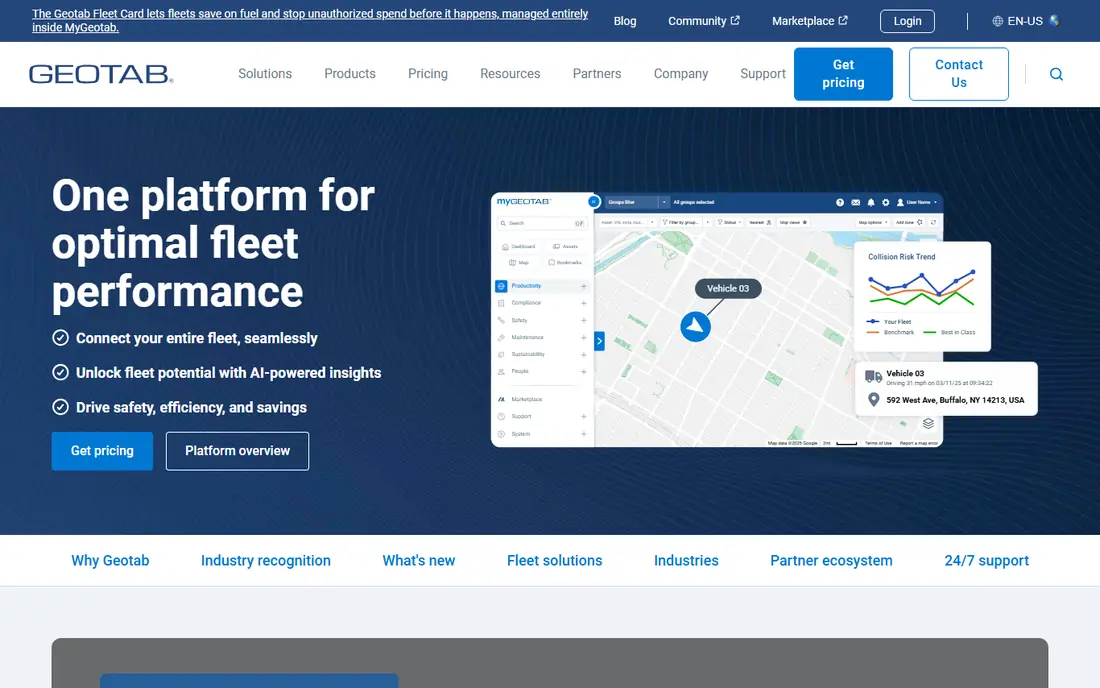
Geotab is the choice we point data-minded fleets toward first. Its GO device plugs into the vehicle and feeds a dashboard that covers live location, trip history, driver behaviour, fuel use and maintenance scheduling. The open platform matters here, because fleets can connect Geotab to routing, fuel card, maintenance and business systems without being locked into one vendor's add-ons.
The trade-off is the buying experience. Geotab sells through authorised resellers, so the price you pay and the service you get can differ by partner. That model also helps explain why published estimates vary so widely. If you run electric vehicles or a mixed fuel and electric fleet, Geotab's EV suitability and charging reporting are a genuine advantage. Smaller fleets should ask a reseller for a firm quote and a clear list of what is included before signing.
- Open platform with a large integration marketplace
- Strong EV and sustainability reporting
- Detailed vehicle and driver data
- Pricing varies by reseller
- Setup can feel complex for very small fleets
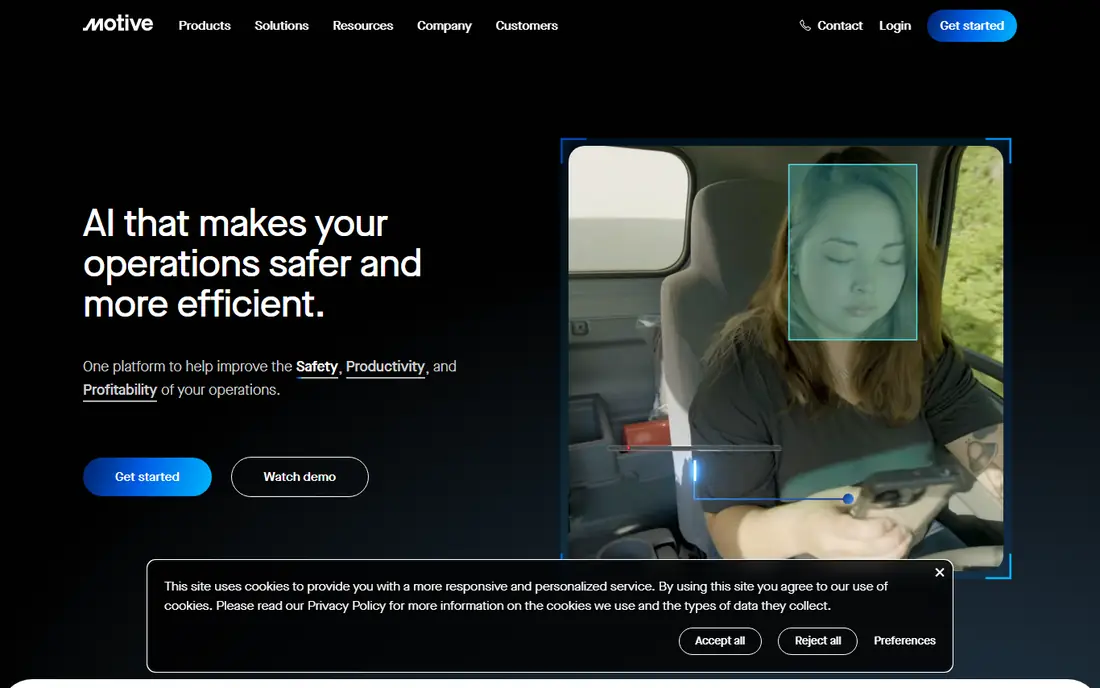
Motive, formerly KeepTruckin, grew up around ELD compliance and still feels most at home with trucking fleets. The driver app handles hours-of-service logging, vehicle inspections and roadside inspection display, while the back office covers GPS tracking, dispatch, fuel and safety scoring. For fleets that live under hours-of-service rules, that compliance core is the main draw.
Motive also offers AI dash cams that flag distraction, drowsiness and unsafe following, plus a fleet card for fuel spending. Contract terms are commonly shorter than the three-year terms seen elsewhere, which gives buyers more room to change course. The catch is pricing: you will need a quote, and camera hardware is an extra cost on top of the subscription. Ask for the per-vehicle rate, the hardware cost and the contract length in one written quote.
- Strong ELD and hours-of-service tools
- AI dash cam options
- Shorter contract terms than many rivals
- Pricing is quote-based
- Camera and hardware costs add up
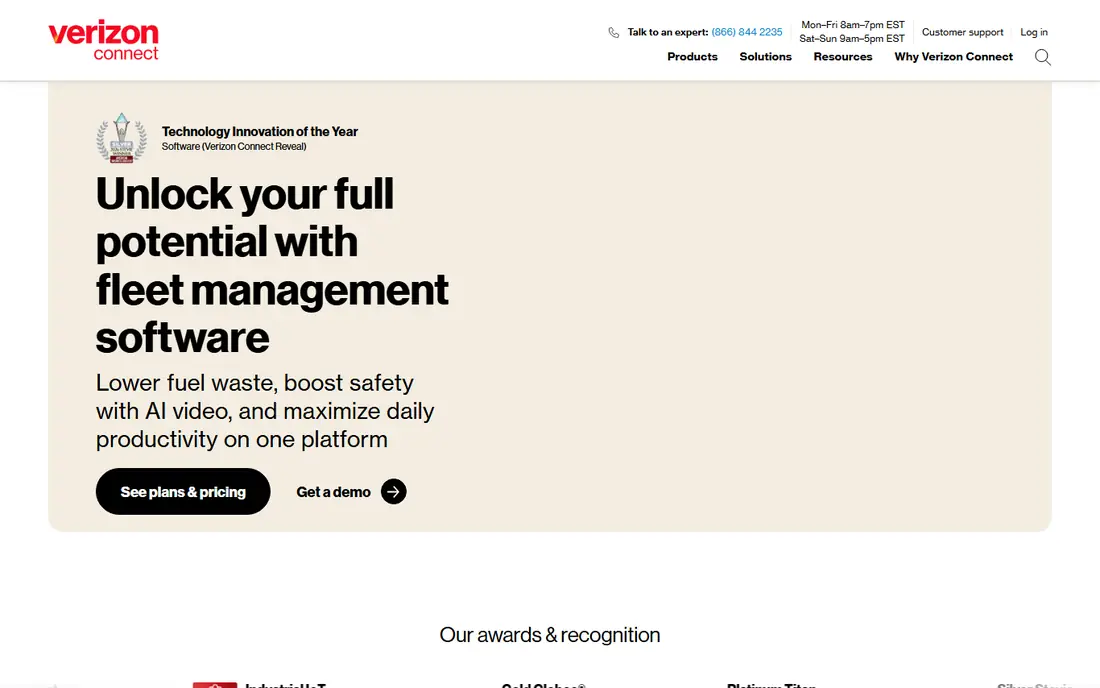
Verizon Connect, built around its Reveal platform, is the established enterprise option for fleets that want tracking, dispatch, compliance and video from one supplier. Its reporting is mature, its field service tools cover job scheduling and mobile work, and fleets already using Verizon for phones may value dealing with one account team. It suits midsize and large operations that need structure and support at scale.
The downside is transparency. Verizon Connect does not publish per-vehicle pricing, so buyers rely on quotes that vary with fleet size, features and term length. Third-party estimates for core tracking in 2026 generally sit in the range of $20 to $40 per vehicle per month, with longer terms historically common. Get the term, the early exit terms and the hardware position in writing, and compare the total contract value rather than the headline monthly figure.
- Mature reporting and a large install base
- Integrated video and field service tools
- Strong network backing
- No published pricing
- Long contracts have been common
Azuga stands out in this list for one simple reason: it publishes its prices. BasicFleet starts at $25 per vehicle per month, SafeFleet at $30 and CompleteFleet at $35, with an AI SafetyCam add-on available on top. That clarity makes budgeting far easier than with quote-only rivals, and the plug-in OBD tracker keeps installation simple for small service fleets.
Driver scores and a rewards programme give Azuga a coaching angle that many small fleets like, since safe driving can be recognised rather than only policed. The limits are worth noting. Location refresh is slower on lower tiers, and ELD, routing and camera features are separate add-ons rather than included in the base plan. Contracts have commonly run to 36 months, so read the term and exit clauses before you commit to the published price.
- Published tier pricing
- Driver scores and rewards
- Simple plug-in hardware
- Long contracts are common
- Faster location refresh and cameras cost extra
Teletrac Navman TN360 combines live tracking with a serious focus on driver wellbeing. Scorecards, custom safety alerts, fatigue management and inspection templates give managers a clear coaching workflow, and the driver app supports messaging and daily inspection reports. For fleets where compliance records and audit trails matter, that structure is a real strength.
Entry terms as short as one year have been reported, which is friendlier than the three-year norm in this market. Pricing, however, is bespoke and based on fleet size, package and contract length, so two fleets can pay quite different rates. Temperature and cargo monitoring are weaker spots than with some rivals. If driver safety is your top priority, Teletrac Navman belongs on the shortlist, but insist on a quote that spells out exactly which safety modules are included.
- Strong driver scorecards and fatigue tools
- One-year entry terms have been offered
- Good compliance reporting
- Pricing is quote-based
- Some advanced hardware features are limited
GPS Trackit is a good fit when the job is mainly knowing where vehicles are, how they are used and when they need attention. It covers live GPS tracking, geofencing, alerts, reports and basic fleet maintenance, without the layered enterprise modules that make larger platforms harder to learn. Small fleets that do not need AI cameras or deep compliance tooling often find that simplicity is the point.
The trade-off is depth. GPS Trackit does not match the video safety or advanced analytics of Motive, Lytx or Geotab, so safety-led buyers should look elsewhere. Pricing is quote-based, so ask for the per-vehicle rate and any hardware or activation fees up front. For a landscaping, plumbing or delivery fleet that wants dots on a map and clean reports, it is a sensible, lower-friction option.
- Straightforward tracking and reporting
- Lower complexity than enterprise suites
- Useful for small fleets
- Fewer advanced safety and AI camera features
- Pricing requires a quote
Fleet Complete covers vehicles, assets and field workers in one system, which helps mixed fleets that run trucks alongside trailers, tools and powered equipment. Its modular approach means a fleet can pay for tracking, asset monitoring, dispatch or compliance features as needed, rather than buying a single large bundle. That flexibility suits operations that grow unevenly across vehicle types.
The modular model also makes comparison harder, since the price depends on which modules you pick and where you operate. Published estimates have ranged widely by package. Before signing, list the exact modules, asset types and user counts in the quote, and check how asset trackers are billed compared with vehicle units. If your fleet is mostly vehicles, a simpler platform may cost less overall.
- Modular pricing across vehicles and assets
- Asset and equipment tracking
- Broad fleet coverage
- Pricing varies by module and region
- Feature depth depends on the package chosen
Lytx is the video-first pick in this list. Its DriveCam programme pairs dual-facing cameras with machine vision that flags risky behaviours such as phone use, distraction and unsafe following, then feeds those events into coaching workflows. For trucking, waste and distribution fleets where a single incident carries high cost, that safety depth is the reason to buy Lytx rather than a general tracker.
Lytx is less of an all-round fleet suite than Geotab or Motive, and it often sits alongside another platform through integration. Pricing is quote-based, with buyer reports placing typical programmes in a wide range depending on cameras, AI features and coaching services. Some users report false alerts and a harder-to-learn interface. If safety outcomes are the metric that matters most to your business, Lytx is worth the longer sales conversation.
- Leading video safety and machine vision
- Managed coaching workflows
- Strong risk detection
- Quote-based pricing
- Interface and support draw mixed feedback
Fleetio solves a different part of the problem, and that is exactly why it belongs here. It manages service schedules, work orders, inspections, parts, fuel logs and asset records, with published pricing starting at about $4 per vehicle per month billed annually for the Essential plan. Unlimited users on plans make it easy for drivers, technicians and managers to share the same maintenance record.
Fleetio does not replace a GPS tracker by itself. It pulls location and odometer data from telematics providers such as Geotab and Samsara through integrations, so many fleets run Fleetio alongside a tracking platform. If your main pain is missed services, messy inspections and unclear maintenance costs, Fleetio is the cheapest and clearest fix. If you need live tracking first, pair it with a telematics tool from this list.
- Clear published pricing
- Strong maintenance, inspections and parts tracking
- Unlimited users on plans
- Not a telematics platform on its own
- Needs a tracking integration for live location
How we picked these
We compared official feature pages, published pricing, reseller and buyer reports and public reviews, and kept only platforms that are live and clearly cover fleet tracking, safety, compliance or maintenance. We favoured tools with a distinct angle, such as published pricing, video safety or maintenance depth, over near-identical trackers. Where a vendor does not publish pricing, we say so plainly instead of presenting an estimate as a vendor price.
What to check before you sign
Start with the job that hurts most. If incidents and insurance costs dominate, shortlist the video safety tools first. If missed services and repair bills dominate, start with maintenance software and add tracking second. If compliance paperwork dominates, put ELD and hours-of-service tools at the top. A platform that is excellent at one job and weak at another will still disappoint if you bought it for the wrong job.
Contract and total cost
Ask every vendor for the same four numbers: the monthly rate per vehicle, the one-time hardware cost, the contract length and the early exit cost. Quote-only platforms can look cheap month to month and expensive over three years once hardware and camera licences are added. A pilot with five to ten vehicles, run for at least a month, will also show whether drivers accept the app and cameras, and whether managers actually use the reports.
Hardware, cameras and data
Check how hardware is supplied, who owns it at the end of the term and what happens if a unit fails. Ask whether camera footage, driver scores and vehicle data can be exported, and which systems the platform connects to, such as fuel cards, routing tools and maintenance software. Fleets that plan to change systems later should treat data export as a buying requirement, not an afterthought.
Frequently asked questions
Is there a free Samsara alternative?
No full enterprise fleet platform in this list is free. Fleetio and Azuga publish low starting prices, and GPS Trackit and Motive offer trials, but live tracking, cameras and compliance all carry a subscription and usually hardware costs. Free consumer GPS apps do not provide ELD compliance, fleet reporting or managed safety tools.
Which Samsara alternative is best for small fleets?
Azuga is the easiest small-fleet pick because its pricing is published and its hardware installs simply. GPS Trackit suits fleets that only need tracking and reporting, while Fleetio suits fleets whose main problem is maintenance. Pilot one tool with a few vehicles before rolling it out to the whole fleet.
Do these alternatives include ELD compliance?
Motive, Teletrac Navman and Verizon Connect all cover ELD and hours-of-service compliance in their main platforms. Azuga offers ELD as a separate module, and Fleetio handles inspections and maintenance rather than ELD itself. Confirm that the plan you are quoted includes the exact compliance features your operation needs.
How much do Samsara alternatives cost per vehicle?
Published starting prices in this list run from about $4 per vehicle per month for Fleetio maintenance software to $25 per vehicle per month for Azuga tracking. Enterprise telematics platforms are usually quote-based, with third-party estimates for core tracking often in the $20 to $40 range. Cameras, hardware and add-on modules sit on top of those figures.
Can I keep my existing telematics hardware when switching?
Usually not. Most platforms use their own devices and data plans, so a switch normally means new hardware and a fresh install. Ask the new vendor about install support, device return terms and any credit for existing units, and plan the swap vehicle by vehicle to avoid a gap in tracking or compliance.
Sources
See where you really rank - block by block
ProMapRanker scans Google Maps across a grid of your service area. Simple monthly plans from $19, white-label on every plan.
Start freeKeep reading
 wpforms alternatives
Best WPForms Alternatives in 2026
We compare 9 wpforms alternatives for WordPress forms, with free and paid options, current pricing notes, and honest limits for small business sites in 2026.
Read → windows task scheduler alternatives
Best Windows Task Scheduler Alternatives in 2026
Looking for Windows Task Scheduler alternatives? We compare 9 schedulers for Windows and cross-platform work, from free tools to enterprise automation.
Read → which ai video service is best
Which AI Video Service Is Best in 2026
which ai video service is best? We compare 10 legitimate AI video services on price, avatars, editing and output quality to help you pick the right tool.
Read →