 ProMapRanker
Best RocketReach Alternatives in 2026


All-in-one prospecting and outreach · Pricing starts at: $49 per user per month
Key takeaways
- Apollo.io gives the widest free starting point in this list, with a free plan plus paid plans from $49 per user per month billed annually.
- Hunter and Snov.io suit smaller teams that mainly need email finding and verification without a large enterprise contract.
- ZoomInfo and Cognism sit at the enterprise end, with sales-led pricing and deeper intent and compliance features.
- Credit systems matter more than headline prices, since the same monthly fee can buy very different numbers of reveals.
- Clay is the odd one out here, because it is built to enrich and route data from many sources rather than to serve as a simple contact lookup tool.
Quick comparison
| Pick | Great for | Pricing starts at | Free tier | |
|---|---|---|---|---|
| Apollo.io | All-in-one prospecting and outreach | $49 per user per month | Yes | Visit |
 ZoomInfo | Enterprise sales intelligence | See website | Free trial | Visit |
 Lusha | LinkedIn prospecting | $32.45 per user per month | Yes | Visit |
 Hunter | Simple email finding and verification | $34 per month | Yes | Visit |
 Snov.io | Affordable prospecting and outreach | $39 per month | Yes | Visit |
 Cognism | Compliant European prospecting | See website | No | Visit |
 UpLead | Verified contacts with an accuracy promise | $74 per month | Free trial | Visit |
 Seamless.AI | Real-time contact search | See website | Yes | Visit |
 Clay | Data enrichment workflows | See website | Yes | Visit |
The best rocketreach alternatives
RocketReach is a handy lookup tool, but teams often outgrow it when they need outreach, deeper company data, or larger credit allowances. These nine options cover that range, from free email finders to enterprise platforms.
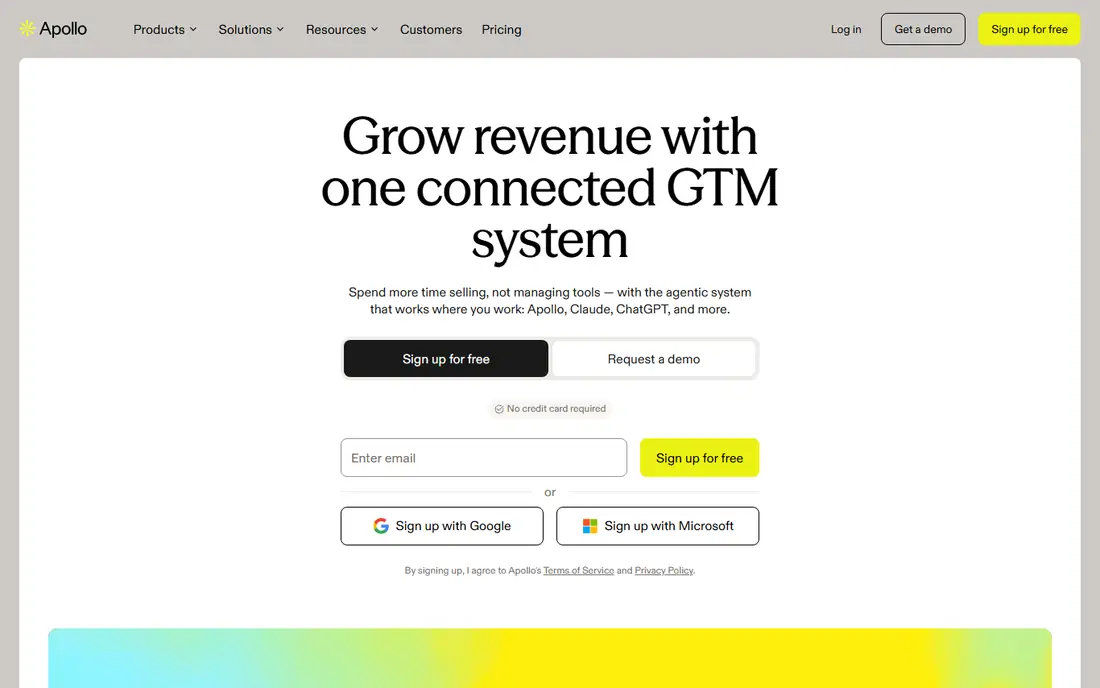
Apollo.io is our pick for most people on this list, because it combines a contact database with email sequences, a dialer, and CRM integrations in one place. A small team can start on the free plan, test the search filters, and only pay once the volume justifies it. The paid Basic plan, at $49 per user per month billed annually, adds more credits and CRM sync.
The catch is the credit model. Credits do not roll over, and different actions consume different credit types, so a team that reveals many mobile numbers will hit limits sooner than a team that only finds emails. Check the credit allowance for your actual workflow, not just the seat price, before you commit. Apollo also works best when you already have a sending domain set up properly for outreach.
- Large contact database
- Built-in sequences and dialer on paid plans
- Generous free tier for testing
- Credit limits can bite on lower plans
- Per-seat pricing adds up fast for larger teams
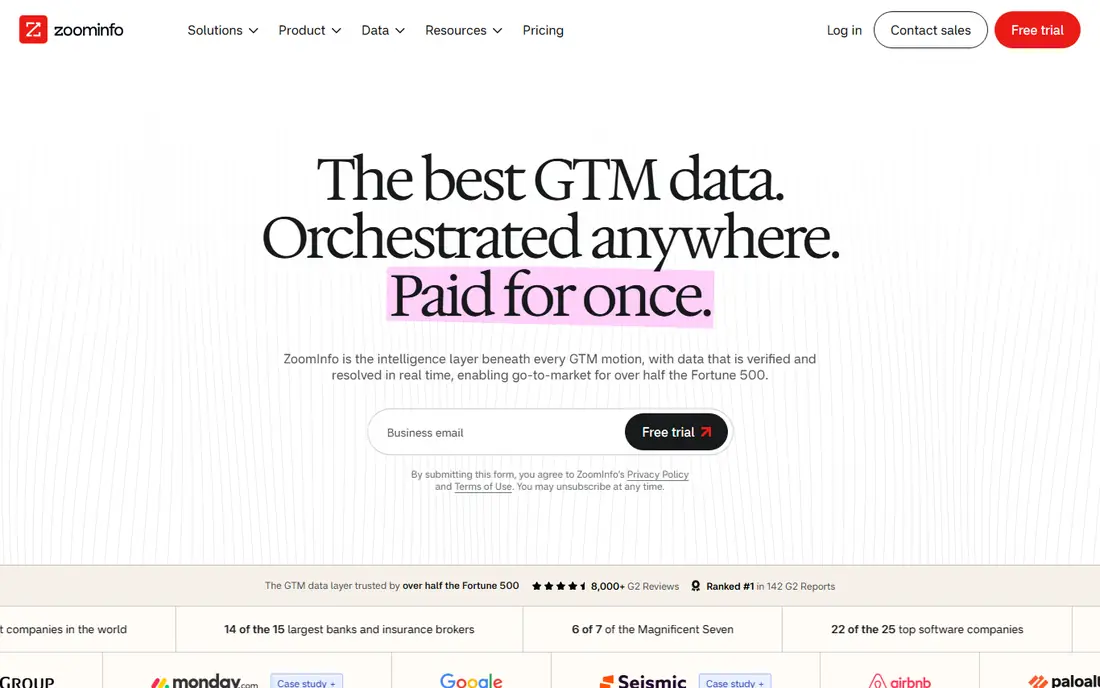
ZoomInfo is the platform larger sales teams turn to when they need company hierarchies, technographics, and intent signals alongside contact details. Its database and signal coverage are a step above a simple lookup tool, and it plugs into Salesforce, HubSpot, and common sales engagement tools. If your team runs account-based selling, that depth is the point.
The trade-off is price and process. Pricing is custom and typically annual, so small teams will find it hard to justify. ZoomInfo also expects a proper onboarding and admin setup, which is fine for a revenue team with operations support but heavy for a founder working alone. Treat it as an enterprise buy, not a quick self-serve trial.
- Very large company and contact database
- Intent data and buying signals
- Strong integrations with major CRMs
- Sales-led, enterprise pricing
- Overkill and costly for solo sellers
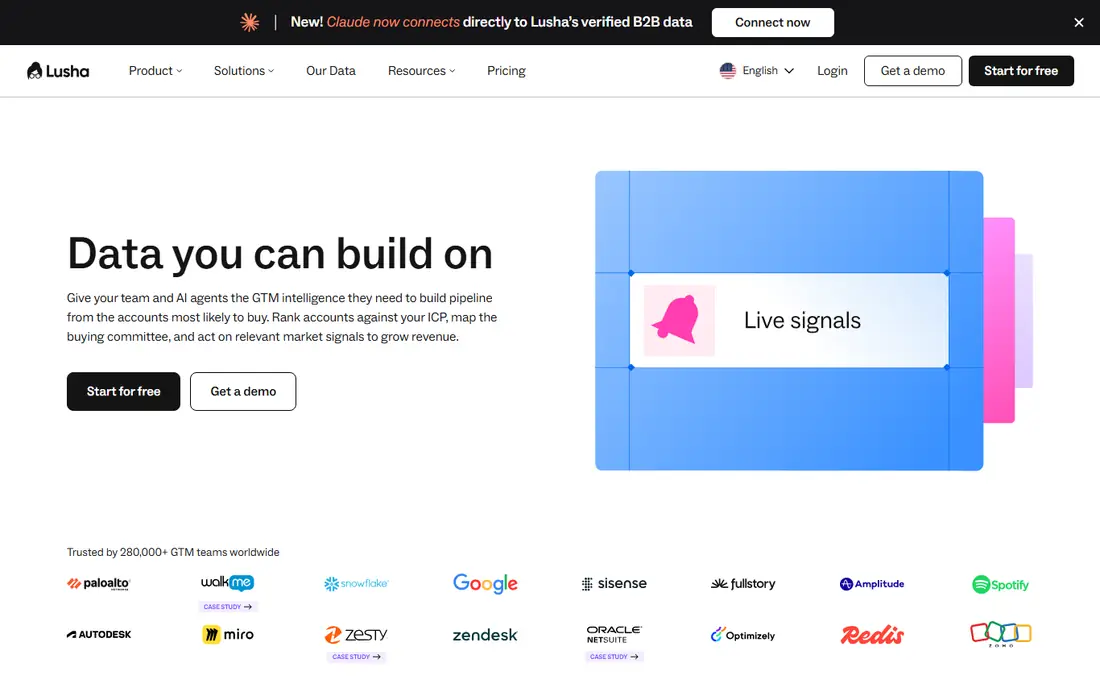
Lusha is built around a simple habit: open a LinkedIn profile or company page, click the extension, and reveal contact details. That workflow suits recruiters and sellers who live on LinkedIn, and the free plan lets you test accuracy on your own target accounts before paying. The entry paid plan starts at $32.45 per user per month billed annually.
Lusha is not a full outreach platform, so you will still need a separate tool for sequences or a CRM to manage follow-up. Credit limits also mean heavy prospecting days can burn through a month's allowance quickly. Still, for LinkedIn-first prospecting, it is one of the most direct RocketReach replacements.
- Fast Chrome extension for LinkedIn and company sites
- Clear credit-based pricing
- Direct dials on higher plans
- Credit allowance is modest on the entry plan
- Data depth varies by region
Hunter does one job well: finding and verifying professional email addresses. Enter a domain and you get a list of associated addresses with confidence scores, or search for a specific person and verify the address before you send. That focus keeps it simple and keeps the price at $34 per month for the entry paid plan, with a free plan for light use.
What Hunter lacks is breadth. It does not provide phone numbers, intent data, or sequences, so teams that need a full outbound stack will pair it with another tool. If your main problem is bounced emails and wasted sends, though, Hunter's verification step alone can pay for itself.
- Clean, simple interface
- Email verification and domain search
- Useful for small teams and freelancers
- No phone numbers
- No built-in outreach sequences
Snov.io appeals to teams that want finding and sending in one subscription without enterprise pricing. The entry plan starts at $39 per month, and it includes email verification, drip campaigns, and a Chrome extension for LinkedIn and company sites. Rollover credits on some plans soften the usual end-of-month scramble that credit tools create.
The weakness is phone coverage. If cold calling is central to your process, Snov.io alone will not match tools that specialise in direct dials. Its campaign features are also simpler than dedicated sales engagement platforms. For email-led outreach on a budget, it is a strong fit.
- Combines finding, verification, and email campaigns
- Credits roll over on some plans
- Flat pricing rather than per-seat on many plans
- Phone data is limited
- Interface takes a little learning
Cognism is the pick for teams selling into Europe, where data rules and phone accuracy matter more than raw database size. It emphasises verified mobile numbers and compliance with European data regulations, and it offers intent data to help teams prioritise accounts. That combination suits mid-market and enterprise teams with a European focus.
Cognism does not offer a free plan, and pricing requires a sales conversation, so it is not a casual test-and-see tool. Smaller US-only teams may also find better value elsewhere. If your pipeline depends on reaching European buyers by phone, the verification work behind the numbers is what you are paying for.
- Strong European coverage with human-verified mobile numbers
- Compliance-focused data handling
- Intent data on higher plans
- Sales-led pricing with no free plan
- Best value for teams, not solo users
UpLead stakes its name on accuracy, offering a 95 percent data accuracy guarantee, which means credits are refunded for inaccurate records under its terms. That promise matters when every bad record costs a rep time and hurts sender reputation. The entry plan starts at $74 per month billed annually, and it includes real-time verification before you export.
UpLead does not try to be an outreach platform, so you will still need a sending tool. Its price also sits above Hunter and Snov.io, which makes it harder to justify for very light use. For teams that buy a lot of data and hate paying for dead contacts, the guarantee is a real differentiator.
- 95 percent data accuracy guarantee on its paid plans
- Real-time email verification
- Technographic filters
- Higher entry price than simpler finders
- No free plan, only a trial
Seamless.AI works more like a search engine than a static database: you search for people and companies, and it returns contact details in real time. That approach can surface fresh contacts that older databases miss, and the free plan gives you a way to judge coverage on your own market. It also connects with Salesforce, HubSpot, and other common tools.
The drawback is pricing transparency. Paid plans are quoted rather than listed as a simple self-serve price, which makes comparison harder. Accuracy also varies, so verify a sample of results against your target list before rolling it out to a whole team. For high-volume, real-time searching, it is worth a trial.
- Real-time search engine for contacts
- Free plan to test
- CRM integrations for common platforms
- Pricing is sales-led on paid plans
- Accuracy varies by industry and region
Clay is not a one-to-one RocketReach clone. It is a workspace where you build a table of companies or people, then enrich each row with data from many providers, web research, and AI prompts. That makes it powerful for teams that want tailored prospect lists, with fields like tech stack, funding, or hiring signals added automatically.
That power comes with complexity. Clay takes longer to learn than a Chrome extension, and usage-based pricing means a large enrichment job can cost more than expected. If you only need a phone number for one person, use a simpler tool. If you build targeted lists every week, Clay can replace several manual research steps at once.
- Enriches lists from dozens of data sources in one workflow
- Flexible tables and automations
- Strong for outbound research
- Learning curve is steeper than a simple finder
- Pricing is usage-based and can grow quickly
How we picked these
We compared official feature pages, pricing pages, and app listings for tools that find business contact details, and we kept only tools that exist and work today and genuinely replace RocketReach for finding contacts. We weighed database coverage, verification, phone data, outreach features, pricing transparency, and free options. We did not claim hands-on testing we did not do; this comparison reflects published features, pricing, and public reviews.
What to check before you pay
Start with your own list, not a vendor demo. Take 50 real target accounts, run them through a free plan or trial, and count how many return a correct email or direct dial. That sample tells you more than any database size claim, because coverage varies sharply by industry and country.
Next, map the credit math. Note how many credits an email reveal, a mobile reveal, and an export each cost, and whether credits roll over. A cheaper plan with stingy credits can cost more per usable contact than a pricier plan with a larger allowance. Finally, check how the tool handles consent and data rules in the markets you sell into, and confirm it connects with your CRM before you sign an annual contract.
If you only need emails
Hunter or Snov.io will cover most cases at a lower price, and both verify addresses before you send. Add a separate sending tool if you need sequences, rather than paying for an enterprise platform you will not use fully.
If you need phones and European coverage
Cognism and Lusha deserve the first trials, with UpLead as a strong alternative if an accuracy guarantee matters to you. Test mobile coverage on your own accounts, since that is where these tools differ most.
If you want one tool for data and outreach
Apollo.io is the closest all-in-one option in this list, and Clay is the choice if enrichment workflows matter more than simple lookup. ZoomInfo fits when intent data and enterprise scale justify a sales-led contract.
Frequently asked questions
What is the best free RocketReach alternative?
Apollo.io and Hunter both offer usable free plans, and Lusha and Snov.io also let you start free with limited credits. Apollo.io is the most complete free option, because it adds sequences and a dialer on paid plans, while Hunter is the simplest if you only need email finding and verification.
Is RocketReach itself still worth using?
RocketReach still works for quick, occasional lookups, especially for executive contacts, and its free tier covers light use. The alternatives here tend to win when you need outreach, larger credit allowances, phone data, or a specific regional focus such as Europe.
How accurate is contact data from these tools?
Accuracy varies by tool, region, and how recently a person changed jobs. Tools that verify emails in real time, or that human-verify phone numbers, tend to return fewer dead records. The safest approach is to test a sample of your own targets and verify emails before sending.
Do these tools include phone numbers?
Some do, and some do not. Lusha, Cognism, UpLead, and Seamless.AI offer phone or mobile data, while Hunter is email only. Check whether a plan includes direct dials or only office numbers, since that difference matters for cold calling.
Can I use these tools with my CRM?
Most of the tools here integrate with HubSpot, Salesforce, or Pipedrive, either directly or through a Chrome extension and export. Confirm the integration is included on the plan you intend to buy, since some vendors reserve CRM sync for higher tiers.
Which alternative is best for a small business on a budget?
Snov.io and Hunter give the best value for email-led prospecting, while Apollo.io's free plan is a good starting point if you also want outreach. Avoid enterprise platforms with annual contracts until your volume clearly needs them.
Sources
See where you really rank - block by block
ProMapRanker scans Google Maps across a grid of your service area. Simple monthly plans from $19, white-label on every plan.
Start freeKeep reading
 free alternatives to grok imagine
Free Alternatives to Grok Imagine in 2026
We compared the best free alternatives to grok imagine for image generation, from fast daily credits to design tools, so you can create without paying.
Read → best tools for instagram content creation
Best Tools for Instagram Content Creation in 2026
Compare the best tools for Instagram content creation, from Canva and CapCut to Later and Buffer, on design, video, planning, scheduling, and price in 2026.
Read → best tool to split pdf files
Best Tool to Split PDF Files in 2026
We compared the best tool to split pdf files on split modes, file limits, privacy and price, so you can split a PDF cleanly and keep every page in one go.
Read →