 ProMapRanker
Best Redbubble Alternatives in 2026

Key takeaways
- Marketplaces bring buyers to you, but they set prices and take a fixed cut, while fulfillment partners give you control and more work.
- TeePublic is the closest like for like marketplace swap, with free uploads and fixed royalties per sale.
- Printful and Printify suit sellers who already have an audience and want their own store and margins.
- Avoid building only on one marketplace, since fee and policy changes can cut earnings without warning.
Quick comparison
| Pick | Great for | Pricing starts at | Free tier | |
|---|---|---|---|---|
 TeePublic | Marketplace selling | Free | Yes | Visit |
 Society6 | Art prints and home decor | Free | Yes | Visit |
 Threadless | Artist shops and community | Free | Yes | Visit |
 Zazzle | Custom and personalized goods | Free | Yes | Visit |
 Spreadshirt | Marketplace plus own shop | Free | Yes | Visit |
 Printful | Quality fulfillment for own store | Free | Yes | Visit |
 Printify | Low cost fulfillment choice | Free | Yes | Visit |
 Fourthwall | Creator storefront and merch | Free | Yes | Visit |
The best Redbubble alternatives
We picked sites that are still open in October 2026, sell print on demand goods, and give artists a real way to earn, whether through a marketplace, a fulfillment partner or a storefront.
TeePublic is the first place most Redbubble sellers try, because the model is familiar. You upload a design, it lands on shirts and other products, and TeePublic handles printing, shipping and customer service. There is no signup or listing fee, and the upload process is among the simplest in this list, which helps if you want to test many designs fast.
The honest catch is price control. TeePublic pays a fixed amount per sale by product, and that amount falls when an item sells at a sale price, during a design first 72 hours, with a coupon or in a bundle. Recent guides note a shirt royalty of $4 at full price and $2 at sale price, which means most sales may land at the lower rate. If you want passive marketplace sales and can live with fixed royalties, it is a strong swap.
- Free to start and upload
- Large apparel audience
- Simple fixed royalty per sale
- You cannot set your own prices
- Sale prices cut the royalty
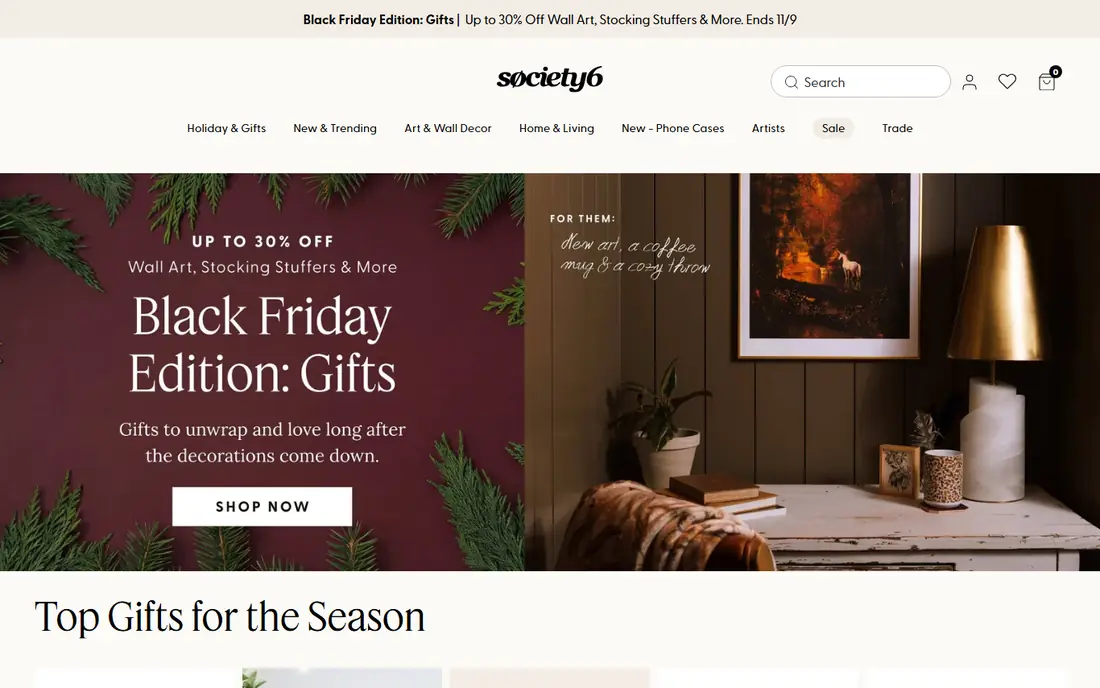
Society6 suits artists whose work looks best on a wall, a pillow or a tote, rather than only on a shirt. Buyers come looking for art led home goods, and the site presents work in a gallery style that fits illustration, photography and pattern design. Opening a shop and uploading work is free, and Society6 handles production and shipping.
The limit is control and apparel reach. Royalties are fixed on some products, so you cannot simply raise a price to lift earnings, and shirt buyers are less central here than on TeePublic. If your portfolio is art first and merch second, Society6 is a good second home for the same designs. If shirts are your main seller, keep TeePublic or a fulfillment partner alongside it.
- Strong for wall art and home decor
- Artist shop is free
- Wide product range
- Royalties are fixed on some items
- Apparel is not the main draw
Threadless gives you two routes in one place. You can open a free Artist Shop, customize the storefront, set your own margins with its pricing tool, and still have products featured on the Threadless marketplace unless you opt out. That blend suits artists who want some brand control without building a full store from scratch, and Threadless has a long record for print quality.
The catch is that a shop alone does not bring sales. Community challenges, features and your own promotion still drive most traffic, and marketplace royalties differ from shop margins. Expect around $10 on a shirt sold near $25 to $30 in a shop, based on third party guides, but check current base costs before you set prices. Threadless works best for artists with an audience to point at the shop.
- Customizable Artist Shop
- Marketplace exposure
- Good print quality reputation
- Marketplace reach needs promotion
- Margins vary by product and channel
Zazzle stands out for customization. Buyers can personalize gifts, invitations, office goods and apparel, which opens sales that a plain shirt marketplace misses. Sellers can set a royalty rate on their products, so you have more price control than on TeePublic, and opening a store is free. That breadth helps for weddings, holidays, business gifts and family designs.
The downside is competition and complexity. The catalog is vast, so a new design can get buried, and the customization tools take longer to master than a simple upload form. Zazzle suits sellers who enjoy making many product versions and who will promote gift and personalized niches. If you want a quick upload and forget model, a simpler marketplace may fit better.
- Huge customizable product range
- You set royalty rate
- Strong for gifts
- Crowded marketplace
- Design tools take time to learn
Spreadshirt lets you sell on its marketplace and run your own Spreadshop storefront from the same account, which is useful if you want both discovery and a branded link for social media. Uploading and opening a shop is free, and the product range covers the usual shirts, hoodies and accessories that apparel sellers need. For a seller moving from Redbubble, that dual route is a practical middle step.
The weakness is that neither channel is automatic. Marketplace sales need volume and good tags, while a Spreadshop still needs your own traffic. Some sellers also find the tools less polished than newer storefront platforms. Use Spreadshirt as a low cost second marketplace, not as your only plan, and track which channel actually brings sales.
- Marketplace and storefront in one account
- Free to start
- Broad apparel range
- Earnings depend on channel and design volume
- Interface feels dated to some sellers
Printful is not a marketplace, it is a fulfillment partner for your own store. You connect it to Shopify, Etsy, WooCommerce or a similar platform, upload designs, set your retail prices, and Printful prints and ships each order. That control over price, brand and customer data is the main reason sellers leave marketplaces, and Printful is often cited for consistent print quality.
The trade off is traffic and cost. No buyers arrive on their own, so you need a store, an audience or ads, and base product costs plus shipping leave less margin than a low cost partner on some items. A single shirt can cost around $10.50 to $36 depending on product in third party comparisons, before shipping. If quality and a clean store matter more than the lowest base cost, Printful is a sound choice.
- Strong print quality record
- Links to major store platforms
- No upfront stock needed
- Base costs are higher than some rivals
- You must drive your own traffic
Printify works like Printful in structure, but its model is a network of print providers, so you can compare base costs, locations and delivery times for the same product. That choice often gives lower base costs, which helps margins if you sell at competitive prices. It connects to Shopify, Etsy, WooCommerce and other platforms, and starting an account is free, with a paid plan for extra discounts.
The risk is variation. Quality, print placement and shipping speed depend on the provider you pick, so a design that looks good from one provider may not from another. Order samples from any provider you plan to use, and keep a backup provider for key products. If you are price focused and willing to test, Printify is a strong partner. If you want one provider with a single quality standard, Printful may be simpler.
- Free to start
- Many print providers to compare
- Links to major store platforms
- Quality varies by provider
- You must test samples before scaling
Fourthwall is built for creators who already have followers and want a store that looks like their brand, not a marketplace listing. It supports physical merch, memberships and digital products, with payment processing on top, and it does not add a platform fee on physical goods in its stated model. That makes it a good step up from a marketplace when your audience is ready to buy from you directly.
The limit is discovery. Fourthwall does not bring Redbubble style search traffic, so a new artist with no audience will sell little there. It also asks more of you on store setup, pricing and promotion than a marketplace does. Use it when you can send traffic from video, social or email, and keep a marketplace running for discovery while the store grows.
- Branded storefront with merch and memberships
- No added fee on physical goods in its stated model
- Good for creators
- Needs your own audience
- Less marketplace discovery than TeePublic or Society6
How we picked these
We compared official seller pages, help pages and recent marketplace guides, and we kept only sites that were still open and selling print on demand goods in October 2026. We favored a mix of marketplaces, fulfillment partners and storefronts, since sellers leave Redbubble for different reasons, and we checked that each site gives artists a clear way to earn. Where royalty or base cost figures change often, we used the site model rather than fixing a rate that may shift.
How to choose between them
Start with where your buyers come from. If you have no audience yet, a marketplace such as TeePublic or Society6 gives you a chance at search traffic, even though royalties are fixed. If you already have followers, a storefront or fulfillment partner gives you better margins and customer data, but you must do the marketing. Many sellers do both, using a marketplace for discovery and a store for higher margin sales.
Next, test print quality before you scale. Order your own designs on the products you plan to sell, check colors, placement and fabric, and compare shipping times. Check who owns the customer relationship, what happens to your shop if you leave, and how payouts work, since those terms matter more over time than a small royalty difference. Finally, avoid Spring, which closed on 15 September 2026 according to recent guides, and do not build a new shop on a closed platform.
Frequently asked questions
What are the best Redbubble alternatives?
TeePublic is the closest marketplace swap, Society6 is best for art and home decor, and Printful or Printify are best if you want your own store. Threadless, Zazzle, Spreadshirt and Fourthwall each suit a different mix of control, audience and product type. The best choice depends on whether you need discovery, margins or brand control most.
Can I sell the same designs on several sites?
In most cases yes, as long as the design is yours and you are not in an exclusive deal. Many artists list the same art on TeePublic, Society6 and their own store, with different product mixes. Check each site terms for exclusivity, fan art rules and trademark limits, since licensed or fan art designs have extra restrictions.
Do Redbubble alternatives cost money to start?
Most marketplaces in this guide are free to start, including TeePublic, Society6, Threadless, Zazzle and Spreadshirt. Fulfillment partners such as Printful and Printify are also free to start, but you pay the base cost and shipping when an order sells. A paid plan may lower base costs, but it is not required to begin.
How do artists get paid on these sites?
Marketplaces usually pay a royalty per sale after the platform takes its base cost and service fee, while fulfillment partners let you keep the retail price minus base cost, shipping and platform fees. Payout timing, minimums and methods vary by site, so check the seller help page before you rely on a payout date. Keep records for tax, since marketplace income is still income.
Is Printful or Printify better than a marketplace?
It depends on your traffic. A marketplace brings buyers but controls price and takes a fixed cut, while Printful and Printify give you price control and customer data but no built in traffic. If you have an audience, a fulfillment partner usually earns more per sale. If you do not, a marketplace is a better starting point.
Sources
See where you really rank - block by block
ProMapRanker scans Google Maps across a grid of your service area. Simple monthly plans from $19, white-label on every plan.
Start freeKeep reading
 wix alternatives
Wix Alternatives in 2026: 8 Products Compared
Compare the best Wix alternatives in 2026 for portfolios, stores and blogs, with current prices, free plans and the right builder by site type in this guide.
Read → webflow alternatives
Best Webflow Alternatives in 2026
Looking for webflow alternatives? We compared 8 website builders on design control, CMS, hosting and price, so you can build without the learning curve.
Read → squarespace alternatives
Best Squarespace Alternatives in 2026
We compared the best Squarespace alternatives for portfolios, stores, blogs and client work, with current pricing, free plans and honest trade-offs in 2026.
Read →