 ProMapRanker
Best Recorded Future Alternatives in 2026

Key takeaways
- Flashpoint suits teams that need deep and dark web intelligence from criminal communities, with analyst-backed research.
- Anomali and ThreatConnect suit security operations teams that need to aggregate feeds and push intelligence into existing tools.
- CrowdStrike and Google Threat Intelligence suit teams already invested in those ecosystems, since intel sits next to endpoint or cloud telemetry.
- Most enterprise threat intelligence platforms price by quote, so request a scoped quote that covers seats, feeds, and analyst hours.
Quick comparison
| Pick | Great for | Pricing starts at | Free tier | |
|---|---|---|---|---|
 Flashpoint | Deep and dark web intelligence | See website | No | Visit |
 Anomali ThreatStream | Feed aggregation and scoring | See website | No | Visit |
 ThreatConnect | Intel operations and automation | See website | Free trial | Visit |
 CrowdStrike Falcon Adversary Intelligence | Adversary intel with endpoint data | See website | No | Visit |
 Google Threat Intelligence | Finished intel with Mandiant research | See website | No | Visit |
 Cyware | Intel sharing and orchestration | See website | No | Visit |
 EclecticIQ | Analyst workflow and collaboration | See website | No | Visit |
 ThreatQuotient | Curated intel workbench | See website | No | Visit |
 MISP | Free open-source sharing | Free | Yes | Visit |
The best recorded future alternatives
We compared official product pages, pricing pages, and platform documentation for threat intelligence tools that were live in October 2026. Recorded Future itself is not listed here, since this article covers alternatives to it.
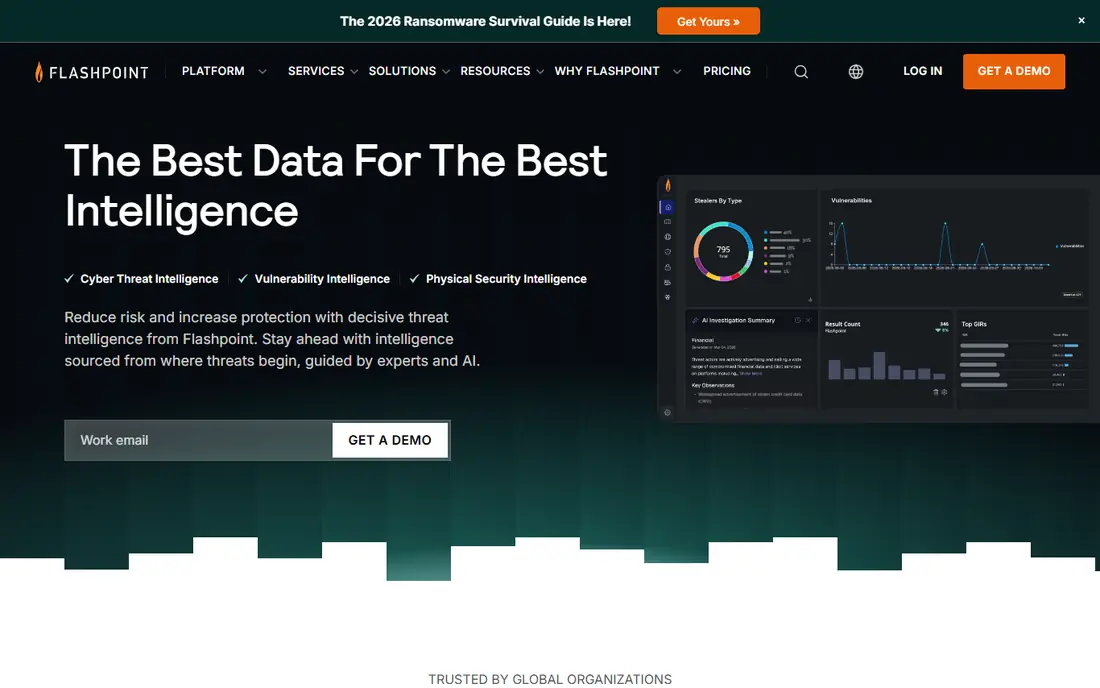
Flashpoint is the strongest alternative when your main question is what criminals are saying and selling. Its Ignite platform draws on its own collection from illicit forums, marketplaces, and chat services, rather than only repackaging public feeds. Analysts can also answer specific research requests, which helps fraud and brand protection teams.
The trade-off is pricing transparency. Packages are quoted, and analyst research draws on scoped hours, so ask for a clear quote that covers data access, seats, and research time. For teams focused on external criminal activity, that depth is often worth the quote process.
- Primary collection from criminal forums and marketplaces
- Analyst research on request
- Strong fraud and credential intelligence
- Quote-based pricing with no published entry price
- Analyst hours can make costs hard to predict
- Less focused on internal telemetry
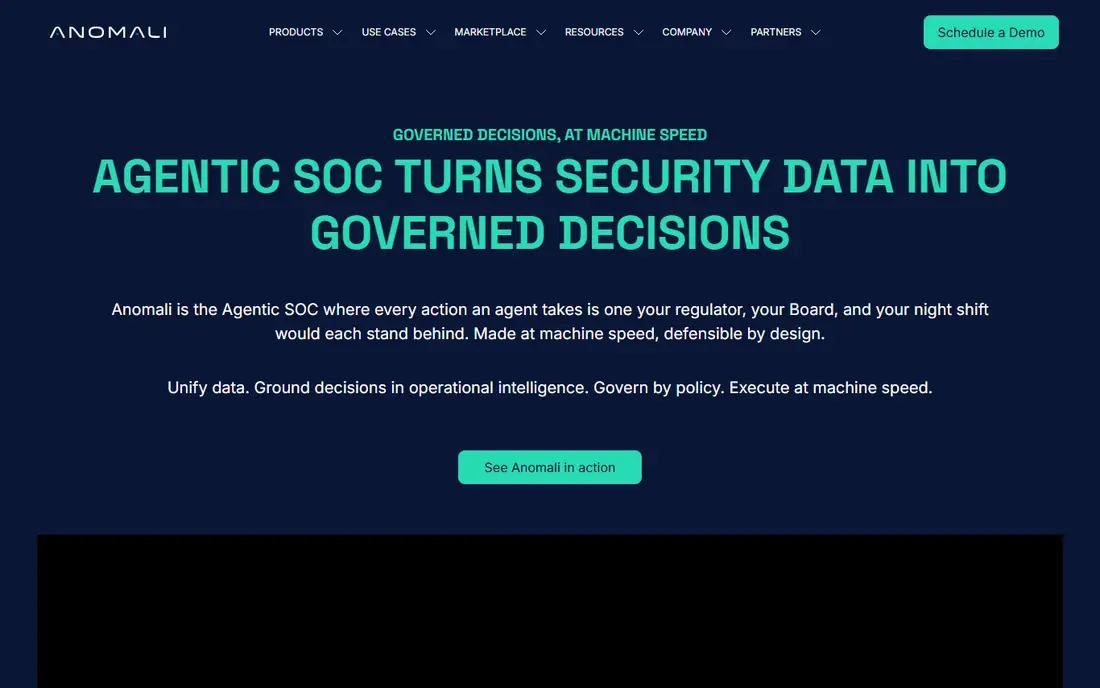
Anomali ThreatStream is a threat intelligence platform built to fuse external feeds with your own assets, logs, and incidents. It scores indicators, matches them against your environment, and pushes relevant intelligence to security tools. For a security operations centre, that operational step matters more than a larger raw feed list.
Expect a quote-based purchase and a tuning period. Feed noise is a real issue with any aggregator, so plan time to score, filter, and match intelligence to your assets before judging the platform.
- Aggregates many feeds into one platform
- Scoring and matching against your own data
- Wide SIEM and SOAR integrations
- Quote-based pricing
- Setup and tuning take time
- Value depends on feed quality and internal data
ThreatConnect, now part of Dataminr for cyber defence, is built for teams that run intelligence as a formal operation. It collects, enriches, and analyses intelligence in one workspace, then shares it with downstream tools through integrations and playbooks. That structure helps larger teams reuse intelligence instead of handling each alert in isolation.
Smaller teams may find the setup heavy, since workflows, scoring, and integrations need configuration to match your processes. For a mature security operations or intel team, that depth is the point.
- Structured intel workflows and collaboration
- Automation and orchestration features
- Risk and prioritisation tools
- Quote-based pricing
- Configuration takes effort
- Best for mature intel programmes
CrowdStrike Falcon Adversary Intelligence
Great for: Adversary intel with endpoint data
CrowdStrike Falcon Adversary Intelligence suits teams already running Falcon, since intel sits next to endpoint telemetry in the same console. Adversary profiles, tracking, and finished reports connect directly to what your endpoints actually saw, which speeds up incident response and hunting.
As a standalone purchase outside Falcon, the value is thinner. If you do not use Falcon endpoints, compare Anomali or ThreatConnect first. If you do, the combined intel and telemetry view is a strong reason to stay in the ecosystem.
- Adversary profiles tied to Falcon endpoint telemetry
- Finished intel from CrowdStrike research
- Strong for incident response
- Best value inside the Falcon ecosystem
- Pricing tied to endpoint or user licensing
- Less useful as a standalone feed hub
Google Threat Intelligence brings together Mandiant incident response research, VirusTotal data, and Google telemetry into finished intelligence with context. That combination helps analysts move from an indicator to an understanding of the actor, campaign, and risk, rather than just a list of hashes and domains.
Pricing is package-based and enterprise-focused, so request a scoped quote for the modules you need. Teams already using Google security products will get the most from the integration, while others should compare it with Flashpoint for external collection depth.
- Combines Mandiant research, VirusTotal data, and Google telemetry
- Finished reports with context
- Strong for incident response
- Package pricing is complex
- Best value with Google security tooling
- Enterprise-focused
Cyware suits organisations that share intelligence with partners, industry groups, or internal teams. Its platform handles intel collection, sharing, and orchestration, with playbooks that push intelligence to SIEM, SOAR, and endpoint tools. For sectors with strong sharing communities, that sharing workflow is a clear advantage.
Because Cyware is modular, price it as a full package, not a single module. Confirm which sharing, automation, and analyst features are included in your quote, and plan the integration work with your existing security stack.
- Intel sharing across partners and ISACs
- Orchestration to SIEM and SOAR tools
- Modular platform for intel operations
- Quote-based pricing
- Modular pricing can add up
- Setup needs planning across teams
EclecticIQ is built around analyst workflow. It gives intel teams a structured workbench for collecting, analysing, and reporting intelligence, with collaboration features that keep analysis consistent across a team. Support for STIX and TAXII standards also helps when sharing intelligence with partners.
It is an enterprise tool, so smaller teams may find the price and setup heavy. For a dedicated intel team that produces finished reports regularly, the workflow structure is a genuine benefit over a simple feed aggregator.
- Structured analyst workbench
- Collaboration and reporting tools
- Support for STIX and TAXII standards
- Quote-based pricing
- Enterprise-focused
- Learning curve for new analysts
ThreatQuotient provides a curated intelligence library and workbench where analysts can prioritise, investigate, and operationalise intelligence. Its focus on curation helps teams avoid drowning in raw feeds, since the platform emphasises relevance to your environment and workflows.
Pricing is by quote, and the company is now part of Securonix, so confirm product direction and integration plans during evaluation. For teams that want a curated, analyst-led alternative to a raw feed hub, it remains a credible option.
- Curated intel library with workbench tools
- Prioritisation and workflow features
- Integrations with security tools
- Quote-based pricing
- Now part of Securonix, so check roadmap
- Setup and tuning needed
MISP is the free, open-source alternative for teams that mainly need to share and correlate indicators. It is widely used by communities and sharing groups, supports standard formats, and can be self-hosted at no licence cost. For a small security team or a sharing community, that is a powerful starting point.
The cost is your time. You host, update, and maintain MISP, and you supply your own feeds and analysis. There is no finished research team behind it. Pair MISP with a commercial feed or a research service when you need analyst-backed context as well as sharing.
- Free and open source
- Standard for community intel sharing
- Wide STIX and feed support
- Needs self-hosting and maintenance
- No vendor support or finished research
- Analyst workflow needs extra tooling
How we picked these
We compared official product pages, pricing pages, and platform documentation in October 2026. We included feed aggregators, finished research providers, ecosystem intel modules, and one open-source platform, so readers can match a tool to their intel job. Where pricing is quote-based, we wrote See website rather than repeating an unverified figure.
How to choose a threat intelligence platform
Start with the intel job, not the feed count. A fraud team needs criminal community data, a SOC needs operationalised indicators, and an intel team needs finished research and a workbench. Those are different purchases, even though vendors often describe them in similar terms.
Next, test operationalisation. Ask how intelligence reaches your SIEM, SOAR, firewall, and endpoint tools, and how it is scored against your own assets. A platform that only shows intelligence in a portal will not reduce alert work.
Finally, scope the quote carefully. Confirm seats, feeds, data sources, analyst hours, and renewal terms in writing, and check whether data-source credits or usage charges apply. Threat intelligence contracts often cost more than the headline quote when those items are added later.
Frequently asked questions
What are the best recorded future alternatives for deep web intelligence?
Flashpoint leads for deep and dark web collection from criminal communities, with analyst research on request. For a free sharing route, MISP covers indicator sharing, though it does not provide finished research.
What are the best alternatives to recorded future for a SOC?
Anomali ThreatStream and ThreatConnect suit SOC use, since both aggregate feeds, score indicators, and push intelligence into existing security tools. CrowdStrike suits SOC teams already running Falcon endpoints.
Is there a free recorded future alternative?
MISP is free and open source for indicator sharing and correlation, but it needs self-hosting and does not include vendor research. Most commercial platforms in this list price by quote and offer demos or trials rather than free plans.
How much do threat intelligence platforms cost?
Most enterprise platforms price by quote, based on seats, feeds, data sources, and modules. MISP is free apart from hosting and maintenance time. Always request a scoped quote that covers all of those items before comparing vendors.
Do I need a threat intelligence platform if I already have a SIEM?
A SIEM collects and alerts on your own logs, while a threat intelligence platform adds external context about actors, campaigns, and indicators. The two work best together, with intel enriching SIEM alerts and SIEM data helping to prioritise intel.
Sources
See where you really rank - block by block
ProMapRanker scans Google Maps across a grid of your service area. Simple monthly plans from $19, white-label on every plan.
Start freeKeep reading
 wpforms alternatives
Best WPForms Alternatives in 2026
We compare 9 wpforms alternatives for WordPress forms, with free and paid options, current pricing notes, and honest limits for small business sites in 2026.
Read → windows task scheduler alternatives
Best Windows Task Scheduler Alternatives in 2026
Looking for Windows Task Scheduler alternatives? We compare 9 schedulers for Windows and cross-platform work, from free tools to enterprise automation.
Read → which ai video service is best
Which AI Video Service Is Best in 2026
which ai video service is best? We compare 10 legitimate AI video services on price, avatars, editing and output quality to help you pick the right tool.
Read →