 ProMapRanker
Best Laravel Alternatives in 2026

Key takeaways
- Symfony is our pick for most teams leaving Laravel for a long-lived, enterprise-grade PHP codebase.
- CodeIgniter and Slim suit small apps and APIs where Laravel feels heavy and slow to set up.
- CakePHP and Yii suit teams that want convention-driven development and fast CRUD building in PHP.
- NestJS and AdonisJS are the main paths for teams moving to TypeScript while keeping Laravel-like structure.
- All nine frameworks below are free and open source, so the real cost is learning time, hosting, and long-term maintenance.
Quick comparison
| Pick | Great for | Pricing starts at | Free tier | |
|---|---|---|---|---|
 Symfony | Enterprise PHP systems | Free | Yes | Visit |
 CodeIgniter | Small, fast PHP apps | Free | Yes | Visit |
 CakePHP | Convention-driven CRUD apps | Free | Yes | Visit |
 Yii | High-performance PHP apps | Free | Yes | Visit |
 Laminas | Standards-first enterprise APIs | Free | Yes | Visit |
 Slim | Small APIs and microservices | Free | Yes | Visit |
 Phalcon | Speed on servers you control | Free | Yes | Visit |
 NestJS | Structured TypeScript backends | Free | Yes | Visit |
 AdonisJS | Laravel-like Node development | Free | Yes | Visit |
The best laravel alternatives
Laravel is popular because it bundles routing, database tools, queues, authentication, and a large ecosystem in one opinionated package. Alternatives make sense when you want a lighter footprint, a different language, stricter component design, or a closer fit for enterprise standards. The frameworks below are all live in October 2026, and none is Laravel itself. We compared official docs, release notes, and public comparisons.
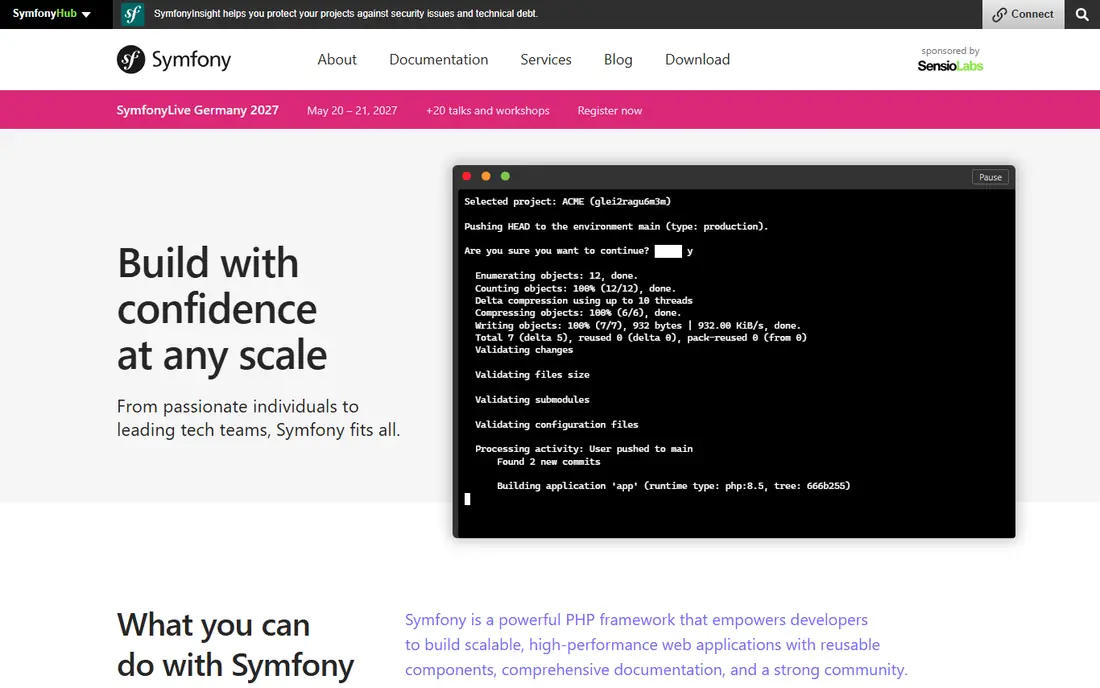
Symfony is the framework Laravel itself borrows from, and it remains the strongest choice for large, long-lived systems. Its components are reusable, well documented, and used by many other PHP projects, which helps hiring and long-term maintenance. Long-term support releases give enterprises a stable upgrade path.
The price of that flexibility is setup work. Symfony asks you to choose and wire more pieces yourself, so a small team chasing a fast MVP may find Laravel quicker. For a platform expected to last years, that upfront care pays off in clearer boundaries.
- Modular components used across PHP
- Long-term support releases
- Strong standards and testing culture
- Steeper learning curve
- More setup decisions than Laravel
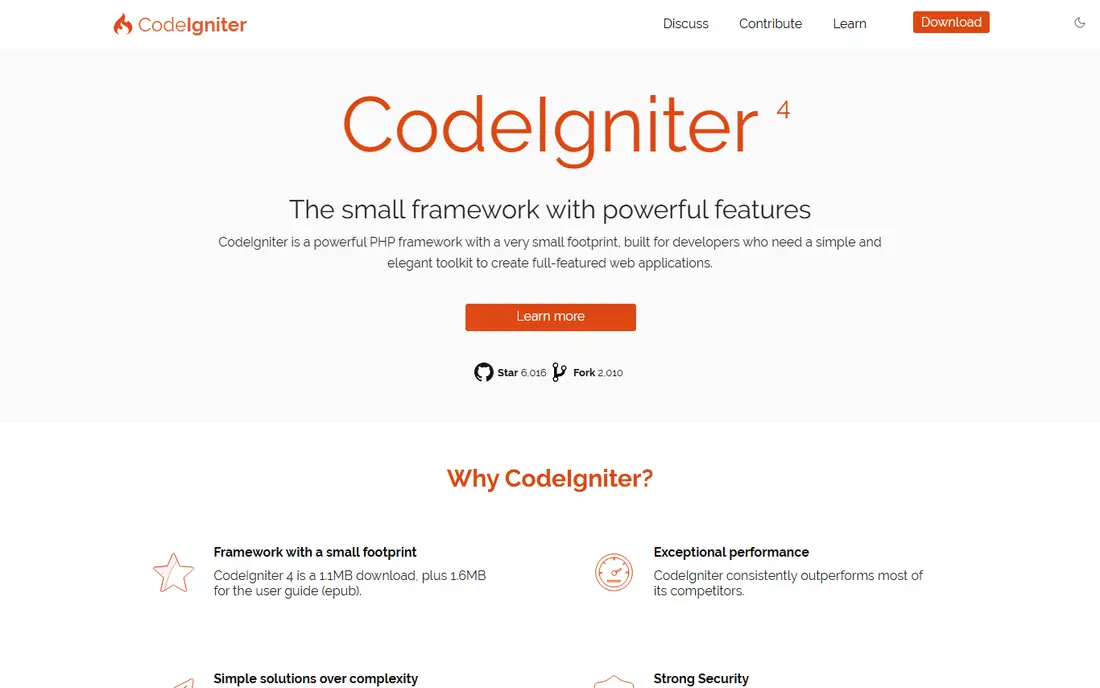
CodeIgniter has stayed small on purpose. Version 4 offers modern PHP support, routing, models, and security tools without a heavy install or complex build step. Developers can read the whole request flow quickly, which helps small teams and solo builders.
Large apps can outgrow it. You will add more libraries yourself for queues, complex auth, and background jobs, and the community is smaller than Laravel. For internal tools, simple sites, and APIs on modest hosting, that simplicity is a feature.
- Small footprint and fast setup
- Simple mental model
- Runs well on shared hosting
- Smaller ecosystem than Laravel
- Fewer built-in tools for large apps
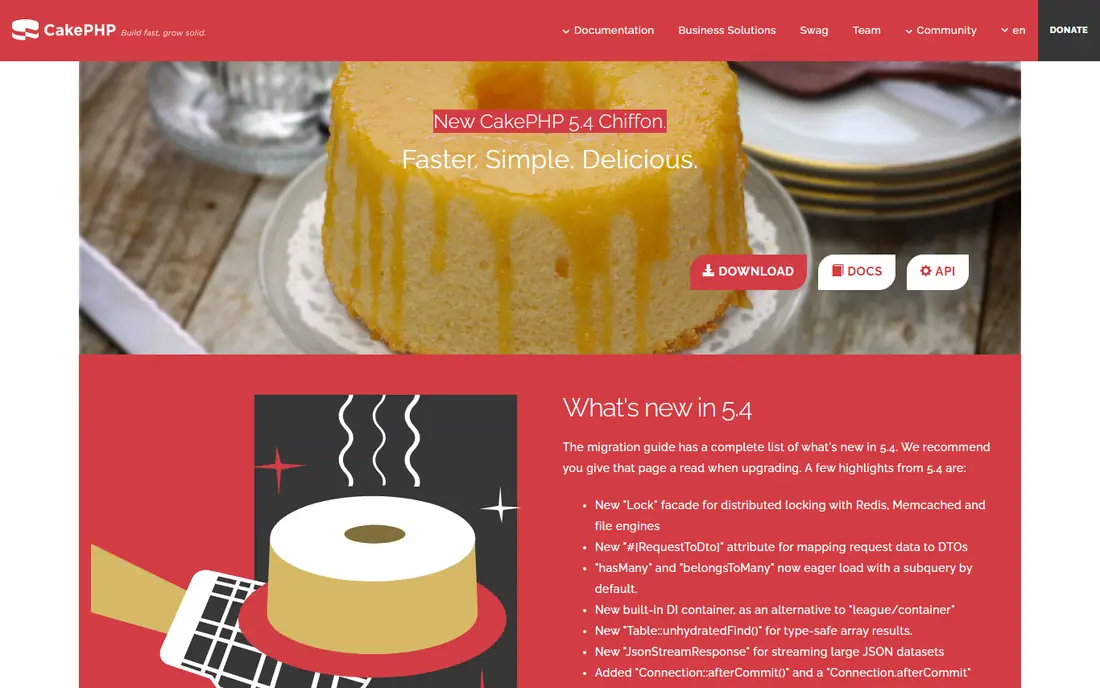
CakePHP suits teams that build many data-driven admin systems and internal apps. Its conventions turn database tables into working CRUD pages quickly, and its ORM, validation, and security tools cover the common cases without extra packages. That speed matters for schema-driven work.
The conventions can chafe when a project breaks the usual patterns, and the talent pool is smaller than Laravel. If your team values predictable structure over trend-driven tooling, CakePHP is a steady, productive choice.
- Strong conventions and code generation
- Built-in ORM and validation
- Stable releases
- Smaller community than Laravel
- Conventions can feel rigid for unusual designs
Yii has long aimed at speed and practical tooling, with caching, validation, forms, and database tools included. It suits CRUD-heavy apps where response time and straightforward code matter. The component model is explicit, which helps teams that like to see how pieces connect.
Version history needs attention: existing Yii 2 apps and new Yii 3 projects differ in structure, so check the current docs for the version you plan to use. For a fresh high-performance PHP app, Yii remains a credible, mature option.
- Performance-focused design
- Rich built-in tools
- Good for CRUD-heavy apps
- Yii 3 migration path needs care
- Smaller ecosystem than Laravel
Laminas is the modern continuation of Zend Framework, and it fits teams with existing Zend-style code or strict enterprise standards. Its components can be used alone or combined into a full MVC app or a middleware-based API with Mezzio. That modularity suits integration-heavy systems.
For a brand-new startup app, Laminas can feel like assembly work compared with Laravel. The payoff comes in long-lived systems where standards, interoperability, and careful architecture matter more than launch speed.
- Successor to Zend Framework
- Component-based design
- Strong enterprise and standards focus
- More assembly required
- Smaller community for new greenfield apps
Slim is a micro-framework for APIs and small services. Routing, request handling, and middleware are the core, and everything else is your choice. That keeps the codebase small and easy to reason about, which is ideal for a webhook receiver, a small API, or a microservice.
It is not a full-stack replacement. Database access, authentication, templating, and queues all come from packages you select. If you enjoy that control, Slim is excellent; if you want batteries included, pick a larger framework.
- Minimal and fast
- PSR standards support
- Easy middleware for auth and logging
- No ORM or auth included
- You choose and wire every extra piece
Phalcon is written as a C extension for PHP, so it runs with low overhead and high speed. It still offers MVC structure, ORM, forms, caching, and security tools, making it a full-stack option rather than a toy micro-framework. Teams that control their servers and care about resource use get a real benefit.
The extension requirement is the catch. Shared hosting often cannot install it, and the community is smaller than Laravel or Symfony. On a VPS or dedicated server where you manage PHP yourself, Phalcon is worth testing.
- Very low resource use
- Full-stack features
- C extension speed
- Requires a server extension install
- Smaller community and hiring pool
NestJS is the leading structured choice for teams moving from PHP to TypeScript. Its module system, dependency injection, and built-in support for REST, GraphQL, queues, and microservices give large backends clear shape. TypeScript also catches many errors before runtime.
PHP developers should expect a learning period around decorators, modules, and Node deployment. If your team already uses JavaScript on the front end, sharing one language across the stack can outweigh that cost.
- Modular TypeScript architecture
- Strong for APIs and microservices
- Large Node ecosystem
- Learning curve for decorators and modules
- Node hosting differs from PHP hosting
AdonisJS is the closest feel to Laravel outside PHP. It offers routing, an ORM, authentication, validation, and mail in one coherent package, with TypeScript throughout. Laravel developers often find its structure familiar within days.
The ecosystem is smaller than NestJS, and far smaller than Laravel, so some niche packages may be missing. For a team that wants Laravel-style productivity on Node without adopting NestJS patterns, AdonisJS is the most direct path.
- Laravel-style conventions in Node
- Built-in ORM, auth, and validation
- TypeScript first
- Smaller ecosystem than NestJS
- Fewer hiring candidates than Laravel
How we picked these
We compared official documentation, current releases, and public framework comparisons for tools that are actively maintained in October 2026. We included PHP frameworks for a direct language match and two TypeScript frameworks for teams changing languages, and we left Laravel itself out. All nine are free and open source, so we judged them on structure, ecosystem, performance fit, and learning cost rather than license price.
What to check before you switch
Match the framework to the project size
A small API, a CRUD admin system, and a multi-year enterprise platform need different tools. Slim or CodeIgniter may be perfect for the first, while Symfony or Laminas fit the third. Picking the largest tool for the smallest job adds maintenance for no benefit.
Test hiring and package depth
Check whether you can hire developers for the framework and whether packages exist for payments, auth, queues, and admin tools you need. A framework that looks clean in a demo can slow you down if every integration must be built from scratch.
Prototype one real feature
Build authentication, one complex form, and one background job in your top two choices. That exercise reveals ORM quirks, testing support, and deployment needs far better than a feature table.
Frequently asked questions
What is the best Laravel alternative for enterprise apps?
Symfony is the strongest enterprise pick in PHP, thanks to modular components, long-term support, and standards-based design. Laminas is close for teams with Zend history or strict integration needs.
What is the lightest Laravel alternative?
Slim is the lightest option here for APIs, followed by CodeIgniter for small full apps. Both start fast and stay small, but you add more packages yourself as the app grows.
Should I switch from Laravel to NestJS or AdonisJS?
Switch if your team is standardizing on TypeScript or sharing code with a JavaScript front end. NestJS suits large structured backends, while AdonisJS suits teams that want Laravel-style conventions on Node. Stay in PHP if your team and hosting are PHP-based.
Are these frameworks really free?
Yes, all nine are open source with no license fee. Costs come from hosting, developer time, paid support if you buy it, and any third-party services you add, such as queues, mail, or monitoring.
Can I migrate a Laravel app gradually?
In many cases, yes, by extracting one service or API at a time behind a stable interface. A full rewrite is riskier than a staged migration, so move the least coupled features first and keep the database contract stable.
Sources
- https://symfony.com
- https://codeigniter.com
- https://cakephp.org
- https://www.yiiframework.com
- https://getlaminas.org
- https://www.slimframework.com
- https://phalcon.io
- https://nestjs.com
- https://adonisjs.com
- https://www.webcodingcenter.com/laravel/other-php-frameworks--a-side-by-side-comparison.html
- https://www.quirkybit.io/blog/comparing-different-php-frameworks
See where you really rank - block by block
ProMapRanker scans Google Maps across a grid of your service area. Simple monthly plans from $19, white-label on every plan.
Start freeKeep reading
 wpforms alternatives
Best WPForms Alternatives in 2026
We compare 9 wpforms alternatives for WordPress forms, with free and paid options, current pricing notes, and honest limits for small business sites in 2026.
Read → windows task scheduler alternatives
Best Windows Task Scheduler Alternatives in 2026
Looking for Windows Task Scheduler alternatives? We compare 9 schedulers for Windows and cross-platform work, from free tools to enterprise automation.
Read → which ai video service is best
Which AI Video Service Is Best in 2026
which ai video service is best? We compare 10 legitimate AI video services on price, avatars, editing and output quality to help you pick the right tool.
Read →