 ProMapRanker
Best LangChain Alternatives in 2026

Key takeaways
- LlamaIndex is the strongest RAG first alternative, while Haystack suits production retrieval pipelines with tracing discipline.
- CrewAI and AutoGen suit multi-agent prototypes, but debugging grows harder as agent count and handoffs increase.
- Semantic Kernel suits .NET and enterprise teams that already build on Microsoft tools.
- Low code tools such as Dify and Flowise help non coders prototype, but they trade control for speed.
Quick comparison
| Pick | Great for | Pricing starts at | Free tier | |
|---|---|---|---|---|
 LlamaIndex | RAG and data retrieval | Free | Yes | Visit |
 Haystack | Production retrieval pipelines | Free | Yes | Visit |
 CrewAI | Role based multi-agent systems | Free | Yes | Visit |
 Microsoft AutoGen | Conversational agent research | Free | Yes | Visit |
 Semantic Kernel | .NET enterprise apps | Free | Yes | Visit |
 DSPy | Prompt optimization | Free | Yes | Visit |
 Dify | Low code AI app building | Free | Yes | Visit |
 Flowise | Visual agent flows | Free | Yes | Visit |
The best LangChain alternatives
We picked frameworks and tools that are still maintained in October 2026 and can build LLM apps, agents or retrieval pipelines without LangChain. LangChain itself is not listed, since this guide covers alternatives to it.
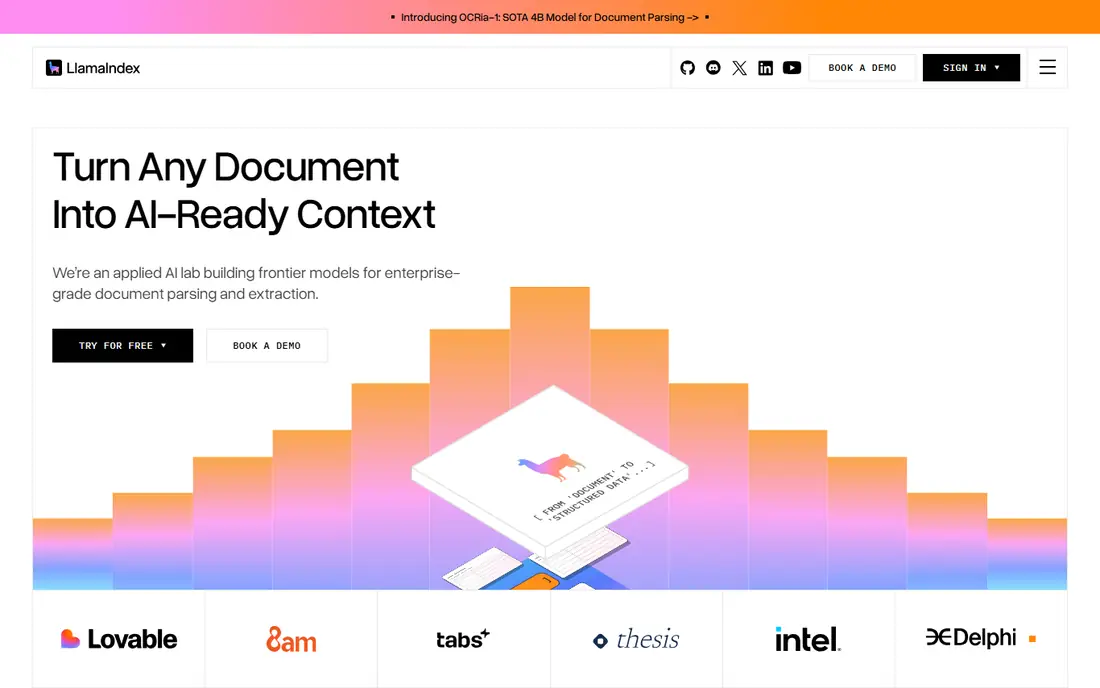
LlamaIndex puts the data layer first. It helps you ingest documents, chunk and index them, connect to many data sources through LlamaHub, and build query engines that retrieve the right passages before an LLM answers. For a document QA product, a knowledge base or a support search tool, that focus means less glue code than a general orchestration framework.
The drawback is debugging. The same abstractions that speed up a first prototype can hide why retrieval failed in production, and tuning chunking, indexing and retrieval takes real understanding of the internals. The core framework is open source and free, while LlamaCloud offers a free tier with monthly credits and paid plans from about $50 per month in third party guides. If RAG is your core product, LlamaIndex is the first alternative to test.
- Data connectors and query engines built for RAG
- Managed LlamaCloud parsing option
- Large community
- Abstraction layers can be hard to debug
- Evaluation tooling is thin
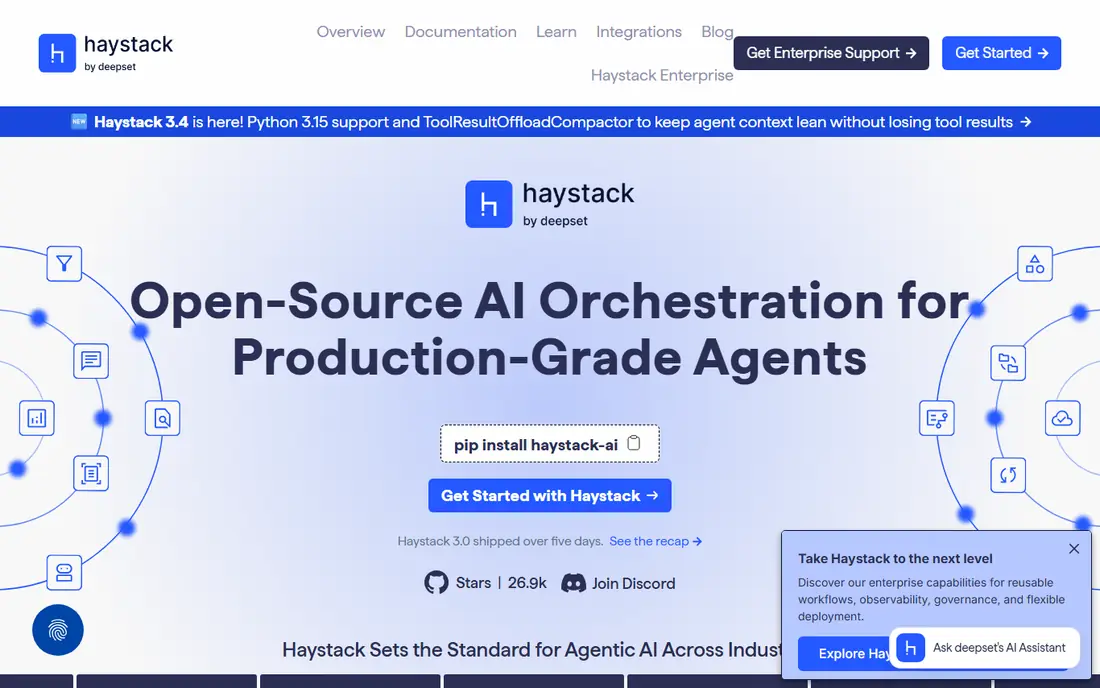
Haystack, from deepset, treats search and retrieval as a pipeline you can build, test and trace step by step. You define components for retrieval, ranking, generation and evaluation, which suits teams that need auditability in production RAG. That discipline helps when a wrong answer needs a clear cause, such as a bad passage, a weak ranker or a poor prompt.
The catch is version history. Haystack 2.x is the current architecture, and teams still on 1.x face a migration project, not a simple upgrade. The framework itself is free and open source, so your real cost is engineering time, plus whatever observability tool you pair with it. If production RAG auditability is your bottleneck, Haystack is a strong, disciplined alternative.
- Clear pipeline model for retrieval
- Apache 2.0 open source
- Good for tracing and testing
- Version 2 migration from 1.x is a project
- Integration count is narrower than LangChain
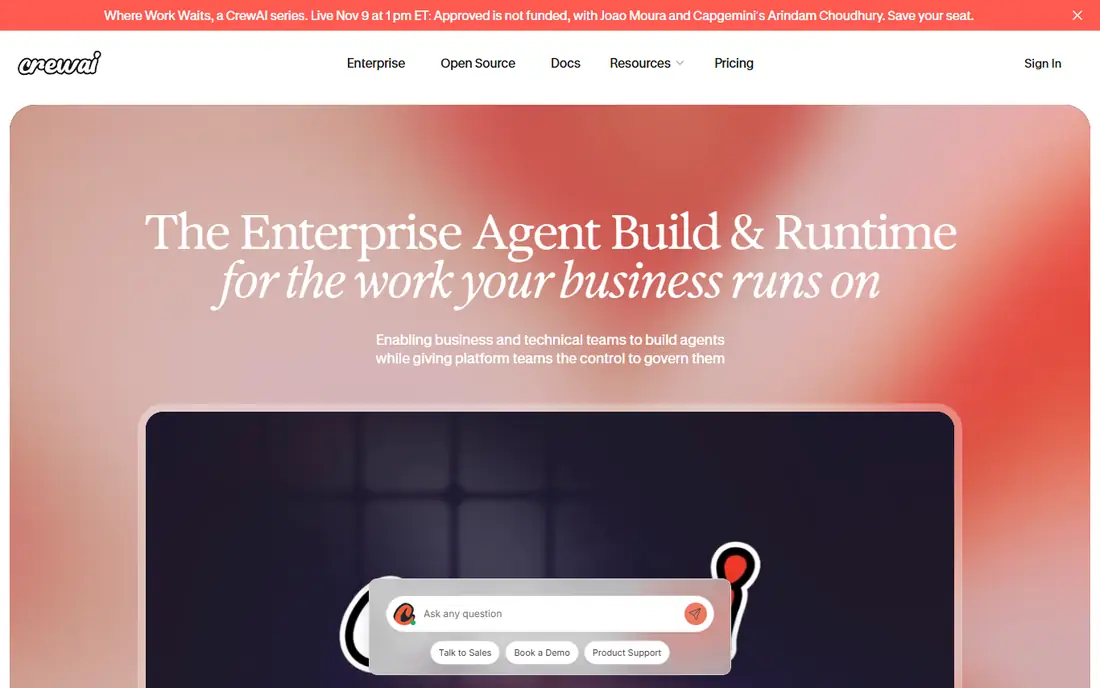
CrewAI lets you define agents with roles, goals and tools, then let them collaborate as a crew on a task. That pattern gets a research, draft and review workflow running with far less boilerplate than a hand built graph, which is why it is popular for prototypes. The open source framework is free under MIT, and the company offers an enterprise plan for deployment and governance.
The limit is scale. As agent count and handoffs grow, debug opacity grows too, and the open source framework has no built in sandboxing for agent executed tools or code. Third party guides also note that a paid self serve tier was discontinued in spring 2026, with larger teams moving to a custom enterprise quote. Use CrewAI for small, fixed role prototypes, and plan a harder look at observability before you scale it.
- Fast role based multi-agent prototypes
- Low boilerplate
- MIT open source core
- Debugging grows opaque with many agents
- Paid self serve tier changed in 2026
AutoGen, from Microsoft, models multi-agent work as conversations between agents, which fits research, brainstorming and task delegation patterns. Agents can talk, call tools and hand off work in a way that mirrors how a team discusses a problem, and the project has strong research roots. It is open source and free, which makes it easy to try for a prototype or a study.
The drawback is stability and production readiness. AutoGen has changed across versions, so code and examples from older releases may not run cleanly on current ones, and production teams need to add their own guardrails, logging and deployment. It suits researchers and teams exploring conversational agents, while product teams should budget time for hardening. If you want a stable, simple multi-agent prototype, CrewAI may be faster to start.
- Conversational multi-agent model
- Research friendly
- Microsoft backing
- API and structure have changed across versions
- Learning curve for production use
Semantic Kernel is Microsoft open source SDK for adding LLM skills to apps, with strong support for .NET and enterprise integration. It lets you define plugins, which are functions an LLM can call, and planners that break a goal into steps, which fits business apps that already run on Azure, Microsoft 365 or .NET services. For an enterprise team that builds in C sharp, that fit matters more than Python ecosystem size.
The trade off is community breadth. Python frameworks have more tutorials, integrations and examples for LLM work, so a Semantic Kernel team may write more glue code for a niche vector store or tool. The SDK itself is free, so cost is engineering time, not license fees. If your stack is Microsoft first, Semantic Kernel is the natural LangChain alternative. If your stack is Python first, LlamaIndex or Haystack will feel more native.
- Strong .NET and enterprise integration
- Plugins and planners
- Microsoft ecosystem links
- Smaller LLM community than Python frameworks
- Enterprise setup takes care
DSPy takes a different view from most frameworks. Instead of hand writing prompts, you define a program with signatures and modules, then optimize it against evaluation data to find prompts and examples that work reliably. That approach suits teams with repeatable tasks, such as classification, extraction or QA, where a small accuracy gain across many calls is worth real effort.
The catch is the learning curve and data need. DSPy is harder to learn than a simple chain framework, and optimization only helps if you have good evaluation data and a clear metric. Without that data, it adds complexity for little gain. The framework is open source and free. Use DSPy when prompt quality is a measurable bottleneck and you can fund evaluation work, not as a first framework for a simple chatbot.
- Programmatic prompt optimization
- Evaluation driven design
- Strong for repeatable tasks
- Steep learning curve
- Needs evaluation data to pay off
Dify is a low code platform for building AI apps, with visual workflows for RAG, agents and chatbots, plus data source links and deployment options. A product manager or a small team can prototype a document QA app or a support bot without writing a full framework app, and the open source version can be self hosted for free, with a cloud plan for teams that want hosting.
The limit is control. Visual workflows speed up common patterns, but complex branching, custom retrieval logic and deep debugging are harder than in code, and you may hit the edge of what the visual tool expresses cleanly. Dify suits prototypes, internal tools and small products where speed matters more than fine control. For a large production system with custom retrieval, a code framework such as LlamaIndex or Haystack will scale better.
- Visual low code builder
- RAG, agents and workflows in one tool
- Open source self host option
- Less control than code frameworks
- Scaling complex logic is harder
Flowise lets you build LLM chains and agents by dragging nodes for models, prompts, retrievers, vector stores and tools onto a canvas, then run the flow as an API. That visual model helps a developer explain a flow to a non technical teammate, test a retrieval setup quickly, and prototype an agent without writing orchestration code. It is open source and free to self host, with a cloud option for hosted use.
The drawback is scale and maintenance. A large flow with many branches becomes hard to read, version and test, and production needs such as auth, logging, rate limits and error handling still need work outside the canvas. Flowise is best for prototypes, demos and small internal tools, or as a way to test a retrieval design before you rebuild it in code. If your flow is already complex, start in code instead.
- Drag and drop agent and chain builder
- Many LLM and vector store links
- Open source
- Visual flows get messy at scale
- Production hardening needs extra work
How we picked these
We compared official docs, release activity and third party framework guides, and we kept only tools that were still maintained in October 2026 and could build LLM apps without LangChain. We favored a mix of RAG first, agent first, enterprise and low code options, since teams leave LangChain for different reasons, from retrieval depth to debugging to ease of use. Where a hosted companion product has a price, we noted it as a guide, while the core frameworks themselves are free and open source.
How to choose a LangChain alternative
Start with your bottleneck, not the framework hype. If retrieval quality is the problem, test LlamaIndex or Haystack on a slice of your real documents with real questions, and score answers before you rewrite everything. If agent collaboration is the problem, prototype the same small crew in CrewAI and AutoGen and see which debugging story you prefer. If your stack is Microsoft and .NET, Semantic Kernel will integrate faster than a Python framework.
Next, check evaluation and observability early. Pick a tool that lets you trace a bad answer back to a passage, a tool call or a prompt, and build a small evaluation set before you scale. For low code prototypes, Dify or Flowise can prove value fast, but plan a code rebuild if the product grows complex. Finally, do not switch only for price, since most core frameworks are free, and the real cost is engineering time, migration and support.
Frequently asked questions
What are the best alternatives to LangChain?
LlamaIndex is best for RAG, Haystack is best for production retrieval pipelines, CrewAI is best for fast multi-agent prototypes, and Semantic Kernel is best for .NET enterprise apps. DSPy suits prompt optimization, while Dify and Flowise suit low code prototypes. The best choice depends on whether retrieval, agents, enterprise fit or speed matters most.
Is LlamaIndex better than LangChain for RAG?
For RAG first products, often yes, since LlamaIndex centers on data ingestion, indexing and retrieval, with many data connectors and query engines. LangChain covers a wider range of app patterns, so it can be better when retrieval is only a small part of a larger agent app. Test both on your own documents before you decide.
Can I use CrewAI without LangChain?
Yes, CrewAI is an independent implementation and does not require a LangChain installation to run role based crews. That independence is one reason teams pick it as an alternative. You will still need an LLM provider key and any vector store or tool links your crew uses.
Is there a low code alternative to LangChain?
Yes, Dify and Flowise are the clearest low code options in this guide. Dify covers RAG, agents and workflows in one platform, while Flowise offers a visual canvas for chains and agents. Both can be self hosted for free, with cloud plans for hosted use. They suit prototypes and small tools, while code frameworks suit larger production systems.
Do LangChain alternatives cost money?
Most core frameworks in this guide are open source and free, including LlamaIndex, Haystack, CrewAI, AutoGen, Semantic Kernel, DSPy, Dify and Flowise. Costs come from LLM API use, vector stores, hosting and paid companion products such as LlamaCloud or enterprise plans. Check the hosted product pricing if you do not want to self host.
Sources
See where you really rank - block by block
ProMapRanker scans Google Maps across a grid of your service area. Simple monthly plans from $19, white-label on every plan.
Start freeKeep reading
 free alternatives to grok imagine
Free Alternatives to Grok Imagine in 2026
We compared the best free alternatives to grok imagine for image generation, from fast daily credits to design tools, so you can create without paying.
Read → best tools for instagram content creation
Best Tools for Instagram Content Creation in 2026
Compare the best tools for Instagram content creation, from Canva and CapCut to Later and Buffer, on design, video, planning, scheduling, and price in 2026.
Read → best tool to split pdf files
Best Tool to Split PDF Files in 2026
We compared the best tool to split pdf files on split modes, file limits, privacy and price, so you can split a PDF cleanly and keep every page in one go.
Read →