 ProMapRanker
Best KnowBe4 Alternatives in 2026


Proofpoint email security customers · Pricing starts at: See website
Key takeaways
- Proofpoint ZenGuide is the natural pick for firms already on Proofpoint email security, with threat-driven simulations and risk signals.
- Hoxhunt stands out for adaptive, gamified phishing tests that adjust difficulty per person rather than sending the same test to everyone.
- Cofense PhishMe suits mature security teams that want reported phishing to flow into triage and incident response.
- Infosec IQ is a strong mid-market option with realistic simulations and customizable content, though pricing is quote-based.
- Most platforms here are quote-based, so shortlist by content style and reporting first, then negotiate price on a trial.
Quick comparison
| Pick | Great for | Pricing starts at | Free tier | |
|---|---|---|---|---|
| Proofpoint ZenGuide | Proofpoint email security customers | See website | No | Visit |
 Mimecast Engage | Mimecast email security customers | See website | No | Visit |
 Infosec IQ | Realistic, customizable training | See website | No | Visit |
 Cofense PhishMe | SOC-linked phishing response | See website | No | Visit |
 Hoxhunt | Adaptive gamified simulations | See website | No | Visit |
 SoSafe | Gamified awareness with European roots | See website | No | Visit |
 Huntress Managed SAT | SMBs without dedicated training staff | See website | No | Visit |
 Living Security | Human risk management | See website | No | Visit |
 NINJIO | Short, story-led video training | See website | No | Visit |
The best knowbe4 alternatives
KnowBe4 is known for a large training library, phishing tests, and automated reporting, but some teams want adaptive difficulty, tighter email integration, or a fully managed program. The platforms below cover those needs in different ways. Our pick for most mid-size teams is Infosec IQ for balanced content and simulations, with Hoxhunt as the best choice if behavior change matters more than compliance checkboxes.

Proofpoint ZenGuide, formerly Proofpoint Security Awareness, builds phishing simulations from real threat intelligence, including attacks seen in the wild. Adaptive groups and learning pathways adjust training by risk, and the report button feeds suspicious mail into the security workflow. For a firm already running Proofpoint email protection, that shared data is a genuine advantage.
The limit is stack fit. ZenGuide is most compelling when email security and training share the same vendor, and pricing is quote-based. A firm with no Proofpoint products can still use it, but should compare it against vendor-neutral options such as Infosec IQ or Hoxhunt before committing.
- Threat-driven simulations from live attacks
- Risk signals from Proofpoint data
- Report button integration
- Quote-based pricing
- Best value inside Proofpoint stack
- Less appealing as a standalone buy
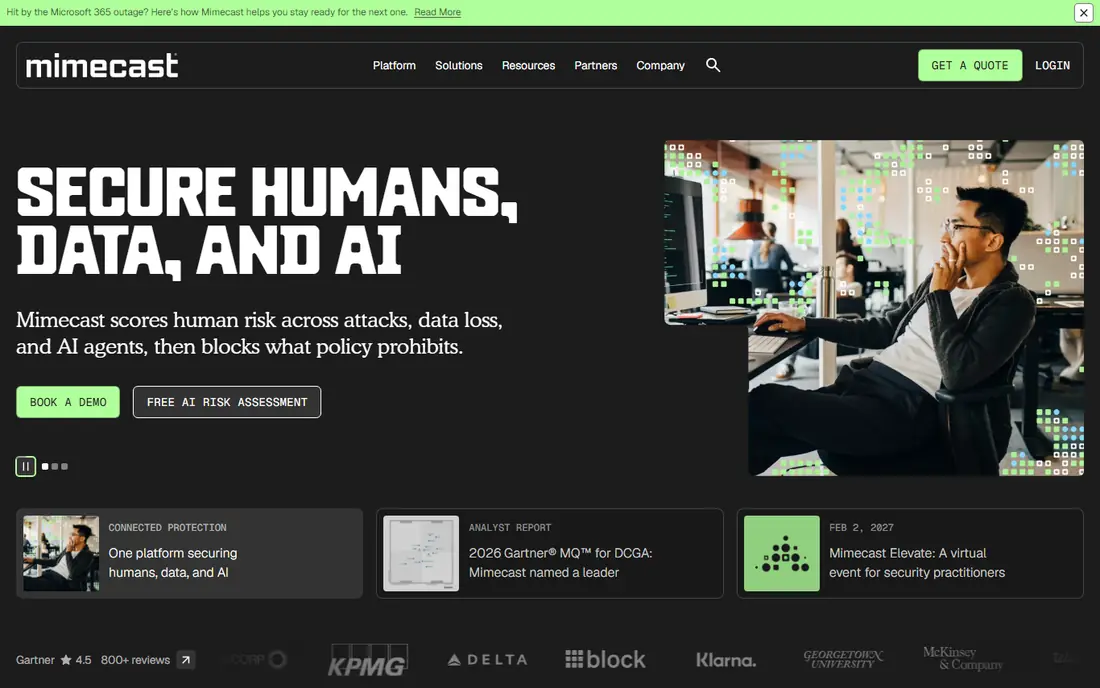
Mimecast Engage replaces the older Mimecast Awareness Training product, which is now end-of-sale, with Core and Pro tiers for existing Mimecast customers. It offers short monthly training modules and email phishing simulations, with a human risk view on higher tiers. That cadence suits teams that prefer small, regular lessons over long annual courses.
New buyers should note the transition: check that you are quoted Engage, not the retired product, and confirm which risk features sit in Core versus Pro. Pricing is quote-based. For Mimecast email customers, Engage is a convenient bundle. For others, a standalone platform may offer more choice.
- Short monthly modules
- Email simulations included
- Human risk scoring on Engage tiers
- Older Awareness Training is end-of-sale
- Quote-based pricing
- Best inside Mimecast stack
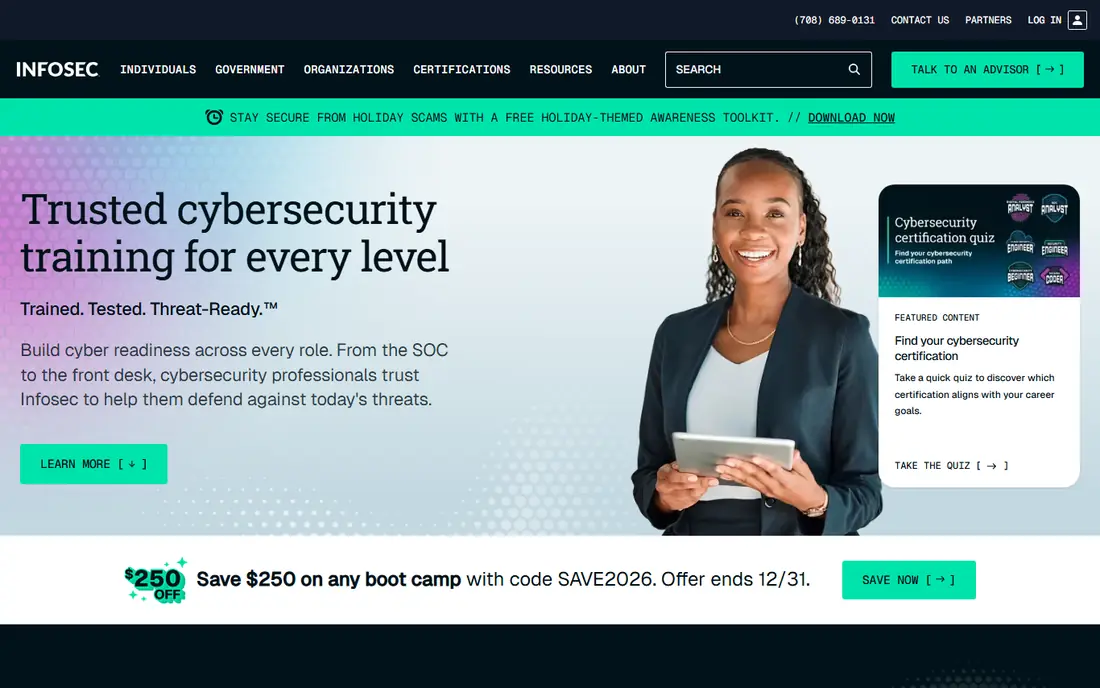
Infosec IQ pairs a broad training library with phishing simulations that reviewers often describe as realistic, plus content that can be tailored by industry and role. Adaptive learning adjusts follow-up training based on performance, and role-based paths address the distinct risks faced by finance, executives, and technical staff. Admin tools cover campaign setup, user management, and progress tracking.
The honest catches are price transparency and admin polish. Infosec IQ does not publish pricing, so you will need a quote, and some admins find managing campaign rosters less smooth than expected. If realistic simulations and customization matter more than a public price, Infosec IQ is a strong KnowBe4 alternative.
- Realistic phishing simulations
- Highly customizable content and roles
- Adaptive learning paths
- Quote-based pricing
- Campaign roster management can feel clunky
- No public price to budget against
Cofense PhishMe focuses on the full phishing loop: simulate, let staff report with one click, triage real reports, and train based on what actually fooled people. Its Reporter button and Triage integration connect training to the security operations workflow, which is valuable when reported mail must be analyzed quickly. Simulations cover email, smishing, vishing, and QR codes.
That depth comes with setup effort. Cofense fits best when a team already has incident response habits and wants training tied to real reports. Firms that only need annual compliance courses may find it more than necessary. For mature teams, it is one of the most operationally serious alternatives here.
- Email, SMS, voice, and QR simulations
- One-click reporting into Triage
- Competency-based reporting
- Quote-based pricing
- Heavier setup than simple training tools
- Best with a mature response process
Hoxhunt sends simulations that adapt in difficulty and cadence to each employee, with instant coaching when someone clicks or reports. That personalization aims at behavior change rather than completion rates, and gamified elements keep participation higher than a static annual course. Coverage now spans email, Teams, SMS, voice, and deepfake-style scenarios, reflecting how phishing has spread beyond email.
Pricing is per-employee and quote-based after a scoping call, so small firms should check minimums early. Gamification also divides opinion: some cultures love leaderboards, others find them distracting. If your goal is measurable risk reduction rather than a compliance record, Hoxhunt is worth a trial.
- Difficulty adapts per person
- Gamified motivation
- Covers email, Teams, SMS, voice, and deepfake-style tests
- Quote-based pricing
- Needs scoping before a number
- Gamification may not suit every culture
SoSafe is a security awareness platform with gamified training, phishing simulations, and reporting, built around behavioral science ideas about how people actually learn. Its multilingual content suits firms with staff across countries, and its approach emphasizes short, engaging modules over long courses. That style can lift completion and recall for teams tired of slide-heavy training.
The main caveat for US buyers is familiarity and fit. SoSafe has a strong European presence and may be less well known in some US markets, though it does serve international firms. Pricing is quote-based. If gamification and multilingual coverage matter, SoSafe deserves a place on the shortlist.
- Gamified training and simulations
- Multilingual content
- Behavioral science approach
- Quote-based pricing
- Stronger European presence
- Less familiar to some US buyers
Huntress Managed SAT, which includes the Curricula story-based content, is designed for firms that have no one to run an awareness program. Huntress manages scheduling, simulations, and coaching content, with short setup and per-learner pricing billed yearly. That hands-off model is ideal for small businesses and for managed service providers serving many clients.
The trade is control. A managed program means less direct control over campaign timing and content than a self-run platform, and larger enterprises may want deeper customization. For a small firm that would otherwise skip training entirely, a managed program that actually runs is far better than a powerful tool nobody operates.
- Fully managed scheduling and content
- Fast setup
- Built for SMBs and managed service providers
- Quote-based, volume-tiered pricing
- Less hands-on control than self-run tools
- Managed model may not suit large enterprises
Living Security frames awareness as human risk management, scoring risk across the workforce and tying training to signals from existing tools. Simulations are randomized to avoid predictable patterns, and action plans help managers remediate risk rather than just record completions. SMS, voice, and QR simulations are available as add-ons in some plans.
Pricing is quote-based and each product can be quoted separately, so confirm the full bundle cost. The platform also works best when it can connect to email security or identity data. For teams that want risk scoring and remediation, not just course completion, Living Security is a thoughtful alternative.
- Human Risk Index scoring
- Randomized simulations
- Action plans tied to reported behavior
- Quote-based pricing
- Some channels are add-ons
- Needs existing email or identity signals to shine
NINJIO delivers security awareness through short, story-led animated episodes that staff can finish quickly and remember. The format suits firms where long courses go unfinished and where a memorable story beats a slide deck. Regular episodes keep security visible through the year rather than in one annual burst.
The limit is simulation depth. NINJIO is strongest on engaging training content, while platforms such as Hoxhunt or Cofense go deeper on adaptive simulations and triage. Teams that need both should pair NINJIO-style content with a simulation tool, or choose a combined platform. If engagement is your main blocker, NINJIO is a good place to start.
- Engaging short animated episodes
- Regular content cadence
- Simple for staff to complete
- Quote-based pricing
- Less simulation depth than specialist tools
- Style may not suit every workplace
How we picked these
We compared official product pages, pricing pages, and public documentation for each platform, focusing on training content, simulation types, reporting, and whether a managed option exists. We favored platforms that are actively sold in October 2026 and that cover email, SMS, voice, and QR simulations where possible. We did not claim hands-on testing, and where a vendor does not publish a price we wrote See website rather than guessing.
How to choose a KnowBe4 replacement
Start with your staffing reality. If no one owns awareness training, choose a managed program such as Huntress Managed SAT, or accept that a self-run tool will stall. If you have a security team, prioritize simulation realism, reporting depth, and integration with your email and incident response tools. A tool that fits your staffing model will outperform a richer tool that nobody runs.
Next, test content with real staff, not just admins. Run a pilot with a cross-section of roles, including finance, executives, and frontline staff, and watch completion, click rates, and report rates. Note which style actually changes behavior: some teams respond to gamification, others to short stories, others to realistic simulations. Pilot data beats vendor demos for this decision.
Finally, confirm the full cost and contract. Most platforms here are quote-based, with pricing by learner, tier, or volume, and some charge separately for extra channels. Ask what is included in the base price, how minimums work, and how long the term runs. Also confirm data handling and language coverage if you have staff in several countries.
Frequently asked questions
What are the best KnowBe4 alternatives?
Proofpoint ZenGuide is best for Proofpoint customers, Infosec IQ is a strong balanced option for mid-market teams, and Hoxhunt is best for adaptive behavior change. Cofense PhishMe suits mature teams that want reported phishing tied to triage. The right pick depends on your email stack, staffing, and whether you value compliance or behavior change more.
Is there a free KnowBe4 alternative?
None of the enterprise platforms here offer a permanent free plan for full training and simulations, though most offer demos and trials. Small firms on a tight budget should look at managed options with per-learner pricing or at bundled tools from their existing email vendor. A free trial is the realistic way to test content before committing.
Which alternative has the best phishing simulations?
Hoxhunt is often cited for adaptive simulations that adjust per person, while Infosec IQ is praised for realistic, customizable simulations. Cofense PhishMe stands out for linking simulations to real reporting and triage. Pilot all three with the same staff group if simulation quality is your deciding factor.
Should I choose a managed awareness program?
Choose a managed program if no one on your team has time to schedule campaigns, write content, and chase completions. Huntress Managed SAT is built for that case. Larger firms with a security team usually benefit from a self-run platform, since they can tailor content and integrate reporting with incident response.
How do I measure whether training works?
Track click rates, report rates, and repeat-clicker rates over time, not just course completion. A good program should lower clicks and raise reports, especially among staff who previously clicked. Also track time to report and whether reported mail reaches your security team quickly, since fast reporting limits damage from real attacks.
Sources
See where you really rank - block by block
ProMapRanker scans Google Maps across a grid of your service area. Simple monthly plans from $19, white-label on every plan.
Start freeKeep reading
 wpforms alternatives
Best WPForms Alternatives in 2026
We compare 9 wpforms alternatives for WordPress forms, with free and paid options, current pricing notes, and honest limits for small business sites in 2026.
Read → windows task scheduler alternatives
Best Windows Task Scheduler Alternatives in 2026
Looking for Windows Task Scheduler alternatives? We compare 9 schedulers for Windows and cross-platform work, from free tools to enterprise automation.
Read → which ai video service is best
Which AI Video Service Is Best in 2026
which ai video service is best? We compare 10 legitimate AI video services on price, avatars, editing and output quality to help you pick the right tool.
Read →