 ProMapRanker
How To Make A Google Business Page?
Creating a Google Business Page, now officially known as a Google Business Profile (GBP), is a straightforward process that significantly boosts your local visibility and customer engagement. To make one, you first need a Google Account. Then, navigate to business.google.com/add, search for your business by name, and select "Add your business to Google." You'll then enter essential details like your business name, address or service area, primary category, phone number, and website. The final, critical step is to verify your business through one of Google's methods, typically a postcard by mail, to confirm your legitimacy and activate your profile for public search results.
This free tool is indispensable for any local business aiming to attract customers through Google Search and Maps. A complete and optimized profile ensures that when potential clients search for services like yours in their area, your business appears prominently, providing them with all the necessary information to contact or visit you.
Why Create a Google Business Page? The Unmissable Benefits
A Google Business Profile dramatically increases your local online visibility, builds trust with potential customers, and drives direct traffic to your business. It places your company directly in front of consumers actively searching for products or services like yours on Google Search and Maps, serving as a powerful, free digital storefront that influences an estimated 80% of local purchase decisions.
Beyond mere visibility, a well-maintained GBP offers a suite of advantages:
- Enhanced Local Search Presence: Your business can appear in the local pack, Google Maps results, and organic search results, often above traditional website listings. This is crucial for local SEO, where proximity and relevance are key ranking factors, as detailed by Google Search Central.
- Increased Credibility and Trust: A complete profile with customer reviews and accurate information signals reliability. Research by Google indicates that businesses with complete profiles are 70% more likely to attract local visits.
- Direct Customer Engagement: Customers can call you, get directions, visit your website, or even message you directly from your profile. This reduces friction in the customer journey.
- Valuable Business Insights: Google provides analytics on how customers find your business, where they come from, and how they interact with your profile (e.g., number of calls, website clicks, direction requests).
- Cost-Effective Marketing: It's a completely free tool that provides significant marketing impact, allowing even small businesses to compete effectively with larger enterprises for local attention.
How Do I Start a Google Business Page? Step-by-Step Setup
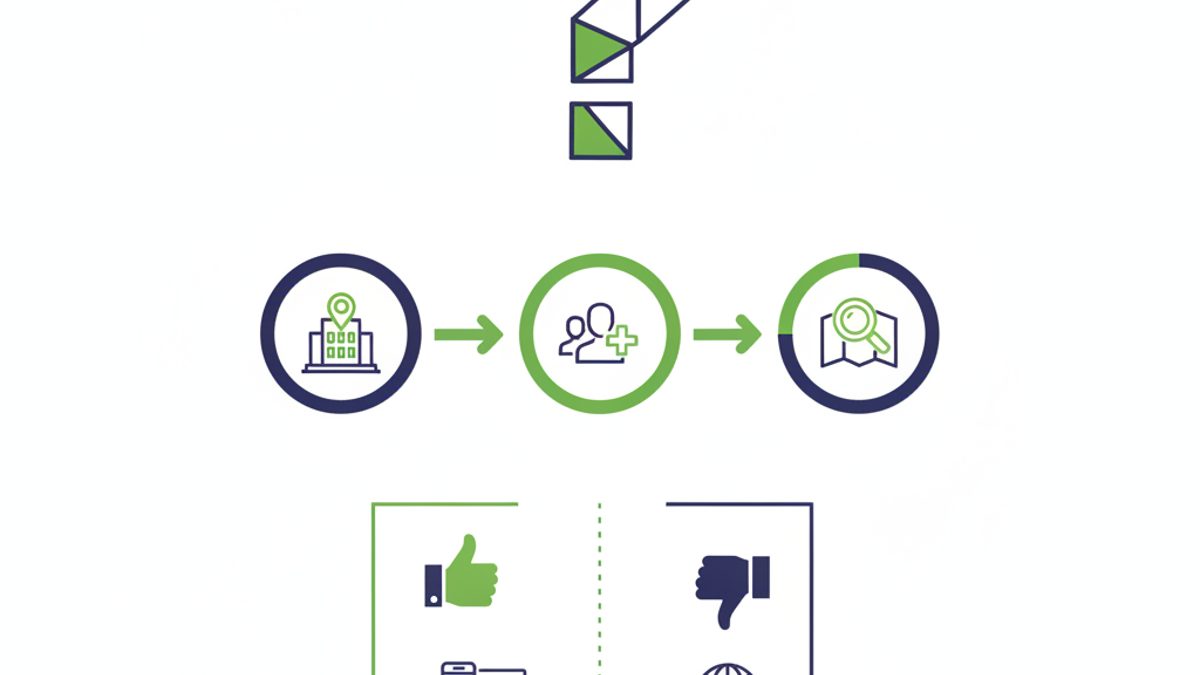
To start, you need a Google Account. Then, visit Google Business Profile, search for your business name, and select "Add your business to Google." Follow the prompts to enter your business details, choose a category, and select a verification method. This foundational process ensures your business is accurately represented online.
Here's a detailed, step-by-step guide to creating your Google Business Profile:
-
Sign In to Google:
You'll need a Google Account (e.g., a Gmail address) to manage your Business Profile. If you don't have one, create it first. This account will be linked to your business management.
-
Access Google Business Profile:
Go to the official Google Business Profile creation page at business.google.com/add. This is the starting point for adding a new business or claiming an existing one.
-
Enter Your Business Name:
Type your business name into the search bar. Google will check if a profile already exists. If it does, you might be prompted to claim it. If not, select "Add your business to Google" at the bottom.
-
Choose Your Business Type:
Google will ask what type of business you manage:
- Online Retail: For e-commerce businesses only, without a physical location or service area.
- Local Store: For businesses with a physical storefront that customers visit (e.g., a restaurant, retail shop, dentist's office).
- Service-Area Business: For businesses that operate from a physical location but serve customers at their locations (e.g., plumbers, electricians, delivery services).
Select the option that best describes your operations. Many businesses, like a plumber with an office, might choose "Local Store" and then also define service areas.
-
Enter Your Business Address (If Applicable):
If you have a physical location (Local Store), enter your full street address. Ensure it's accurate and consistent with how it appears on other online directories. If you're a Service-Area Business, you'll specify your service areas later.
-
Define Your Service Areas (If Applicable):
For Service-Area Businesses, you'll specify the cities, counties, or zip codes where you provide services. This helps Google show your business to relevant customers within those regions. You can define areas up to a 2-hour drive from your base location or up to 50 locations, according to Google's guidelines.
-
Select Your Primary Business Category:
This is one of the most critical steps for local SEO. Choose the category that best and most accurately describes your core business. Be as specific as possible. For example, instead of "Restaurant," choose "Italian Restaurant." You can add additional categories later to broaden your reach. For more on this, see our guide on Google Business Profile Categories.
-
Add Your Phone Number and Website:
Provide a direct phone number where customers can reach you. If you have a business website, enter its URL. If you don't have a website, Google offers a basic website builder, though we generally recommend a professional, optimized site for better SEO and user experience.
-
Choose a Verification Method:
This is the final step before your profile goes live. Google needs to confirm that your business is real and that you are authorized to manage its profile. We'll detail verification methods next.
How Do I Verify My Google Business Page? Crucial for Visibility
Verification confirms you're the legitimate owner of the business and is essential for your profile to appear publicly on Google Search and Maps. Common methods include postcard by mail, phone, email, or instant verification for eligible businesses. Without successful verification, your profile remains unpublished and won't rank in local search results, making it invisible to potential customers.
Google offers several ways to verify your business, designed to ensure accuracy and prevent fraudulent listings. The available methods depend on your business type and Google's assessment of your eligibility.
Here are the most common verification methods:
-
Postcard by Mail (Most Common):
Google sends a postcard containing a verification code to your business's physical address. This typically takes 5-14 business days to arrive. Once you receive it, log back into your GBP account and enter the code to complete verification. Ensure your address is accurate and can receive mail directly.
-
Phone or SMS:
Some businesses are eligible to receive a verification code via an automated phone call or text message to the phone number listed on their profile. This is often instant and the quickest method if available to you.
-
Email:
Similar to phone verification, some businesses can receive a verification link or code via email. This usually goes to an email address associated with your business domain or an email already listed in your public business information. This is also a fast method if offered.
-
Video Recording:
Google may ask for a short video recording to verify your business. This involves showing your business location (signage, street view), proof of management (keys, opening up), and proof of ownership (access to POS systems, branded items). This method is becoming more common for certain business types and can be relatively quick.
-
Instant Verification:
If your business website is already verified with Google Search Console, you might be eligible for instant verification. This method automatically verifies your GBP profile, leveraging existing trust signals.
-
Bulk Verification:
For businesses with 10 or more locations, Google offers a bulk verification process, typically handled through a spreadsheet submission.
Here's a quick comparison of common verification methods:
| Method | Speed | Availability | Requirements |
|---|---|---|---|
| Postcard by Mail | 5-14 business days | Widely available | Physical mailing address |
| Phone/SMS | Instant | Limited eligibility | Valid business phone number |
| Instant | Limited eligibility | Valid business email address | |
| Video Recording | Varies (can be quick) | Growing availability | Smartphone, ability to record and upload |
| Instant (Search Console) | Instant | Limited eligibility | Website verified in Google Search Console |
Important Note: The exact verification methods offered are determined by Google based on your business type, industry, and other factors. Always follow the instructions provided in your Google Business Profile dashboard.
What Information Should I Add to My Google Business Page for Best Results?
Optimize your profile with comprehensive and accurate information: business hours, high-quality photos, detailed services/products, a compelling description, and frequently updated posts. The more complete and consistent your data, the better your chances of ranking higher in local search results and attracting local customers, as Google favors profiles that offer rich, helpful details.
After verification, your GBP becomes a powerful marketing tool. Maximize its potential by adding robust, accurate information:
- Business Name: Ensure it exactly matches your real-world business name, as it appears on your signage and legal documents. Avoid adding keywords unless they are genuinely part of your legal business name, as this can lead to suspension.
- Address: Double-check for accuracy. For service-area businesses, ensure your service areas are correctly defined.
- Hours of Operation: List your regular operating hours, including special hours for holidays or events. Keeping this up-to-date prevents customer frustration.
- Phone Number & Website: Provide a direct phone number and a functional link to your business website.
- Categories: Revisit your primary category and add relevant secondary categories. For example, a "Dentist" might also add "Cosmetic Dentist" or "Emergency Dental Service." This helps Google understand all the services you offer.
- Business Description: Write a concise, keyword-rich description (up to 750 characters) that highlights what makes your business unique and the services you provide. Focus on what customers need to know.
- Photos and Videos: Upload high-quality photos of your storefront, interior, products, team, and "work in progress" shots. Businesses with photos receive more direction requests and website clicks. Aim for at least 10-15 diverse photos, and update them regularly. Google recommends photos at least 720px by 720px.
- Services/Products: Use the dedicated sections to list your services and products with descriptions and pricing if applicable. This provides specific details that can appear directly in search results.
- Q&A (Questions & Answers): Monitor and answer questions posed by customers. You can also proactively add frequently asked questions and their answers to provide immediate value.
- Reviews: Encourage customers to leave reviews and respond to every one, positive or negative. This shows you value feedback and are engaged with your customers. For strategies on this, read our guide on How to Get More Google Reviews.
- Google Posts: Regularly create posts about offers, events, new products, or company updates. These appear directly on your profile and can significantly boost engagement and visibility.
- Messaging: Enable the messaging feature to allow customers to text you directly through your Business Profile, offering another convenient communication channel.
How Can I Optimize My Google Business Profile for Local Search?
To optimize your Google Business Profile, consistently update information, actively manage reviews, utilize Google Posts, and ensure NAP consistency across all online directories. Regularly monitoring your local rankings with a geo-grid tool like ProMapRanker helps identify areas for improvement and track performance against competitors across specific geographic zones.
Creating your GBP is just the beginning. Ongoing optimization is key to maintaining and improving your local search rankings. As Md Shihab Mia, founder of ProMapRanker, I can tell you that successful local businesses don't just "set and forget" their profiles. They actively manage them.
- Maintain NAP Consistency: Ensure your Business Name, Address, and Phone number (NAP) are identical across your GBP, website, and all other online directories (e.g., Yelp, Facebook, Yellow Pages). Inconsistencies confuse search engines and can hurt your rankings. Building strong local citations on best citation sites for local SEO is crucial.
- Generate and Respond to Reviews: Reviews are a top local ranking factor. Actively solicit reviews from satisfied customers. More importantly, respond to every review, both positive and negative, within 24-48 hours. This demonstrates excellent customer service and engagement. For practical tips, see our article on How to Respond to Google Reviews.
- Publish Google Posts Regularly: Use Google Posts to share updates, promotions, events, or new products. Posts have a shelf life (usually 7 days for updates, longer for events) and help keep your profile fresh and relevant. Aim for at least one post per week.
- Keep Photos Fresh and Plentiful: Continuously add new, high-quality photos. Businesses that regularly add photos are perceived as more active and appealing. Consider adding 5-10 new photos monthly.
- Utilize Products and Services Features: Fully populate these sections. They allow you to list specific offerings, descriptions, and even pricing, which can appear directly in search results and attract highly qualified leads.
- Optimize Your Website for Local SEO: Ensure your linked website is mobile-friendly, loads quickly (aim for an INP under 200ms), and contains local keywords and schema markup. Your website and GBP work together to boost your overall local presence.
- Monitor Performance with a Geo-Grid Rank Tracker: Generic "local" ranking reports aren't enough. You need to know how you rank across a specific service area, like a 5x5 or 7x7 grid at 1-mile intervals. Tools like ProMapRanker provide geo-grid heatmaps, showing your exact position in Google Maps across your entire service territory. This level of detail helps you pinpoint areas where you're strong and where you need to improve. Our platform also offers an in-depth Google Business Profile audit to uncover optimization opportunities.
- Track SoLV and ARP: Beyond individual rankings, understand your Share of Local Voice (SoLV) and Average Rank Position (ARP) across your geo-grid. ProMapRanker tracks these metrics, giving you a holistic view of your visibility and competitive standing. This helps you understand if your efforts are truly moving the needle across your entire service area, not just in one spot.
By actively managing and optimizing your Google Business Profile with these strategies, you'll not only improve your local search rankings but also convert more searchers into paying customers. Ready to see exactly where your business ranks across your entire service area? Try ProMapRanker for free today and get a comprehensive geo-grid scan and GBP audit.
Frequently asked questions
Is a Google business page free?
Yes, creating and maintaining a Google Business Profile is completely free. Google provides this powerful tool to help businesses of all sizes establish an online presence, connect with customers, and manage their local visibility without any subscription fees.
Do I need a Gmail account for Google My Business?
Yes, you need a Google Account to create and manage a Google Business Profile. While any Google Account will work, most businesses use a Gmail address for convenience, or an existing Google Workspace account linked to their business domain, to centralize management.
Do you need an LLC to make a Google business page?
No, you do not need an LLC or any specific legal business structure to create a Google Business Profile. Google's primary requirement is that you operate a legitimate business that interacts with customers at a physical location or within a defined service area, regardless of its legal formation.
How long does it take for a Google Business Profile to go live?
The time it takes for a Google Business Profile to go live varies. Once you've entered all your business details, the profile becomes visible after successful verification. Postcard verification can take 5-14 business days, while phone or email verification can be almost instant, provided you're eligible for those methods.
Can I have multiple Google Business Profiles for one business?
Generally, you should only have one Google Business Profile per distinct physical location or service-area business. However, if your business operates from multiple locations (e.g., a chain of restaurants), each location should have its own separate, verified Google Business Profile.
What happens if I don't verify my Google Business Profile?
If you don't verify your Google Business Profile, it will remain unpublished and will not appear in Google Search or Maps results. This means potential customers won't be able to find your business through Google, effectively negating all the benefits of having a profile.
See where you really rank - block by block
ProMapRanker scans Google Maps across a grid of your service area. Simple monthly plans from $19, white-label on every plan.
Start free