 ProMapRanker
GoDaddy Alternatives in 2026


Lowest-cost shared hosting for new sites · Pricing starts at: $2.99 per month
Key takeaways
- Intro prices mislead: always compare the renewal rate and the total cost over two or three years, not just the first term.
- Hostinger and Namecheap suit budget buyers, while SiteGround and DreamHost suit buyers who value support and daily backups.
- Bluehost suits WordPress beginners, and Cloudways suits growing sites that need managed cloud hosting without a long contract.
- Squarespace and Wix suit owners who want a website and hosting in one account, with less technical setup.
- GoDaddy itself is not listed here, since this article covers alternatives only.
Quick comparison
| Pick | Great for | Pricing starts at | Free tier | |
|---|---|---|---|---|
| Hostinger | Lowest-cost shared hosting for new sites | $2.99 per month | No | Visit |
 Bluehost | WordPress beginners with a free domain offer | $3.99 per month | No | Visit |
 SiteGround | Support and daily backups for WordPress | $2.99 per month | No | Visit |
 Namecheap | Low-cost hosting and domains | $2.28 per month | Free trial | Visit |
 DreamHost | WordPress hosting with a long refund window | $2.89 per month | No | Visit |
 Cloudways | Managed cloud hosting without a long lock-in | $14 per month | Free trial | Visit |
 Squarespace | Design-led sites with hosting included | $19 per month | Free trial | Visit |
 Wix | Flexible website building with hosting included | $17 per month | Yes | Visit |
The best GoDaddy alternatives
People leave GoDaddy for different reasons: renewal prices, upsells at checkout, support quality, or a wish for a simpler website builder. The options below cover shared hosting, managed cloud hosting and all-in-one builders, so you can match the alternative to the reason you are leaving. Prices are intro rates found in October 2026, and renewal rates are noted where they change the decision.
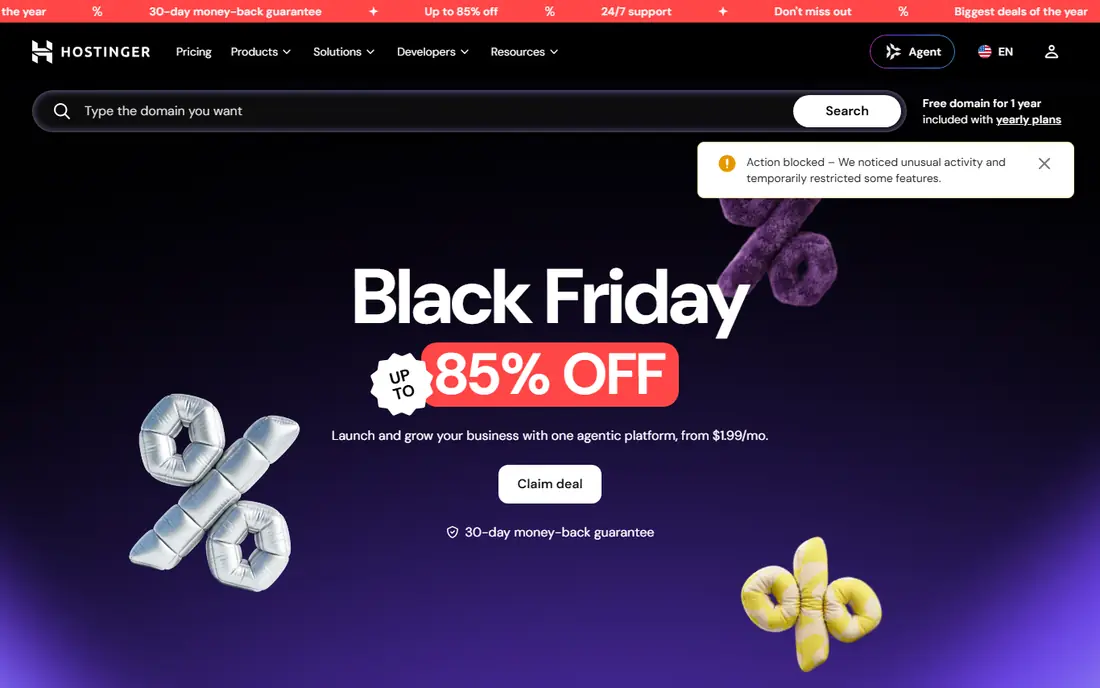
Hostinger is the budget pick for a new site that does not yet earn money. Premium shared hosting is $2.99 per month on a 48-month term, with a free domain for a year on published terms and storage for several websites. The control panel is modern and the setup flow is fast, which helps first-time owners get a WordPress site live in an evening.
The renewal rate is the catch. After the intro term, Premium renews at $10.99 per month, so the long-term cost is far higher than the headline suggests. Weekly backups on the entry plan also mean a busy site should consider a higher plan or a separate backup tool. If you accept those terms and want the lowest start cost, Hostinger is hard to beat.
- Low intro price on a long term
- NVMe storage on plans
- Built-in website builder and AI tools
- Renews at $10.99 per month
- Entry backups are weekly only
- Uses its own control panel rather than cPanel

Bluehost has long been the default suggestion for WordPress beginners, and its setup flow reflects that. The Starter plan is $3.99 per month on a 36-month term, with a free domain for the first year and room for multiple sites. WordPress installs in a few clicks, and the dashboard guides new owners through themes, plugins and basic settings.
Renewal pricing and upsells are the reasons to read the checkout carefully. The plan renews at $9.99 per month, and optional add-ons can raise the total if you accept them without checking. Backups on the base plan are weekly, so a site that changes daily should add a backup plugin. For a first WordPress blog or small business site, Bluehost remains a straightforward choice.
- WordPress-recommended host with simple setup
- Free domain for the first year
- Supports up to 10 sites on the entry plan in published comparisons
- Renews at $9.99 per month
- Weekly backups on the base plan
- Checkout upsells need care

SiteGround suits owners who value support and reliability over the lowest price. The StartUp plan is $2.99 per month for 12 months, with daily backups, managed WordPress features and security tools included. When something breaks, the support team is the reason many owners stay, since fixes tend to be fast and clearly explained.
The renewal rate is steep. At $17.99 per month after year one, SiteGround costs several times more over three years than a budget host, and the StartUp plan covers only one website. If your site earns money or supports client work, that cost can be justified by uptime and support. If it is a hobby blog, a cheaper host will serve you just as well.
- Daily backups
- Strong support reputation
- Managed WordPress tools and security features
- Renews at $17.99 per month, the highest here
- StartUp plan covers one site only
- Intro term is only 12 months
Namecheap is a strong choice if you want hosting and domains in one account without a large renewal jump. Stellar shared hosting is $2.28 per month on a yearly term in published comparisons, renewing at $4.66 per month, which keeps the three-year cost low. A free trial on published terms lets you test the service before paying for a full year.
The trade-offs are modest. Base storage is SSD rather than the faster NVMe storage some rivals offer, and performance is good rather than outstanding. For a small business site, a portfolio or a blog, those limits rarely matter. If you already buy domains from Namecheap, keeping hosting there also simplifies renewals and DNS settings.
- Low intro and renewal pricing
- Free trial on published terms
- Good domain management alongside hosting
- Base storage uses SSD rather than NVMe
- Support and speed are solid rather than class-leading
- Higher plans needed for larger sites
DreamHost appeals to owners who want time to test a host without risk. Shared hosting starts at $2.89 per month for the first year, with daily backups and a refund window of 97 days on published terms, far longer than the usual 30 days. That window lets you run a real site, test speed and support, and leave if it does not suit you.
Support is by live chat and tickets rather than phone, which suits some owners and frustrates others. The custom control panel also takes a short adjustment if you are used to cPanel. Renewal at $10.99 per month is in line with other mid-priced hosts. For WordPress owners who value a long trial and honest terms, DreamHost is a dependable pick.
- Daily backups
- Long 97-day refund window on published terms
- Supports unlimited sites on some plans
- Employee-owned company
- Renews at $10.99 per month
- No phone support, with chat and tickets instead
- Custom panel takes learning
Cloudways is the step up when shared hosting no longer fits. Managed cloud plans start from around $14 per month, billed hourly, with no long intro discount to lose at renewal. You choose a cloud provider, and Cloudways manages the server, security patches and basic optimisation, while you keep control of your site and apps.
The price and learning curve rule it out for a first hobby site. Cloudways suits growing stores, agencies and sites with traffic spikes, where performance and scaling matter more than the lowest monthly fee. A short trial lets you test speed before you move a live site. If your site has outgrown shared hosting, this is the most flexible managed option in this list.
- Managed cloud servers with hourly billing
- No long intro lock-in
- Choice of cloud providers
- Staging and scaling tools
- Higher entry price than shared hosting
- Needs more technical confidence
- Support depth varies by plan
Squarespace suits owners who want a good-looking site without managing hosting, updates and plugins separately. Basic is $19 per month billed annually, with a free trial, and includes hosting and site tools in one price. Templates are clean and consistent, which helps portfolios, service businesses and small stores look professional from day one.
Selling terms need checking. Basic carries a 2% fee on store sales on top of card processing, while Core at $29 per month billed annually removes that fee. Squarespace also offers less freedom than WordPress for custom features and plugins. If design polish and simplicity matter more than deep customisation, Squarespace is a strong all-in-one alternative.
- Polished templates
- Hosting, domain and site tools in one account
- Selling with no platform fee on Core and above
- Basic plan carries a 2% fee on store sales
- Less flexibility than WordPress
- Template customisation has limits
Wix gives the most flexible drag-and-drop building in this list, with hosting included. Light is $17 per month billed annually for a basic site, while Core at $29 per month billed annually adds payments, bookings and a basic store. A free plan lets you build and test before you pay, though it cannot use a custom domain and cannot sell products.
The main limit is portability. A Wix site is hard to move to another platform later, so you should be comfortable staying with Wix as the site grows. For a small business owner who wants to build a site in a weekend, add a store later, and avoid technical hosting work, Wix is a practical and forgiving choice.
- Free plan for testing
- Flexible drag-and-drop builder
- Core plan adds payments and a basic store
- Free plan cannot use a custom domain or sell
- Core is $29 per month billed annually
- Moving a Wix site elsewhere is hard
How we picked these
We compared official pricing pages and published hosting comparisons checked in October 2026, focusing on hosts and builders that serve US small businesses today. We favoured options with clear intro and renewal pricing, daily or weekly backups, and a clear reason to choose them over GoDaddy, such as lower renewal cost, better support or simpler building. GoDaddy itself is excluded, since this article covers alternatives.
What to check before you move
Compare the full term cost, not the headline. A $2.99 plan that renews at $17.99 costs more over three years than a $3.99 plan that renews at $9.99. Write down the intro term, the renewal rate, the number of sites covered, backup frequency and whether a domain is included for year one only.
Domains, email and migration
Check whether your domain can transfer without a long lock, and whether email is included or needs a separate service. Ask the new host about free migration help, and test the migrated site on a temporary address before you point the domain across. Keep the old account live for a week after the move, in case mail or DNS needs a fix.
Builder versus hosting
Decide whether you want a builder or a host. Builders such as Squarespace and Wix include hosting and handle updates, but limit customisation and portability. Shared and cloud hosts give more freedom with WordPress and other software, but you handle more setup yourself. Pick the model that fits your time and technical comfort, not just the price.
Frequently asked questions
What are the best GoDaddy alternatives for web hosting?
Hostinger and Namecheap suit budget buyers, SiteGround and DreamHost suit buyers who value support and backups, and Bluehost suits WordPress beginners. Cloudways suits growing sites that need managed cloud hosting. The best choice depends on your budget, renewal tolerance and how much support you want.
What is the cheapest GoDaddy hosting alternative?
On intro pricing, Namecheap and Hostinger are among the cheapest, with Namecheap also keeping renewal pricing low. Always compare the renewal rate and the total over two or three years, since a low intro price with a high renewal can cost more than a slightly higher intro price with a low renewal.
Can I transfer my domain away from GoDaddy?
Yes, in most cases you can transfer a domain to another registrar once any transfer lock has passed and the domain is not within a recent registration or transfer window. Remove the transfer lock from the domain, get the transfer code, and start the transfer at the new registrar. Allow several days for the transfer to complete and keep DNS settings noted.
Is Wix or Squarespace better than GoDaddy hosting?
Wix and Squarespace are website builders with hosting included, while GoDaddy hosting is a hosting service you pair with a site you build. Builders suit owners who want design, hosting and tools in one account with less setup. Hosts suit owners who want WordPress freedom and more control over the site and server.
Do these hosts include a free domain?
Many intro plans include a free domain for the first year, including Hostinger, Bluehost and SiteGround on published terms. The domain usually renews at the regular price from year two, so check that renewal cost before you count it as a long-term saving.
What is the best GoDaddy alternative for WordPress?
Bluehost, SiteGround and DreamHost are all strong WordPress choices, with different strengths: Bluehost for simple setup, SiteGround for support and daily backups, and DreamHost for a long refund window. Hostinger also handles WordPress well at a lower price, with weekly backups on its entry plan.
Sources
See where you really rank - block by block
ProMapRanker scans Google Maps across a grid of your service area. Simple monthly plans from $19, white-label on every plan.
Start freeKeep reading
 best resource management software
Best Resource Management Software in 2026
We compared the best resource management software for scheduling, capacity and utilization, with current pricing and free trials, to help teams choose well.
Read → best reporting tools
Best Reporting Tools in 2026
Compare the best reporting tools for dashboards, scheduled reports, and business insights, from Power BI and Tableau to Looker Studio for every team size.
Read → best remote support software
Best Remote Support Software in 2026
Looking for the best remote support software? We compare 9 tools on price, security, session controls, and fit for helpdesks, MSPs, and small teams in 2026.
Read →