 ProMapRanker
Best FBS Alternatives in 2026


Widest documentation and lot matching · Pricing starts at: See website
Key takeaways
- This article covers alternatives for fetal bovine serum, the laboratory cell culture reagent, not the forex broker that shares the FBS initials.
- Gibco and MilliporeSigma are the widest, most documented starting points for labs that need consistent lots and clear certificates of analysis.
- HyClone, Corning, and BioWest give labs useful choices on origin, filtration, and treated formats such as heat-inactivated or gamma-irradiated serum.
- Smaller suppliers such as Gemini Bio, Peak Serum, and Quality Biological can suit labs that want direct support or a specific format.
- Our pick for most labs is to shortlist two suppliers, test the same cell line on both, and then reserve a matched lot before scaling work.
Quick comparison
| Pick | Great for | Pricing starts at | Free tier | |
|---|---|---|---|---|
| Gibco Fetal Bovine Serum | Widest documentation and lot matching | See website | No | Visit |
 MilliporeSigma Fetal Bovine Serum | Triple-filtered serum with cross-reference help | See website | No | Visit |
 Corning Fetal Bovine Serum | Broad catalog and treated formats | See website | No | Visit |
 HyClone Fetal Bovine Serum | Large-scale and bioprocessing supply | See website | No | Visit |
 BioWest Fetal Bovine Serum | European-origin and specialty formats | See website | No | Visit |
 Gemini Bio Fetal Bovine Serum | US-based supply with direct support | See website | No | Visit |
 Peak Serum Fetal Bovine Serum | Smaller-lot and research supply | See website | No | Visit |
 Quality Biological Fetal Bovine Serum | Straightforward research-grade serum | See website | No | Visit |
The best fbs alternatives
Fetal bovine serum, often shortened to FBS, is a supplement used in cell culture to support cell growth. Labs choose a supplier based on cell performance, lot consistency, origin, filtration, and the paperwork that comes with each lot. The suppliers below all sell fetal bovine serum for laboratory use. This article is for laboratory buyers, and serum handling should follow your institution biosafety and storage rules.
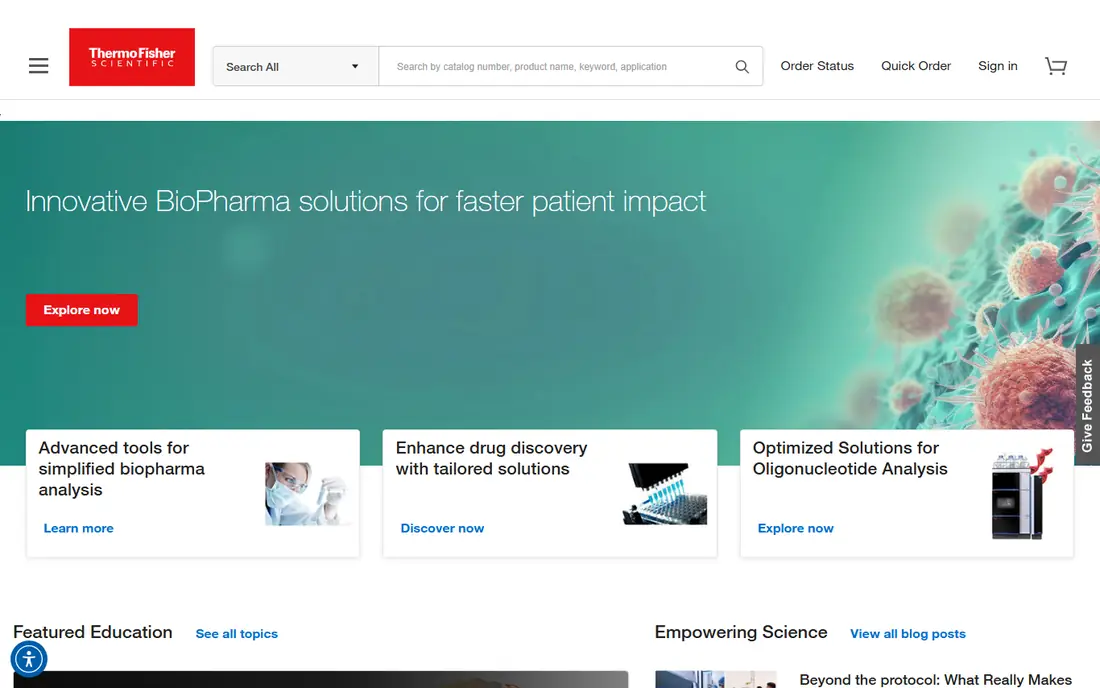
Gibco, from Thermo Fisher Scientific, is the default starting point for many labs, and for good reason. Its serum range covers standard, heat-inactivated, dialyzed, charcoal-stripped, and other treated formats, so a lab can stay with one supplier as an experiment changes. The lot matching service is also useful, since it helps a lab find a new lot that behaves like a previous one.
The catch is that serum is a natural product, so lot-to-lot variation still happens. A Gibco lot that works well for one cell line may not be the best lot for another. Test before you commit, and reserve enough of a working lot for the full experiment where you can.
- Long history in cell culture
- Lot matching tools and origin traceability
- Wide range of standard and treated formats
- Pricing varies by account and lot
- Popular lots can sell out
MilliporeSigma Fetal Bovine Serum
Great for: Triple-filtered serum with cross-reference help
MilliporeSigma, the life science business of Merck KGaA, suits labs that want a clear, filtered product and help switching from another brand. Its serum cross-reference tables map its products against Gibco, HyClone, Corning, and other suppliers, which makes a planned switch less of a guessing game. Distribution through Sigma-Aldrich channels also helps labs outside the United States.
The main friction is choice. Multiple grades, origins, and treatments can make the first order harder than it needs to be. Use the cross-reference table and the certificate of analysis for the exact lot, rather than ordering on product name alone.
- Triple 0.1 micron filtration on its processed serum
- Published cross-reference tables against other suppliers
- Broad global distribution
- Catalog can be confusing across brands and grades
- Pricing is account-based
Corning is a familiar name in cell culture consumables, and its serum catalog fits labs that already buy Corning vessels and media. Having serum, media, and cultureware from related channels can simplify ordering, especially for teaching labs and core facilities. The range includes standard and treated formats in common sizes such as 500 mL bottles.
As with every supplier here, the product name is only part of the story. Check origin, filtration, endotoxin level, and treatment for the lot you receive. Corning serum sold through a distributor should still arrive with a certificate of analysis for that lot.
- Wide range of serum products and sizes
- Treated options including heat-inactivated serum
- Sold through major distributors
- Quality and origin details vary by product, so check each lot
- Distributor pricing can differ
HyClone, now part of Cytiva, fits labs and manufacturers that plan to scale. If a research protocol may move toward larger culture volumes or bioprocessing, starting with a supplier that can support that growth avoids a painful switch later. HyClone offers serum in research and process grades, with options for origin and treatment.
Small labs should still ask for research-scale sizes and clear lot documents before assuming a process-grade product is the right fit. The strength here is continuity from bench to larger production, not low cost for a single small experiment.
- Strong bioprocessing and large-volume options
- Range of origins and treatments
- Cytiva support for scale-up work
- Enterprise and bioprocessing focus can feel heavy for a small academic lab
- Pricing is quoted
BioWest suits labs that want a European-origin serum option or a supplier outside the largest US brands. Its catalog includes standard, heat-inactivated, dialyzed, and other specialty sera, with origin information that matters for import and regulatory paperwork. For labs in Europe, local supply can also shorten delivery times.
The trade-off is regional coverage. A US lab may face longer shipping or distributor steps than with a domestic supplier. Check cold-chain shipping, delivery time, and import documents before placing a first order, and test a lot on your own cells.
- European manufacturing and sourcing
- Specialty and treated serum options
- Clear product grading
- Availability and shipping vary by region
- Pricing is account-based
Gemini Bio fits labs that prefer working directly with a mid-sized supplier. Direct support can make lot questions, reserve requests, and paperwork faster than going through a large distributor chain. Its serum range covers standard and treated formats, with origin options that labs often need for grant or compliance records.
The limit is scale. Gemini Bio will not match the full catalog depth of Thermo Fisher or MilliporeSigma. For a lab with a defined protocol and a stable cell line, that depth may not matter. For a core facility serving many different cell types, a larger supplier may be simpler.
- US-based serum supplier
- Range of origins and treatments
- Direct technical support for lot questions
- Smaller catalog than the largest suppliers
- Some products are distributor-only in certain regions
Peak Serum is a focused choice for research labs that want serum expertise without a huge general catalog. A focused supplier can be easier to talk to about a specific lot, treatment, or origin question. Its products cover the common research formats, including standard and heat-inactivated serum.
Because it is smaller, stock and shipping deserve a check before you build a timeline around it. Ask about lot availability, reserve options, and cold-chain shipping. If those answers are solid, Peak Serum can be a dependable second supplier for lot comparison.
- Focused serum supplier
- Research sizes and treated options
- Lot-specific documentation
- Smaller company, so check stock before planning a large run
- Limited global distributor network
Quality Biological Fetal Bovine Serum
Great for: Straightforward research-grade serum
Quality Biological fits labs that want a plain, research-grade serum without a complex product system. Its catalog is easier to read than some larger suppliers, and common sizes suit routine culture work. For teaching labs and small research groups, that simplicity is a genuine advantage.
The catch is support depth. You may not get the same lot-matching tools that Gibco offers, so keep your own records of which lot worked for which cell line. That habit matters with every supplier, but it matters more when the supplier offers fewer matching services.
- Research-grade serum in common sizes
- Treated formats available
- US-based supplier
- Less published lot-matching support than the largest brands
- Check treated format availability per lot
How we picked these
We compared supplier product pages, cross-reference tables, distributor catalogs, and public product documentation, and we kept only suppliers that sell fetal bovine serum for laboratory cell culture in October 2026. We favored suppliers with clear lot documentation, stated filtration or treatment options, and a reachable official site. We did not list the forex broker FBS, since the other keyword for this row points plainly to fetal bovine serum. Prices are shown as See website because serum pricing varies by lot, origin, volume, and account, and we do not invent figures.
How to choose a serum supplier without wasting a month
Start with your cell line, not with a brand. Serum performance varies by cell type, so a serum that grows one line well may be average for another. Shortlist two suppliers, order the same treatment and origin type from each, and run the same growth and viability checks side by side. Keep passage number, seeding density, and media identical, or the comparison will mislead you.
Read the certificate before you thaw a bottle
Check origin, filtration, endotoxin level, hemoglobin level, and treatment on the certificate for the lot you received. Store the certificate with your lab notebook record for that experiment. If a later result looks odd, that record is the first place to look. Do not assume a new lot matches an old lot just because the product name matches.
Reserve the lot that works
Once a lot passes your checks, ask the supplier about reserving enough bottles for the full experiment or project phase. Serum lots sell out, and switching mid-project can add weeks of retesting. If a reserve is not possible, order a second lot early and test it while the first lot is still in use.
Consider serum-free options for the next protocol
Serum-free and chemically defined media reduce lot variation, and they suit some cell lines well. They are not a drop-in replacement for every protocol, and they need their own testing. If lot variation keeps hurting your work, ask your shortlisted suppliers about serum-free media for your cell type as a separate project.
Frequently asked questions
What are fetal bovine serum alternatives?
Fetal bovine serum alternatives in this article are other suppliers of fetal bovine serum for laboratory cell culture, plus the choice of a different origin, treatment, or grade from a supplier. They are not the forex broker FBS. Labs switch suppliers to improve lot consistency, meet origin or paperwork needs, or find a format such as heat-inactivated serum.
Is Gibco the best fetal bovine serum supplier?
Gibco is the most widely documented choice, with lot matching tools and a broad format range, which makes it a strong default. It is not automatically the best for every cell line, since serum performance varies by lot and cell type. Test Gibco against one other supplier on your own cells before committing to a large reserve.
What does heat-inactivated fetal bovine serum do?
Heat inactivation reduces complement activity in serum, which some protocols need for immunology or sensitive cell work. It can also reduce growth support for some cell lines, so it is not better in general. Choose heat-inactivated serum only when your protocol calls for it, and test it against standard serum.
How do I compare two serum lots fairly?
Use the same cell line, passage number, seeding density, media, and culture conditions for both lots, and measure growth and viability over the same time period. Record the lot number, origin, and certificate details for each bottle. A single flask is not enough to judge a lot, so repeat the check before reserving a large quantity.
Why does fetal bovine serum pricing vary so much?
Serum is a natural product with limited supply, and price varies by origin, treatment, filtration, lot quality, volume, and account terms. Suppliers rarely publish a single list price that covers every lot. Ask for a quote for the exact product, size, and quantity you need, and confirm cold-chain shipping costs.
Are there serum-free alternatives to fetal bovine serum?
Yes, serum-free and chemically defined media exist for many common cell lines, and they can reduce lot variation. They are not a direct swap for every protocol, and they need testing for growth, morphology, and assay readouts. Treat a serum-free switch as a separate validation project, not as a quick substitution.
Sources
See where you really rank - block by block
ProMapRanker scans Google Maps across a grid of your service area. Simple monthly plans from $19, white-label on every plan.
Start freeKeep reading
 wpforms alternatives
Best WPForms Alternatives in 2026
We compare 9 wpforms alternatives for WordPress forms, with free and paid options, current pricing notes, and honest limits for small business sites in 2026.
Read → windows task scheduler alternatives
Best Windows Task Scheduler Alternatives in 2026
Looking for Windows Task Scheduler alternatives? We compare 9 schedulers for Windows and cross-platform work, from free tools to enterprise automation.
Read → which ai video service is best
Which AI Video Service Is Best in 2026
which ai video service is best? We compare 10 legitimate AI video services on price, avatars, editing and output quality to help you pick the right tool.
Read →