 ProMapRanker
eBay Alternatives in 2026

Key takeaways
- Etsy, Mercari and Poshmark suit sellers with a clear niche, from handmade goods to fashion and everyday items.
- Facebook Marketplace suits local sellers who want no listing fee and fast, in person sales.
- Depop and Reverb suit niche buyers, with Depop for vintage fashion and Reverb for music gear.
- Bonanza and Ruby Lane suit sellers who want a storefront feel without building their own website.
- Fees, buyer reach and category fit matter more than brand size, so list where your buyers already shop.
Quick comparison
| Pick | Great for | Pricing starts at | Free tier | |
|---|---|---|---|---|
 Etsy | Handmade and vintage sellers | Free | Yes | Visit |
 Mercari | Everyday items and fast listings | Free | Yes | Visit |
 Poshmark | Fashion and closet sales | Free | Yes | Visit |
 Facebook Marketplace | Local selling | Free | Yes | Visit |
 Depop | Vintage and streetwear fashion | Free | Yes | Visit |
 Bonanza | Storefront style selling | Free | Yes | Visit |
 Ruby Lane | Antiques and vintage collectibles | Free | Yes | Visit |
 Reverb | Music gear sellers | Free | Yes | Visit |
The best eBay alternatives
We compared official seller pages, fee pages and app store listings for marketplaces active in the United States in October 2026. Each option below lets private sellers and small businesses list items without building their own store. The best choice depends on what you sell, how you want to ship, and if you prefer local pickup or national shipping.

Etsy is the first place to look if you sell handmade goods, craft supplies or vintage items that are at least 20 years old. Buyers come to Etsy specifically for unique, handmade and vintage finds, so a well photographed listing can reach people who would never search a general marketplace. Seller tools cover shop pages, listings, shipping labels and basic analytics, which helps small sellers look professional without a separate website.
The catch is fees and competition. Etsy charges listing and transaction fees, plus payment processing, and popular categories are crowded. You need strong photos, clear titles and competitive shipping to stand out. Etsy suits sellers who make or curate distinctive items and are willing to invest in presentation. For generic used goods, a general marketplace may work better.
- Huge buyer pool for handmade and vintage goods
- Strong search for niche items
- Seller tools for shops
- Listing and transaction fees add up
- Competition is high in popular categories
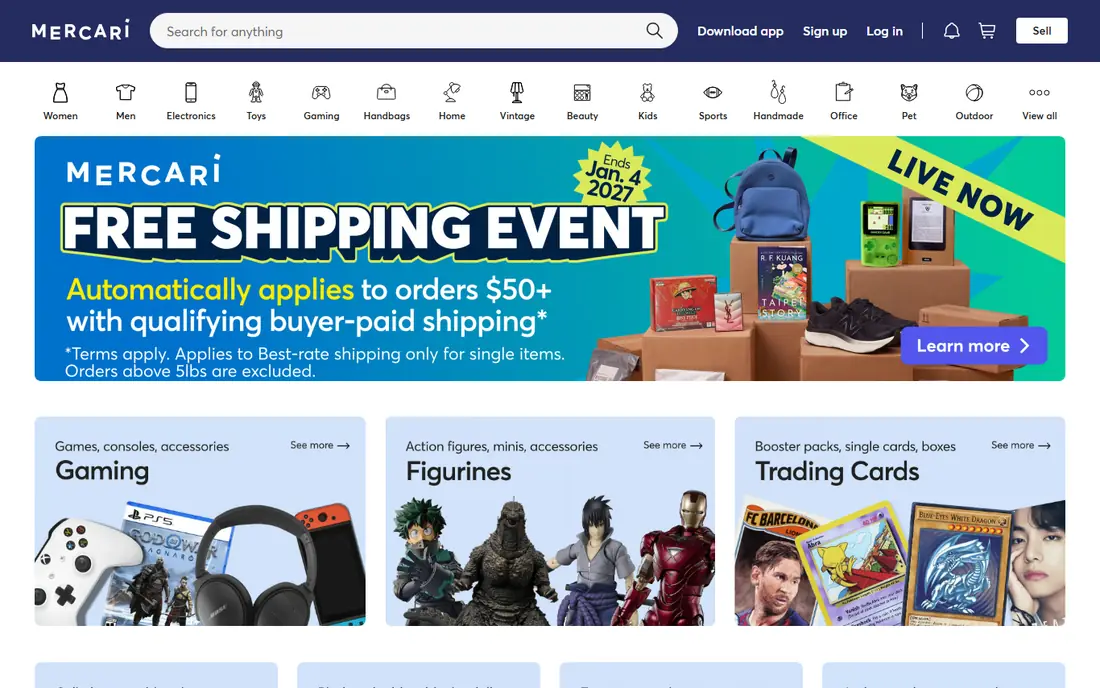
Mercari is built for speed. You can photograph an item, add a short description and price, and list it in minutes from your phone. Categories cover clothing, electronics, home goods, toys and more, so it suits sellers clearing out a closet or a spare room. The app handles offers, shipping labels and payment, which keeps the process simple for private sellers who do not want a shop setup.
The trade off is fees and reach. Mercari charges a service fee on sales, and its buyer pool, while large, is smaller than the biggest general marketplaces. Prices also tend to skew toward deals, so high end items may sell better on a niche site. Mercari is our pick for everyday sellers who want a quick, low friction listing flow and are happy to accept offers.
- Fast listing from a phone photo
- Broad categories
- Shipping labels in the app
- Service fees apply to sales
- Buyer pool is smaller than the largest marketplaces

Poshmark turns closet selling into a social activity. Sellers share listings, follow other closets and join themed parties, which can drive views for fashion items. The buyer pool is large for clothing, shoes, handbags and accessories, and Poshmark provides a prepaid shipping label for many sales, which simplifies postage. For sellers with a steady flow of fashion items, that social loop can build repeat buyers.
The downside is commission. Poshmark takes a share of each sale, and the fee feels steep on low priced items, so very cheap listings may not be worth the effort. It is also a poor fit for non fashion goods. Poshmark suits fashion sellers who enjoy the social side and can price items to cover the fee. For electronics or home goods, look elsewhere.
- Social selling features
- Large fashion buyer pool
- Shipping label included for many sales
- Commission on sales is high for low priced items
- Fashion focus limits other categories
Facebook Marketplace is the simplest way to sell locally. Listing is free for most local sales, and your item appears to buyers near you who already use Facebook daily. Messages go through Messenger, so you can arrange pickup quickly and answer questions in real time. Furniture, appliances, cars and bulky items that are costly to ship sell especially well here, since buyers collect in person.
The risk is the lack of structure for local deals. There is no built in escrow for cash pickup sales, and no shows and low offers are common. Meet in a public place, preferably a police station safe exchange zone where offered, and do not ship an item before payment clears. Marketplace is best for local sellers who want speed and no listing fee, and who are comfortable handling messages and meetups themselves.
- No listing fee for most local sales
- Huge local audience
- Fast messages through Messenger
- No shipping guarantee for local pickup deals
- Scams and no shows need careful handling
Depop is a social marketplace with a strong focus on vintage clothing, streetwear and unique fashion. Listings look like social posts, with photos, likes and follows, which suits sellers who can style items well and build a following. Buyers come to Depop for pieces they cannot find in mainstream stores, so rare vintage and limited items can do well. The app also reaches international buyers, which widens the pool for distinctive fashion.
The limit is audience fit. Depop skews younger, so classic or formal fashion may sell slower than on Poshmark or Etsy. Fees apply to sales and payment processing, so price with those in mind. Depop is our pick for sellers with vintage, streetwear or Y2K style stock who enjoy the social, visual side of selling. For general used goods, Mercari is simpler.
- Strong vintage and streetwear audience
- Social feed style listings
- International buyer reach
- Fees apply to sales
- Audience skews younger, so fit depends on your style
Bonanza gives sellers a booth, similar to a small online shop, rather than a single listing feed. You can build a storefront, list across broad categories from fashion to home goods to collectibles, and use tools for offers and discounts. That shop feel suits sellers who want a persistent presence and repeat buyers, without paying for a standalone website. Bonanza also offers optional advertising tools for sellers who want extra visibility.
The trade off is traffic. Bonanza buyer volume is smaller than the largest marketplaces, so you may need to share your booth link on social media or in other channels to drive sales. Fees vary by plan and sale type, so read the current seller page before you list. Bonanza suits sellers who like a shop format and are willing to promote their booth, rather than relying only on marketplace search.
- Storefront feel with booth pages
- Broad categories
- Lower fee structure than some rivals for many sellers
- Smaller buyer traffic than the largest marketplaces
- Sellers need to drive some of their own traffic
Ruby Lane is a curated marketplace for antiques, vintage collectibles, jewelry, dolls and art. Buyers come here specifically for older, collectible and artisan pieces, so a well described antique can find a knowledgeable buyer faster than on a general site. Shops have their own pages, which helps sellers build a reputation in a niche. For collectors and antique dealers, that focused audience is the main draw.
The limit is scope. Ruby Lane is not a place for everyday used electronics or fast fashion, and shop fees may apply depending on the plan you choose. Sellers should check current shop pricing and listing terms before they open a store. Ruby Lane is best for sellers with genuine antique or vintage stock who want buyers who understand value and condition.
- Curated audience for antiques and vintage
- Shop format for collectors
- Strong for jewelry and dolls
- Niche focus limits general items
- Monthly shop fees may apply depending on plan
Reverb is the go to marketplace for guitars, pedals, synths, studio gear and other music equipment. Buyers are musicians who know what they want, and Reverb price guides help sellers set fair prices based on recent sales. Watch lists, offers and shipping tools make it easy to manage a gear sale, and the community feel means listings get seen by the right people. For music gear, Reverb often beats a general marketplace on both price and speed.
The obvious limit is category. Reverb only makes sense if you sell music gear, and fees apply to each sale. If you have one guitar to sell, it is still worth listing here first, since the buyer pool is focused. For everything else, use one of the general or fashion marketplaces above. Reverb shows why niche fit can matter more than sheer marketplace size.
- Huge music gear buyer pool
- Price guides and watch lists
- Shipping and payment tools
- Fees apply to sales
- Niche focus means it only fits music gear
How we picked these
We compared official seller pages, fee pages and app store listings for marketplaces active in the United States in October 2026. We kept only marketplaces that accept private sellers or small businesses, offer listing and payment tools, and have a real buyer pool in their category. We favored sites with clear fee information, seller protection notes and shipping tools, and we noted where traffic is smaller than the largest general marketplaces.
We did not claim hands on testing that did not happen. Our view comes from vendor pages, seller help centers and public fee comparisons. Fees change by category, sale price and plan, so check the current seller fee page before you list. Always read return, shipping and payout terms for the marketplace you choose.
How to choose the right marketplace for what you sell
Match the item to the buyer, not just to the lowest fee. Handmade and vintage goods belong on Etsy, fashion belongs on Poshmark or Depop, music gear belongs on Reverb, and bulky local items belong on Facebook Marketplace. A general item can go on Mercari or Bonanza, where categories are broad and listing is fast. If you sell across categories, run two marketplaces: one niche and one general, and track which one brings better net profit after fees.
Price with fees and shipping in mind. Check the marketplace fee page, add payment processing, and decide if you offer free shipping or charge the buyer. Take clear photos in good light, describe condition honestly, and state measurements for clothing and furniture. For local sales, meet in public and accept secure payment only. For shipped sales, use tracked shipping and keep proof of postage until the buyer confirms delivery.
Frequently asked questions
What are the best alternatives to eBay for sellers?
Etsy, Mercari, Poshmark and Facebook Marketplace are the most useful general alternatives, with Depop, Bonanza, Ruby Lane and Reverb covering niches. The best choice depends on what you sell and if you want local pickup or national shipping. Start with the marketplace where your buyers already shop.
What are alternatives to eBay for private sellers?
Mercari and Facebook Marketplace suit private sellers best, since listing is fast and, for local Marketplace sales, free in most cases. Poshmark also works for private fashion sellers, while Etsy suits private makers and vintage sellers. All of these let you sell without a business storefront.
What is the best alternative to selling on eBay for handmade goods?
Etsy is the clearest alternative for handmade goods, since its buyers search specifically for handmade, custom and vintage items. Bonanza can work as a second shop, but it lacks Etsy handmade buyer intent. Price with Etsy fees in mind and invest in photos and shop presentation.
Is Facebook Marketplace a good eBay alternative?
Yes, for local sales. It has no listing fee for most local deals and a huge local audience, which suits furniture, appliances and bulky items. It is less structured than a shipped marketplace, so meet in public, use secure payment, and be ready for no shows and haggling.
Do eBay alternatives charge fees?
Most do, though the structure differs. Some charge a listing fee, some charge a transaction commission, and some charge payment processing on top. Facebook Marketplace local sales are usually free to list, while Poshmark, Depop, Reverb and Etsy charge on sales. Always check the current fee page before you list.
Can I sell on more than one marketplace at once?
Yes, as long as you manage inventory carefully and remove a listing once it sells elsewhere. Many sellers list a unique item on one niche site and one general site to widen reach. For identical stock with multiple units, cross listing is easier, but update stock counts promptly to avoid overselling.
Sources
See where you really rank - block by block
ProMapRanker scans Google Maps across a grid of your service area. Simple monthly plans from $19, white-label on every plan.
Start freeKeep reading
 eventbrite alternatives
Eventbrite Alternatives in 2026
Find Eventbrite alternatives in 2026 with lower fees, free events and better check-in, compared by pricing, features, payouts and who each platform suits.
Read → cursor alternatives
Cursor Alternatives in 2026
Compare the best Cursor alternatives for AI coding, from GitHub Copilot and Windsurf to Zed, Claude Code, Cline, Aider, and Amazon Q Developer in 2026.
Read → constant contact alternatives
Constant Contact Alternatives in 2026
We compared the best Constant Contact alternatives on price, free plans, automation and nonprofit options, so small businesses can switch with confidence.
Read →