 ProMapRanker
Constant Contact Alternatives in 2026

Key takeaways
- Mailchimp is the easiest mainstream switch, with a free plan for small lists and a paid plan from $13 per month.
- Brevo is the best value for send-volume pricing, since it does not charge by how many contacts you store.
- MailerLite suits budget senders who want a clean editor, while ActiveCampaign suits teams that need deeper automation.
- Nonprofits should compare discounts and free tiers carefully, since list size and sending frequency change the cheapest option fast.
Quick comparison
| Pick | Great for | Pricing starts at | Free tier | |
|---|---|---|---|---|
 Mailchimp | Mainstream switch | $13 per month | Yes | Visit |
 Brevo | Value and multi-channel sending | $9 per month | Yes | Visit |
 MailerLite | Budget senders | See website | Yes | Visit |
 ActiveCampaign | Deep automation | $15 per month | Free trial | Visit |
 Klaviyo | Online stores | See website | Yes | Visit |
 Omnisend | Affordable store automation | $16 per month | Yes | Visit |
 Kit | Creators and newsletters | See website | Yes | Visit |
 HubSpot | CRM plus email marketing | Free | Yes | Visit |
The best Constant Contact alternatives
Constant Contact has no free plan, only a trial, so many small businesses look elsewhere for a cheaper start or stronger automation. We compared pricing models, free tiers, automation depth, integrations and support, with a focus on tools that suit small businesses, creators and nonprofits.
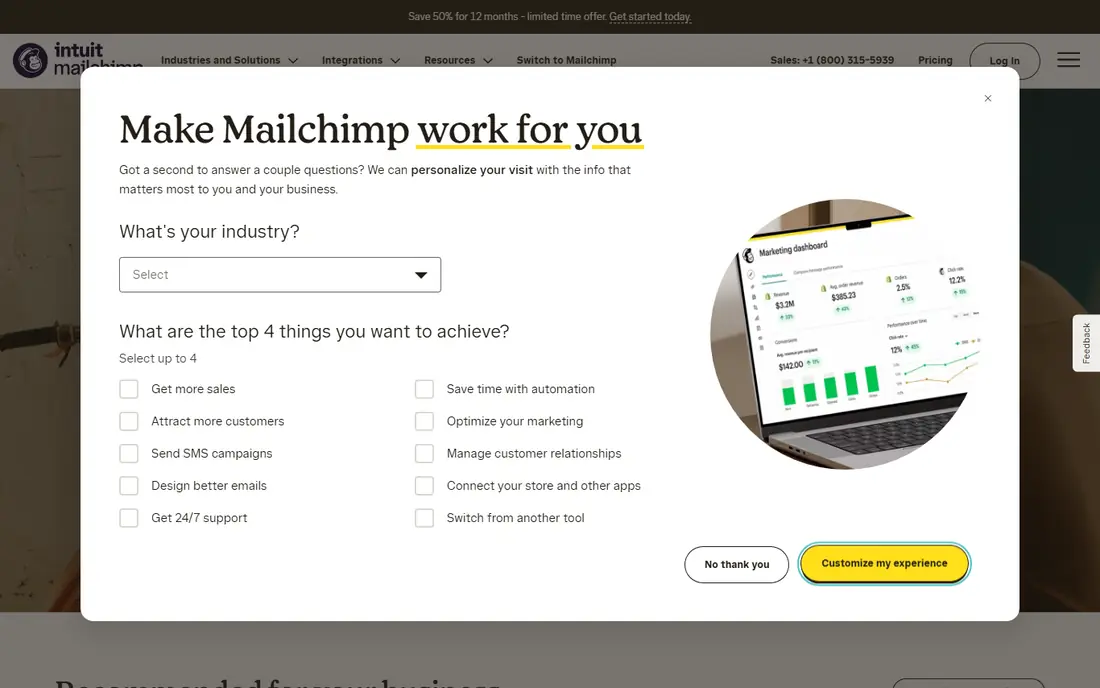
Mailchimp is the most straightforward replacement for most small businesses. Its free plan lets a new sender start without paying, and its paid Essentials plan starts at $13 per month for 500 contacts on monthly billing. Almost every other tool, store platform and form builder connects to Mailchimp, which makes migration and future integrations less painful.
The limits deserve a clear look. The free plan caps contacts and sends, and costs climb as your list grows, so a business with a large but quiet list may pay more than it expects. Automation depth also improves on higher plans. Even with those caveats, Mailchimp remains the safest default switch for a small business that wants a well-known tool with plenty of help available.
- Free plan for small lists
- Huge integration ecosystem
- Familiar editor and templates
- Free plan is limited to 250 contacts and 500 sends a month in recent reports
- Price rises with list size
- Unsubscribed contacts can still count
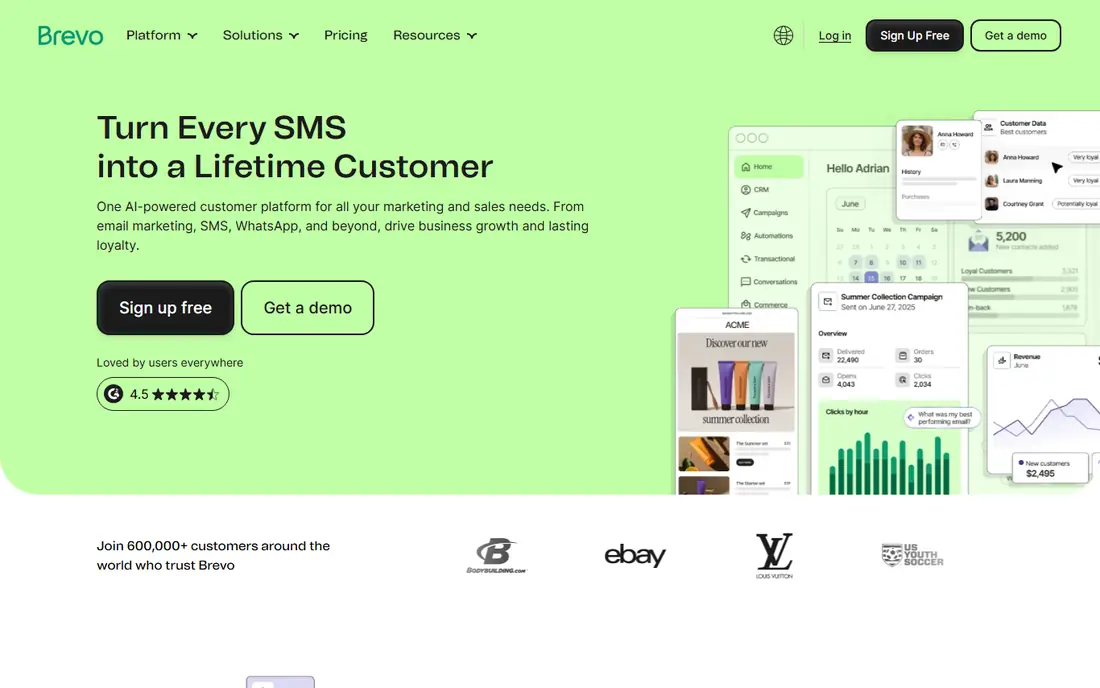
Brevo, formerly Sendinblue, is the best value pick for businesses with a large list that does not email every contact every week. Because it prices by how many emails you send, not how many contacts you store, a list of 10,000 quiet subscribers costs far less than on a contact-priced tool. Its paid plan starts at $9 per month, and the free plan allows 300 sends a day.
The free plan will not suit a business that sends a large campaign in one day, since the daily cap will force you to split sends. SMS and WhatsApp add useful reach, though they cost extra. For nonprofits and small businesses with big lists and modest sending, Brevo is often the cheapest honest option.
- Unlimited contact storage on free and paid plans
- SMS and WhatsApp options
- Pricing follows send volume, not list size
- Daily send limit on the free plan
- Email design tools feel less polished than some rivals
- Advanced features sit on higher plans
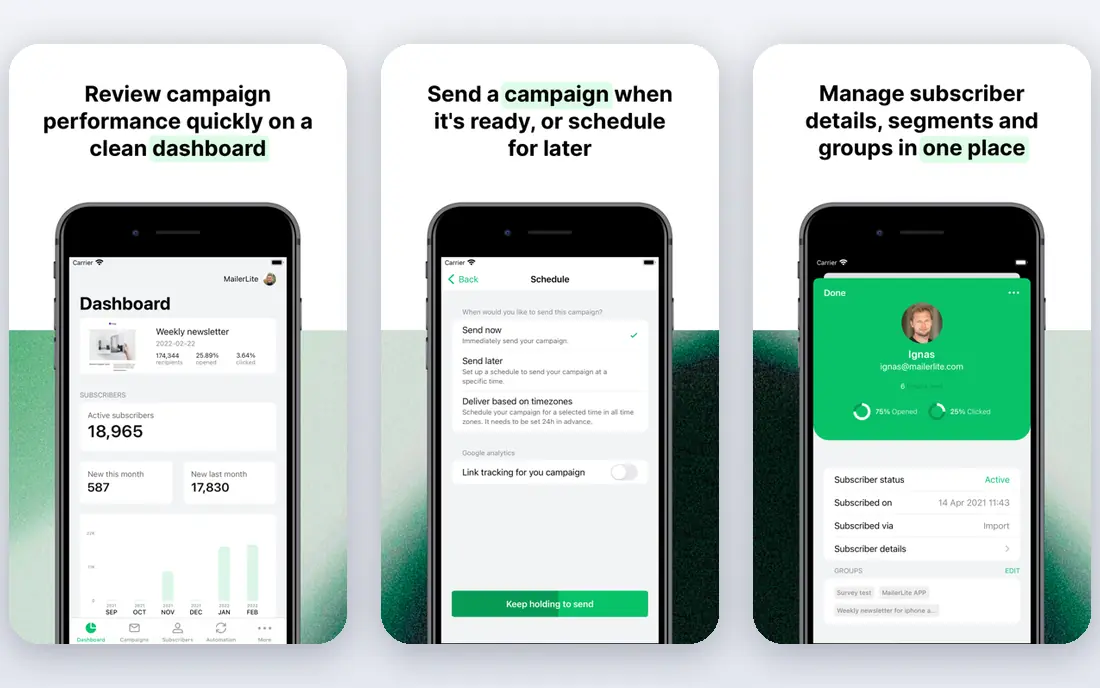
MailerLite appeals to senders who want a tidy editor and a fair price without a steep learning curve. Its free plan covers small lists, and its paid plans stay competitive for growing businesses. Landing pages, signup forms and basic automation are included, so a small team can run a newsletter and a simple welcome sequence from one place.
It is not the deepest automation tool here. Teams that need complex branching, lead scoring and CRM-style workflows will outgrow it sooner. New accounts can also face approval checks that delay the first send. For straightforward newsletters and small business campaigns, MailerLite is a calm, budget-friendly choice.
- Clean, modern editor
- Generous free tier for small lists
- Simple automation and landing pages
- Support and review processes can slow new accounts
- Advanced automation is lighter than ActiveCampaign
- Pricing varies by list size
ActiveCampaign is the pick when simple newsletters are no longer enough. Its automation builder handles multi-step sequences, branching based on behavior, lead scoring and CRM tasks in a way that simpler tools cannot match. The Starter plan starts at $15 per month for 1,000 contacts on annual billing in recent reports, which is fair for the depth on offer.
The cost is time as well as money. Building good automations takes planning, and a small team that only sends a monthly newsletter will not use most of what it pays for. There is no free plan, only a trial. Choose ActiveCampaign when automation will genuinely earn its keep, such as welcome series, abandoned cart flows and lead nurturing.
- Strongest automation builder on this list
- Built-in CRM features
- Detailed segmentation and site tracking
- No permanent free plan
- Learning curve is steeper
- Price rises with contacts and features
Klaviyo is built for online stores, and that focus shows in its flows. Abandoned cart, post-purchase, browse abandonment and win-back sequences connect directly to store data, so messages can reflect what a customer actually bought or viewed. Its free plan covers small stores, and paid pricing scales with profiles and sends, so we have used See website for the current starting figure.
For a business that does not sell online, Klaviyo is overkill and often more expensive than a general email tool. Store owners should also watch profile counts, since all emailable profiles can count toward billing. When revenue comes from a store, though, Klaviyo often pays for itself through flows that general tools cannot match.
- Deep Shopify and store integrations
- Strong purchase-based flows
- Predictive features for store owners
- Costs rise fast as profiles grow
- Best value only for stores
- Setup takes care to get right
Omnisend gives store owners much of Klaviyo's practical value at a lower starting price. Its paid plan starts at $16 per month, and it includes prebuilt automation for welcome, cart recovery and post-purchase messages, plus SMS and push channels. That combination suits small stores that want automation without enterprise pricing.
The free plan is useful for testing, but its contact and send limits mean a growing store will move to paid plans fairly soon. Businesses without a store will find less to love here than in Mailchimp or MailerLite. For a small online shop on a budget, Omnisend is the balanced middle choice.
- Store automation at a lower price than Klaviyo
- SMS and push options
- Prebuilt flows for stores
- Less suited to non-store businesses
- Free plan limits contacts and sends
- Reporting is simpler than enterprise tools
Kit, formerly ConvertKit, is built for creators, writers and newsletter publishers rather than general business marketing. Its free plan covers up to 10,000 subscribers in recent reports, which is unusually generous, and its sequences, forms and landing pages are designed for growing an audience. Paid plans add automation and commerce features as a creator's income grows.
Design flexibility is the trade-off. Templates are clean but simpler than the polished layouts in Mailchimp or MailerLite, and complex business workflows are not its strength. For a creator, coach or newsletter writer moving from Constant Contact, Kit is a natural fit, especially while the audience is still growing.
- Generous free plan for creators
- Simple sequences and landing pages
- Creator-focused tools and commerce options
- Design templates are simpler than Mailchimp
- Less suited to complex business automation
- Paid pricing rises with subscribers
HubSpot suits businesses that want email beside a real CRM, not just a mailing list. The free tools cover contacts, forms and basic email, which is enough for a small business starting to organize leads. As the business grows, paid Marketing Hub plans add automation, landing pages and reporting, all tied to the same contact records.
The catch is the price curve. Paid plans, especially at Pro level, cost far more than the tools above, and a small team can feel lost in a platform built for larger companies. Start with the free CRM if you need sales and marketing in one place, and only upgrade when the CRM data is already part of your daily work.
- Free CRM with contacts and forms
- Email plus sales tools in one place
- Strong reporting as you scale
- Paid marketing plans get expensive fast
- The full platform can feel large for a tiny team
- Email limits apply on free tools
How we picked these
We compared official pricing pages and October 2026 pricing reports, focusing on what a small business actually pays at a realistic list size. We favored tools with a free plan or trial, clear automation options and a proven migration path from Constant Contact. We also weighed nonprofit needs, since Constant Contact has long appealed to nonprofits, and we noted where a free tier or send-volume pricing helps that group most.
What to check before you switch
Export your list, segments and past campaigns before you cancel anything, and clean unsubscribed and bounced contacts first, since some tools charge for contacts you no longer mail. Check how each tool counts contacts, because a tool that counts unsubscribes will cost more than one that does not, even at the same headline price.
Test deliverability and automation on a small segment before moving your whole list. Send a welcome sequence, a campaign and a test to major inbox providers, and confirm that forms, tags and automations carried over correctly. Also check nonprofit discounts, since several tools offer them on request, and confirm whether SMS or event tools you used in Constant Contact are included or need a separate plan.
Frequently asked questions
What are the best free alternatives to Constant Contact?
Mailchimp, Brevo, MailerLite, Kit and HubSpot all offer free plans, though each limits contacts or sends. Brevo is best for large lists with modest sending, while Kit is best for creators with a growing audience.
What is the best Constant Contact alternative for nonprofits?
Brevo and MailerLite are strong budget picks, since send-volume pricing and low paid plans keep costs down. HubSpot free tools also help small nonprofits that need a CRM, and some vendors offer nonprofit discounts on request, so ask before you pay.
Is Mailchimp a good Constant Contact alternative?
Yes, for most small businesses it is the easiest switch, thanks to its free plan, familiar editor and wide integrations. Its paid plan starts at $13 per month for 500 contacts, though costs rise with list size.
Which alternative has the best automation?
ActiveCampaign has the deepest automation builder on this list, with branching, scoring and CRM features. Klaviyo and Omnisend are better for store automation, while Mailchimp and MailerLite cover simpler welcome and newsletter sequences well.
How hard is it to move from Constant Contact?
Migration is usually straightforward: export contacts and lists, import them into the new tool, rebuild key automations and test forms before switching. The hardest part is recreating complex automations and event setups, so allow time for testing rather than switching on the day of a big campaign.
Do these tools include SMS marketing?
Brevo, Omnisend and HubSpot offer SMS or multi-channel options, while others focus mainly on email. Check whether SMS is included in your plan or charged separately, since it can change the total cost.
Sources
- https://mailchimp.com
- https://www.brevo.com
- https://www.mailerlite.com
- https://www.activecampaign.com
- https://www.klaviyo.com
- https://www.omnisend.com
- https://kit.com
- https://www.hubspot.com
- https://marketingemailtools.com/compare/constant-contact-vs-mailchimp
- https://www.beltcreative.com/articles/constant-contact-alternatives-2026
- https://www.uneed.best/alternatives/mailchimp
See where you really rank - block by block
ProMapRanker scans Google Maps across a grid of your service area. Simple monthly plans from $19, white-label on every plan.
Start freeKeep reading
 eventbrite alternatives
Eventbrite Alternatives in 2026
Find Eventbrite alternatives in 2026 with lower fees, free events and better check-in, compared by pricing, features, payouts and who each platform suits.
Read → ebay alternatives
eBay Alternatives in 2026
Find the best eBay alternatives in 2026. We compare 8 marketplaces for sellers on fees, buyer reach, categories, shipping and ease of selling online today.
Read → cursor alternatives
Cursor Alternatives in 2026
Compare the best Cursor alternatives for AI coding, from GitHub Copilot and Windsurf to Zed, Claude Code, Cline, Aider, and Amazon Q Developer in 2026.
Read →