 ProMapRanker
E-commerce Software With the Best App Ecosystem in 2026

Key takeaways
- Shopify has the largest curated app store among hosted platforms, which suits stores that want one-click add-ons for marketing, shipping, and loyalty.
- WooCommerce offers the widest plugin choice overall, thanks to the WordPress ecosystem, but it needs more hands-on management.
- BigCommerce and Adobe Commerce suit larger stores that want more built-in features and fewer add-ons, with apps for the gaps.
- App count alone is a poor guide. Check the apps you actually need, their monthly cost, and whether they are maintained before you choose a platform.
Quick comparison
| Pick | Great for | Pricing starts at | Free tier | |
|---|---|---|---|---|
 Shopify | Largest hosted app store | $39 per month | Free trial | Visit |
 WooCommerce | Widest plugin choice | Free | Yes | Visit |
 BigCommerce | Built-in features plus apps | $39 per month | Free trial | Visit |
 Adobe Commerce | Enterprise apps and integrations | See website | No | Visit |
 Wix | Simple app market for small stores | See website | Free trial | Visit |
 Squarespace | Design-led stores with extensions | See website | Free trial | Visit |
 Ecwid | Adding a store with apps | Free | Yes | Visit |
 PrestaShop | Open-source modules | Free | Yes | Visit |
The best e-commerce software with strong app ecosystems
An app ecosystem decides how far a store can grow without custom code. The platforms below differ in how many apps they offer, how well those apps are reviewed, and how much they cost each month. The best ecosystem for you is the one that covers your must-have apps at a total price you can accept.

Shopify leads hosted platforms on app range. The Shopify App Store covers abandoned cart recovery, reviews, loyalty, subscriptions, shipping, accounting, and print on demand, with ratings, reviews, and install counts to help you judge each app. For a small team without developers, that one-click model is the main reason to choose Shopify over a more technical platform.
The cost is the catch. Each useful app adds a monthly fee, and a store with ten apps can easily double its platform bill. Check the apps you need before you commit, and prefer apps with recent updates and clear support pages. A large store is not a cheap store, and Shopify is no exception.
- Large curated app store
- One-click installs
- Strong apps for marketing, shipping, and subscriptions
- App fees stack up quickly
- Some core features still need apps
- Transaction fees apply without Shopify Payments
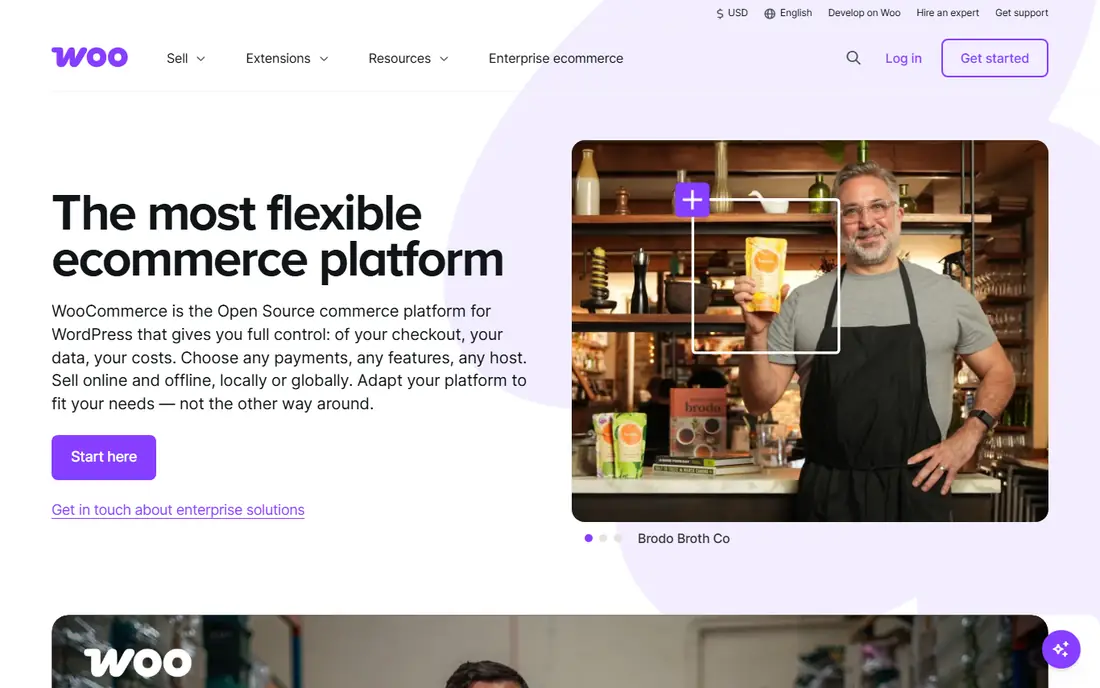
WooCommerce, as a free WordPress plugin, opens the widest plugin ecosystem of any option here. WordPress plugins cover payments, shipping, bookings, memberships, subscriptions, and search, with both free and paid choices for most needs. For a content-led store or a business that already runs WordPress, that range and control are hard to match.
Control comes with work. You manage hosting, updates, backups, and security, and a poorly maintained plugin can break a store or slow it down. WooCommerce suits owners who are comfortable with WordPress or who have a developer on call. If you want a fully hosted service, Shopify or BigCommerce will feel easier day to day.
- Huge WordPress plugin range
- Many free plugins
- Full control over code and hosting
- You manage hosting, updates, and security
- Plugin quality varies
- Too many plugins can slow a store

BigCommerce takes a different route: more features are built in, so you need fewer apps. Complex product rules, bulk pricing, multi-currency selling, and strong search come standard on many plans, which keeps the monthly app bill lower than a comparable Shopify store. The app marketplace still covers payments, marketing, shipping, and accounting for the gaps.
The trade-off is choice. The BigCommerce marketplace is smaller than Shopify, and some niche apps may not exist or may cost more. For a growing store with a large catalog or complex pricing, fewer apps can be an advantage, since there is less to maintain. For a store that lives on a specific Shopify app, check for an equivalent first.
- More built-in features than Shopify
- Solid app marketplace
- No extra transaction fees on most plans
- App marketplace is smaller than Shopify
- Theme and app choice is narrower
- Enterprise pricing is quote-based
Adobe Commerce, formerly Magento, suits large and complex stores that need custom integrations. Its marketplace and developer ecosystem cover enterprise search, product information, order management, and B2B features that smaller platforms handle only through workarounds. Multi-store and multi-language support are also strong, which matters for global brands.
This is not a small-store platform. Adobe Commerce needs developers, a hosting plan, and a maintenance budget, and pricing for the cloud edition is quote-based. A store that does not need that depth will pay for complexity it never uses. Choose it when custom logic, not app count, is the deciding factor.
- Deep customization and integrations
- Strong marketplace for enterprise needs
- Multi-store support
- Needs developers and a larger budget
- Hosting and maintenance are your job on open-source editions
- Setup is slow
Wix suits small stores and creators who want a simple builder with an app market for the basics. The Wix App Market covers bookings, subscriptions, marketing, and shipping, with one-click installs and a visual editor that needs no code. For a maker, artist, or small brand, that simplicity gets a store live quickly.
Scale is the limit. Wix has fewer apps than Shopify or WooCommerce, and large catalogs or complex B2B rules can push against its limits. If you plan to grow into a large store with many integrations, start with a platform built for that scale. If you plan to stay small and design-led, Wix is a pleasant, low-friction choice.
- Easy drag-and-drop builder
- App market for common needs
- Good for small stores and creators
- App range is narrower than Shopify or WooCommerce
- Scaling to large catalogs is harder
- Migration options are limited
Squarespace is the design-led pick. Templates look polished out of the box, blogging is built in, and the extensions marketplace covers shipping, tax, accounting, email marketing, and print on demand for common needs. For a brand where visual presentation matters as much as checkout, Squarespace keeps design and commerce in one place.
The extension range is smaller than Shopify or WooCommerce, and some advanced commerce features sit on higher plans. A store with unusual fulfillment, subscription, or B2B needs should check extension availability before committing. For a small to mid-size brand with a strong visual identity, Squarespace is a good fit.
- Strong templates and design tools
- Extensions for shipping, accounting, and marketing
- Blogging built in
- Extension range is smaller than Shopify
- Advanced commerce features need higher plans
- Customization has limits
Ecwid suits businesses that already have a website and want to add a store without rebuilding. It embeds into WordPress, Wix, Squarespace, and social pages, and the free plan covers a small catalog. The app market adds payments, marketing, shipping, and social selling, which covers the basics for a side store or a small catalog.
Ecwid is not a full replacement for Shopify or BigCommerce for a large, standalone store. App choice is narrower, and design control is more limited than a dedicated store builder. For adding commerce to an existing site, though, it is fast, cheap, and easy to test.
- Free plan for small stores
- Embeds into existing sites and social pages
- App market for payments and marketing
- Smaller app range than major platforms
- Advanced features need paid plans
- Design control is more limited
PrestaShop is an open-source option with a large module marketplace, popular with stores in Europe and with developers who want full control. Modules cover payments, shipping, marketing, marketplaces, and B2B features, and the core software is free to download and self-host. For a technical owner, that combination offers flexibility at a low starting cost.
As with WooCommerce, you manage hosting, updates, and security, and module quality varies, so check reviews and update dates before installing. Paid modules can also add up, which narrows the gap with hosted platforms. PrestaShop suits owners who want open-source control and have the skills to maintain it.
- Free open-source download
- Large module marketplace
- Strong in European markets
- You manage hosting and updates
- Module quality varies
- Some modules add significant cost
How we picked these
We compared official app stores, marketplaces, pricing pages, and feature lists for e-commerce platforms, and we kept only platforms with a live app, plugin, or module ecosystem in 2026. We favored platforms where apps are reviewed, updated, and easy to install, and we noted where a platform relies on built-in features rather than apps. We did not claim hands-on testing, and we used See website where a vendor does not publish a single starting price.
How to judge an app ecosystem before you commit
List your must-have apps first, then check each platform for them by name. A platform with thousands of apps is no help if the one shipping, subscription, or accounting app you need is missing, poorly rated, or unmaintained. Check the last update date, the review count, and the support response pattern for each must-have app, and add its monthly fee to the platform price.
Next, test the install and uninstall flow. Install a trial app, connect it to a test product, and remove it cleanly, watching for leftover code or broken pages. A good ecosystem makes that cycle safe. A weak one leaves traces that slow the store or break checkout, which is a warning sign for long-term use.
Finally, plan for app debt. Every app adds a fee, a security surface, and a dependency on a third-party developer. Review installed apps each quarter, remove ones you no longer use, and prefer built-in features where a platform offers them. The best ecosystem is not the largest one; it is the smallest set of reliable apps that covers your store.
Frequently asked questions
What e-commerce software has the best app ecosystem?
Shopify has the largest curated app store among hosted platforms, while WooCommerce offers the widest plugin choice overall through WordPress. Choose Shopify for one-click hosted apps, and WooCommerce for maximum plugin range with more hands-on management.
What is the best app ecosystem for e-commerce platforms for small stores?
Shopify and Wix are strong for small stores, with curated app markets and easy installs. Ecwid is a good free starting point for adding a store to an existing site, while Squarespace suits design-led small brands.
Is WooCommerce or Shopify better for apps?
WooCommerce wins on total plugin choice and control, while Shopify wins on curated quality, one-click installs, and hosted maintenance. Pick WooCommerce if you manage WordPress comfortably, and Shopify if you want the platform to handle hosting, security, and updates.
How much do e-commerce apps cost?
App costs vary widely, from free plugins to monthly fees per app, and they stack up quickly. Add the monthly fee for each must-have app to the platform price before you compare platforms, and check whether a needed feature is built in on a rival platform.
Do I need many apps to run a store?
No. Many stores run well on a platform with strong built-in features, such as BigCommerce, plus a handful of apps for payments, shipping, reviews, and marketing. Fewer reliable apps usually mean lower costs, faster pages, and easier maintenance.
Can I switch platforms if the app ecosystem disappoints?
Yes, but migration takes work, including product data, customer records, order history, and redirects. Keep your product and customer data exportable, avoid apps that lock data away, and test migration tools before a busy sales period.
Sources
See where you really rank - block by block
ProMapRanker scans Google Maps across a grid of your service area. Simple monthly plans from $19, white-label on every plan.
Start freeKeep reading
 wpforms alternatives
Best WPForms Alternatives in 2026
We compare 9 wpforms alternatives for WordPress forms, with free and paid options, current pricing notes, and honest limits for small business sites in 2026.
Read → windows task scheduler alternatives
Best Windows Task Scheduler Alternatives in 2026
Looking for Windows Task Scheduler alternatives? We compare 9 schedulers for Windows and cross-platform work, from free tools to enterprise automation.
Read → which ai video service is best
Which AI Video Service Is Best in 2026
which ai video service is best? We compare 10 legitimate AI video services on price, avatars, editing and output quality to help you pick the right tool.
Read →