 ProMapRanker
Debezium Alternatives in 2026

Key takeaways
- Debezium is an open source log-based change data capture tool that reads database logs and sends change events, often into Kafka.
- Managed tools such as Fivetran, Airbyte, Hevo Data and Estuary Flow suit teams that want less pipeline maintenance, while Striim and Qlik Replicate suit enterprise real-time replication.
- Confluent Cloud suits teams already built around Kafka, while AWS DMS and Google Cloud Datastream suit teams inside those clouds.
- Pricing models differ sharply: rows, events, volume, compute and credits all change the bill, so model costs at your change volume.
- Latency claims need testing, since scheduled syncs, log-based capture and streaming delivery behave very differently under load.
Quick comparison
| Pick | Great for | Pricing starts at | Free tier | |
|---|---|---|---|---|
 Fivetran | Managed ELT into warehouses | See website | Yes | Visit |
 Airbyte | Open source ELT with cloud option | See website | Yes | Visit |
 Striim | Real-time enterprise CDC | See website | Free trial | Visit |
 Qlik Replicate | Enterprise database replication | See website | Free trial | Visit |
 Hevo Data | No-code ELT for small teams | See website | Yes | Visit |
 Estuary Flow | Streaming CDC and pipelines | See website | Yes | Visit |
 Confluent Cloud | Kafka-based streaming | See website | Free trial | Visit |
 AWS DMS | AWS database migration | See website | Free trial | Visit |
 Google Cloud Datastream | Google Cloud CDC | See website | Free trial | Visit |
 Stitch | Simple extract and load | See website | Free trial | Visit |
The best debezium alternatives
Debezium captures row changes from databases such as PostgreSQL, MySQL, SQL Server, Oracle and MongoDB, and streams them for analytics, replication or event-driven apps. The alternatives below replace that work with managed services, cloud tools or enterprise replication platforms.
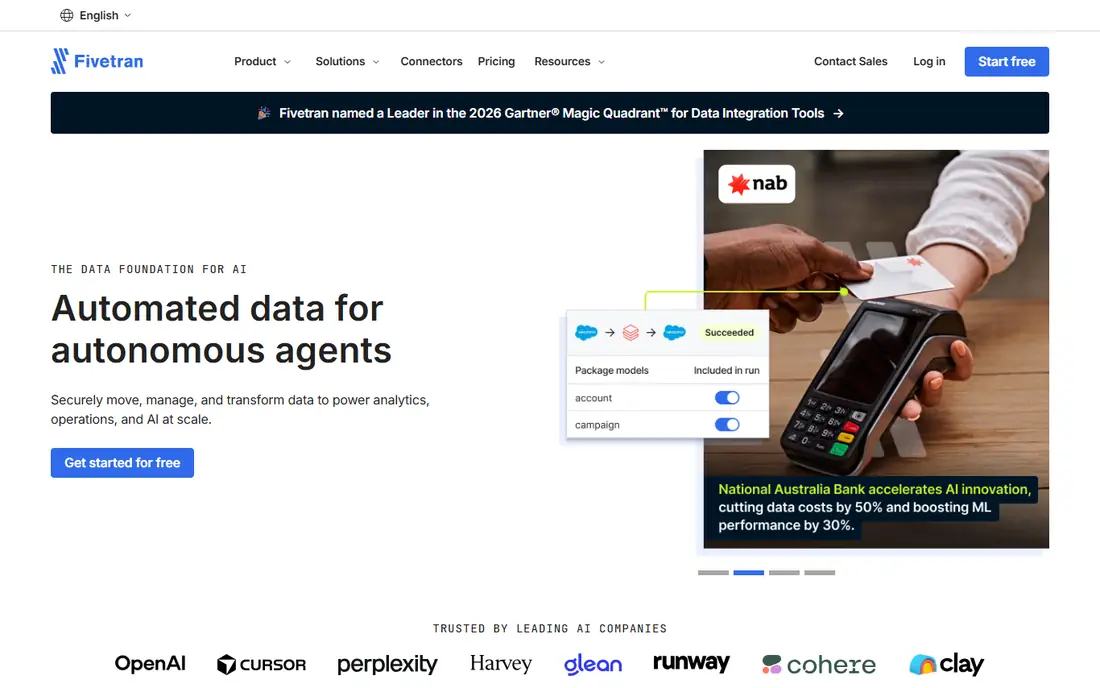
Fivetran is a managed ELT platform that moves data from databases, apps and files into warehouses and lakes, with change capture for many database sources. Teams like it because connectors are maintained by the vendor, schema changes are handled, and syncs run without a pipeline team watching every job. A free tier for low row volume helps small teams start.
The cost model needs care. Monthly active rows can rise fast when source tables churn, and connection structure affects the bill. For teams that want managed simplicity and broad connectors, Fivetran is a strong Debezium alternative.
- Very large connector catalog
- Low maintenance managed syncs
- Strong warehouse support
- Usage pricing rises with row churn
- Real-time needs may need careful connector choice
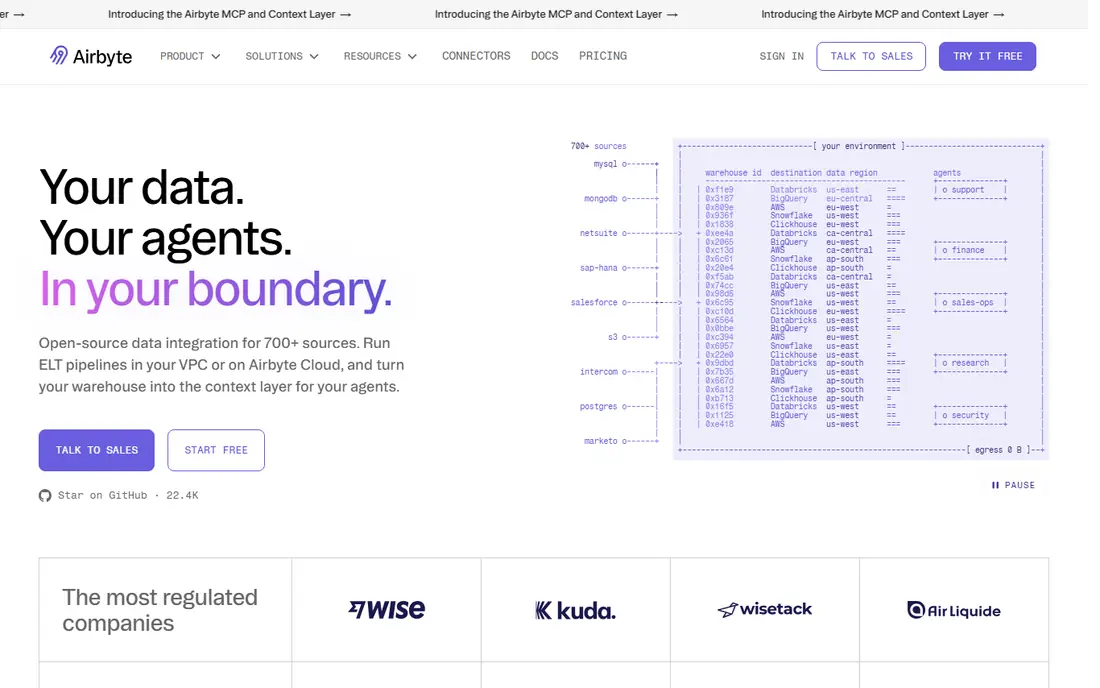
Airbyte offers an open source data integration platform that teams can self-host, plus a cloud service for managed pipelines. It covers database CDC, SaaS sources and warehouse destinations, with transformations through dbt or warehouse SQL. Technical teams like the control and the community connector work.
Managed cloud pricing uses credits or capacity, and sync frequency depends on plan, so true streaming use needs a higher tier. For teams that want open source flexibility with a managed path, Airbyte is a practical Debezium alternative.
- Open source self-hosted option
- Large connector catalog
- Cloud plans for managed use
- Cloud sync intervals vary by plan
- High-volume costs need sizing
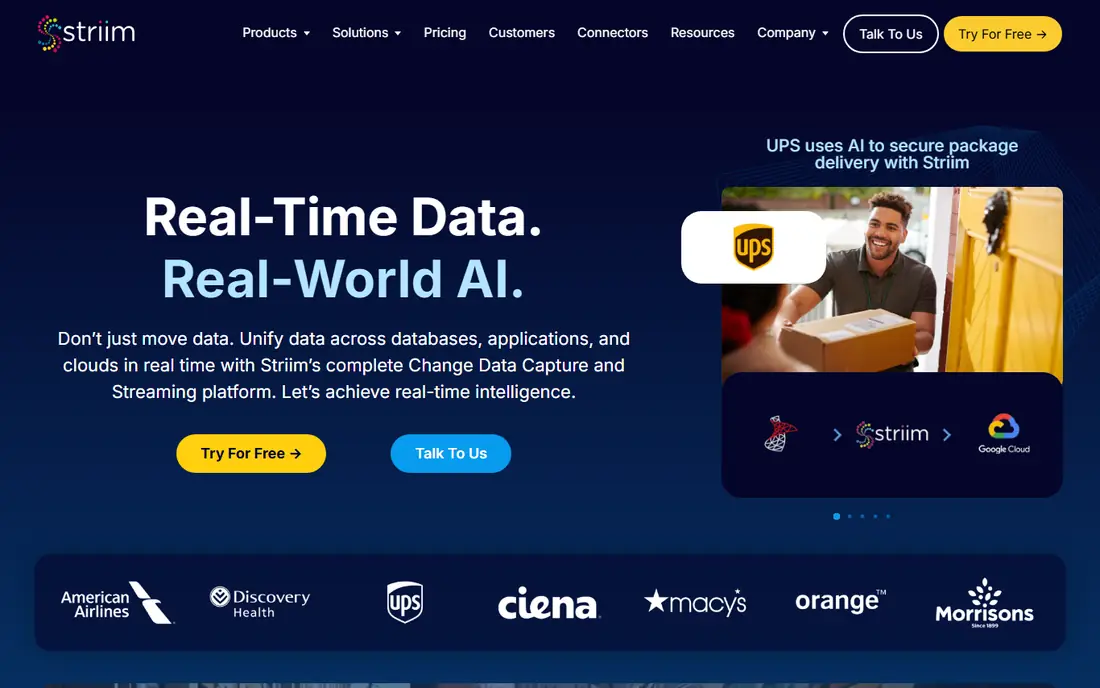
Striim is a real-time data integration platform built for continuous CDC, streaming and processing. It reads database logs, enriches and filters events in flight, and delivers to warehouses, lakes and messaging systems. Banks, retailers and large firms use it when latency and scale matter more than low entry cost.
The trade-off is complexity and price. Striim suits teams with streaming expertise and enterprise budgets, not a solo developer moving one small table. For real-time enterprise replication, it is one of the closest Debezium alternatives in spirit.
- Real-time streaming CDC
- In-flight processing and enrichment
- Enterprise deployment options
- Enterprise pricing and setup
- Needs skilled operators for complex pipelines
Qlik Replicate, formerly Attunity Replicate, replicates data from a wide range of databases, including legacy and mainframe sources, to warehouses, lakes and cloud targets. It uses log-based capture for low-impact replication, with full load and ongoing change options. Large firms with mixed old and new systems value that breadth.
Pricing is not published as a simple monthly rate, and deployment needs planning for sources, targets and network rules. For enterprise replication where Debezium alone would need heavy custom work, Qlik Replicate is a serious alternative.
- Log-based replication across many databases
- Mainframe and legacy support
- Enterprise governance
- Pricing is quote based
- Setup needs enterprise planning
Hevo Data is a no-code ELT platform for small and mid-size teams that want database and SaaS data in a warehouse without building pipelines. Pipelines can be set up from a visual interface, with transformations in Python or drag-and-drop steps, plus dbt on paid plans. A free tier helps teams test a first pipeline.
Event-based pricing means high-churn tables cost more, so measure change volume before you commit. For teams that want a managed, no-code path from databases to a warehouse, Hevo Data is a useful Debezium alternative.
- No-code pipeline setup
- Free tier for low event volume
- Good warehouse destinations
- High change rates raise event costs
- Streaming pipelines need sales enablement in some cases
Estuary Flow is a streaming data platform that captures database changes and delivers them continuously to warehouses, lakes and other systems. It suits teams that need fresher data than scheduled batch syncs, with derivations for cleaning and joining data in flight. A free tier for low volume helps teams test streaming.
Pricing combines data volume and connector runtime, so model both capture and delivery volume. For real-time analytics where minutes matter, Estuary Flow is a strong managed Debezium alternative.
- Streaming CDC with low latency
- Per-volume pricing
- SQL and TypeScript transformations
- Volume and connector costs need modeling
- Smaller team than Fivetran or Airbyte
Confluent Cloud is a managed Kafka platform that can run CDC connectors, stream processing and data sharing for event-driven systems. Teams already using Kafka often add CDC here rather than running separate infrastructure, and they can process events with SQL or code before delivery. That makes it a natural home for Debezium style events.
The cost model is multi-part, covering compute, throughput, storage and networking, so total bills need careful sizing. For Kafka-centered teams, Confluent Cloud offers scale and tooling that a single CDC tool does not.
- Full Kafka platform in the cloud
- CDC connectors and stream processing
- Strong ecosystem
- Total cost combines compute, storage and networking
- Needs Kafka knowledge
AWS Database Migration Service helps teams move databases to AWS and keep them in sync with ongoing replication. It supports full load plus change capture for many sources, with targets in AWS databases and S3. Teams migrating to AWS often use it as a first step, then keep it for replication.
It is tied to the AWS ecosystem, so multi-cloud teams may prefer a neutral tool. For AWS migrations and replication, it is a managed, practical Debezium alternative.
- Managed migration and ongoing replication in AWS
- Wide source and target support
- Pay for compute used
- AWS centered
- Latency and schema handling vary by source and target
Google Cloud Datastream captures changes from databases such as MySQL, PostgreSQL, Oracle and SQL Server, and streams them into BigQuery, Cloud Storage or other Google targets. It handles backfill and then ongoing CDC, which suits analytics teams building a warehouse in Google Cloud. Serverless operation removes server management.
Pricing is based on data processed, so backfill size and change volume matter. For Google Cloud analytics, Datastream is a clean, managed Debezium alternative.
- Serverless CDC into BigQuery and storage
- Backfill plus ongoing changes
- Google Cloud integration
- Google Cloud centered
- Pricing is per data processed, which needs volume checks
Stitch, from Talend, is a simple extract and load service that moves data from databases and SaaS apps into warehouses. Small teams like its straightforward setup and row-based tiers, especially when they need regular syncs rather than sub-minute streaming. It covers common sources without pipeline code.
The limit is CDC depth. It does not match log-based streaming tools for real-time or delete-heavy workloads, and some sources use polling rather than log capture. For simple, low-volume replication, Stitch is a low-friction Debezium alternative.
- Simple setup for basic pipelines
- Clear row-tier pricing
- Good for small data teams
- CDC depth is limited compared with log-based tools
- Fewer advanced streaming features
How we picked these
We compared official product pages, pricing pages and public documentation for CDC and data integration tools that still work in October 2026. We focused on log-based capture, streaming delivery, warehouse destinations and managed operation, since those are the core Debezium jobs. We mixed managed, open source and cloud-native tools, and we left out tools that only copy files or only sync SaaS apps.
What to check before you choose
Start with latency and volume. Ask how fresh data must be: seconds, minutes or hourly, and how many row changes occur per day. A scheduled sync tool may be enough for daily reports, while a streaming tool is needed for live dashboards or event-driven apps. Test with your largest table, not a demo table.
Check schema change handling, deletes and backfill. Some tools add columns cleanly, some need a reload, and some handle deletes differently. Also check destination support, security controls and failure recovery, since a pipeline that fails silently is worse than one that fails loudly.
Cost at real change volume
Model costs from your own change logs for a month, including backfill, row churn and destination writes. Compare row, event, volume and compute models on the same workload, and ask vendors for a written estimate at your volume before you sign.
Frequently asked questions
What is Debezium?
Debezium is an open source log-based change data capture project that reads database change logs and emits change events, commonly into Kafka or a compatible streaming system. Teams use it for replication, analytics and event-driven apps.
Which Debezium alternative is best for managed use?
Fivetran, Hevo Data and Estuary Flow suit managed use, with Fivetran offering the broadest connector catalog, Hevo Data offering a simpler no-code start, and Estuary Flow offering streaming delivery.
Which Debezium alternative is best for real-time data?
Striim and Estuary Flow are strong for real-time CDC, while Confluent Cloud suits Kafka-based streaming. Test latency on your own workload, since source, network and target all affect freshness.
Can I self-host a Debezium alternative?
Yes. Airbyte offers a self-hosted open source option, and Confluent and other tools offer private deployment paths. Self-hosting gives control but adds maintenance, monitoring and upgrade work.
Do these tools handle schema changes?
Most handle common schema changes, such as new columns, but behavior varies for renames, type changes and deletes. Test schema changes on a staging pipeline before you rely on them in production.
Is a managed CDC tool cheaper than running Debezium?
It depends on volume and staff time. Debezium itself has no license fee, but you pay for servers, Kafka and engineering time. Managed tools charge for usage, but they remove much of that operating work.
Sources
See where you really rank - block by block
ProMapRanker scans Google Maps across a grid of your service area. Simple monthly plans from $19, white-label on every plan.
Start freeKeep reading
 wpforms alternatives
Best WPForms Alternatives in 2026
We compare 9 wpforms alternatives for WordPress forms, with free and paid options, current pricing notes, and honest limits for small business sites in 2026.
Read → windows task scheduler alternatives
Best Windows Task Scheduler Alternatives in 2026
Looking for Windows Task Scheduler alternatives? We compare 9 schedulers for Windows and cross-platform work, from free tools to enterprise automation.
Read → which ai video service is best
Which AI Video Service Is Best in 2026
which ai video service is best? We compare 10 legitimate AI video services on price, avatars, editing and output quality to help you pick the right tool.
Read →