 ProMapRanker
Best Darktrace Alternatives in 2026


Network detection for large security teams · Pricing starts at: See website
Key takeaways
- Vectra AI is the closest network detection match for Darktrace, with behavior-based detection across network, identity, cloud, and SaaS.
- CrowdStrike Falcon and SentinelOne lead on endpoint detection and response, and both publish entry pricing that smaller teams can check.
- Microsoft Defender XDR is the most cost-effective option for firms already on Microsoft 365, with standalone pricing from $3 per user per month.
- Most enterprise detection platforms are quote-based, so expect a scoping call and a trial before you get a firm number.
- Small teams without a security operations center should favor managed options such as Arctic Wolf over tools that assume in-house analysts.
Quick comparison
| Pick | Great for | Pricing starts at | Free tier | |
|---|---|---|---|---|
| Vectra AI | Network detection for large security teams | See website | No | Visit |
 CrowdStrike Falcon | Cloud-native endpoint protection | See website | Free trial | Visit |
 SentinelOne | Autonomous endpoint response | See website | Free trial | Visit |
 ExtraHop | Deep network visibility | See website | Free trial | Visit |
 Palo Alto Cortex XDR | Palo Alto network customers | See website | Free trial | Visit |
 Microsoft Defender XDR | Microsoft 365 environments | $3 per user per month | Free trial | Visit |
 Trend Micro Vision One | Broad multi-layer protection | See website | Free trial | Visit |
 Sophos Intercept X | SMB endpoint and XDR | See website | Free trial | Visit |
 Arctic Wolf | Managed detection for lean teams | See website | No | Visit |
The best darktrace alternatives
Darktrace is known for AI-driven network detection and autonomous response, but its enterprise pricing and deployment model do not fit every firm. The tools below cover the same core job from different angles: some watch the network, some protect endpoints, and some hand you a managed team. Our pick for most firms with a real security team is Vectra AI for network detection, paired with a strong endpoint tool.
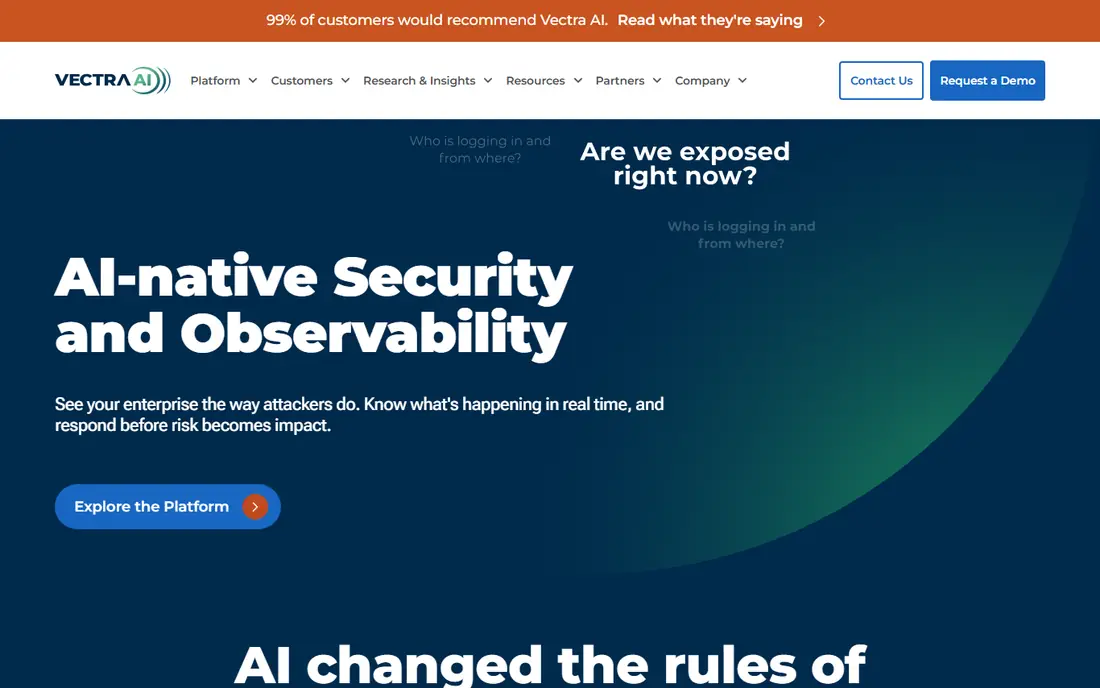
Vectra AI focuses on Attack Signal Intelligence, which correlates suspicious behavior across network traffic, identity activity, cloud workloads, and SaaS apps. That breadth helps a security operations center spot an attack that moves from a phished account to cloud data, rather than seeing each step in isolation. Reviewers often cite lower alert noise compared with older network tools, though results vary by environment.
The trade-offs are price and effort. Vectra is quote-based and aimed at enterprise teams, with deployments that need appliances and tuning. It also leans more toward detection and investigation than autonomous response, so firms that want Darktrace-style automatic containment may need a companion endpoint tool. For a mature SOC, it is the closest network-first alternative.
- Behavior-based detection across network, identity, and cloud
- High-fidelity alerts
- Managed detection option
- Quote-based enterprise pricing
- Deployment takes planning
- Response features are lighter than Darktrace
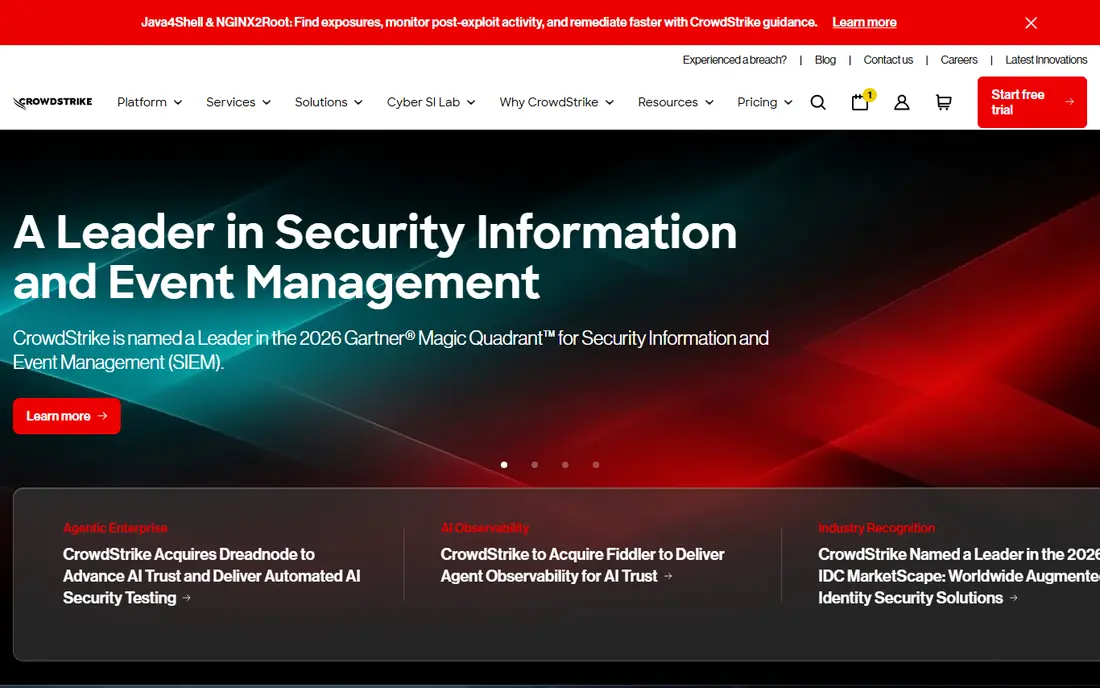
CrowdStrike Falcon protects endpoints from a cloud console, with detection, threat hunting, and response in one agent. Its threat intelligence draws on a large customer base, which helps it recognize new attack patterns quickly. For firms without analysts, the Falcon Complete managed option adds around-the-clock response from CrowdStrike staff.
Pricing is tiered and can climb as you add modules and devices, so small firms should check the entry tiers carefully. The platform is also endpoint-first, so network visibility is not its main strength. If your biggest risk is laptops, servers, and cloud workloads rather than raw network traffic, Falcon is a strong Darktrace alternative.
- Cloud-native agent and console
- Broad threat intelligence
- Managed Complete option for lean teams
- Enterprise pricing adds up at scale
- Smaller Falcon Go tier caps devices
- Modules can confuse buyers
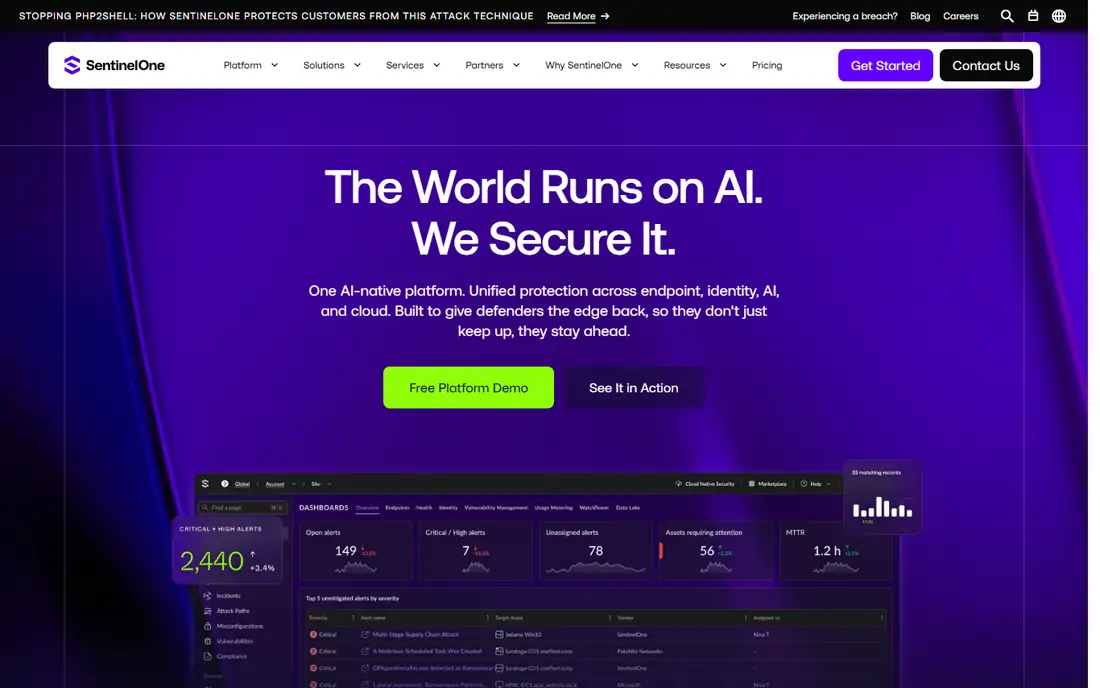
SentinelOne Singularity combines endpoint detection with autonomous response, including rollback that can restore files after a ransomware event. That self-contained response appeals to teams that cannot staff a 24-hour desk but still want fast containment. It covers Windows, macOS, Linux, and cloud workloads from one console.
The catch is packaging. Different tiers carry different features, and the managed WatchTower service is an add-on rather than included by default. Buyers should confirm exactly which tier includes the response and hunting features they need. For endpoint-heavy firms that want automation, SentinelOne is one of the best Darktrace alternatives.
- Autonomous rollback for ransomware
- Strong endpoint detection
- Cloud and on-premises coverage
- Pricing varies by tier and partner
- Managed service is an add-on
- Console depth takes learning
ExtraHop RevealX watches network traffic at packet level, decrypts where permitted, and reconstructs what actually happened during an incident. That forensic depth helps investigators answer questions that endpoint logs alone cannot, such as which internal system talked to an attacker first. It also covers cloud traffic, not just the office network.
The tool assumes network skill. Deployment, decryption setup, and tuning take expertise, and pricing is quote-based. Small firms may find it more than they need. For larger firms that want to understand network behavior as deeply as Darktrace promises, ExtraHop is a serious, evidence-rich option.
- Deep packet inspection and decryption
- Strong forensic detail
- Cloud and on-premises coverage
- Quote-based pricing
- Needs network expertise
- Can be costly for small firms
Cortex XDR pulls together data from Palo Alto firewalls, endpoints, and cloud sources, then uses analytics to surface attacks that span those layers. Its automation can contain hosts, block indicators, and open investigation timelines with less manual work. For a firm already running Palo Alto firewalls, that integration is a major advantage.
Outside the Palo Alto stack, the value case is weaker, since some of the richest data comes from Palo Alto products themselves. Pricing is also quote-based and licensing can be complex. If your network already runs on Palo Alto, Cortex XDR is a natural Darktrace alternative. If not, compare it carefully against Vectra and ExtraHop.
- Ties network, endpoint, and cloud data together
- Strong automation
- Deep Palo Alto integration
- Quote-based pricing
- Best value inside the Palo Alto stack
- Complex licensing
Microsoft Defender XDR unifies endpoint, identity, email, and cloud app signals for firms already on Microsoft 365. Defender for Business is available standalone from $3 per user per month, which makes it the cheapest credible option on this list for small firms. Larger firms can move to Defender for Endpoint plans with deeper hunting and response features.
The limit is ecosystem fit. Defender shines when mail, identity, and endpoints are all Microsoft, and it is less compelling as a standalone network tool. Managed response also comes through partners rather than Microsoft directly in many cases. For Microsoft shops, though, it is often the smartest first alternative to evaluate.
- Low standalone price for Business
- Deep Microsoft 365 integration
- Unified endpoint, identity, and email signals
- Best inside Microsoft environments
- Advanced features need higher plans
- Managed response is via partners
Trend Micro Vision One correlates signals across endpoint, email, network, and cloud layers, giving analysts a risk view that spans the attack chain. That breadth suits firms that already use Trend Micro for endpoint or email security and want one investigation console. Partners can also provide managed detection on top of the platform.
The console can feel broad for a lean team, and the richest data comes from Trend Micro layers. Pricing is quote-based, so budget a sales cycle. If you want a single vendor view across several layers without building it yourself, Vision One deserves a trial.
- Covers endpoint, email, network, and cloud layers
- Risk scoring across layers
- Partner-managed options
- Quote-based pricing
- Console breadth can overwhelm small teams
- Some features need Trend Micro products
Sophos Intercept X pairs endpoint protection with XDR features, and it integrates well with Sophos firewalls for a small or mid-size firm that wants one vendor. The optional Sophos MDR service adds analyst-led response for teams without their own security staff. That combination is practical for firms that need protection without hiring a SOC.
The trade is depth. Sophos is excellent for SMBs but does not match the largest enterprise platforms on every advanced hunting feature. Pricing often runs through partners, so published numbers are limited. For a small business leaving Darktrace on cost grounds, Sophos is a sensible, well-supported landing place.
- Strong SMB fit
- Optional managed response
- Firewall and endpoint integration
- Pricing via partners in many cases
- Enterprise depth below larger rivals
- Managed tiers add cost
Arctic Wolf is a managed detection and response service rather than a tool you run alone. Its analysts monitor telemetry from your endpoints, network, and cloud accounts, triage alerts, and guide response. That model suits firms that know they need 24-hour coverage but cannot hire analysts to provide it.
The trade is control and trust. You rely on an outside team for triage speed and judgment, and pricing is quote-based on your environment size. Firms with a strong in-house SOC may prefer a platform they run themselves. Firms without one will often get better outcomes from Arctic Wolf than from a powerful tool nobody watches.
- Managed SOC included
- Covers endpoint, network, and cloud telemetry
- Concierge-style support model
- Quote-based pricing
- You trust an outside SOC
- Less hands-on control than a self-run platform
How we picked these
We compared official product pages, pricing pages, and public documentation for each tool, focusing on detection coverage, response ability, deployment model, and whether a managed option exists. We favored tools that are actively sold in October 2026 and that cover network detection, endpoint detection, and managed detection as distinct paths. We did not claim hands-on testing, and where a vendor does not publish a price we wrote See website rather than guessing.
How to choose a Darktrace replacement
Start by naming what Darktrace actually did for you. If it mainly watched network traffic, a network-first tool such as Vectra AI or ExtraHop is the right replacement. If it mainly protected laptops and servers, an endpoint platform such as CrowdStrike or SentinelOne fits better. If nobody watched its alerts closely, a managed service such as Arctic Wolf may improve outcomes more than any new tool.
Next, test alert quality in your own environment, not in a demo. Run a trial with real traffic, count how many alerts your team can actually triage, and check how clearly each alert explains the evidence. A tool that fires hundreds of low-value alerts will be ignored, no matter how strong its marketing claims. Also test response: can it isolate a host, block an account, or roll back files without a long manual process.
Finally, price the staffing, not just the license. A self-run platform needs analysts, tuning time, and on-call coverage. A managed service bundles that labor but costs more per year and gives you less direct control. Add both sides to the total before you decide, and confirm contract length, data retention, and exit terms while you still have room to negotiate.
Frequently asked questions
What are the best alternatives to Darktrace?
Vectra AI is the best network-first alternative, while CrowdStrike Falcon and SentinelOne lead on endpoint detection and response. Microsoft Defender XDR is best for Microsoft 365 shops, and Arctic Wolf is best for firms that want a managed team. The right pick depends on whether your main gap is network, endpoint, or staffing.
Is there a cheaper alternative to Darktrace?
Microsoft Defender for Business, from $3 per user per month standalone, is the cheapest credible option here for small firms on Microsoft 365. Sophos Intercept X is also a practical SMB option, though pricing runs through partners. Enterprise network tools such as Vectra AI and ExtraHop remain quote-based and are not budget picks.
Does CrowdStrike replace Darktrace?
CrowdStrike can replace Darktrace for endpoint-focused firms, since Falcon covers detection, hunting, and response on devices and cloud workloads. It does not provide the same depth of network packet analysis as a network detection tool. Firms that need both should pair an endpoint platform with a network tool or a managed service.
What is network detection and response?
Network detection and response watches network traffic for suspicious behavior, rather than relying only on known malware signatures. It looks for patterns such as unusual lateral movement, data exfiltration, and compromised credentials. That behavior focus is why it can catch attacks that slip past traditional firewalls and antivirus tools.
Do I need a security team to run these tools?
A self-run platform works best with at least one dedicated analyst and an on-call plan, since alerts need triage and tuning. Firms without that staffing should choose a managed option such as Arctic Wolf or a managed tier from CrowdStrike, SentinelOne, or Sophos. Buying a powerful tool that nobody watches is worse than buying a simpler managed service.
Sources
See where you really rank - block by block
ProMapRanker scans Google Maps across a grid of your service area. Simple monthly plans from $19, white-label on every plan.
Start freeKeep reading
 wpforms alternatives
Best WPForms Alternatives in 2026
We compare 9 wpforms alternatives for WordPress forms, with free and paid options, current pricing notes, and honest limits for small business sites in 2026.
Read → windows task scheduler alternatives
Best Windows Task Scheduler Alternatives in 2026
Looking for Windows Task Scheduler alternatives? We compare 9 schedulers for Windows and cross-platform work, from free tools to enterprise automation.
Read → which ai video service is best
Which AI Video Service Is Best in 2026
which ai video service is best? We compare 10 legitimate AI video services on price, avatars, editing and output quality to help you pick the right tool.
Read →