 ProMapRanker
Best CreatorIQ Alternatives in 2026

Key takeaways
- GRIN is the best all-round alternative for e-commerce brands, with creator management, gifting, affiliate tracking, and revenue attribution.
- Traackr leads on enterprise measurement, benchmarking, and spend governance for global programs.
- Modash and HypeAuditor are the strongest picks for discovery and vetting, with large databases and audience quality checks.
- Aspire and Upfluence suit brands that want marketplace recruitment and customer-to-creator programs tied to sales.
- Most enterprise platforms are quote-based, while mid-market tools publish entry prices from about $199 to $649 per month.
Quick comparison
| Pick | Great for | Pricing starts at | Free tier | |
|---|---|---|---|---|
 GRIN | E-commerce creator programs | See website | Free trial | Visit |
 Aspire | Marketplace recruitment and UGC | See website | No | Visit |
 Upfluence | Customer-to-creator and affiliate programs | See website | No | Visit |
 Traackr | Enterprise measurement and benchmarking | See website | No | Visit |
 Modash | Fast creator discovery and vetting | $199 per month | No | Visit |
 HypeAuditor | Audience vetting and fraud detection | See website | Free trial | Visit |
 Influencer Hero | All-in-one mid-market programs | $649 per month | No | Visit |
 Later Influence | Visual campaign management | See website | No | Visit |
 Captiv8 | Enterprise reporting and brand safety | See website | No | Visit |
The best creatoriq alternatives
CreatorIQ is an enterprise influencer platform known for API-connected data, governance, and custom reporting, but its annual contracts and onboarding effort exceed what many growing brands need. The platforms below cover discovery, campaign management, e-commerce attribution, and measurement in different mixes. Our pick for most e-commerce brands is GRIN, for its balance of management, gifting, and sales tracking.
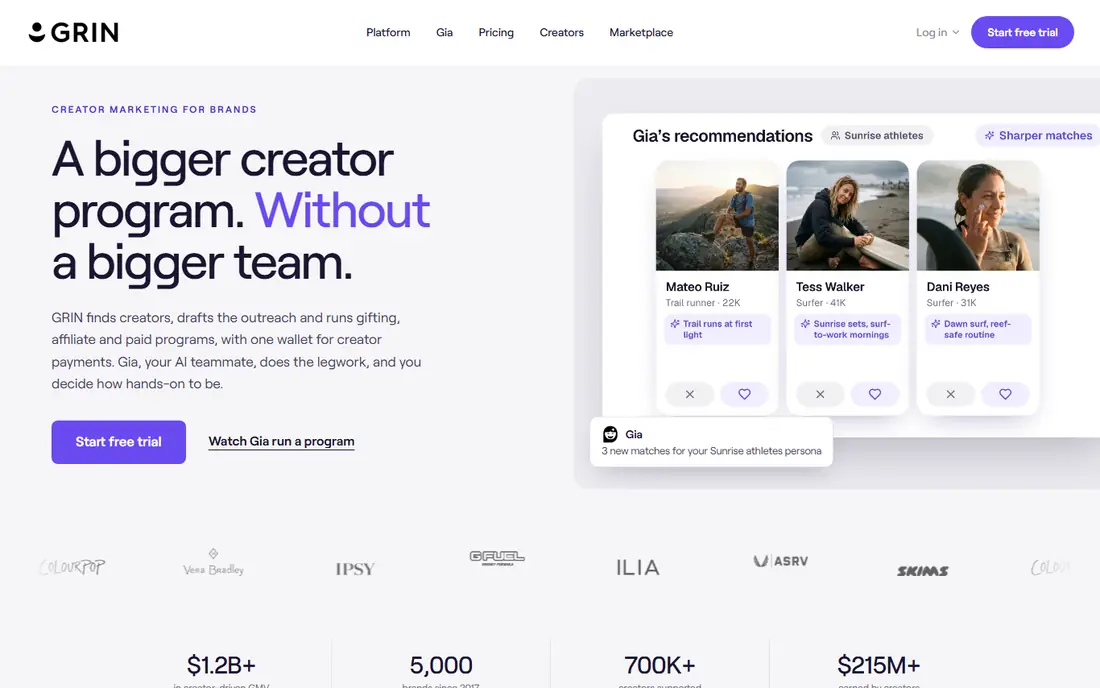
GRIN is built for e-commerce brands that run creator programs as a sales channel, not just a branding exercise. It combines creator discovery and CRM, product seeding, affiliate links, discount codes, and payouts, with reporting that ties creator activity to revenue. Integrations with Shopify and WooCommerce keep product, order, and payout data in sync.
The catch is tiering. Entry pricing has been reported in a wide range depending on plan and timing, so confirm the current rate and what is included before budgeting. Setup also takes effort for a large program, though less than a full enterprise rollout. For DTC brands that need attribution, GRIN is the most complete CreatorIQ alternative.
- Creator CRM plus gifting and payouts
- Affiliate and revenue attribution
- Shopify and WooCommerce integrations
- Pricing varies by tier
- Enterprise features need higher plans
- Setup takes time for large programs
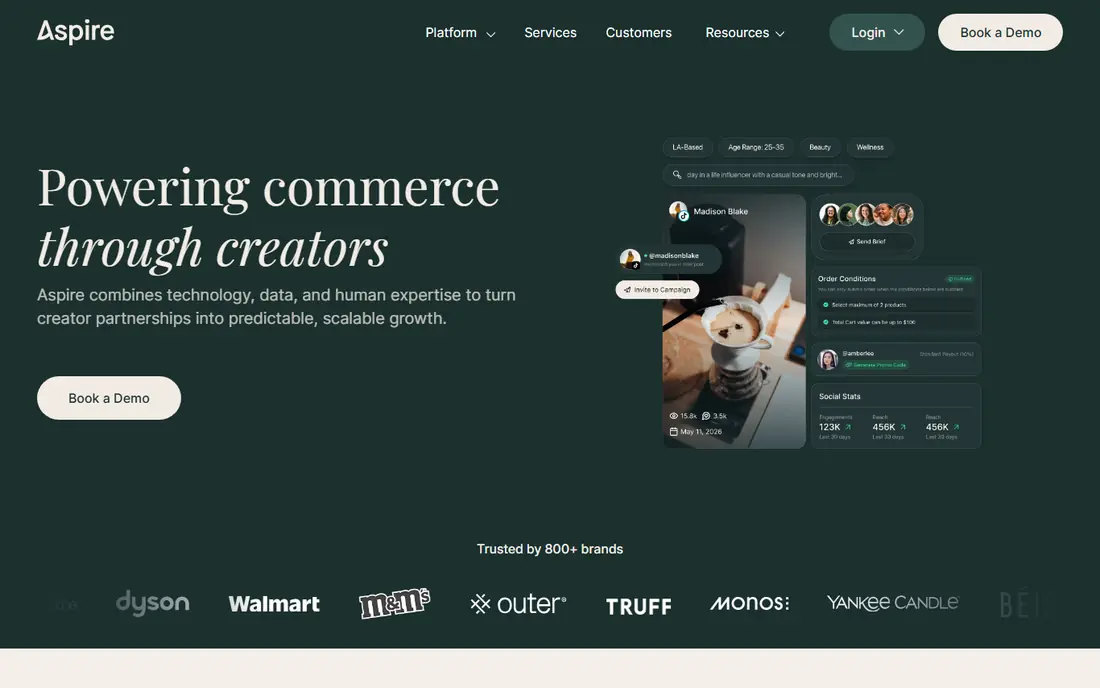
Aspire, formerly AspireIQ, helps brands recruit creators through a marketplace and application pages, then manage campaigns, content approvals, and gifting in one workflow. That inbound model suits brands that want creators to apply, rather than chasing each one manually. Shopify gifting and content tools make it practical for e-commerce teams that need user-generated content at scale.
Pricing is typically quote-based with an annual commitment, and reported entry rates have varied, so get a current quote. Marketplace depth also varies by niche, so test discovery in your category before signing. For community-led and UGC-heavy programs, Aspire is a strong alternative.
- Creator marketplace and application pages
- Shopify gifting workflows
- Campaign and content management
- Quote-based pricing in many cases
- Annual commitment common
- Marketplace size varies by niche
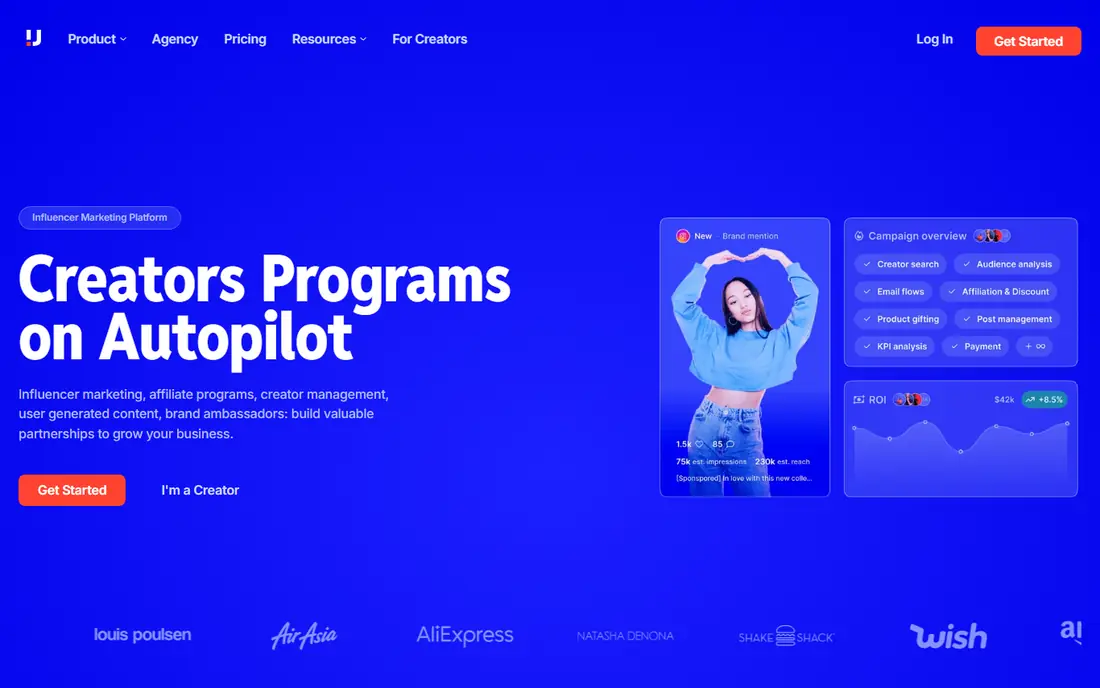
Upfluence combines creator discovery with a CRM, affiliate tracking, and gifting, with a distinctive strength in turning existing customers into creators and affiliates. Brands can search a large database, invite customers based on purchase history, and track sales from creator links and codes. Integrations cover Shopify, WooCommerce, and other e-commerce platforms.
The trade is commitment and complexity. Plans commonly run on an annual commitment, and the full feature set can feel dense for a first-time user. Pricing has also varied by source, so confirm the current quote. For brands that want customer-driven growth tied to sales, Upfluence is a compelling pick.
- Large creator database
- Turns customers into affiliates
- Affiliate tracking and gifting
- Annual commitment common
- Pricing varies by plan
- Interface can feel dense for beginners
Traackr is built for global brands that need rigorous measurement: benchmarking against competitors, tracking spend by market and creator, and managing long-term creator relationships. Its data-led approach helps large teams justify budgets and compare performance across regions and campaigns. That governance focus is why it is often compared directly with CreatorIQ.
The cost is enterprise scale. Pricing is annual and quote-based, with reported entry levels in the tens of thousands per year, so it is not a small-brand tool. Smaller teams should look at Modash or Influencer Hero instead. For global programs where measurement and governance matter most, Traackr is the leader here.
- Deep influencer intelligence and benchmarking
- Budget and spend governance
- Relationship management
- Enterprise annual pricing
- No public price
- Heavier than mid-market tools
Modash focuses on discovery done well: fast search across a large creator database, with profile data, audience checks, and outreach tools. Brands that need to find many suitable creators quickly, vet them, and track affiliate performance will move fast with Modash. Shopify workflows help e-commerce teams link discovery to sales.
The limit is breadth. Modash is stronger on discovery and vetting than on full campaign management, payouts, and content approvals, so some teams pair it with another tool. Entry pricing from $199 per month billed yearly makes it accessible for mid-size teams. If discovery is your bottleneck, Modash is the fastest route here.
- Large creator database
- Fast AI-powered search
- Shopify affiliate workflows
- Discovery-first, less full campaign management
- Annual billing common
- Higher tiers add cost
HypeAuditor helps brands check whether a creator's audience is real, relevant, and engaged before paying for a post. Its fraud detection, audience quality scores, and demographic breakdowns reduce the risk of buying reach that never converts. Social listening and discovery tools round out the platform for teams that vet many creators.
The trade is focus. HypeAuditor is analytics-first, so campaign management, gifting, and payouts are less central than in GRIN or Aspire. Pricing also varies, with entry rates reported around $299 per month billed yearly for some plans, so confirm the current tier. For vetting-led programs, it is an excellent safeguard.
- Audience quality and fraud analysis
- Large database
- Social listening features
- Pricing varies by plan
- Analytics-first, less campaign management
- Learning curve for reports
Influencer Hero aims to give mid-market brands an all-in-one platform without enterprise contracts: discovery, outreach automation, CRM workflows, gifting, affiliate tracking, and ROI reporting. Entry pricing from $649 per month with a short minimum term makes it easier to test than a five-figure annual deal. That balance has made it popular with growing DTC brands.
The catch is budget for the smallest brands, since $649 per month is still a real commitment. It is also a newer vendor than Traackr or CreatorIQ, so enterprise buyers should check integrations and support depth. For most mid-size brands, Influencer Hero is the best blend of breadth and price here.
- Discovery, CRM, gifting, affiliate tracking, and reporting in one place
- AI outreach
- Clear entry price
- Monthly minimum term
- Entry price may exceed small-brand budgets
- Newer vendor than enterprise rivals
Later Influence, part of the Later social platform, combines influencer campaigns with social media scheduling and management in visual workflows. Brands can run creator campaigns, manage UGC, handle Shopify gifting, and coordinate posting from one suite. That combination suits social teams that already plan content in Later and want creator work in the same place.
Pricing is quote-based, with reported entry levels in the tens of thousands per year plus onboarding, so it is an enterprise or upper mid-market buy. Teams that only need influencer tools may find the wider social suite more than necessary. For social-led brands, Later Influence is a convenient, visual alternative.
- Visual campaign workflows
- Combines influencer work with social scheduling
- Shopify gifting and UGC tools
- Quote-based enterprise pricing
- Onboarding fee reported
- Social suite may exceed influencer-only needs
Captiv8 serves large brands and agencies that need detailed reporting, competitive benchmarking, and brand safety controls across campaigns. Its analytics help teams compare creators, track campaign performance, and manage approvals with governance in mind. Collaboration tools support large teams working across markets.
The trade is cost and weight. Pricing is annual and quote-based, with reported entry levels around $25,000 per year plus onboarding, so small brands should look elsewhere. For enterprise teams that need rigorous reporting and compliance, Captiv8 is a credible CreatorIQ alternative.
- Advanced reporting and benchmarking
- Brand safety and compliance tools
- Team collaboration
- Enterprise annual pricing
- Onboarding fee reported
- Heavier than mid-market tools
How we picked these
We compared official product pages, pricing pages, and public documentation for each platform, focusing on discovery, vetting, campaign management, e-commerce attribution, and reporting. We favored platforms that are actively sold in October 2026 and that cover a mix of mid-market and enterprise options. We did not claim hands-on testing, and where a vendor does not publish a price we wrote See website rather than guessing.
How to choose a CreatorIQ replacement
Start with your program shape. E-commerce brands that need sales attribution should shortlist GRIN, Upfluence, and Influencer Hero. Global brands that need benchmarking and governance should shortlist Traackr and Captiv8. Brands whose main problem is finding and vetting creators should shortlist Modash and HypeAuditor. That one decision will cut the list in half.
Next, test discovery in your niche, not in a generic demo. Search for creators in your actual category, language, and audience size, then check audience quality, past brand work, and contactability. A database that looks huge in marketing may be thin in your niche. Also test the full workflow: invite, brief, approve content, ship product, and pay, since friction in any step will slow your team.
Finally, confirm total cost and contract terms. Enterprise platforms often charge annual fees plus onboarding, while mid-market tools charge monthly with a short minimum. Add up discovery, campaign, affiliate, and reporting tiers, and check whether creator payouts or platform fees sit on top. A cheaper monthly rate that excludes payouts can end up costing more than a higher all-in price.
Frequently asked questions
What are good creatoriq alternatives?
GRIN is a good all-round alternative for e-commerce brands, Traackr is best for enterprise measurement, and Modash is best for fast discovery. Influencer Hero offers a strong mid-market all-in-one option from $649 per month. The best pick depends on whether sales attribution, governance, or discovery matters most.
Is there a cheaper alternative to CreatorIQ?
Yes. Modash from $199 per month and Influencer Hero from $649 per month are far cheaper than enterprise annual contracts. HypeAuditor also offers entry plans for vetting-led teams. Cheaper tools usually cover discovery and mid-market campaigns well, but may lack the custom governance of CreatorIQ.
Which alternative is best for Shopify brands?
GRIN, Aspire, and Upfluence are all strong for Shopify brands, with gifting, affiliate tracking, and order sync. GRIN leads on revenue attribution, Aspire leads on marketplace recruitment and UGC, and Upfluence leads on turning customers into affiliates. Test gifting and payout workflows in your Shopify store before choosing.
How do I vet creators before paying them?
Check audience quality, follower growth patterns, engagement rates, and demographic fit, using a tool such as HypeAuditor or Modash. Review past brand work and content quality manually, and start with a small paid test before a long contract. Vetting protects budget and brand safety far better than follower counts alone.
Do I need an enterprise platform?
You need an enterprise platform only if you run global programs, need strict governance and custom reporting, or manage many markets and agencies. Most growing brands do well with a mid-market tool such as GRIN or Influencer Hero. Move to Traackr or Captiv8 when reporting, benchmarking, and compliance become the bottleneck.
Sources
See where you really rank - block by block
ProMapRanker scans Google Maps across a grid of your service area. Simple monthly plans from $19, white-label on every plan.
Start freeKeep reading
 wpforms alternatives
Best WPForms Alternatives in 2026
We compare 9 wpforms alternatives for WordPress forms, with free and paid options, current pricing notes, and honest limits for small business sites in 2026.
Read → windows task scheduler alternatives
Best Windows Task Scheduler Alternatives in 2026
Looking for Windows Task Scheduler alternatives? We compare 9 schedulers for Windows and cross-platform work, from free tools to enterprise automation.
Read → which ai video service is best
Which AI Video Service Is Best in 2026
which ai video service is best? We compare 10 legitimate AI video services on price, avatars, editing and output quality to help you pick the right tool.
Read →