 ProMapRanker
Companies With the Best Beverage Portfolios in 2026


Broadest soft drink portfolio · Pricing starts at: See website
Key takeaways
- Coca-Cola and PepsiCo have the broadest non-alcoholic portfolios, spanning cola, juice, water, sports drinks and ready-to-drink tea and coffee.
- Anheuser-Busch InBev and Heineken dominate beer, while Nestle, Danone and Keurig Dr Pepper cover coffee, water and soft drinks in different ways.
- Monster Beverage shows how a narrow energy focus can still build a large portfolio through partnerships and brand extensions.
- This is a guide based on publicly reported brand range and category coverage, not a verified ranking and not investment advice.
Quick comparison
| Pick | Great for | Pricing starts at | Free tier | |
|---|---|---|---|---|
| The Coca-Cola Company | Broadest soft drink portfolio | See website | No | Visit |
 PepsiCo | Drinks plus snacks breadth | See website | No | Visit |
 Anheuser-Busch InBev | Global beer portfolio | See website | No | Visit |
 Nestle | Coffee and water breadth | See website | No | Visit |
 Heineken | International beer and cider | See website | No | Visit |
 Keurig Dr Pepper | Coffee systems and soft drinks | See website | No | Visit |
 Danone | Water and dairy drinks focus | See website | No | Visit |
 Monster Beverage | Energy drink portfolio | See website | No | Visit |
The best beverage company portfolio
A strong beverage portfolio is not just about one famous brand. It is about covering several categories, reaching many kinds of drinkers, and having brands that can grow when tastes change. The companies below are judged on that breadth, using publicly reported brand ranges, rather than on sales figures alone. This is general information for readers comparing companies, not financial advice.
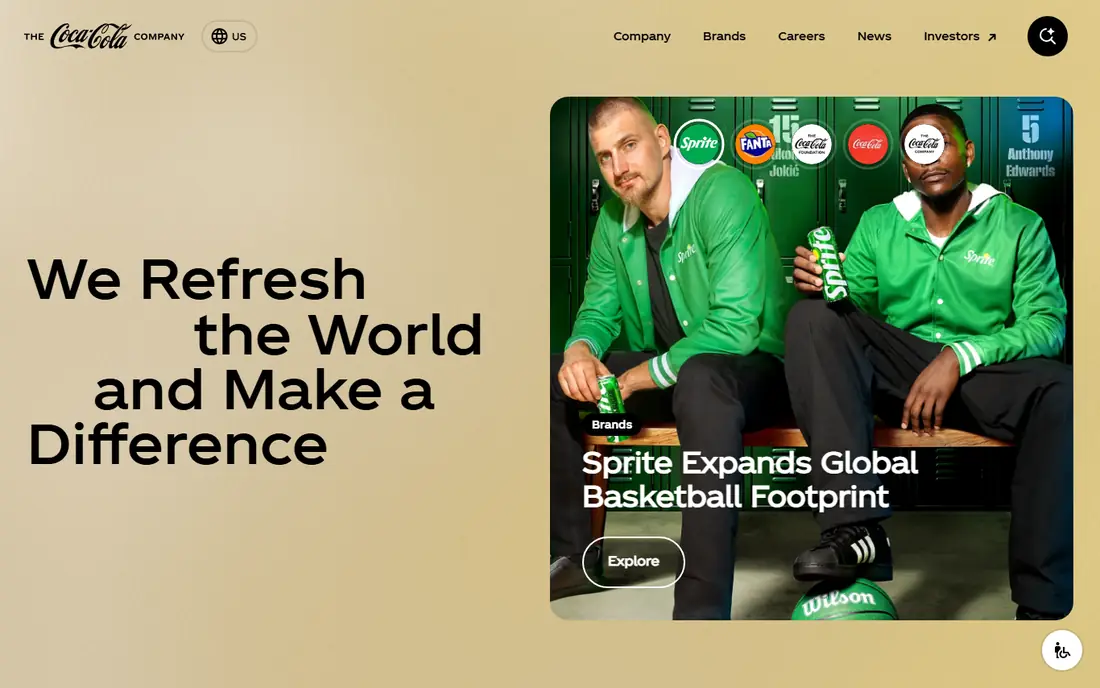
Coca-Cola's portfolio is the benchmark for breadth in non-alcoholic drinks. Beyond its flagship cola, it covers Diet Coke and Coke Zero Sugar, Sprite, Fanta, juices, bottled waters, sports drinks and ready-to-drink teas and coffees. That spread means a shift in one category, such as cola, does not leave the company with nowhere to grow. Its distribution through bottling partners also puts its brands in stores, restaurants and vending machines almost everywhere.
The weakness is concentration in sweetened drinks, even with zero-sugar growth. Health trends and sugar taxes keep pressure on the core business, and the company must keep reformulating and adding lower-sugar options to stay relevant. As a portfolio, though, few companies match its combination of scale, category range and brand recognition.
- Very wide brand range across categories
- Global distribution
- Strong zero-sugar lineup
- Core cola faces health scrutiny
- Portfolio depends heavily on sugary and sweetened drinks
PepsiCo's beverage portfolio includes Pepsi, Mountain Dew, Gatorade, Tropicana and a range of waters, teas and energy partnerships. Gatorade is a particular strength, since sports drinks are a category where PepsiCo leads rather than follows. Its drinks also sit beside a large snacks business, which gives it shelf and foodservice advantage that pure drink companies do not have.
The trade-off is focus. Pepsi trails Coca-Cola in cola, and a company spanning drinks and snacks must split attention across both. For readers judging beverage portfolios alone, PepsiCo still ranks near the top on range, but its cola position and its dependence on a few large brands are honest limits.
- Wide drink range plus snacks
- Gatorade leads sports drinks
- Strong foodservice presence
- Trails Coca-Cola in cola
- Snacks can distract from drink innovation
Anheuser-Busch InBev owns a beer portfolio that spans global brands such as Budweiser, Corona and Stella Artois, alongside many local and craft-style brands. That range covers premium, mainstream and value price points, and it reaches drinkers in markets across the world. Brewing scale also gives it cost and distribution advantages that smaller brewers cannot match.
Concentration is the risk. Unlike Coca-Cola or PepsiCo, its portfolio is mainly beer, so a shift away from beer or a downturn in discretionary spending hits it harder. It has added beyond-beer products, but beer remains the core. Judged purely as a beverage portfolio, its beer breadth is unmatched, while its non-beer range is thinner.
- Huge global beer brand range
- Premium and value tiers
- Strong brewing scale
- Portfolio is concentrated in beer
- Alcohol demand is sensitive to spending shifts
Nestle's beverage strength centers on coffee and water. Nescafe is one of the world's largest coffee brands, and its Nespresso system covers premium at-home coffee, while its water brands include well-known mineral waters sold across many markets. Ready-to-drink coffee and functional drinks add further range, and the wider Nestle group gives it research and distribution scale.
The catch for portfolio watchers is that beverages are only part of Nestle, so drink strategy can be shaped by wider food group priorities. Bottled water also faces environmental and regulatory scrutiny over plastic and water use. Still, on coffee and water alone, Nestle's range is among the strongest on this list.
- Strong coffee brands
- Large water portfolio
- Global food and drink scale
- Beverages are one part of a much larger group
- Water faces environmental scrutiny
Heineken's portfolio is built around its flagship lager, plus brands such as Tiger and Amstel and a cider range that gives it reach beyond beer drinkers. Its international footprint is broad, with brewing and distribution across Europe, Asia, Africa and the Americas. Low- and no-alcohol versions of its main brands also help it respond to changing drinking habits.
Like Anheuser-Busch InBev, Heineken is mainly a beer company, so its portfolio is narrower than the soft drink giants. That focus is also a strength, since its brands are clear and its brewing expertise is deep. For readers comparing beer portfolios specifically, Heineken belongs near the top.
- Strong international lager brands
- Cider range
- Growing low-alcohol options
- Beer concentration
- Smaller non-beer portfolio than soft drink giants
Keurig Dr Pepper combines two different strengths: the Keurig single-serve coffee system and a soft drink portfolio including Dr Pepper, Canada Dry, Snapple and other brands. That mix covers at-home coffee and ready-to-drink refreshment, two very different occasions, and its US distribution network is strong. Energy drink partnerships add a growth category without the company having to build an energy brand from scratch.
Its footprint is more US-focused than the global giants, which limits its international portfolio story. Coffee system growth also depends on households buying and using machines, which can slow. In the US market, though, its combination of coffee systems and soft drinks is distinctive.
- Keurig coffee system plus soft drinks
- Energy drink partnerships
- Strong US distribution
- Portfolio is US-heavy
- Coffee system sales depend on machine adoption
Danone's beverage portfolio centers on natural mineral waters such as Evian and Volvic, plus dairy and plant-based drinks that sit close to its wider nutrition business. That health-led positioning suits drinkers who choose water or functional drinks over sweetened sodas, and its water brands carry strong premium recognition. Its portfolio feels coherent, even if it is narrower than a soft drink giant's.
The limit is range. Danone does not compete in cola, energy or beer at the scale of the companies above, and bottled water growth is modest in mature markets. For a reader who values water and health-positioned drinks, Danone is a strong pick; for sheer category breadth, it sits below Coca-Cola and PepsiCo.
- Strong natural mineral water brands
- Plant-based and dairy drinks
- Health positioning
- Narrower beverage range than cola giants
- Water is a low-growth category in some markets
Monster Beverage shows that a portfolio does not need dozens of categories to matter. Its Monster Energy range covers many flavors, sugar-free versions and related energy brands, and distribution partnerships have put those products in stores worldwide. Energy remains a growth category, and Monster's brand recognition within it is very high.
Narrowness is the clear risk. A portfolio built mainly on energy drinks is exposed to health scrutiny, regulation and changing tastes in a way that a diversified soft drink portfolio is not. Monster has added adjacent products, but energy remains its core. Judged as an energy portfolio, it is excellent; judged on overall breadth, it is the most focused company here.
- Leading energy brand range
- Strong distribution partnerships
- Brand extensions into flavors
- Narrow category focus
- Energy drinks face health and regulatory scrutiny
How we picked these
We compared publicly reported brand ranges, category coverage and geographic reach for large beverage companies, using official company sites and public brand listings. We avoided invented sales figures and scores, and we framed the list as a guide to portfolio breadth rather than a verified ranking. Where a brand list was unclear, we described categories in general terms rather than naming a figure we could not verify.
What makes a beverage portfolio strong
Breadth across occasions matters most: a company that covers morning coffee, midday refreshment, sports and evening drinks is less exposed to a single trend. Brand strength within each category matters too, since a weak brand in a growing category adds little. Finally, watch distribution and innovation: a portfolio only works if new products reach shelves and if older brands are refreshed with lower-sugar or low-alcohol versions when tastes change.
Frequently asked questions
What is the best beverage company portfolio?
For overall breadth, Coca-Cola and PepsiCo are the usual answers, since they cover cola, juice, water, sports drinks and ready-to-drink tea and coffee. For beer, Anheuser-Busch InBev and Heineken lead, while Nestle leads in coffee and water. The best portfolio depends on which categories you care about.
Which company has the most beverage brands?
Coca-Cola reports hundreds of brands across its system, and PepsiCo also reports a very large brand count across drinks and snacks. Exact counts change as brands launch and retire, so treat any single number with care. Category coverage is a more useful measure than a raw brand count.
Are beverage portfolios a good investment guide?
No, this guide is general information about brand range, not investment advice. Sales, margins, debt and market conditions matter as much as portfolio breadth. Get independent financial advice before making investment decisions based on a company list.
Why do beer companies rank differently from soft drink companies?
Beer portfolios are judged on beer breadth, price tiers and geographic reach, while soft drink portfolios are judged across many categories. A beer specialist can have an excellent beer portfolio and still look narrow next to a diversified soft drink company. Compare like with like.
How do tastes affect beverage portfolios?
Health trends push companies toward zero-sugar, low-alcohol and functional drinks, while premium and ready-to-drink coffee growth rewards coffee portfolios. Companies that refresh older brands and add new categories tend to hold up better when one category slows.
Sources
See where you really rank - block by block
ProMapRanker scans Google Maps across a grid of your service area. Simple monthly plans from $19, white-label on every plan.
Start freeKeep reading
 wpforms alternatives
Best WPForms Alternatives in 2026
We compare 9 wpforms alternatives for WordPress forms, with free and paid options, current pricing notes, and honest limits for small business sites in 2026.
Read → windows task scheduler alternatives
Best Windows Task Scheduler Alternatives in 2026
Looking for Windows Task Scheduler alternatives? We compare 9 schedulers for Windows and cross-platform work, from free tools to enterprise automation.
Read → which ai video service is best
Which AI Video Service Is Best in 2026
which ai video service is best? We compare 10 legitimate AI video services on price, avatars, editing and output quality to help you pick the right tool.
Read →