 ProMapRanker
Best Weight Lifting App in 2026

Key takeaways
- Strong and Hevy lead for fast, simple logging, while Fitbod and Alpha Progression lead for guided programming.
- Free tiers vary a lot: some allow unlimited logging, while others limit routines or history.
- Fitbod has no lasting free tier, so budget buyers should start with a free logger first.
- Progress charts, rest timers and Apple Watch support matter more day to day than a huge exercise library.
Quick comparison
| Pick | Great for | Pricing starts at | Free tier | |
|---|---|---|---|---|
 Strong | Simple, fast workout logging | Free | Yes | Visit |
 Hevy | Social logging with routines | Free | Yes | Visit |
 JEFIT | Huge exercise library and plans | Free | Yes | Visit |
 Fitbod | Adaptive workouts that plan each session | See website | Free trial | Visit |
 StrongLifts 5x5 | Simple 5x5 strength programme | Free | Yes | Visit |
 Alpha Progression | Set-by-set strength guidance | See website | Yes | Visit |
 Boostcamp | Proven programmes from coaches | Free | Yes | Visit |
 RepCount | Clean logging with charts | Free | Yes | Visit |
 StrengthLog | Ad-free logging with programmes | Free | Yes | Visit |
The best weight lifting apps
We compared logging speed, programme quality, free tier limits and progress tracking across official app listings and feature pages. These apps give general fitness information only and are not a substitute for professional coaching or medical advice.
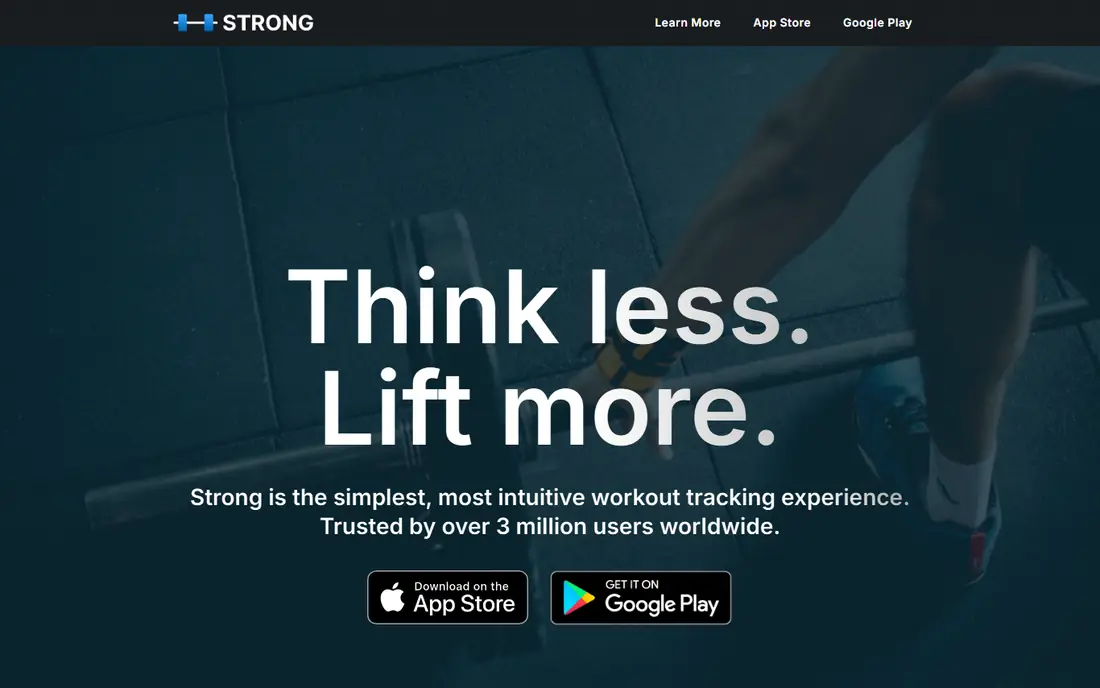
Strong is the notebook-style logger many lifters stick with for years. Entering sets is quick, rest timers are built in, and charts show progress on key lifts without a lot of setup. The Apple Watch app lets you log from your wrist, which helps when your phone is across the gym.
Strong does not plan your training for you. If you want a programme that tells you what to lift next, you will need to bring your own plan or look elsewhere. The free tier also limits custom routines, so heavy users who build many programmes may need the paid tier.
- Fast set and rep entry
- Progress charts
- Apple Watch app
- Free tier limits custom routines
- Programme guidance is limited
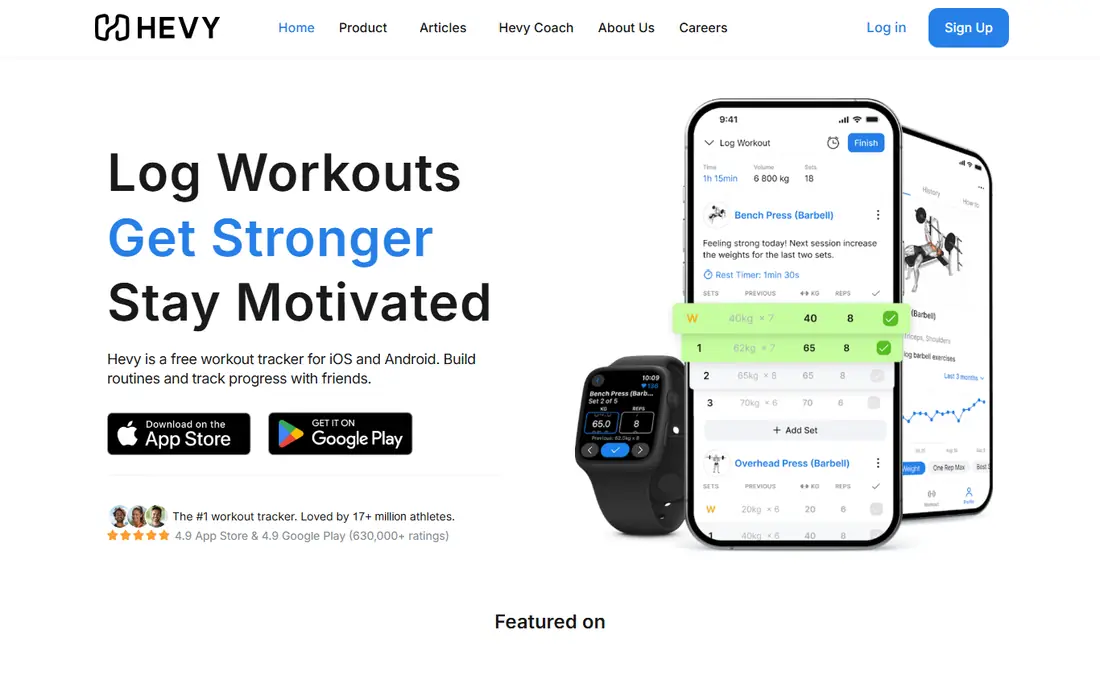
Hevy combines a fast logger with a social side that suits lifters who train with friends. You can follow other lifters, share routines and see how training partners are progressing, which helps motivation on flat weeks. Logging itself is quick, with rest timers and plate calculators built in.
The free tier has limits that matter over time: a set number of routines, custom exercises and months of history. Lifters who build many programmes or want years of data in the app may need Pro. The social feed is also a distraction for lifters who prefer a quiet, private log.
- Unlimited logging on the free tier
- Routine sharing
- Social feed for friends
- Free tier limits routines, custom exercises and history length
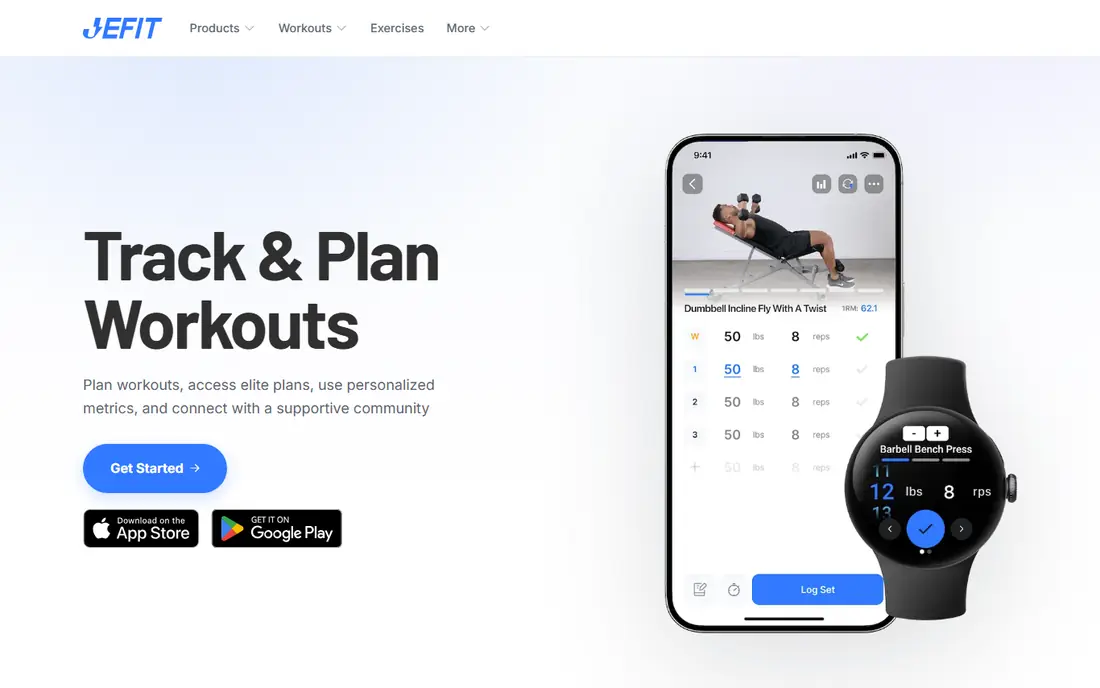
JEFIT suits lifters who want choice. Its exercise library is among the largest in this list, with guides for movements you may not know by name, and community programmes give beginners a starting point without hiring a coach. Body stats and progress charts help you see change beyond the weight on the bar.
The app can feel busy, especially on the free tier with ads. Navigation takes a little learning, and some advanced features sit behind Elite. If you want a calm, minimal logger, JEFIT may feel like too much app. If you want depth and community plans, that depth is the point.
- Very large exercise library
- Community programmes
- Body stats and progress tracking
- Free tier shows ads
- Interface can feel busy
Fitbod is the pick for lifters who do not want to plan. Tell it your equipment, goals and available time, and it builds each session, adjusting weights and exercises as you progress. That guidance helps beginners avoid the blank-page problem of a plain logger, and it adapts when you train at a different gym.
There is no free tier to fall back on beyond a trial, so Fitbod is a subscription commitment from the start. Lifters who already know their programme may find the guidance unnecessary, and the monthly cost adds up compared with a free logger. It earns its price only if you actually use the planning.
- Workouts adapt to equipment, recovery and progress
- Video guides
- Apple Watch support
- No lasting free tier
- Subscription cost adds up over a year
StrongLifts 5x5 is the simplest way to start serious strength training. The programme is just a few compound lifts, three days a week, with weights rising each session. The app handles the maths, tells you what to lift, and logs it all, so a beginner never has to guess.
Its focus is also its limit. Once you outgrow 5x5 or want more variety, bodybuilding work or sport-specific training, this app will feel narrow. Treat it as a starting programme with a clear exit point, not as a long-term all-purpose logger, and move on when progress stalls.
- Clear, proven 5x5 structure
- Automatic weight progression
- Simple logging
- Only suits the 5x5 programme
- Limited exercise variety
Alpha Progression sits between a logger and a coach. It recommends the next set based on your past performance, tracks progression in detail, and covers a large exercise library. Lifters who like data and want each session guided, without a human coach, often find it more precise than a generic plan generator.
The full planning features need a paid tier, and the interface assumes some lifting knowledge. Beginners may find the settings and progression options confusing at first. It suits intermediate lifters who already understand sets, reps and progression and want an app to handle the details.
- Next-set recommendations
- Detailed progression tracking
- Large exercise library
- Full planning features need Pro
- Learning curve for new lifters
Boostcamp is built around programmes rather than blank logging. Many programmes from known coaches are available free, covering powerlifting, bodybuilding and general strength, with progression built in. That makes it easy to pick a trusted plan and follow it week by week without writing your own.
Programme quality varies because many coaches contribute, so a popular programme is not always the right one for your level. Some features need Pro, and the app is less suited to lifters who want a fully custom routine. Read programme reviews and check the level before committing to twelve weeks.
- Many coach-built programmes free
- Progression tracking
- Community features
- Programme quality varies
- Some advanced features need Pro
RepCount is a calm, straightforward logger for lifters who want speed without social features. Templates make it easy to repeat a routine, charts show progress clearly, and the interface stays out of the way during a workout. It is a good fit for lifters who already know what they are doing.
RepCount lacks the programme library and community of larger apps, so beginners looking for a plan to follow may feel unsupported. Its strength is logging well, not coaching. If you bring your own programme, that focus is a benefit. If you need guidance, pair it with a written plan or choose a guided app.
- Simple, fast logging
- Clear progress charts
- Workout templates
- Smaller community and fewer programmes than larger rivals
StrengthLog appeals to lifters who dislike ads and upsells in a free app. Logging is unlimited on the free tier, programmes are included, and the exercise library is large enough for most gym training. The tone is calm and focused, without a social feed competing for attention.
Its community is smaller than Hevy or JEFIT, so social motivation and shared routines are thinner. Premium features still need a subscription, and lifters who want Apple Watch depth or very advanced analytics should check the current feature list. For a quiet, ad-free logger with programmes, it is a strong value pick.
- Ad-free free tier
- Many free programmes
- Large exercise library
- Premium features need a subscription
- Smaller user base than top rivals
How we picked these
We compared official feature pages, pricing pages, privacy policies and app store listings for each option. We kept only products that are still offered in October 2026 and that fit the topic directly. We checked whether a free tier or trial is real, what the paid plan adds, and where each product falls short, so the list reflects trade-offs rather than marketing claims alone.
How to choose a lifting app that you will use
Start with how you train. If you already follow a programme, a fast logger such as Strong, Hevy or RepCount is enough, and paying for planning wastes money. If you do not have a programme, a guided app such as Fitbod, Alpha Progression or Boostcamp saves you from guessing, at least until you learn what works for you.
Check the free tier before you pay. Count how many routines, custom exercises and months of history you actually need, and test the app for two weeks of real workouts. A free tier that covers your routine is better than a paid tier full of features you never open. Also check Apple Watch or wearable support if you log from your wrist.
Finally, respect recovery and form. An app can track weights and reps, but it cannot see your technique or tell you when pain means stop. Start lighter than you think, learn key lifts properly, and get coaching or medical advice if you have an injury, a health condition or pain that does not settle. Progress is built over months, not in one hard week.
Frequently asked questions
What is the best weight lifting app overall?
Strong is the best general pick for fast, simple logging, while Hevy adds social features for lifters who train with friends. Fitbod is the best guided option if you want the app to plan each session, and Boostcamp is the best free route to coach-built programmes.
What are the best lifting apps for beginners?
StrongLifts 5x5 is the simplest start for pure strength, with a clear three-day programme. Boostcamp gives beginners a wider choice of coach programmes, and Fitbod plans sessions for people who do not want to choose exercises themselves.
What are the best strength training apps with a free tier?
Hevy, Strong, JEFIT, Boostcamp, RepCount and StrengthLog all offer a usable free tier, though limits differ. Fitbod is the exception, with a trial rather than a lasting free tier, so budget buyers should start elsewhere.
Do I need a paid lifting app?
No, not to start. A free logger covers sets, reps and progress for most lifters. Pay only when a specific paid feature, such as unlimited routines, advanced analytics or guided planning, solves a problem you actually have.
Can a lifting app replace a coach?
No. Apps track and suggest, but they cannot check your form, adapt to an injury or judge fatigue the way a coach can. Use an app for structure and records, and get in-person coaching if you are new to heavy lifts or returning after injury.
Sources
See where you really rank - block by block
ProMapRanker scans Google Maps across a grid of your service area. Simple monthly plans from $19, white-label on every plan.
Start freeKeep reading
 free alternatives to grok imagine
Free Alternatives to Grok Imagine in 2026
We compared the best free alternatives to grok imagine for image generation, from fast daily credits to design tools, so you can create without paying.
Read → best tools for instagram content creation
Best Tools for Instagram Content Creation in 2026
Compare the best tools for Instagram content creation, from Canva and CapCut to Later and Buffer, on design, video, planning, scheduling, and price in 2026.
Read → best tool to split pdf files
Best Tool to Split PDF Files in 2026
We compared the best tool to split pdf files on split modes, file limits, privacy and price, so you can split a PDF cleanly and keep every page in one go.
Read →