 ProMapRanker
Best Warehouse Inventory Software in 2026


Manufacturers and distributors on QuickBooks · Pricing starts at: $229 per month
Key takeaways
- Fishbowl and Cin7 lead for product businesses that need inventory, manufacturing or multichannel selling tied to accounting.
- Zoho Inventory, Finale and inFlow suit smaller warehouses that need solid stock control without enterprise pricing.
- ShipHero, Logiwa, Deposco and NetSuite WMS suit high-volume or multi-warehouse operations that need directed picking and order flow.
- Check plan limits on locations, users and orders, because those limits decide the real cost more than the headline price.
- Budget for scanners, labels, onboarding and data cleanup on top of the subscription, especially for larger warehouses.
Quick comparison
| Pick | Great for | Pricing starts at | Free tier | |
|---|---|---|---|---|
| Fishbowl | Manufacturers and distributors on QuickBooks | $229 per month | No | Visit |
 Cin7 | Multichannel sellers with complex inventory | $349 per month | Free trial | Visit |
 Zoho Inventory | Startups and small warehouses | Free | Yes | Visit |
 Finale Inventory | Simple affordable warehouse tracking | $99 per month | Free trial | Visit |
 inFlow | B2B and wholesale warehouses | $99 per month | Free trial | Visit |
 ShipHero | High-volume ecommerce fulfillment | $1,850 per month | No | Visit |
 Logiwa | High-volume multi-warehouse operations | See website | No | Visit |
 Deposco | Enterprise fulfillment at scale | See website | No | Visit |
 NetSuite WMS | Companies already on NetSuite ERP | See website | No | Visit |
 Katana | Makers needing production and inventory together | $179 per month | Free trial | Visit |
The best warehouse inventory software
Warehouse inventory software tracks stock levels, locations, purchase orders and sales orders, and the stronger tools on this list also handle picking, packing and shipping workflows. We compared official pricing pages, feature lists and public reviews, and we focused on multi-location support, barcode workflows, accounting integration and total cost.
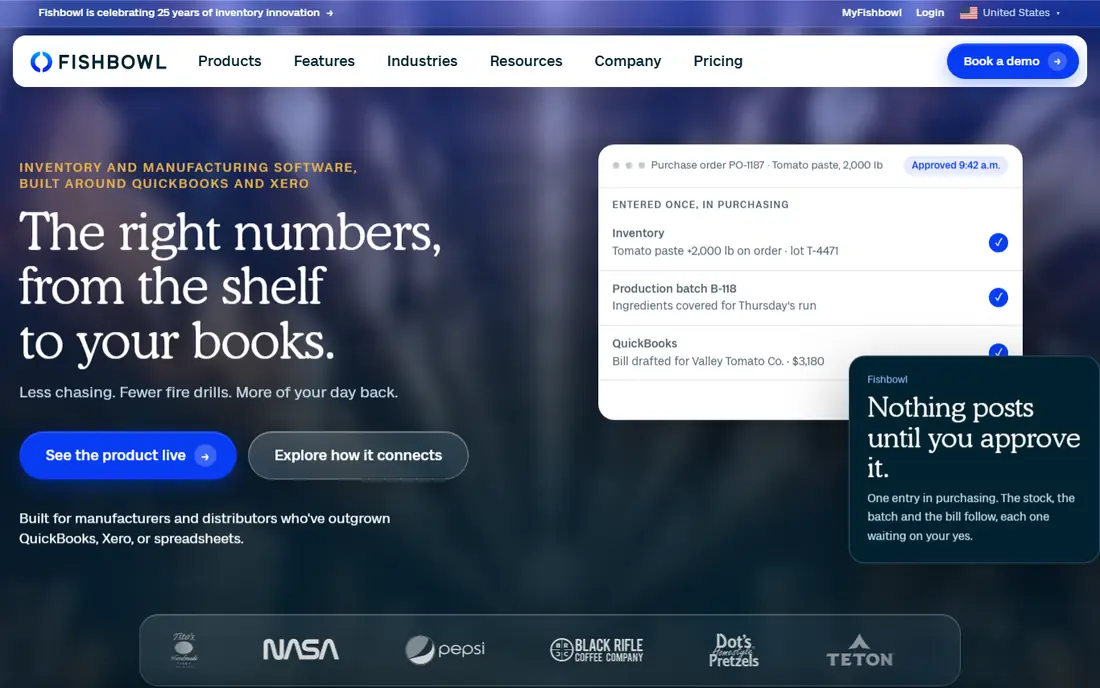
Fishbowl has long been the default for QuickBooks shops that outgrow spreadsheets. Inventory, manufacturing and warehouse workflows post into QuickBooks or Xero, so stock movements, costs and sales stay aligned with the books. Multi-location tracking, lot and serial traceability and barcode picking cover the core warehouse jobs, while bills of materials and work orders serve makers that also produce goods.
The honest cost is time as well as money. Implementation typically takes weeks, and the jump from entry to growth tiers adds cost as users increase. A small team that needs stock tracking in a day should look at Zoho or Finale first, while a manufacturer or distributor that lives in QuickBooks will find Fishbowl's depth worth the setup.
- Deep QuickBooks and Xero sync
- Manufacturing tools including bills of materials
- Multi-location and lot tracking
- Implementation takes weeks
- Pricing rises quickly with users and tiers
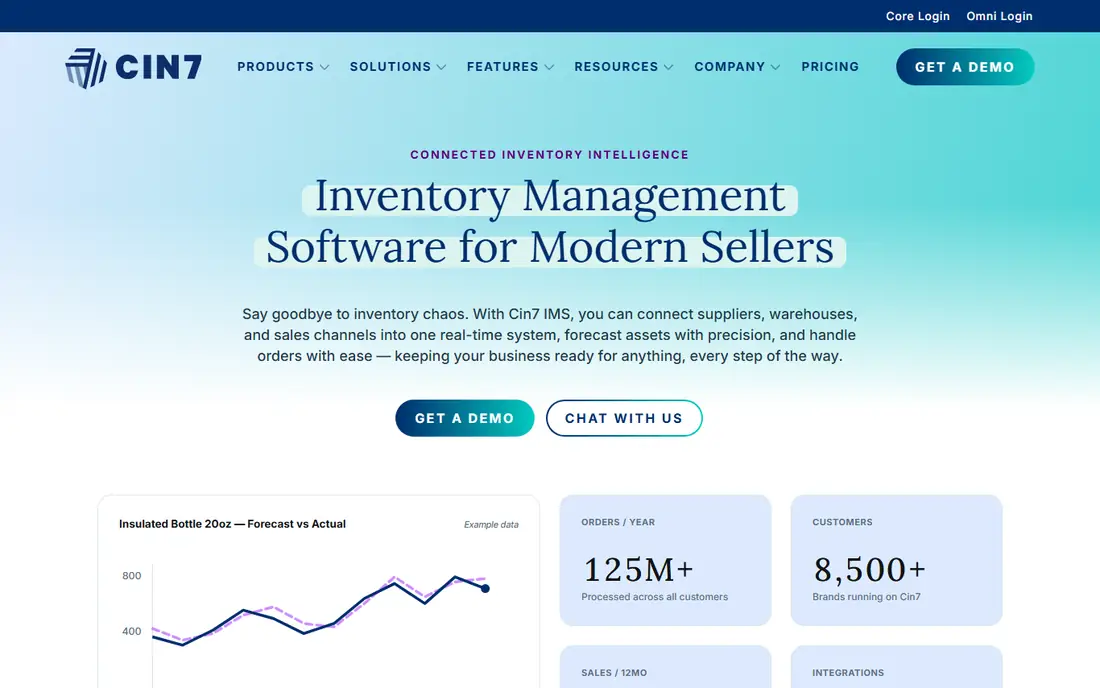
Cin7 suits product businesses selling across Shopify, Amazon, wholesale and retail at the same time. Stock stays accurate across channels from one dashboard, purchase orders and sales orders flow through the same system, and built-in EDI helps wholesalers trade with large retailers without a separate EDI provider. The B2B portal and point of sale round out a system that covers more than just a warehouse.
Advanced warehouse management, including directed putaway and sophisticated picking, sits on the higher tier, so buyers should not assume the entry plan covers full WMS workflows. The learning curve is also real for teams new to inventory systems. For multichannel sellers whose inventory has outgrown simpler tools, Cin7 is a natural step up.
- Multichannel inventory across marketplaces
- Built-in EDI for retail
- B2B portal and point of sale
- Advanced warehouse features need the higher tier
- Learning curve for new teams
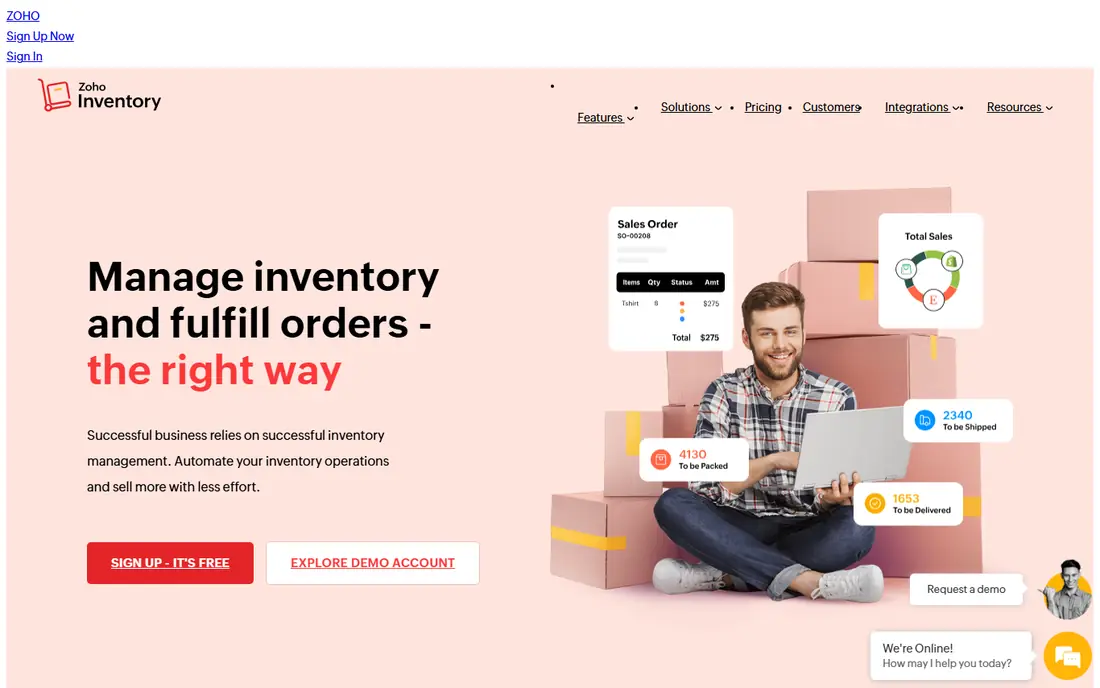
Zoho Inventory is the easiest low-cost entry point for a small warehouse. The free tier handles basic stock, orders and a limited number of users, and paid tiers add multi-location, barcode and integration depth. It connects to Shopify, Amazon and other channels, and it sits inside the wider Zoho ecosystem, which helps firms that already use Zoho Books or Zoho CRM.
Depth is the limit. Directed picking, advanced putaway and complex manufacturing workflows are thinner than on Fishbowl, Cin7 or NetSuite WMS. A startup or a single-warehouse firm with straightforward stock will find Zoho plenty, while a high-volume or multi-warehouse operation should compare the heavier platforms before committing.
- Free tier for small operations
- Multi-channel order management
- Zoho ecosystem integration
- Warehouse depth is lighter than Fishbowl or Cin7
- Higher tiers needed for larger volumes
Finale Inventory suits small warehouses that want clear, affordable stock control without a long implementation. Locations, stock levels, purchase orders and sales orders are easy to follow, barcode workflows help reduce mispicks, and integrations with QuickBooks and ecommerce channels keep orders and accounting aligned. The setup is faster than Fishbowl or Cin7, which matters for a team that needs to go live quickly.
Manufacturing depth is thinner, and enterprise features such as complex wave picking are limited. A maker with deep bills of materials should look at Fishbowl or Katana, while a distributor or ecommerce seller with straightforward stock will find Finale a good balance of price and capability.
- Clear stock and location tracking
- Barcode support
- QuickBooks and ecommerce integrations
- Less manufacturing depth
- Fewer enterprise warehouse features
inFlow fits B2B and wholesale warehouses that handle quotes, sales orders and purchase orders every day. The workflow is clear for office and warehouse staff, barcode scanning supports receiving and picking, and QuickBooks integration keeps inventory and accounting in sync. Pricing starts at a level that small wholesalers can justify, and the trial lets a team test the full workflow before paying.
Location limits matter. The entry plan covers one location, so a firm with several warehouses needs a higher tier. Teams should also check user limits and order volumes on their chosen tier, because those limits decide whether the entry price holds as the business grows.
- Strong for B2B and wholesale orders
- Barcode and location tracking
- QuickBooks integration
- Entry plan covers one location
- Higher tiers needed for multi-warehouse work
ShipHero is built for ecommerce brands and third-party logistics firms that ship at high volume. Picking, packing, shipping and inventory workflows are designed for speed on the warehouse floor, and integrations with ecommerce platforms and carriers keep orders flowing. For a brand shipping thousands of orders a month, that throughput focus matters more than a low subscription price.
Small warehouses should not start here. The entry price is far above Zoho, Finale or inFlow, and the system is designed for volume that a small firm does not yet have. A growing ecommerce brand that is hitting picking errors and shipping delays at scale should get a ShipHero quote, while a smaller firm should stay with a lighter tool until volume justifies the move.
- Built for high-volume ecommerce picking and packing
- Warehouse automation
- Shipping integrations
- High entry price
- Overkill for small single warehouses
Logiwa suits high-volume sellers and third-party logistics providers that run several warehouses. The cloud system handles receiving, putaway, picking, packing and shipping across sites, with order accuracy tools that matter when mispicks cost money and customer trust. Multi-client support helps 3PL firms manage different brands from one system.
Pricing is quoted, so buyers need a sales conversation to budget accurately. Implementation also needs planning, including data cleanup and warehouse layout mapping. A single small warehouse will find Logiwa heavy, while a multi-warehouse or 3PL operation will value its scale and control.
- Cloud warehouse management for high volume
- Multi-warehouse and 3PL support
- Order and inventory accuracy
- Quote-only pricing
- Implementation and training need planning
Deposco targets enterprise and high-growth brands that need order management and warehouse management in one platform. Omnichannel orders from stores, websites and marketplaces flow into a single fulfillment workflow, which helps large firms promise accurate delivery times and keep stock visible across channels. The platform scales for seasonal peaks and multi-site networks.
The trade is cost and rollout time. Pricing is quoted, and larger deployments take months of planning, integration and training. A midsize firm should compare Deposco against ShipHero and Logiwa on total first-year cost, while a large enterprise with complex omnichannel needs will find Deposco's breadth hard to match with a small-team tool.
- Enterprise order and warehouse management
- Strong for omnichannel fulfillment
- Scalable for large volumes
- Quote-only pricing
- Longer rollout for larger operations
NetSuite WMS makes sense only for firms already running NetSuite ERP, and for those firms it makes a lot of sense. Warehouse workflows plug directly into finance, orders and inventory, so stock movements, costs and customer orders stay in one system without middleware. Multi-location tracking, automation and reporting benefit from that single data model.
Firms not on NetSuite should not buy WMS alone, because the value depends on the wider ERP. Learning curve and partner implementation costs also add to the total, so buyers should get a full quote from NetSuite or a partner. For existing NetSuite users with growing warehouse complexity, WMS is the natural next step.
- Native NetSuite integration
- Multi-location inventory
- Automation and reporting across finance and operations
- Requires NetSuite ERP
- Learning curve and partner costs can be high
Katana suits makers who need production and inventory in one place. Bills of materials, manufacturing orders, shop floor control and real-time stock levels help a small manufacturer plan raw materials, track work in progress and promise delivery dates. Ecommerce integrations with Shopify and WooCommerce help makers sell direct while keeping stock accurate.
Pure distributors will get less value, because Katana's strength is production, not large-scale distribution or third-party logistics. The cloud-only model also suits firms comfortable with hosted software. A maker juggling raw materials, subassemblies and online orders should trial Katana against Fishbowl, while a distributor should prefer Fishbowl or Cin7.
- Production planning and inventory in one system
- Bills of materials and shop floor control
- Ecommerce integrations
- Less suited to pure distribution at scale
- Cloud-only deployment
How we picked these
We compared official pricing and feature pages, app store listings and public reviews for warehouse inventory tools operating in October 2026. We kept tools that track stock, locations, purchase orders and sales orders, plus tools that add picking, packing and shipping workflows, and we excluded generic accounting tools with no warehouse features. We marked pricing as See website where vendors quote rather than publish a price, instead of guessing a figure.
We weighed multi-location support, barcode workflows and accounting integration heavily, because those decide whether a system works on the warehouse floor and in the books. A tool that tracks stock well but cannot handle locations or scanning will fail as volume grows, so readers should trial the picking workflow, not just the dashboard.
How to choose for your warehouse size
Count locations, SKUs, daily orders and channels before comparing features. A single warehouse with a few hundred SKUs and modest daily orders suits Zoho, Finale or inFlow. A multichannel seller with retail EDI needs Cin7. A manufacturer on QuickBooks needs Fishbowl or Katana. A high-volume ecommerce or 3PL operation needs ShipHero, Logiwa, Deposco or NetSuite WMS, depending on its existing systems.
Next, trial the floor workflow. Receive stock, put it away, pick an order, pack it and ship it, using a scanner if your team will use one. Check how the system handles partial picks, returns and cycle counts, and confirm the accounting sync posts correctly. Finally, price the full first year, including scanners, labels, onboarding and any tier jumps for users or locations.
Frequently asked questions
What is the best software for warehouse inventory?
Fishbowl and Cin7 lead for most product businesses, with Fishbowl suiting QuickBooks manufacturers and Cin7 suiting multichannel sellers. Zoho Inventory, Finale and inFlow suit smaller warehouses, while ShipHero, Logiwa and Deposco suit high-volume operations.
What is the difference between warehouse inventory software and a WMS?
Warehouse inventory software tracks stock levels, locations and orders, while a full warehouse management system also runs floor operations such as receiving, putaway, directed picking, packing and labor. Small warehouses usually need the first, while multi-zone or multi-client operations need the second.
How much does warehouse inventory software cost?
Published entry prices on this list run from free for Zoho Inventory, through $99 per month for Finale and inFlow, $179 for Katana, $229 for Fishbowl and $349 for Cin7, up to quote-only enterprise pricing for ShipHero, Logiwa, Deposco and NetSuite WMS.
Does warehouse inventory software integrate with QuickBooks?
Yes, across much of this list. Fishbowl, Cin7, Finale, inFlow and Katana integrate with QuickBooks Online, and several also cover QuickBooks Desktop and Xero. Check whether the sync is two-way and whether inventory adjustments post automatically.
Do I need barcode scanners for warehouse inventory software?
If your team picks more than a few dozen orders a day, yes. Barcode receiving, picking and packing cut mispicks and make cycle counts practical. Most tools here support standard handheld scanners, but budget the hardware separately from the subscription.
Can warehouse inventory software handle multiple warehouses?
Most tools here handle multiple locations in some form, but plan limits differ. inFlow's entry plan covers one location, while higher tiers and the quoted platforms handle many warehouses, transfers and location-level stock visibility. Confirm location limits before buying.
Sources
See where you really rank - block by block
ProMapRanker scans Google Maps across a grid of your service area. Simple monthly plans from $19, white-label on every plan.
Start freeKeep reading
 wpforms alternatives
Best WPForms Alternatives in 2026
We compare 9 wpforms alternatives for WordPress forms, with free and paid options, current pricing notes, and honest limits for small business sites in 2026.
Read → windows task scheduler alternatives
Best Windows Task Scheduler Alternatives in 2026
Looking for Windows Task Scheduler alternatives? We compare 9 schedulers for Windows and cross-platform work, from free tools to enterprise automation.
Read → which ai video service is best
Which AI Video Service Is Best in 2026
which ai video service is best? We compare 10 legitimate AI video services on price, avatars, editing and output quality to help you pick the right tool.
Read →