 ProMapRanker
10 Best Trucking Companies in 2026

Key takeaways
- Truckload carriers move full trailers, while LTL carriers combine smaller shipments from many shippers.
- Intermodal service pairs trucks with rail for long lanes, which can suit cost-conscious shippers with flexible timing.
- Dedicated fleets serve one shipper or route pattern, which can mean steadier schedules for drivers.
- Driver fit depends on home time, freight type and terminal location as much as on fleet size.
Quick comparison
| Pick | Great for | Pricing starts at | Free tier | |
|---|---|---|---|---|
 J.B. Hunt | Intermodal and dedicated freight | See website | No | Visit |
 Knight-Swift | Large truckload and LTL scale | See website | No | Visit |
 Schneider | Truckload, intermodal and dedicated | See website | No | Visit |
 Landstar | Owner-operator and specialised freight | See website | No | Visit |
 Old Dominion Freight Line | Premium national LTL service | See website | No | Visit |
 XPO | LTL and heavy-goods delivery | See website | No | Visit |
 Werner Enterprises | Dedicated and truckload freight | See website | No | Visit |
 Prime Inc. | Refrigerated and flatbed freight | See website | No | Visit |
 Estes Express Lines | National LTL freight | See website | No | Visit |
 Saia | Growing LTL network | See website | No | Visit |
The 10 best trucking companies
Trucking companies serve two different readers: shippers who need freight moved, and drivers who need steady work, fair pay and decent equipment. This guide covers both angles, with truckload, less-than-truckload, intermodal and dedicated services explained in plain terms.
These companies are presented as a guide based on publicly reported service types and scale, not as a verified ranking with scores. Rates, routes and driver programs change often, so confirm current terms with each carrier before you book freight or apply for a job.
J.B. Hunt suits shippers with intermodal or dedicated needs, pairing truck capacity with rail and brokerage options. Its dedicated fleets serve repeat routes for large shippers, which can give drivers steadier schedules than irregular long-haul work.
Experience varies by division and terminal, so check the specific program and lane rather than judging the whole company at once. Before you commit, confirm the service type, the lanes covered, the delivery or pickup window, and for drivers, the home-time pattern and pay structure in writing.
- Intermodal, dedicated and brokerage services
- Large network
- Shipper and driver programs
- Scale can mean varied driver experience by division
Knight-Swift suits shippers that need scale across truckload, LTL and logistics services from one group. Its size also gives drivers a wide choice of freight types and terminals, which helps if you later want to change divisions.
With a group this large, pay, home time and dispatch style differ by fleet, so confirm the exact job you are applying for. Before you commit, confirm the service type, the lanes covered, the delivery or pickup window, and for drivers, the home-time pattern and pay structure in writing.
- Truckload, LTL, intermodal and logistics services
- Many terminals
- Varied driver jobs
- Large-company variation by fleet and region
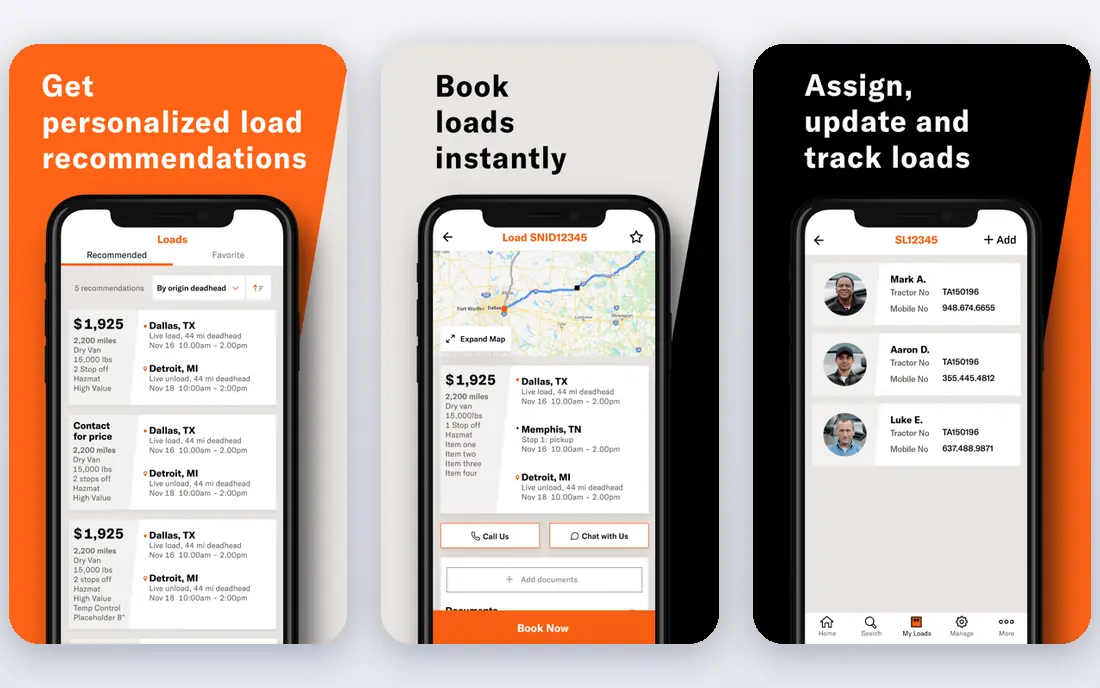
Schneider suits shippers with truckload, intermodal or dedicated volume, including cross-border lanes to Mexico and Canada. Its driver programs include training routes for newer drivers, which can help people entering the industry.
Division matters here too, so compare the dedicated, regional and over-the-road options separately before choosing. Before you commit, confirm the service type, the lanes covered, the delivery or pickup window, and for drivers, the home-time pattern and pay structure in writing.
- Truckload, intermodal and dedicated services
- Cross-border lanes
- Driver training programs
- Service and driver terms vary by division
Landstar suits independent owner-operators and shippers with specialised or oversized freight that needs experienced capacity. Its agent and owner-operator network handles flatbed, heavy-haul and other specialised loads that standard fleets may not cover.
It is not the right comparison for a driver seeking a standard company job with company equipment and a set schedule. Before you commit, confirm the service type, the lanes covered, the delivery or pickup window, and for drivers, the home-time pattern and pay structure in writing.
- Owner-operator network
- Flatbed and heavy-haul expertise
- Brokerage capacity
- Owner-operator model, not a standard company-driver job
Old Dominion suits shippers with regular LTL freight who value careful handling and a single-line national network. Its service-centre network supports consistent transit and claims handling for palletised shipments.
It is an LTL carrier first, so shippers with full truckload needs should compare it with truckload specialists as well. Before you commit, confirm the service type, the lanes covered, the delivery or pickup window, and for drivers, the home-time pattern and pay structure in writing.
- National LTL network
- Low-damage reputation in public reports
- Service-centre network
- LTL focus, not full truckload
- Pricing by quote
XPO suits shippers with LTL freight and heavy goods that need last-mile delivery to homes or job sites. Its network and tracking tools help shippers follow LTL shipments across a large service area.
Transit and pricing still vary by lane, so quote your actual origin and destination rather than relying on a national average. Before you commit, confirm the service type, the lanes covered, the delivery or pickup window, and for drivers, the home-time pattern and pay structure in writing.
- North American LTL network
- Last-mile heavy goods
- Technology and tracking tools
- LTL focus
- Pricing and transit vary by lane
Werner suits shippers with dedicated retail or e-commerce volume that needs repeat, reliable capacity. Its dedicated accounts can give drivers regular routes and home-time patterns that irregular freight cannot.
Dedicated work depends on the account, so ask about the specific customer, route and schedule before accepting a role. Before you commit, confirm the service type, the lanes covered, the delivery or pickup window, and for drivers, the home-time pattern and pay structure in writing.
- Dedicated, truckload and intermodal services
- Retail and e-commerce experience
- Driver programs
- Driver experience varies by account and lane
Prime Inc. suits shippers with temperature-controlled freight, where reefer capacity and food-safety handling matter. Its training programs also make it a common entry point for new drivers who want reefer or flatbed experience.
Refrigerated work brings loading waits and temperature monitoring, so drivers should weigh that against steadier dry-van work. Before you commit, confirm the service type, the lanes covered, the delivery or pickup window, and for drivers, the home-time pattern and pay structure in writing.
- Refrigerated truckload strength
- Flatbed and tanker divisions
- Driver training
- Reefer work involves waiting and temperature checks
- Terms vary by division
Estes suits shippers with national LTL volume that want a privately held carrier with a broad service network. Its LTL and logistics services cover many shipment sizes, from single pallets to larger consolidated freight.
As an LTL carrier, it is a weaker fit for full truckload shippers, who should compare truckload specialists for those loads. Before you commit, confirm the service type, the lanes covered, the delivery or pickup window, and for drivers, the home-time pattern and pay structure in writing.
- National LTL network
- Privately held carrier
- Global and logistics services
- LTL focus
- Pricing by quote
Saia suits shippers with LTL freight in the regions its network covers well, with expedited options for time-sensitive loads. Its expanding network has added service areas in recent years, which can help shippers whose lanes have grown.
Check coverage for your exact lanes first, because LTL service quality is lane-specific rather than national in every case. Before you commit, confirm the service type, the lanes covered, the delivery or pickup window, and for drivers, the home-time pattern and pay structure in writing.
- LTL and expedited services
- Expanding service network
- Logistics options
- Network coverage varies by region
- Pricing by quote
How we picked these
We compared official service pages and public industry lists on fleet type, service range and lane focus. We did not invent revenue figures or driver pay rates, and we used See website where pricing and pay are set by quote, contract or driver program.
How to choose a trucking company as a shipper or a driver
For shippers: match freight to the mode. Full truckload suits large, time-sensitive loads that fill a trailer, while LTL suits smaller pallet shipments that can share a trailer. Intermodal suits longer lanes where a day or two of extra transit is acceptable in exchange for lower cost, and dedicated service suits steady, repeat volume on fixed routes.
For shippers: ask about claims and tracking. Damage, loss and delay handling differ by carrier and service, so ask about claims process, tracking tools and delivery windows before tendering freight. A carrier that is strong on one lane may be weaker on another, so test a lane before moving all volume.
For drivers: compare the whole job, not only the headline. Home time, freight type, terminal location, equipment, benefits and dispatch style all shape daily life on the road. Ask current drivers about wait time, route patterns and how often home-time promises hold in practice.
For drivers: check the freight you will actually haul. Reefer, flatbed, dry van, tanker and dedicated retail work each bring different loading, waiting and physical demands. Pick the freight type that fits your experience and lifestyle, then compare carriers within that niche.
Frequently asked questions
What is the best trucking company to drive for?
It depends on the freight type, home time and region you want, because no carrier leads on every measure. Some drivers prefer large fleets with many terminals, while others prefer smaller fleets with steadier routes. Talk to current drivers at the terminal you would actually run from.
What is the difference between truckload and LTL?
Truckload means one shipper fills a trailer, while LTL means several shippers share trailer space with smaller shipments. Truckload is usually faster and simpler for large loads, while LTL is usually cheaper per pallet for smaller freight. The right mode depends on shipment size and timing.
Which trucking companies are best rated?
Public lists rank carriers by size, service type and shipper feedback, but ratings differ by lane and service. Use those lists as a starting point, then check service on your own lanes and read recent driver and shipper feedback for the terminals you would use.
Do trucking companies hire new drivers?
Many large carriers run training programs for new drivers, while others require experience, especially for flatbed, tanker or specialised freight. Ask about training length, pay during training and any contract terms before enrolling in a program.
How do I get a freight quote from a trucking company?
Most carriers ask for origin, destination, shipment size and weight, freight type and timing, then quote by lane and service. Provide the same details to each carrier so quotes are comparable, and confirm fuel, access and detention terms in writing.
Sources
- https://www.jbhunt.com
- https://www.knightswift.com
- https://www.schneider.com
- https://www.landstar.com
- https://www.odfl.com
- https://www.xpo.com
- https://www.werner.com
- https://www.primeinc.com
- https://www.estes-express.com
- https://www.saia.com
- https://www.inteklogistics.com/blog/top-ltl-truckload-freight-companies
See where you really rank - block by block
ProMapRanker scans Google Maps across a grid of your service area. Simple monthly plans from $19, white-label on every plan.
Start freeKeep reading
 wpforms alternatives
Best WPForms Alternatives in 2026
We compare 9 wpforms alternatives for WordPress forms, with free and paid options, current pricing notes, and honest limits for small business sites in 2026.
Read → windows task scheduler alternatives
Best Windows Task Scheduler Alternatives in 2026
Looking for Windows Task Scheduler alternatives? We compare 9 schedulers for Windows and cross-platform work, from free tools to enterprise automation.
Read → which ai video service is best
Which AI Video Service Is Best in 2026
which ai video service is best? We compare 10 legitimate AI video services on price, avatars, editing and output quality to help you pick the right tool.
Read →