 ProMapRanker
Best Trading Apps in India in 2026


Active traders and long term investors · Pricing starts at: Free for equity delivery; 20 rupees or 0.03 percent for intraday
Key takeaways
- Zerodha remains our pick for most active traders, with free equity delivery and a mature platform, while Groww is the simplest starting point for new investors.
- Most discount brokers now charge about 20 rupees per intraday or options order, so the real differences are in tools, support and extra charges.
- Dhan and FYERS suit traders who want charting and fast order placement, while bank backed brokers suit investors who want banking and broking in one place.
- Check the full charge sheet before you open an account, because taxes, exchange charges and depository charges apply on top of brokerage at every broker.
Quick comparison
| Pick | Great for | Pricing starts at | Free tier | |
|---|---|---|---|---|
| Zerodha | Active traders and long term investors | Free for equity delivery; 20 rupees or 0.03 percent for intraday | No | Visit |
 Groww | First time investors | 20 rupees per order or 0.1 percent, whichever is lower | No | Visit |
 Angel One | Investors who want research and guidance | 20 rupees per order or 0.1 percent, whichever is lower | No | Visit |
 Upstox | Mobile first active traders | 20 rupees per order | No | Visit |
 Dhan | Options and intraday traders | Free for equity delivery; 20 rupees per futures and options order | No | Visit |
 ICICI Direct | Investors who bank with ICICI | See website | No | Visit |
 Kotak Neo | Low cost futures and options trading | 10 rupees per futures and options order | No | Visit |
 FYERS | Chart focused technical traders | 20 rupees per order | No | Visit |
The best trading apps in India
We compared official pricing pages, platform features and public user feedback to shortlist apps that are regulated, widely used and still actively maintained in October 2026. This is not financial advice. Trading carries risk, and you can lose money, so only trade with funds you can afford to lose and check each broker's SEBI registration before you transfer money.
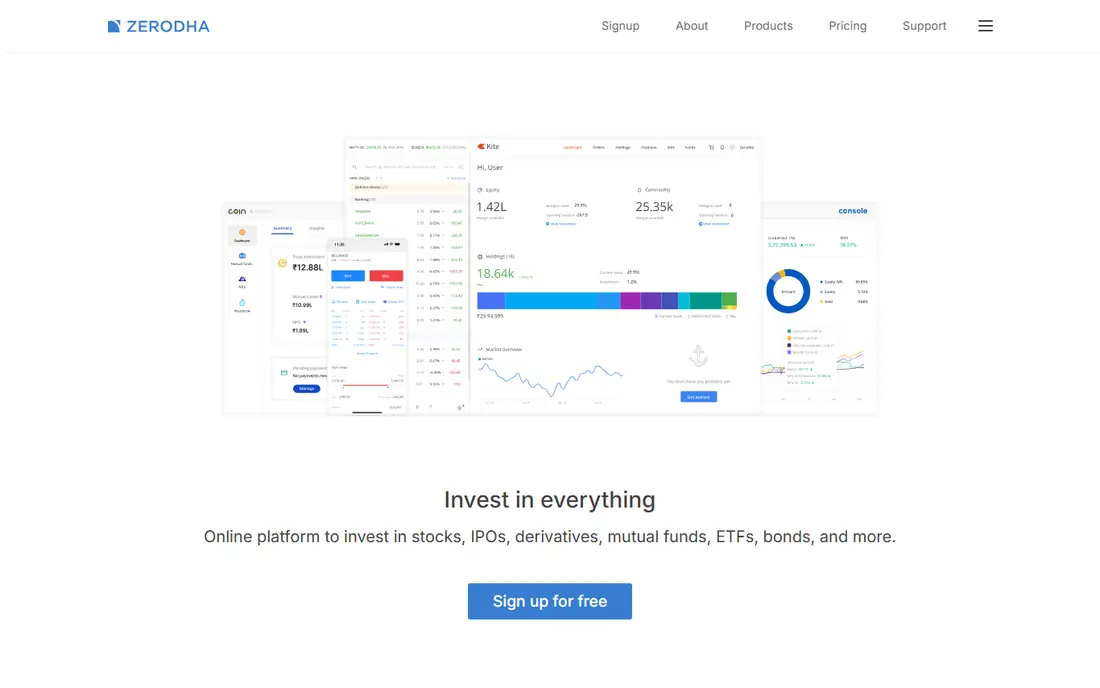
Zerodha built its name on the Kite platform, and in 2026 it still feels like the reference point other Indian brokers are measured against. Orders, charts, watchlists and portfolio reports sit in one place, and the Console back office gives clear tax and profit and loss reports at the end of the year. For investors who buy shares and hold them, free delivery brokerage keeps long term costs low.
The trade off is that Zerodha is a self directed service. You get tools and education through Varsity, but you do not get personal stock tips or a relationship manager pushing ideas. Account maintenance costs about 300 rupees a year plus tax, and call and trade orders carry an extra charge. If you want a hands off service with advice, another broker on this list may suit you better.
- Free equity delivery
- Mature Kite platform
- Strong learning library and reporting
- Annual account maintenance charge applies
- Support is mainly ticket based
Groww is the easiest app on this list to pick up if you have never traded before. The screens are clean, the order flow has few steps, and mutual fund investing sits beside stocks so new investors do not need a second app. That simplicity is also why many first time investors start here and stay here for regular investing.
Active traders may find the limits sooner. Charting and order types cover the basics, but they do not match the depth of Zerodha, Dhan or FYERS for heavy intraday work. Delivery brokerage is charged per order, so frequent small purchases cost more than they would at a broker with free delivery. For a beginner who values clarity over power, that trade is usually worth it.
- Very simple app
- Stocks, mutual funds and futures and options in one place
- No annual maintenance charge
- Fewer advanced trading tools
- Delivery trades are not free
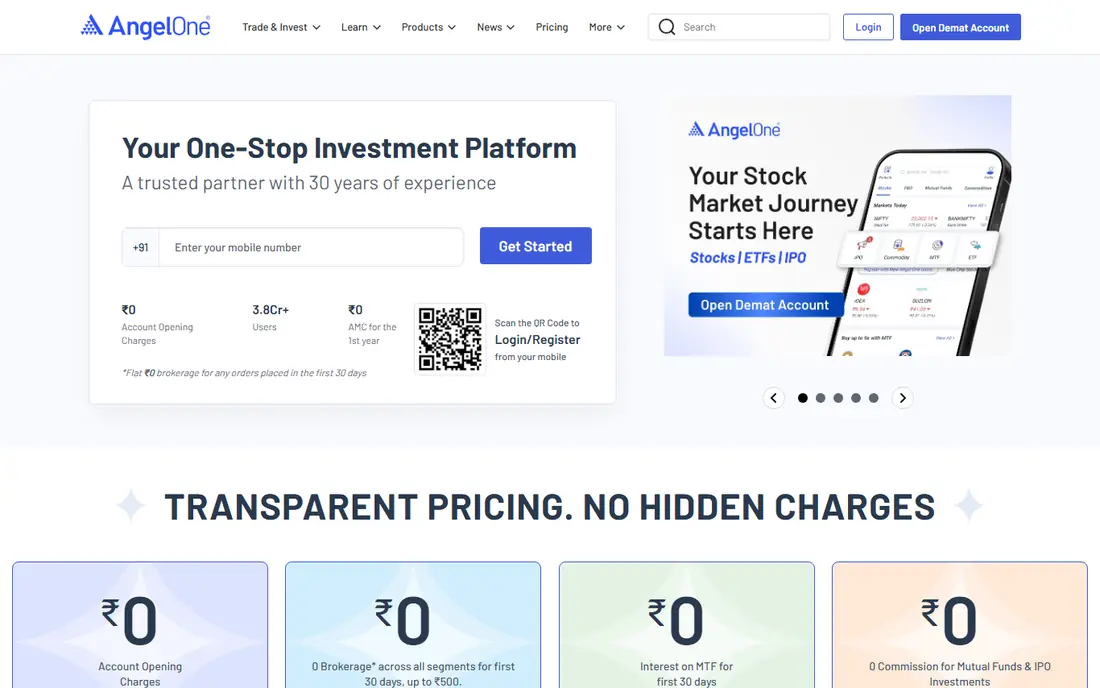
Angel One sits between a pure discount broker and a full service broker. You get research ideas, advisory features and a broad set of products, including stocks, commodities and mutual funds, without paying the higher percentage brokerage that older full service firms charged. For investors who like some guidance but still want to place their own orders, that middle ground is useful.
The catch is that you need to read the current plan carefully. Introductory offers, annual charges and add on services have changed over time, so a price you saw in an old review may not match the price you get today. Check the charge sheet at sign up and turn off services you do not need. If you only want the lowest possible cost and no advice, a simpler discount broker will be cheaper.
- Research reports and advisory tools
- Wide product range
- Branch and assisted support
- Pricing offers change often
- Extra services can push costs up
Upstox has long aimed at traders who live on their phones. The app is quick, order placement takes few taps, and charting covers the indicators most intraday traders use day to day. It also supports mutual funds and futures and options, so you do not need to switch apps as you move from investing to trading.
Buy and hold investors should weigh the delivery charge, since every delivery order costs up to 20 rupees. That adds up if you invest small amounts often. Support can also feel stretched during volatile market days, a complaint shared by most large brokers. For an active trader who values speed on mobile, Upstox still earns its place here.
- Fast mobile app
- Strong charting
- Quick account opening
- Delivery brokerage is charged
- Support quality varies at peak times
Dhan combines two features that rarely appear together: free equity delivery and no annual maintenance charge. On top of that, it offers TradingView charts, fast order entry, a strategy builder and an open API for traders who build their own tools. That mix makes it a strong pick for active traders who watch costs closely.
Beginners may find the interface busier than Groww, and there is less hand holding for a first time investor. Dhan is also a younger brand than Zerodha or Angel One, with a smaller offline presence. If you already know how to trade and want low costs with modern tools, Dhan is one of the best value options in India right now.
- Free delivery and no annual maintenance charge
- Modern trading tools
- Open API access
- Less suited to absolute beginners
- Smaller branch network
ICICI Direct suits investors who want everything tied to their bank account. Funds move between bank, trading and demat accounts without separate transfers, and research, portfolio tracking and advisory content come as part of the service. For investors who already bank with ICICI and value that convenience, the integration is a genuine benefit.
Cost is the clear downside. Percentage based brokerage on the default plan is higher than the flat 20 rupee model at discount brokers, and annual charges apply. Active traders will usually pay far less elsewhere. ICICI Direct makes most sense for long term investors who trade rarely and want bank backed support and a single login for banking and investing.
- Three in one bank, trading and demat account
- Wide research
- Trusted bank backing
- Brokerage is higher than discount brokers
- Pricing depends on the plan chosen
Kotak Neo is the trading platform from Kotak Securities, and its headline appeal is low futures and options brokerage at 10 rupees per order on its low cost plan. That undercuts the 20 rupee standard at most discount brokers, which matters if you place many derivatives orders each month. The platform also offers advanced charts and API access for active traders.
Delivery pricing is plan dependent, so you need to check which plan you are on before you assume a trade is cheap. Annual charges also vary by plan. Kotak Neo fits an active trader who already understands plan structures and wants to cut derivatives costs, rather than a beginner who wants one simple price for everything.
- Low futures and options brokerage
- Advanced trading platform
- API access
- Delivery pricing depends on the plan
- Annual charges can apply
FYERS built its reputation on charting. Technical traders who spend their day reading price action will find a capable charting engine, multiple chart types and a platform that stays focused on trading rather than trying to do everything. Account maintenance is free, which keeps fixed costs low for traders who are active for only part of the year.
The range beyond trading is narrower than at Angel One or ICICI Direct, and research coverage is lighter. FYERS is not the best pick if you want advisory calls or a wide set of wealth products. For a trader who already has a strategy and mainly needs reliable charts and order execution at a flat price, it is a solid choice.
- Strong charting engine
- Clean trading platform
- No annual maintenance charge
- Smaller product and research range than larger brokers
- Fewer branches
How we picked these
We compared official pricing pages, platform feature lists, app store listings and public reviews for brokers operating in India in October 2026. We kept only SEBI registered brokers with live trading apps covering NSE and BSE, and we favoured brokers with clear published charges and a track record of handling large trading volumes. We did not test live trading accounts, and we did not rank brokers on returns, since past performance does not predict future results.
What to check before you open an account
Start with the full cost, not just the headline brokerage. Add delivery and intraday charges, annual maintenance, depository charges on sales, taxes and exchange charges, and any platform or call and trade fees. A broker that looks cheap for one order type can cost more once all of these are counted, especially if you trade often.
Next, match the platform to how you actually trade. A beginner needs a simple order flow and clear portfolio views. An intraday trader needs fast charts, stable execution during volatile sessions and order types like bracket and cover orders where offered. A long term investor needs good reports, mutual fund access and low fixed charges. Open a free account only after you confirm the broker is SEBI registered and your shares will sit in your own demat account.
Finally, think about support and safety. Check how you can reach help during market hours, whether two factor login is required, and how funds are transferred. Keep your login details private, never share one time passwords, and be wary of tips from social media groups promising guaranteed returns. No legitimate broker can promise profits, and any service that does should be avoided.
Frequently asked questions
What is the best trading app in India for beginners?
Groww is our pick for most beginners because its app is simple and it covers stocks and mutual funds in one place. Zerodha is a strong second choice if you plan to trade more actively later, since its tools and education grow with you. Start with small amounts while you learn how orders, charges and market volatility work.
Which trading app has the lowest brokerage in India?
It depends on what you trade. Zerodha and Dhan charge no brokerage on equity delivery, while Kotak Neo charges 10 rupees per futures and options order on its low cost plan. Most other discount brokers charge up to 20 rupees per intraday or options order. Compare your own trading pattern, not just one headline price.
Are these trading apps safe and SEBI registered?
The brokers on this list are SEBI registered and offer trading on NSE and BSE, with shares held in your own demat account. That registration is a baseline, not a guarantee against market losses. Always verify registration on the SEBI site and confirm the broker's details before you transfer funds.
What is the best trading platform in India for intraday trading?
Dhan, Zerodha, Upstox and FYERS all suit intraday traders, with fast apps, charting and flat per order pricing. Dhan and FYERS stand out for charting depth, while Zerodha stands out for platform stability and reporting. Your choice should follow the tools you use daily, not a single feature list.
Do I need a separate demat account to use these apps?
No, each broker opens a trading and demat account together during sign up, usually through online KYC with PAN and Aadhaar. You will need a linked bank account for fund transfers, and income proof is usually required only to activate futures and options or commodity trading.
Can I invest in mutual funds through these trading apps?
Yes, most apps on this list offer mutual fund investing beside stocks, and several offer direct plans with no commission. Check whether the app offers direct or regular plans, since regular plans carry ongoing commission that reduces your returns over time.
Sources
See where you really rank - block by block
ProMapRanker scans Google Maps across a grid of your service area. Simple monthly plans from $19, white-label on every plan.
Start freeKeep reading
 which software is best for pdf page removal
Which Software Is Best for PDF Page Removal in 2026
Find which software is best for pdf page removal, from free online tools to desktop editors, with page controls, privacy, safety, and pricing compared.
Read → when i work alternatives
Best When I Work Alternatives in 2026
Looking for when i work alternatives? We compare 8 scheduling apps for hourly teams, covering pricing, free plans, time clocks and the best fit for business.
Read → the best tool for keyword analysis
The Best Tool for Keyword Analysis in 2026
Find the best tool for keyword analysis with our 2026 comparison of 10 keyword analysis software tools on data depth, difficulty scores and price today.
Read →