 ProMapRanker
Best Tools for Personal Development in 2026

Key takeaways
- Habitica and Fabulous suit habit building, while Headspace and Calm suit mindfulness and sleep, so start with the goal, not the app store ranking.
- Duolingo and Headway help learning become a daily habit, through short lessons and short book summaries.
- Forest and Todoist help focus and organisation, which often matter more than another motivational app.
- Most of these apps offer a free tier or trial, so test one for two weeks before paying for a year.
- Our pick for most people starting out is Habitica for habits, with Headspace close behind for calm and sleep.
Quick comparison
| Pick | Great for | Pricing starts at | Free tier | |
|---|---|---|---|---|
 Habitica | Gamified habit tracking | Free | Yes | Visit |
 Headspace | Guided meditation | $69.99 per year | Free trial | Visit |
 Calm | Sleep and stress relief | $69.99 per year | Free trial | Visit |
 Duolingo | Daily language learning | Free | Yes | Visit |
 Headway | Short book summaries | See website | Free trial | Visit |
 Fabulous | Morning and evening routines | See website | Free trial | Visit |
 Forest | Focus sessions | See website | Yes | Visit |
 Todoist | Tasks and organisation | Free | Yes | Visit |
The best tools for personal development
Personal development covers many goals, from building a habit to learning a language, sleeping better or staying focused at work. No single app covers all of them well, so this list groups tools by the job they do best. Pick one goal first, choose the app that matches it, and give it two weeks before adding another tool. These apps support self-improvement, but they are not a replacement for professional help when you need it.
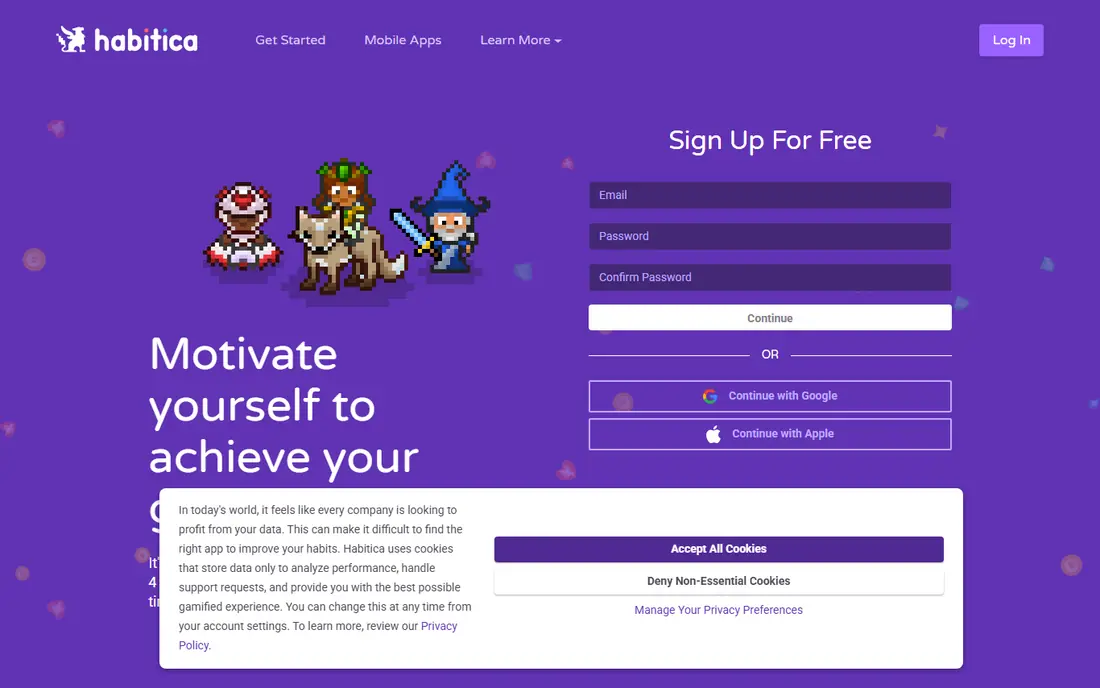
Habitica turns daily habits, to-dos and routines into a role-playing game. Completing a habit earns experience and gold, missing one costs health, and your character levels up as you stay consistent. You can join parties and guilds for accountability, take on quests with others, and buy cosmetic rewards with earned gold. For people who respond to streaks, rewards and social pressure, that game layer makes a boring habit feel worth opening each day.
The game style is also the main risk. If role-playing characters, pets and quests feel like a distraction, Habitica will annoy rather than motivate. The interface has many features, so new users should start with three habits and one daily routine, then add more only after a week. Habitica is free for core use, with paid options for extra gems and features, which makes it a low-risk first pick for habit building.
- Turns habits into a role-playing game
- Social accountability through parties and guilds
- Free core features
- Game style will not suit everyone
- Interface can feel busy at first
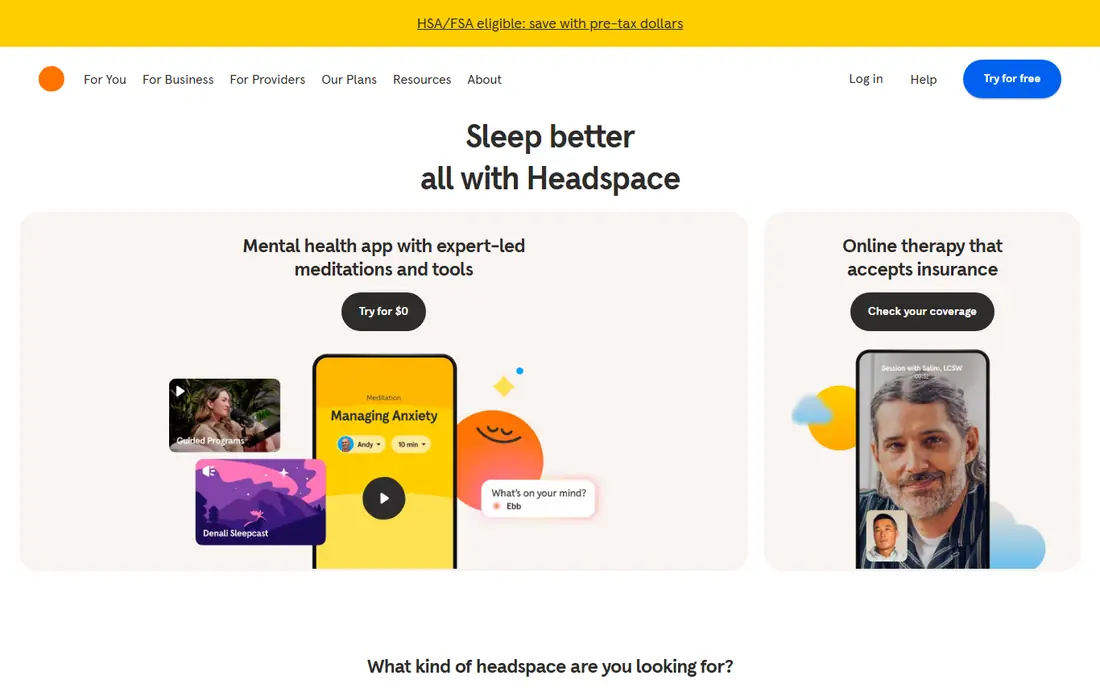
Headspace is the most structured meditation app for beginners. Its courses guide you through breathing, body scans and mindfulness in short sessions, with progress that builds over days rather than asking you to meditate for an hour at once. Sleep casts, wind-down exercises and focus music extend it beyond meditation, which helps people who want one app for calm, sleep and concentration. Sessions are well produced and easy to follow, even if you have never meditated before.
The main cost is the annual subscription, though a trial lets you test the style first. Some users will find the library large and may need to stick to one course at a time rather than browsing endlessly. Headspace is best for someone who wants a clear, guided path into meditation and a daily calm routine, rather than a timer with no guidance. If you prefer nature sounds and celebrity-narrated sleep stories, Calm may fit better.
- Structured beginner courses
- Sleep content and focus music
- Short sessions for busy days
- Annual subscription is the main paid route
- Library can feel large for new users
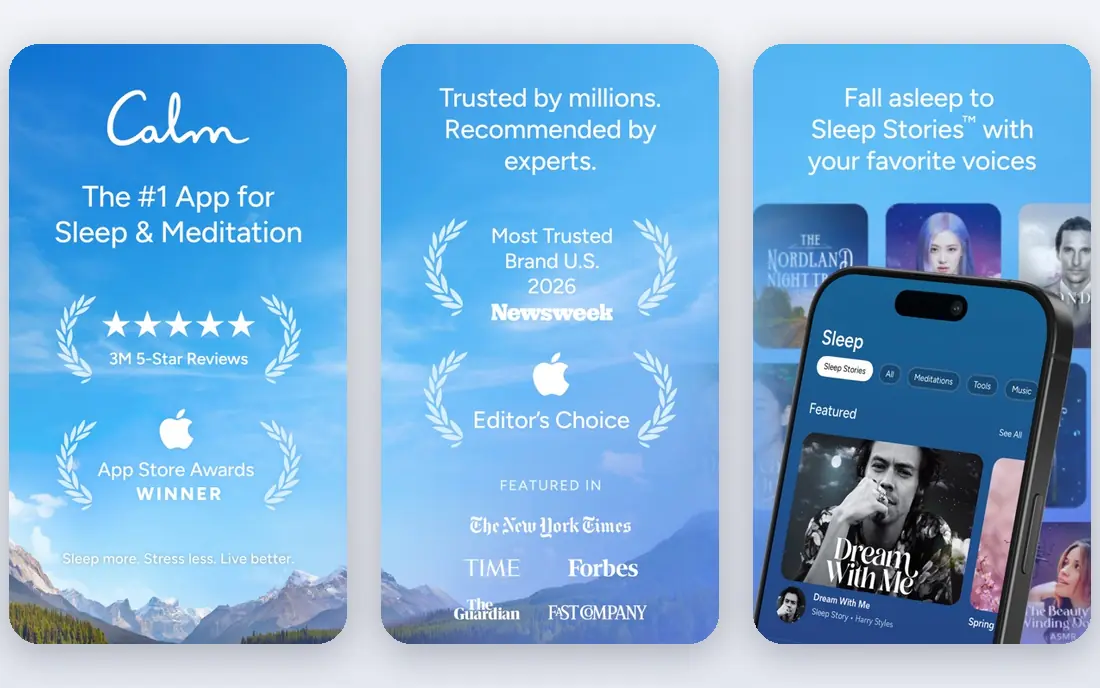
Calm focuses on sleep and stress relief as much as meditation. Its sleep stories, narrated by familiar voices, help many listeners fall asleep, while soundscapes, breathing exercises and short meditations cover daytime stress. The app is polished and easy to browse, with collections for anxiety, focus and bedtime. For someone whose main goal is better sleep, Calm is often the more appealing choice than a purely instructional meditation app.
Calm is not the best pick if you want deep, structured meditation training, since some of its content leans toward relaxation and entertainment. The subscription is annual, so use the trial to check whether sleep stories actually help you, rather than assuming they will. If sleep is your main issue, pair Calm with a consistent bedtime and a phone-free wind-down, since no app alone fixes poor sleep habits.
- Sleep stories and soundscapes
- Guided meditations for stress
- Breathing tools
- Annual subscription
- Some content is more entertainment than instruction
Duolingo makes language learning a daily habit through short, game-like lessons. Each lesson takes a few minutes, covers vocabulary and simple sentences, and uses streaks, leagues and rewards to keep you returning. That daily rhythm is its real value for personal development: many people fail at language learning not because the method is wrong, but because they stop after two weeks. Duolingo lowers the barrier to day one, day ten and day one hundred.
It will not make you fluent on its own. Grammar depth, conversation practice and reading longer texts need other resources, and the free version includes ads and limited hearts on some platforms. A paid plan removes ads and adds extra features. Use Duolingo as the daily habit layer, then add conversation practice, reading or a tutor when you reach a level where simple lessons feel too easy.
- Free core lessons
- Streaks and leagues keep daily practice going
- Many languages
- Free version includes ads
- Advanced grammar needs extra study elsewhere
Headway turns bestselling nonfiction books into short summaries you can read or listen to in about 15 minutes. Its library covers productivity, psychology, habits, leadership and health, which makes it useful for someone who wants to learn ideas daily without committing to a full book each week. You can save highlights, set reading goals and listen during a commute or walk, which fits personal development into time that would otherwise be idle.
The limit is clear: a summary gives you the main ideas, not the full argument, examples or nuance of the original book. Headway works best as a discovery tool, helping you decide which full books are worth reading, and as a daily learning habit. If a summary sparks real interest, read the full book. Check current pricing on the Headway site, since plans and trial terms vary, and test whether short summaries suit your learning style before paying for a year.
- Book ideas in about 15 minutes
- Audio and text summaries
- Large library on productivity and psychology
- Summaries are not a substitute for full books
- Pricing varies by plan and region
Fabulous builds personal development around routines rather than single habits. Its journeys guide you through morning and evening routines step by step, adding one small habit at a time, with coaching messages and reminders along the way. That structure helps people who know they want a better morning, but do not know where to start. The design is calm and encouraging, and the focus on one change at a time avoids the overload of tracking twenty habits at once.
Experienced habit builders may find the early journeys slow, since they are designed for beginners. Pricing is subscription-based, so use the trial to see whether the guided pace suits you. Fabulous is best for someone who wants a coach-like routine builder, especially for mornings, evenings and basic health habits, rather than a flexible tracker for many custom goals.
- Structured journeys for routines
- Habit coaching and reminders
- Attractive design
- Subscription pricing
- Some journeys feel slow for experienced habit builders
Forest helps you stay focused by turning a work session into a growing virtual tree. You set a timer, plant a tree, and if you leave the app to check your phone, the tree dies. That simple consequence is surprisingly effective for people who check their phone out of habit rather than need. Over time, you build a forest that shows your focused hours, and the app offers a way to plant real trees through partner programmes in some versions.
Forest is not a task manager, habit tracker or planner, so it works best alongside a tool like Todoist. Its pricing and free features vary by platform, so check the store listing for your device. If distraction is your main barrier to personal development, whether for study, writing or deep work, Forest is a focused, low-cost tool that does one job well.
- Simple focus timer with a growing tree
- Discourages phone use during work
- Tracks focus history
- Paid features vary by platform
- Not a full task manager
Todoist is the organisation backbone for personal development. It lets you capture tasks quickly, organise them into projects, set due dates and priorities, and filter by label or date. That clarity matters, because many personal goals fail not from lack of motivation, but from vague plans. A goal such as read more becomes a daily Todoist task, with a recurring reminder and a project that tracks progress. The free plan covers core task management, with paid plans adding reminders, filters and more collaborators.
Todoist will not motivate you on its own, and it does not include meditation, habit games or learning content. Its strength is turning intentions into a visible, manageable list. Pair it with a habit app or a learning app, and use Todoist to hold the daily actions that support your larger goal. For most people, a clear task list is the least glamorous but most useful personal development tool.
- Fast task capture
- Projects, labels and filters
- Works on many devices
- Advanced features need a paid plan
- No built-in habit game or meditation content
How we picked these
We compared official pricing, feature pages and app store listings, and we favoured apps that are widely available in the United States, still actively sold in October 2026, and clearly tied to a personal development goal. We mixed habit, mindfulness, learning, focus and organisation tools, rather than eight meditation apps, so readers can match an app to their goal. Prices are entry-level list prices where we could verify them, and we used See website where pricing varies by platform or region. We did not claim hands-on testing, and we based our notes on published features and listings.
How to use these apps without overload
Pick one goal and one app for two weeks. If your goal is habits, start with Habitica or Fabulous. If it is calm or sleep, start with Headspace or Calm. If it is learning, start with Duolingo or Headway. Adding five apps at once creates a new chore, not a new habit, and most people abandon the whole set within days. A single app used daily beats five apps opened once.
After two weeks, review honestly. Did you open the app most days, and did it change a behaviour you can name, such as meditating before bed or practising a language at lunch. If yes, keep it and consider a paid plan. If no, try a different style, such as switching from a game-based tracker to a routine builder, rather than blaming yourself. Personal development tools work when they fit your daily rhythm, your phone habits and your patience for setup. The best tool is the one you still use in month two.
Frequently asked questions
What are the best apps for personal development?
The best apps for personal development depend on your goal. Habitica and Fabulous suit habits, Headspace and Calm suit mindfulness and sleep, Duolingo suits language learning, Headway suits short book learning, Forest suits focus, and Todoist suits organisation. Start with one goal, then choose the app that matches it.
What are the best personal development apps free to use?
Habitica, Duolingo and Todoist all offer useful free plans, and Forest has a free option depending on platform. Headspace, Calm, Headway and Fabulous offer trials, but their full libraries need a subscription. A free plan is enough to test whether an app fits your routine before you pay.
What are the best free self help apps?
Free self help options in this list include Habitica for gamified habits, Duolingo for daily learning, and Todoist for task organisation. Headspace and Calm also offer some free content and trials. If you need support for a serious mental health issue, these apps are not a substitute for professional help, and you should seek a qualified clinician.
How do I choose a personal development app?
Name one goal, such as building a morning routine, sleeping better or learning a language, then pick the app built for that goal. Trial it for two weeks, check whether you use it most days, and only then pay for a year. Avoid installing several apps at once, since that creates overload rather than progress.
Do personal development apps actually work?
They can help when they turn a vague goal into a daily action, a reminder and a visible streak or record. They work less well when they are used as a substitute for action, or when the goal is too broad. The app is a support tool, not the change itself, so pair it with a clear daily action and a realistic schedule.
Sources
See where you really rank - block by block
ProMapRanker scans Google Maps across a grid of your service area. Simple monthly plans from $19, white-label on every plan.
Start freeKeep reading
 zoom alternatives
Best Zoom Alternatives in 2026
Compare Zoom alternatives in 2026, with free meeting limits and prices, so you can pick the best alternative to Zoom for your team, class, or community.
Read → which software is best for remote work
Which Software Is Best for Remote Work in 2026
Answering which software is best for remote work, we compare Slack, Zoom, Asana, Notion, Teams and more, with pricing and honest tradeoffs in 2026 now.
Read → which ai tool is best for content writing
Which AI Tool Is Best for Content Writing in 2026
Wondering which ai tool is best for content writing? We compare ChatGPT, Claude, Jasper, Grammarly, and more on price, quality, and best use in 2026 now.
Read →