 ProMapRanker
Best Tools for Integration Testing in 2026

Key takeaways
- Postman is our pick for most API teams, because it covers design, testing, mocking and CI runs in one familiar workspace.
- Playwright and Cypress suit teams that need to test full web workflows, while Selenium remains the broadest choice for many browsers and languages.
- Karate, Pact and Rest Assured suit code led teams that want contract, API and service tests written close to the codebase.
- Testcontainers solves a common integration problem by giving tests real databases, queues and services instead of fragile mocks.
- Start with the integration surface you actually own, such as APIs, databases or browser flows, and pick the tool that tests that surface best.
Quick comparison
| Pick | Great for | Pricing starts at | Free tier | |
|---|---|---|---|---|
 Postman | API integration testing | Free | Yes | Visit |
 Cypress | Web workflow testing | Free | Yes | Visit |
 Playwright | Cross browser workflow testing | Free | Yes | Visit |
 Selenium | Broad browser and language testing | Free | Yes | Visit |
 Katalon | All in one API and UI testing | Free | Yes | Visit |
 Karate | API and contract testing in plain syntax | Free | Yes | Visit |
 Pact | Consumer driven contract testing | Free | Yes | Visit |
 SoapUI | SOAP and REST service testing | Free | Yes | Visit |
 Rest Assured | Java API testing | Free | Yes | Visit |
 Testcontainers | Real service testing in code | Free | Yes | Visit |
The best integration testing tools
Integration testing checks that parts of a system work together, not only alone. The tools below cover API tests, service contracts, database checks and full browser workflows, so you can match the tool to the integration you need to prove.
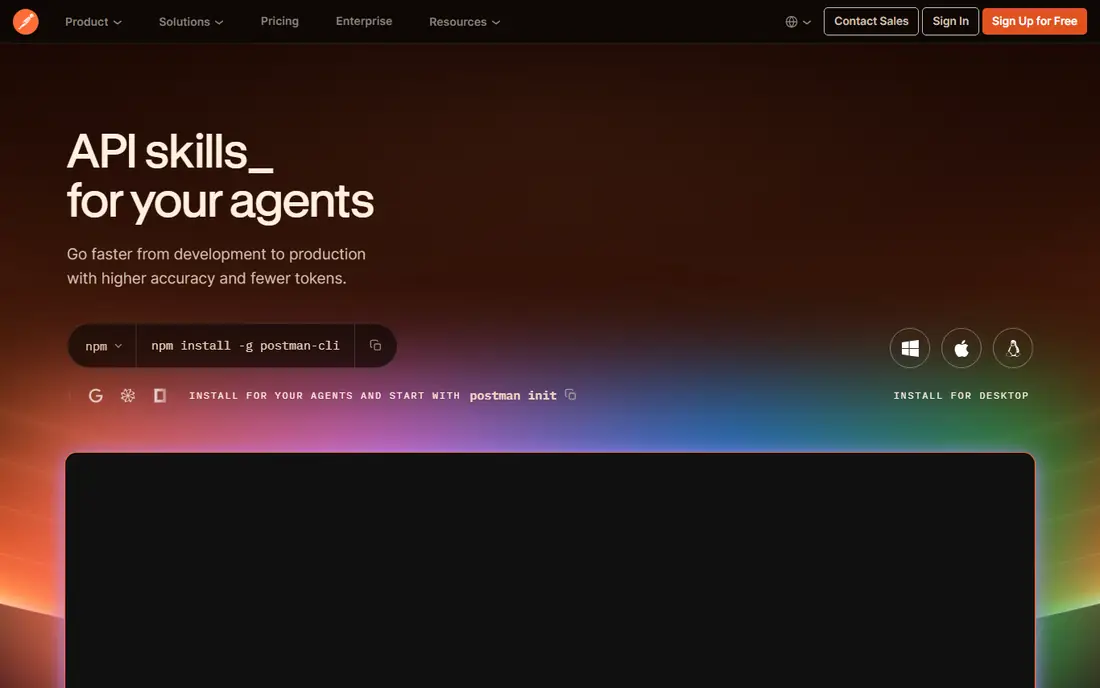
Postman is the most widely used API testing platform, and it fits integration testing well. Teams can build request collections, write test scripts, run collections in CI, mock services that are not ready, and monitor APIs on a schedule. That range covers the common integration cases: checking that endpoints work together, that data flows correctly, and that a change in one service does not break another.
The free plan suits individuals and small teams, while paid plans add collaboration, governance and higher run limits. Postman is less suited to deep browser workflow testing, where Playwright or Cypress are stronger. For API led integration work, though, it is the easiest team to start and the easiest to scale.
- Full API workflow from design to CI runs
- Collections, mocks and monitors
- Large community and templates
- Paid plans needed for larger teams and governance
- Costs rise per user
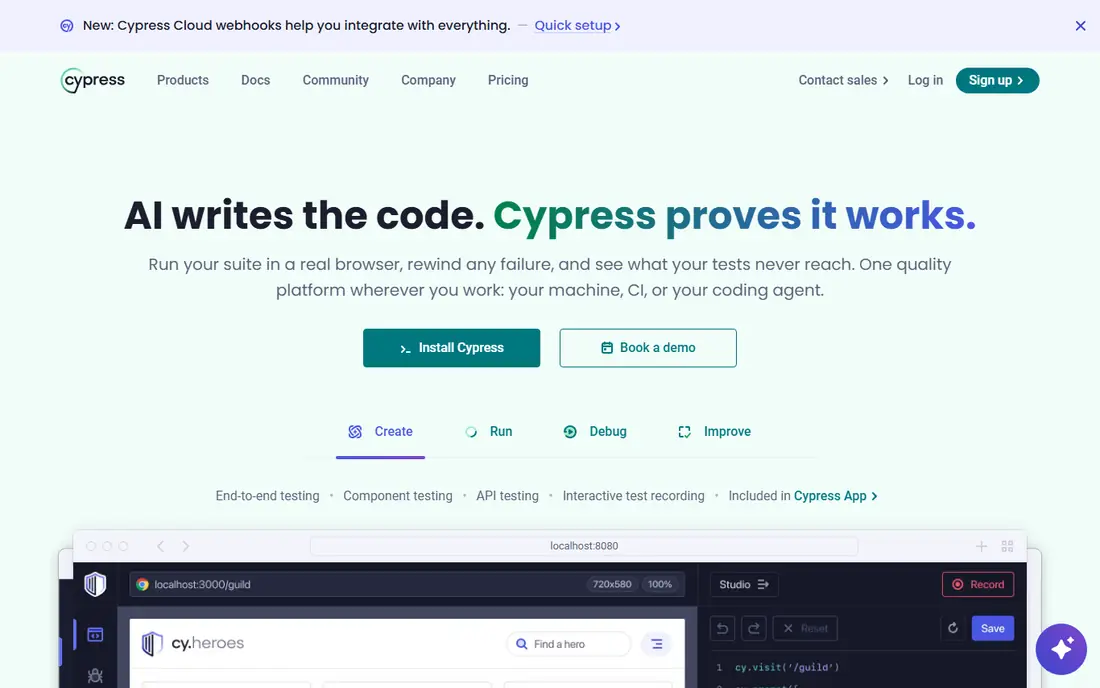
Cypress is a JavaScript testing framework for web applications, and it works well for integration tests that follow a user through several pages and services. You can test login, forms, checkout and dashboard flows in a real browser, with time travel debugging, screenshots and clear failure output. Its local runner is free, and Cypress Cloud adds parallel runs, analytics and flake detection.
Cypress is strongest for single browser workflows in JavaScript and TypeScript projects. Teams that need many browsers, native mobile apps or non JavaScript stacks may prefer Playwright or Selenium. For web teams that want readable, maintainable journey tests, Cypress remains a strong default.
- Fast local runner with clear debugging
- Good for full user journeys
- Cloud dashboard for CI
- Browser and multi tab limits compared with some rivals
- Cloud features are paid
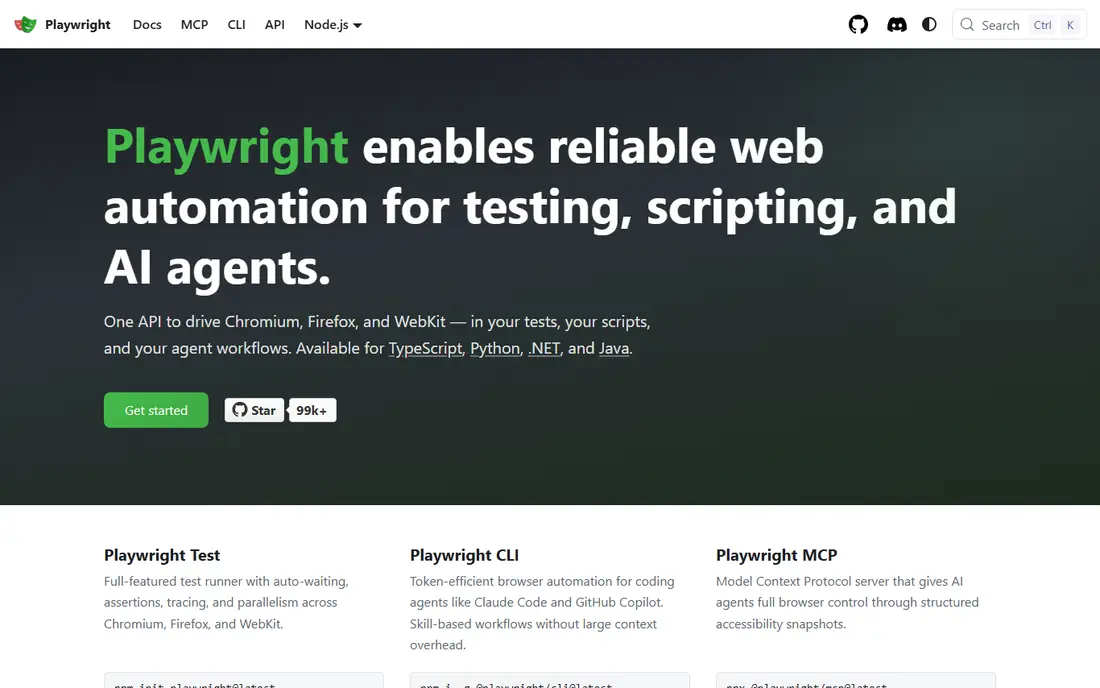
Playwright, from Microsoft, is a free open source framework for browser automation and testing. It runs tests in Chromium, Firefox and WebKit, supports TypeScript, JavaScript, Python, Java and C#, and handles parallel execution, auto waiting and trace viewing out of the box. That makes it a strong choice for integration tests that span front end, API and browser behaviour.
Playwright is code led, so manual testers and product managers will need developer support to write and maintain tests. It also needs discipline around test data and environment setup, or tests can become flaky. For engineering teams that want one framework for web, API and cross browser integration checks, Playwright offers the best balance of power and cost.
- Free and open source
- Chromium, Firefox and WebKit
- Parallel runs and strong tracing tools
- Code led, so non developers need help
- Test maintenance is ongoing work
Selenium WebDriver is the long established browser automation framework, with support for Java, Python, C#, Ruby and JavaScript, and for many browsers through drivers and Selenium Grid. It suits teams that need broad compatibility, legacy browser coverage, or a framework that works across many stacks and vendors. Its community and documentation are extensive.
Newer frameworks such as Playwright and Cypress offer faster setup, better auto waiting and clearer debugging for many web projects. Selenium still earns its place when language choice, browser breadth or existing investment matters most. Teams should invest in good waits, page objects and stable test data, or Selenium tests can become hard to maintain.
- Very broad browser and language support
- Large community
- Selenium Grid for parallel runs
- More setup and boilerplate than newer frameworks
- Flaky tests need careful waiting and design
Katalon is an all in one test automation platform for web, API, mobile and desktop testing. It offers a recorder for less technical testers, script modes for engineers, and integrations with CI tools and test management systems. That breadth helps teams that need API integration tests and UI journey tests in one place, without managing several frameworks.
The free community edition covers many core needs, while enterprise features, support and advanced reporting are paid. Katalon can feel heavier than a single purpose framework, and code led teams may prefer Postman plus Playwright. For mixed teams that want one platform and a gentler learning curve, Katalon is a practical choice.
- Combines API, web and mobile testing
- Recorder and script modes
- CI integrations
- Enterprise features are quoted
- Heavy projects may outgrow the free edition
Karate is a free open source testing framework that lets teams write API tests in a readable, plain language style, without writing large amounts of boilerplate code. It supports API testing, UI testing, performance testing and contract style checks, and it runs in CI with clear reports. That makes it useful for integration tests where product and QA staff need to read and review test cases.
Karate suits mixed dev and QA teams that want tests close to the code but readable by non developers. Its community is smaller than Postman or Playwright, so finding examples for edge cases can take longer. For API heavy integration work, Karate offers a clean balance between readability and power.
- Free and open source
- Readable plain language tests
- API, UI and performance testing in one tool
- Smaller community than Postman or Playwright
- Learning curve for advanced features
Pact is the standard framework for consumer driven contract testing. Consumer tests generate a contract that describes what a service expects, and provider tests verify that the service still meets that contract. PactFlow adds a broker, versioning and deployment checks, so teams can block a release when a contract would break. That approach catches integration breaks early, without running full end to end suites for every change.
Pact needs commitment from both sides of an integration. Consumer and provider teams must write and maintain tests, and the first setup takes real effort. For microservice teams with many service to service dependencies, that effort pays off in fewer surprise breaks. For a single small API, Postman or Karate will usually be simpler.
- Mature consumer driven contract framework
- Many languages
- Deployment gating with PactFlow
- Both consumer and provider teams must maintain tests
- Setup takes effort
SoapUI, from SmartBear, is a long running open source tool for testing web services. It supports both SOAP and REST APIs, with visual test case building, assertions, data driven testing and scripting for complex flows. That makes it a good fit for integration tests against older SOAP services, enterprise systems and mixed API estates.
The open source version covers core testing well, while ReadyAPI adds advanced features, security testing and virtualization at quoted enterprise pricing. SoapUI is less modern than Postman for new REST only teams, and its interface can feel dated. For teams that still depend on SOAP, or need a dedicated service testing tool, it remains a reliable choice.
- Strong SOAP and REST support
- Visual test building
- Assertions and data driven tests
- Interface feels dated
- Advanced ReadyAPI features are paid
Rest Assured is a free Java library for testing REST APIs. It offers a clean, readable syntax for sending requests, checking status codes, headers and bodies, and writing data driven tests. It integrates naturally with JUnit, TestNG and CI pipelines, which makes it a strong choice for Java teams that already test in code.
Rest Assured is Java only, so it does not suit Python, JavaScript or .NET teams, and it has no visual builder for non developers. For Java shops, though, it keeps integration tests close to the application code, with full control over setup, assertions and test data. Pair it with Testcontainers when tests need real databases or services.
- Free Java library
- Clean syntax for API tests
- Integrates with JUnit and TestNG
- Java only
- Needs code and CI setup
- No visual test builder
Testcontainers is a free open source library that starts real dependencies, such as databases, message queues and caches, in containers during tests. Instead of mocking a database, your integration test runs against a real one, which catches SQL, migration and configuration problems that mocks hide. It supports Java, .NET, Python, Go and other languages, and it works in CI with Docker.
The trade off is resources and speed. Tests need Docker, container startup adds time, and CI pipelines need enough capacity. For teams that have suffered from mock drift, where mocks pass but production fails, Testcontainers is worth that cost. Use it for the integration layer, and keep fast unit tests separate for logic that does not need a real service.
- Real databases, queues and services in tests
- Works with many languages
- Reduces mock drift
- Needs Docker and CI resources
- Test setup can be slower than pure unit tests
How we picked these
We compared official documentation, pricing pages and 2026 testing guides for tools that test how parts of a system work together. We kept tools that cover API, service, database or browser integration, rather than pure unit testing libraries alone, and we included contract and container tools because they solve common integration failures. We checked that each tool is still maintained and available in October 2026, and we used free plan labels where the core tool is open source or free, with paid cloud or enterprise options noted separately.
How to build an integration test strategy that holds up
Name the integration before you pick the tool
List the boundaries you must prove: API to API, app to database, app to queue, browser to API, or service to third party. Each boundary favours a different tool. API boundaries suit Postman, Karate or Rest Assured. Service contracts suit Pact. Browser journeys suit Playwright or Cypress. Database behaviour suits Testcontainers. Picking the tool first often leads to tests that look good but miss the real risk.
Keep the test pyramid in mind
Unit tests should still cover most logic, because they are fast and cheap. Integration tests should cover the boundaries and data flows that unit tests cannot see. End to end tests should cover only the most important user journeys, because they are slower and more fragile. A suite that is mostly end to end tests will be slow, flaky and hard to maintain.
Control test data and environments
Flaky integration tests usually come from shared data, unstable environments or timing issues, not from the test tool. Use isolated test data, reset state between runs, and use mocks or containers consistently. Testcontainers helps for databases, Pact helps for service contracts, and Postman mocks help when a dependent service is not ready.
Run integration tests in CI, not only locally
A test that only runs on one developer machine will not catch integration breaks. Run API, contract and key journey tests in CI on every pull request, with clear failure output and trace or video where available. Gate deployments on contract checks when you use Pact, and track flaky tests separately so they do not erode trust in the suite.
Review failures as a team
When an integration test fails, ask whether the code, the contract, the data or the test itself is wrong. Fixing the test to pass without understanding the failure hides real risk. Keep a short log of recurring failures, and refactor tests that fail for timing or environment reasons before they become ignored.
Frequently asked questions
What is the best integration testing software?
Postman is our pick for most API teams, because it covers design, testing, mocking and CI runs in one place. Playwright suits full web workflows, Karate suits readable API tests, and Pact suits microservice contracts. The best choice depends on whether your main integration surface is APIs, services, databases or browser journeys.
What are the best integration testing tools for APIs?
Postman, Karate, Rest Assured and SoapUI are strong API integration testing tools. Postman suits team workflows and visual test building. Karate suits readable, code light tests. Rest Assured suits Java teams. SoapUI suits SOAP and mixed service estates. Testcontainers adds real database and service coverage alongside any of these.
What is the best software integration testing tool for web apps?
Playwright is our pick for most web teams, because it is free, cross browser and handles parallel runs well. Cypress is a strong alternative for JavaScript teams that want clear debugging. Selenium remains best when broad language and browser coverage matter most. Choose based on your stack, browser needs and team skills.
What is the difference between integration testing and contract testing?
Integration testing checks that real parts work together, such as an app with its API and database. Contract testing, with tools such as Pact, checks that a consumer and a provider agree on an interface, without running the full system. Contract tests are faster and catch breaking changes earlier, while integration tests prove the real system works end to end.
Are there free integration testing tools?
Yes, many of the best tools are free and open source. Playwright, Selenium, Karate, Pact, Rest Assured, SoapUI and Testcontainers all have free core versions. Postman, Cypress and Katalon offer free plans with paid cloud or enterprise options. Start free, and pay only when team, governance or scale limits actually block you.
How do I choose between Postman and Karate?
Choose Postman when you want a visual workspace, team collaboration, mocks and monitors in one platform. Choose Karate when you want readable tests written close to code, with less boilerplate and no per user cost. Many teams use both, with Postman for exploration and collaboration, and Karate for repeatable CI tests.
Sources
See where you really rank - block by block
ProMapRanker scans Google Maps across a grid of your service area. Simple monthly plans from $19, white-label on every plan.
Start freeKeep reading
 wpforms alternatives
Best WPForms Alternatives in 2026
We compare 9 wpforms alternatives for WordPress forms, with free and paid options, current pricing notes, and honest limits for small business sites in 2026.
Read → windows task scheduler alternatives
Best Windows Task Scheduler Alternatives in 2026
Looking for Windows Task Scheduler alternatives? We compare 9 schedulers for Windows and cross-platform work, from free tools to enterprise automation.
Read → which ai video service is best
Which AI Video Service Is Best in 2026
which ai video service is best? We compare 10 legitimate AI video services on price, avatars, editing and output quality to help you pick the right tool.
Read →