 ProMapRanker
Best Telematics Companies in 2026

Key takeaways
- Geotab, Samsara, and Powerfleet lead recent independent vendor assessments, but the best telematics company for a fleet depends on fleet size, hardware mix, and contract terms.
- Most enterprise telematics pricing is quote-based, so compare the three-year total including hardware, installation, and camera licenses, not a monthly headline.
- Azuga lists $25 to $35 per vehicle per month, which gives small fleets a rare published starting point, while larger vendors quote per fleet.
- Dashcams change safety outcomes only when paired with coaching, so budget for the behavior program, not just the camera license.
- ELD compliance, fuel reporting, and maintenance scheduling are the modules to confirm in writing, since they are often sold separately from base tracking.
Quick comparison
| Pick | Great for | Pricing starts at | Free tier | |
|---|---|---|---|---|
 Geotab | Mixed fleets and open integrations | See website | Free trial | Visit |
 Samsara | Connected operations and AI dashcams | See website | Free trial | Visit |
 Verizon Connect | Safety, compliance, and routing | See website | Free trial | Visit |
 Motive | Driver-focused fleets and ELD | See website | Free trial | Visit |
 Powerfleet | Mixed assets and trailers | See website | Free trial | Visit |
 Webfleet | Factory-fit data and AI video | See website | Free trial | Visit |
 Teletrac Navman | Fleet and equipment management | See website | Free trial | Visit |
 Azuga | Published pricing for smaller fleets | $25 per vehicle per month | Free trial | Visit |
 Lytx | Video safety and claims evidence | See website | Free trial | Visit |
The best telematics companies
Telematics is more than a dot on a map. The companies below combine GPS tracking with diagnostics, driver safety, compliance, and maintenance, and they differ most in platform depth, hardware, and how they sell to small versus large fleets.
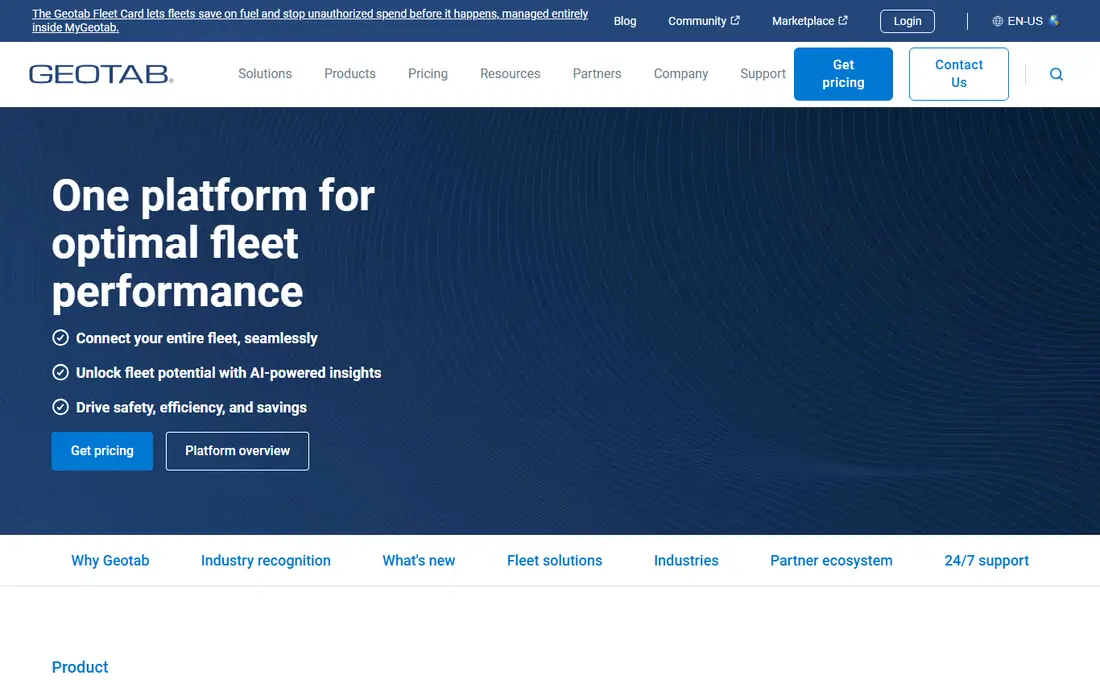
Geotab bundles GPS tracking, diagnostics, routing, maintenance scheduling, fuel reporting, and asset management, with an open API that links to transport, warehouse, and safety tools. That breadth suits mixed fleets across multiple sites, where vans, trucks, and equipment need one reporting view. OEM telematics connections also pull embedded vehicle data directly into the platform, which can reduce aftermarket hardware for newer vehicles.
Recent ABI Research assessments place Geotab first overall among commercial telematics vendors, citing its GO devices, asset trackers, OEM integrations, and a marketplace with hundreds of partner solutions. The trade-off is complexity: a small fleet may not need the full marketplace, and configuration takes time. Geotab is the strongest pick when integration depth and mixed-fleet reporting matter more than a simple tracking app.
- Broad platform depth
- Open API and large marketplace
- OEM data and EV reporting
- Quote-based pricing
- Setup can feel heavy for very small fleets
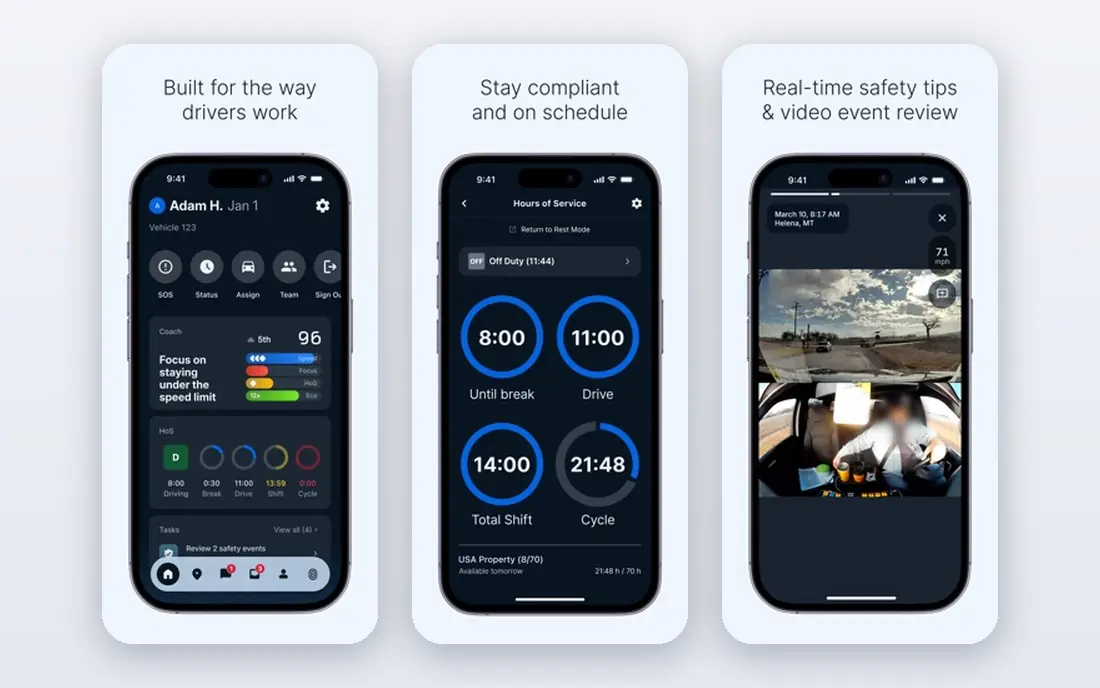
Samsara offers real-time GPS tracking, AI-powered dashcams, driver safety alerts, maintenance schedules, and workflow tools in one cloud platform. Its mobile app gives managers live locations, safety scores, and maintenance status, while in-cab alerts flag hard braking, distracted driving, and other risky behavior in the moment. That combination is why Samsara ranks second in recent ABI Research assessments and first in some user review rankings for fleet platforms.
The platform reaches beyond vehicles to equipment, sites, and workflows, which suits large and complex operations. The catch is price and scale: Samsara is premium-priced and less suited to very small fleets, with a 30-day hardware trial and multi-year terms in many deals. For a fleet that wants one connected system and can use the full platform, Samsara is hard to beat.
- All-in-one connected operations cloud
- Strong AI dashcams
- Fast deployment for large fleets
- Premium pricing
- Minimum fleet sizes and contract terms need checking
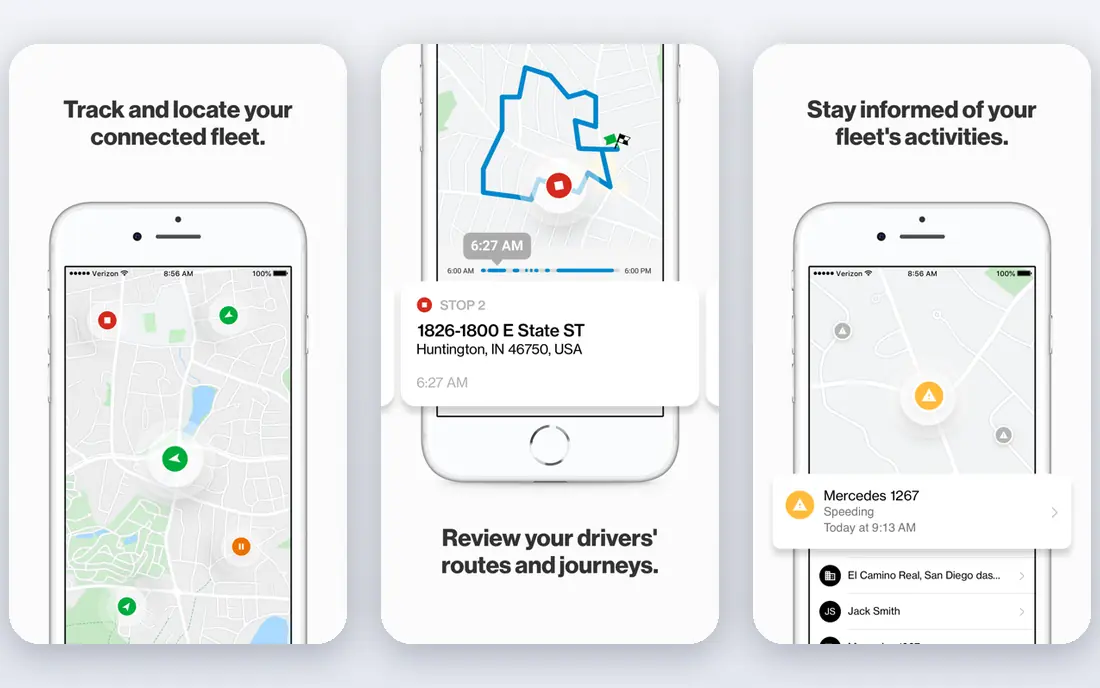
Verizon Connect pairs GPS tracking with AI dashcam safety, compliance tracking, route optimization, and driver performance monitoring. Geofencing alerts notify managers when a vehicle enters or leaves an area, and the app shows location, driving behavior, and schedule status in one view. For fleets that need compliance and safety coaching alongside routing, that depth is useful.
The downside is buying complexity. Pricing is quote-based, many features are add-ons, and three-year minimum contracts appear in reviews, so the total cost can rise well above an initial quote. Customer service and hardware reliability also draw mixed comments in public reviews. Verizon Connect suits larger fleets that will use routing, safety, and compliance together and that negotiate the full contract carefully.
- Feature-rich platform
- AI video and driver safety tools
- Strong routing optimization
- Complex pricing with many add-ons
- Three-year terms are common in reviews
Motive, formerly KeepTruckin, combines live GPS tracking, smart dashcams, fuel management, maintenance, ELD compliance, and workforce tools in an integrated platform. Reviewers praise its interface and ease of use, which matters when drivers and dispatchers must adopt the system daily. ELD-compliant logging covers hours of service for interstate trucking, provided the device is on the FMCSA registered list.
The platform is driver-centric, with safety scores, coaching workflows, and spend tools that reduce the need for separate apps. Pricing is quote-based, with reports suggesting tiered plans from about $20 per vehicle per month for basic features, but hardware and camera licenses change the total. Motive is a strong fit for mixed-industry fleets that want one driver-focused system rather than a patchwork of tools.
- GPS, ELD, AI video, and fuel in one platform
- Driver-friendly app
- Strong user experience reviews
- Quote-based pricing
- Camera and compliance modules may be separate licenses
Powerfleet, formed in part through the MiX Telematics merger, covers vehicles, trailers, powered equipment, and other assets with AI video and OEM integration. Its Unity platform aims to bring cross-asset intelligence into one view, which helps fleets that lose track of trailers and equipment between jobs. ABI Research placed Powerfleet third in its recent commercial telematics ranking, citing hardware breadth and market traction since the merger.
The trade-off is transition risk. Reviews note that post-merger integration is still in progress and that support can vary during that period. Fleets with complex asset mixes should still shortlist Powerfleet, but they should confirm support terms, migration help, and hardware compatibility in writing. For trailers and equipment alongside trucks, Powerfleet has a breadth few rivals match.
- Mixed-fleet and asset tracking
- AI video and OEM integration
- Global coverage after MiX merger
- Post-merger integration is still in progress in reviews
- Support consistency varies
Webfleet, formerly TomTom Telematics, offers fleet management with OEM.connect factory-fit data plus AI video telematics. For fleets running newer OEM-connected vehicles, factory-fit data can reduce installation work and keep vehicle health, location, and diagnostics flowing without an extra device. That is a practical saving when a fleet renews vehicles on a rolling cycle.
The platform also covers routing, driver behavior, and compliance reporting, with a focus on fleets that want to avoid aftermarket hardware where possible. Pricing is quote-based, and US buyers should confirm local support and integration coverage before committing. Webfleet suits fleets with modern OEM-connected vehicles and a preference for video safety without a heavy hardware install.
- OEM.connect factory-fit data
- AI video telematics
- Avoids aftermarket hardware for some fleets
- Quote-based pricing
- Brand recognition is stronger in Europe than in some US segments
Teletrac Navman combines fleet management software with equipment management, real-time data, customizable dashboards, and automated compliance reporting. That pairing helps construction, field service, and logistics fleets that need to track powered equipment alongside vehicles. Customer support draws praise in some reviews, while setup and administration draw criticism in others, so implementation help matters.
Pricing is quote-based and centered on guided solution selection, so buyers should ask for a breakdown by vehicle count, hardware, and module. Teletrac Navman is a solid choice for fleets that want equipment tracking in the same system as vehicle tracking, and that value simplicity in daily dashboards over a large app marketplace.
- Fleet plus equipment management
- Compliance reporting automation
- Customizable dashboards
- Quote-based pricing
- Setup and customization draw mixed reviews
Azuga is the transparent option in a quote-heavy market. Basic plans are listed from $25 per vehicle per month, with higher tiers at $30 and $35 per vehicle per month adding features, and a SafetyCam add-on for video safety. GPS tracking, alerts and notifications, and driver scores are included in the base tiers, which makes it easier for a small fleet to budget without a sales call.
The limitation is enterprise depth. Azuga covers core tracking, safety, and fleet management well, but it does not match the marketplace or connected operations breadth of Geotab or Samsara. ELD compliance is available as an add-on in some listings, so interstate fleets should confirm that cost. For a small fleet that wants published pricing and a clear starting point, Azuga is the easiest quote to compare.
- Published plans from $25 per vehicle per month
- GPS tracking, alerts, and driver scores
- SafetyCam add-on
- ELD is an add-on in some listings
- Smaller enterprise depth than Geotab or Samsara
Lytx specializes in video telematics: cameras, in-cab alerts, coaching workflows, and event footage that settles insurance claims and changes driver behavior. Its published aggregate claims savings from client fleets are often cited by buyers, though any premium discount depends on the insurer and the fleet's loss history. For fleets with meaningful accident exposure, video evidence alone can justify the cost.
Lytx is less of a general fleet management platform than Samsara or Geotab, so fleets that also need routing, maintenance, and fuel reporting may pair it with another system or choose a full platform with video included. The right fit is a fleet where safety and claims are the top priority and where a coaching program will actually use the footage. Without coaching, a camera alone changes little.
- Leading video safety platform
- Driver coaching workflows
- Claims and exoneration evidence
- Quote-based pricing
- Video focus means less general fleet management depth than full platforms
How we picked these
We compared recent vendor assessments, including ABI Research rankings, plus official product pages and public pricing listings for fleet telematics. We favored companies with live GPS tracking, diagnostics or safety tools, ELD options where relevant, and a current US or global fleet presence. We used See website where pricing was quote-based, and we used published figures only where a vendor or recent comparison listed them. We did not claim hands-on testing, and we framed this guide as a comparison based on publicly reported factors, not a verified ranking.
What to check before you sign a telematics contract
Start with the three-year total. Ask each vendor to break out telematics software, dashcam licenses, hardware, installation, ELD modules, and support as separate line items. A low monthly software rate can hide a high camera license or a hardware charge that repeats at renewal. Also confirm contract length, renewal terms, and cancellation terms in writing, since three-year terms are common.
Next, check hardware and coverage. Confirm which vehicles need an aftermarket device, which can use OEM data, and whether trailers and equipment need separate trackers. Test the mobile app with dispatchers and drivers, not just with managers, since daily adoption decides whether safety scores and maintenance alerts get used.
Then confirm compliance and integrations. If you run interstate trucking, confirm the ELD device is FMCSA registered and whether ELD is included or an add-on. Check integrations with your transport, maintenance, fuel card, and payroll systems, and ask for a named implementation contact. Finally, plan the safety program: dashcam footage only reduces incidents when coaching follows, so budget time for weekly reviews and driver feedback.
Frequently asked questions
What is the best telematics company?
Geotab leads recent ABI Research assessments for overall implementation, with Samsara second and Powerfleet third, but the best fit depends on fleet size and needs. Small fleets often start with Azuga for published pricing, while large fleets shortlist Geotab, Samsara, or Verizon Connect for platform depth.
How much does telematics cost per vehicle?
Published prices are rare. Azuga lists $25 to $35 per vehicle per month, and Fleetio, a related fleet tool, lists $4 to $10 per asset per month for software without a telematics feed. Quoted telematics platforms are typically reported in the $25 to $60 range per vehicle per month once hardware and cameras are included, but every fleet quote differs by size, term, and features.
Do I need dashcams, or is GPS tracking enough?
GPS tracking answers where a vehicle is and how fast it moves. Dashcams answer what happened, which settles insurance claims and changes driver behavior through coaching. If your fleet has meaningful accident exposure, video from Samsara, Motive, Lytx, or Azuga SafetyCam is worth pricing as a separate license.
What is ELD compliance, and which tools cover it?
The ELD mandate requires most commercial drivers in the US to log hours of service electronically. Motive, Samsara, Geotab, Verizon Connect, Teletrac Navman, and Azuga as an add-on all offer ELD workflows. Confirm the device is on the FMCSA registered list and whether ELD is included in the base price or a separate module.
Can telematics reduce insurance premiums?
Sometimes. Documented safety programs and exoneration footage can reduce claim frequency and severity, and some vendors advertise insurance partnerships with discounts. Discounts depend on your insurer and loss history, so get any insurance conversation in writing before counting savings in a business case.
How long are telematics contracts?
Many enterprise deals run for three years, especially where hardware is included, while smaller published plans may offer shorter terms. Always read renewal, hardware replacement, and cancellation terms before signing, and compare the full term cost across vendors, not just the first-year rate.
Sources
- https://www.withvector.com/blog/top-7-leading-telematics-companies/
- https://www.abiresearch.com/press/geotab-samsara-and-powerfleet-take-the-top-spots-in-abi-researchs-commercial-telematics-competitive-ranking
- https://rankite.com/blog/best-telematics-software
- https://www.geotab.com
- https://www.samsara.com
- https://www.verizonconnect.com
- https://www.gomotive.com
- https://www.azuga.com
See where you really rank - block by block
ProMapRanker scans Google Maps across a grid of your service area. Simple monthly plans from $19, white-label on every plan.
Start freeKeep reading
 wpforms alternatives
Best WPForms Alternatives in 2026
We compare 9 wpforms alternatives for WordPress forms, with free and paid options, current pricing notes, and honest limits for small business sites in 2026.
Read → windows task scheduler alternatives
Best Windows Task Scheduler Alternatives in 2026
Looking for Windows Task Scheduler alternatives? We compare 9 schedulers for Windows and cross-platform work, from free tools to enterprise automation.
Read → which ai video service is best
Which AI Video Service Is Best in 2026
which ai video service is best? We compare 10 legitimate AI video services on price, avatars, editing and output quality to help you pick the right tool.
Read →