 ProMapRanker
Best Tech Companies to Work in 2026


Engineers focused on AI hardware and accelerated computing · Pricing starts at: See website
Key takeaways
- NVIDIA and Google appear near the top of most 2026 employer lists, with Microsoft noted for breadth and internal mobility.
- No single employer wins on every measure: pay, work model, learning paths, and team culture vary by role and location.
- Large employers offer wider internal moves, while smaller teams inside big firms can feel very different from the headline brand.
- Check the specific team, manager, and work model before accepting, since those factors shape daily life more than a company ranking.
Quick comparison
| Pick | Great for | Pricing starts at | Free tier | |
|---|---|---|---|---|
| NVIDIA | Engineers focused on AI hardware and accelerated computing | See website | No | Visit |
 Google | Engineers who want breadth across search, cloud, and AI | See website | No | Visit |
 Microsoft | Engineers who want cloud, AI, and enterprise breadth | See website | No | Visit |
 Apple | Engineers focused on hardware and software integration | See website | No | Visit |
 Meta | Engineers who want scale in social, AI, and mixed reality | See website | No | Visit |
 Adobe | Engineers and designers in creative and digital experience software | See website | No | Visit |
 Salesforce | Engineers and builders in enterprise cloud software | See website | No | Visit |
 Amazon | Engineers who want scale in cloud, retail, and devices | See website | No | Visit |
The best tech companies to work in 2026 in 2026
These are the best technology companies to work for when you weigh scale, learning, and career options, with a mix of hardware, cloud, software, and platform employers.
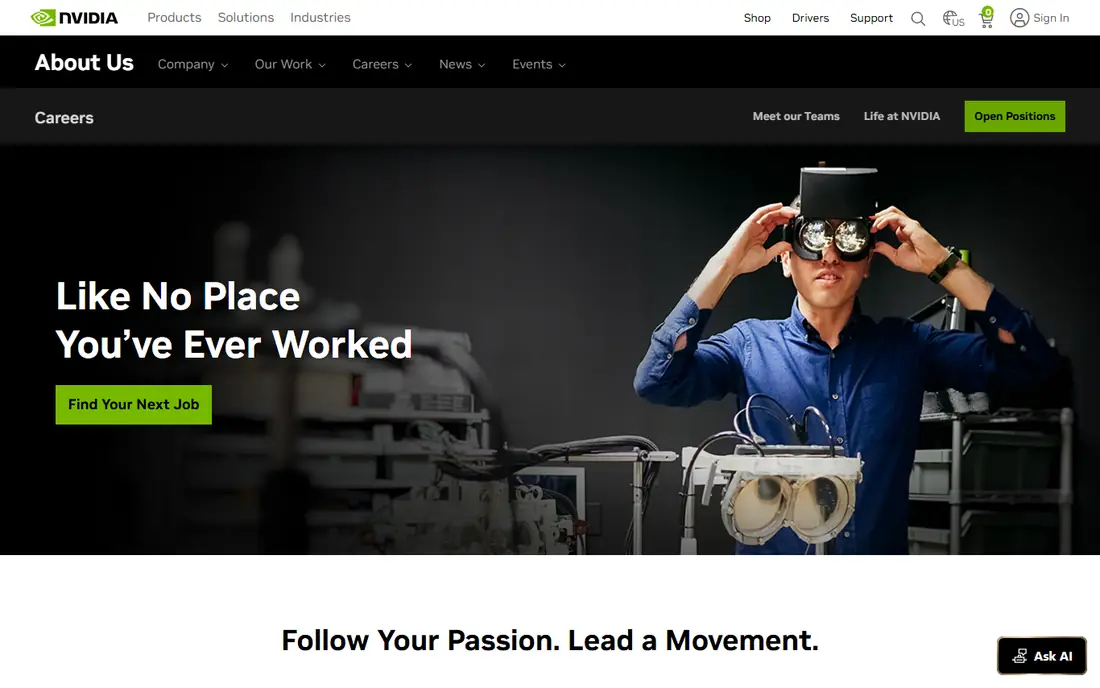
NVIDIA is known for graphics processors, AI computing platforms, and software such as CUDA, and it sits at the center of much current AI infrastructure work. Engineers here can work on hardware, systems software, and AI frameworks that reach a wide range of industries.
Public employer lists in 2026 place NVIDIA near the top for employee sentiment among large tech firms. That profile suits engineers who want hard technical problems, but candidates should expect demanding hiring bars and team-dependent work models.
- Deep AI and chip work, strong employee sentiment in public lists, large research scope
- Roles are often office based or hybrid, competition for roles is intense
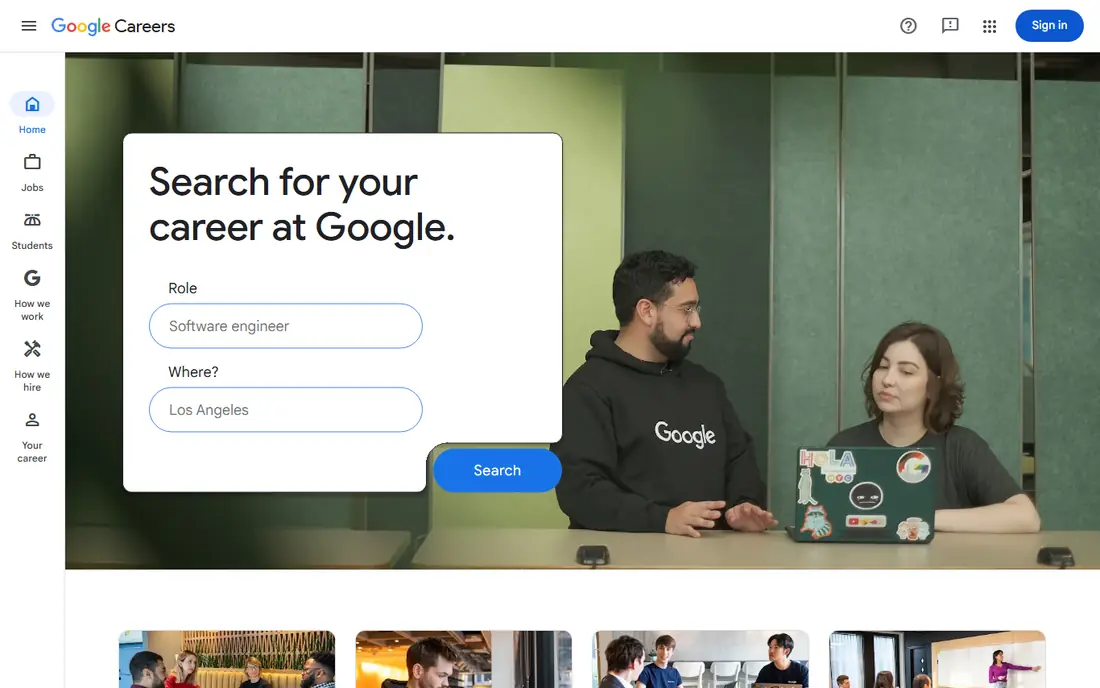
Google covers search, advertising, cloud, Android, and AI research through DeepMind, which gives engineers many internal directions over a career. A move from one product area to another is more feasible here than at a single-product firm.
Google has appeared on best-places-to-work lists for many consecutive years, and public lists still rank it highly in 2026. Candidates should still compare teams closely, since scope, on-call load, and hybrid expectations differ across the company.
- Wide product range, internal mobility, strong learning resources
- Large-company process can slow decisions, work model varies by team
Microsoft
Great for: Engineers who want cloud, AI, and enterprise breadth
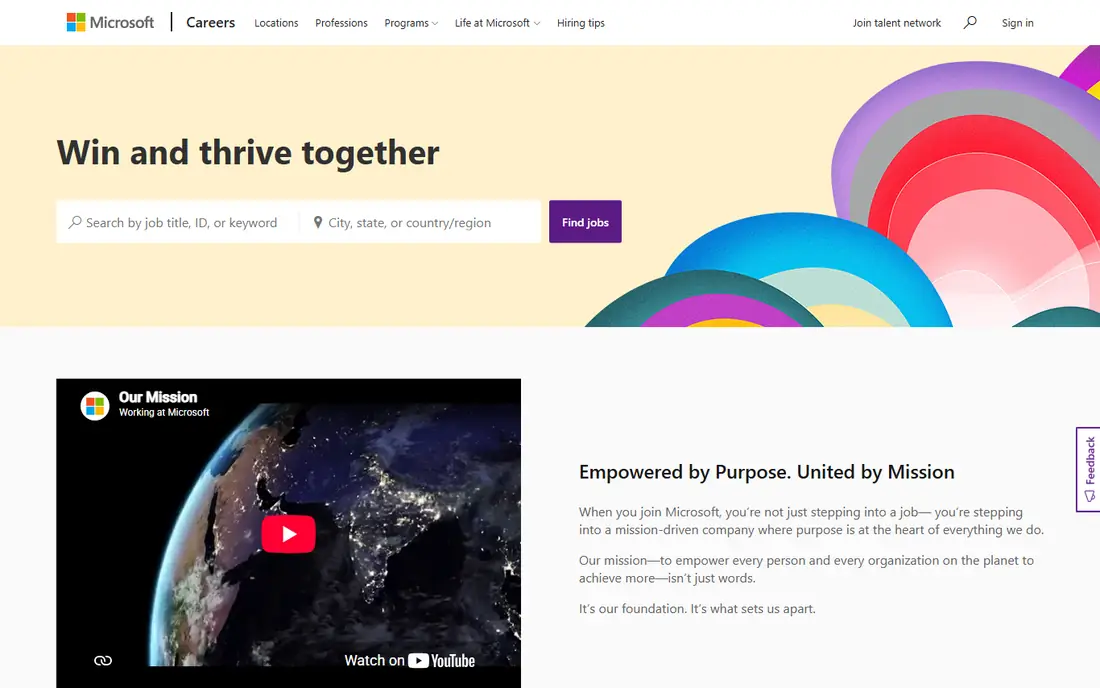
Microsoft spans cloud computing through Azure, productivity software, developer tools, gaming, and AI products built around Copilot. That breadth gives software engineers many paths, from infrastructure to applied AI to enterprise software.
Microsoft has been named highly in Forbes employer rankings in recent years, and it remains a common pick for engineers who value stability alongside AI work. The trade-off is scale: a great team experience depends heavily on the specific group you join.
- Azure and Copilot breadth, internal mobility, long product cycles
- Large scope can mean slower change in some teams, hybrid rules vary by team
Apple builds hardware, operating systems, and services together, so engineers work close to the physical product in a way that pure software firms cannot match. That integration appeals to people who care about performance, design, and polish.
Public lists rank Apple among the best big tech companies to work for, with a focus on product quality. Candidates should note that many roles are office based or hybrid, and project details are often shared only after joining.
- Product craft, hardware and software integration, long product support
- Mostly office or hybrid work, secrecy limits public detail on projects
Meta operates large social platforms and invests heavily in AI and mixed reality, giving engineers problems in ranking, infrastructure, and AI research at very large scale. The engineering tooling and internal systems are a draw in their own right.
Meta appears on many best-employer shortlists, though its public employee scores sit below NVIDIA and Google in some 2026 lists. Engineers should weigh the scale of the work against team culture and hybrid expectations for the specific role.
- Massive scale, AI systems work, strong engineering tooling
- Employee sentiment scores are lower than some peers, work model varies by role
Adobe is best known for creative tools such as Photoshop and Acrobat, plus digital experience products for marketing and documents. Engineers and designers here work on products used daily by creative professionals and large enterprises.
Adobe is frequently cited for benefits and workplace culture, and it offers hybrid work for many roles. It suits people who want creative software depth without the volatility of a startup, though product pace differs across its divisions.
- Creative product depth, benefits reputation, hybrid options
- Enterprise sales cycles can slow some product work, scope varies by product
Salesforce is a leading enterprise cloud software firm, with products for sales, service, marketing, and platform development. Engineers can work on cloud infrastructure, AI features, and tools used by companies of every size.
Salesforce ranks among the best software companies to work for in several 2026 lists, with internal learning a repeated strength. Candidates should check whether a role is customer-facing, platform-focused, or product-focused, since daily work differs sharply.
- Enterprise SaaS scale, internal learning, broad customer base
- Large enterprise processes, hybrid rules depend on role and location
Amazon spans retail, cloud computing through AWS, advertising, and devices, which gives engineers an unusually wide set of teams to join. AWS alone covers infrastructure, databases, AI services, and developer tools.
Amazon is one of the largest technology employers, and it is a common first step for software engineers because of hiring volume. The experience varies more by team than at most firms on this list, so team research matters more than the brand name alone.
- AWS breadth, many internal teams, fast hiring volume
- Pace and on-call load vary widely by team, large-company process
How we picked these
We compared official careers pages, public employer lists, and public reviews for each company on this list. We weighted breadth of engineering work, internal mobility, work model clarity, and repeated appearance in credible employer rankings. We did not invent salary, headcount, or ranking numbers, and we note where a factor varies by team or location rather than presenting a single company-wide claim. We did not claim hands-on employment at any of these firms.
How to compare tech employers
Look past the brand
Two teams inside one company can offer different managers, on-call loads, and growth paths. Ask about the team roadmap, how success is measured, and how often people move internally. A strong brand helps a resume, but daily work is set by the team.
Weigh work model honestly
Hybrid, office-based, and remote labels hide wide variation. Confirm how many days are expected in office, whether those days are fixed, and how distributed teams collaborate. If location flexibility matters to you, get the team policy in writing before you accept.
Check learning and mobility
Ask how internal transfers work, what learning budgets cover, and how promotions are decided. The best companies for software engineers are often the ones where a lateral move is normal, not a special request. Also check review cycles, since they shape pay progression over time.
Before you pay, read the cancellation and renewal terms, check whether your data can be exported, and confirm support hours for your time zone. A short trial or a monthly plan, where offered, is a safer first step than an annual plan, even when annual billing looks cheaper per month. Keep a note of the renewal date, since many services renew automatically.
Frequently asked questions
What are the best software companies to work for as an engineer?
The best software companies to work for depend on your priorities. NVIDIA suits AI hardware depth, Google suits breadth, Microsoft suits cloud and enterprise breadth, and Adobe suits creative software. Shortlist two or three firms, then compare specific teams rather than company averages.
Which are the best IT companies to work for if I want stability?
Larger firms such as Microsoft, Google, and Salesforce tend to offer more internal moves and steadier product cycles than early-stage firms. Stability still varies by division, so check hiring trends for the team you would join, not only for the company as a whole.
What are the best companies for software engineers starting out?
Large employers with structured onboarding and internal learning are often the best companies for software engineers at the start of a career. Google, Microsoft, Amazon, and Salesforce all hire at volume and offer many teams, which gives new engineers room to find a good fit.
What is the best tech company to work for if I want AI work?
NVIDIA, Google, Microsoft, and Meta all invest heavily in AI, but the work differs: chips and systems at NVIDIA, research and products at Google, cloud and Copilot at Microsoft, and large-scale AI systems at Meta. Pick the layer of AI work you enjoy most, then target teams in that layer.
Are these the best big tech companies to work for in every country?
No. Pay, benefits, work models, and hiring vary by country and city, and some roles exist only in certain hubs. Use this list as a starting shortlist, then check local careers pages and local employee reviews for the location where you would actually work.
Finally, compare two finalists side by side on the same task, using the same inputs and the same time of day where timing matters. Note where each tool saves time, where it adds steps, and where it forces a workaround. That direct comparison usually reveals the better fit faster than a longer feature list, and it gives you a clear reason to defend the choice to a team or a client.
Sources
See where you really rank - block by block
ProMapRanker scans Google Maps across a grid of your service area. Simple monthly plans from $19, white-label on every plan.
Start freeKeep reading
 zoom alternatives
Best Zoom Alternatives in 2026
Compare Zoom alternatives in 2026, with free meeting limits and prices, so you can pick the best alternative to Zoom for your team, class, or community.
Read → which software is best for remote work
Which Software Is Best for Remote Work in 2026
Answering which software is best for remote work, we compare Slack, Zoom, Asana, Notion, Teams and more, with pricing and honest tradeoffs in 2026 now.
Read → which ai tool is best for content writing
Which AI Tool Is Best for Content Writing in 2026
Wondering which ai tool is best for content writing? We compare ChatGPT, Claude, Jasper, Grammarly, and more on price, quality, and best use in 2026 now.
Read →