 ProMapRanker
Best Sushi Delivery Apps in 2026

Key takeaways
- Uber Eats, DoorDash, and Grubhub carry the widest range of sushi restaurants in most US cities.
- Fantuan and HungryPanda are the strongest picks for authentic Asian restaurants in cities where they operate.
- Delivery fees, service charges, and menu prices vary by restaurant and time, so the same order can cost different amounts on different apps.
- Subscription passes cut delivery fees for frequent orders, but only pay off if you order often enough.
- For raw fish, order from restaurants with strong recent reviews and eat the order promptly on arrival.
Quick comparison
| Pick | Great for | Pricing starts at | Free tier | |
|---|---|---|---|---|
 Uber Eats | widest restaurant choice | Free | Yes | Visit |
 DoorDash | coverage and grocery add-ons | Free | Yes | Visit |
 Grubhub | deals and restaurant range | Free | Yes | Visit |
 Seamless | New York ordering | Free | Yes | Visit |
 Caviar | premium and curated picks | Free | Yes | Visit |
 Fantuan | authentic Asian restaurants | Free | Yes | Visit |
 HungryPanda | Asian food delivery | Free | Yes | Visit |
 ChowNow | direct ordering from local restaurants | Free | Yes | Visit |
The best sushi delivery apps
These apps all deliver sushi in the US in 2026, but they differ in coverage, fees, and the kind of restaurant you will find on each one.
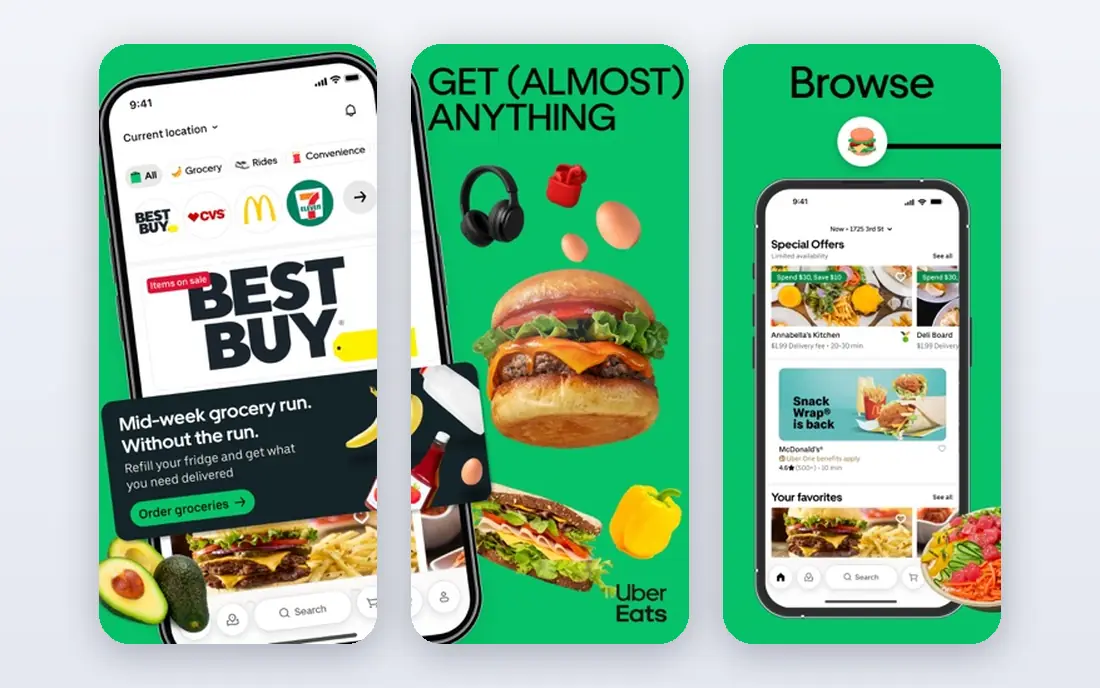
Uber Eats is our pick for most people because it lists sushi restaurants from large chains to small local shops in most cities. You can filter by cuisine, price, and delivery time, see photos of rolls and sashimi sets, and track the courier from the restaurant to your door. Scheduled ordering helps for dinner plans, and the app stores past orders so a repeat order takes a couple of taps.
The downside is cost control. Delivery fees, service fees, and small-order fees change by restaurant and by time of day, and menu prices on the app can sit above in-store prices. That means a cheap-looking roll can turn into a pricey total at checkout. Compare the final total, not just the menu price, and use the app mainly where its restaurant range beats the alternatives.
- Large restaurant range
- Live order tracking
- Scheduled orders
- Fees and menu markups vary by restaurant
- Delivery quality depends on the courier
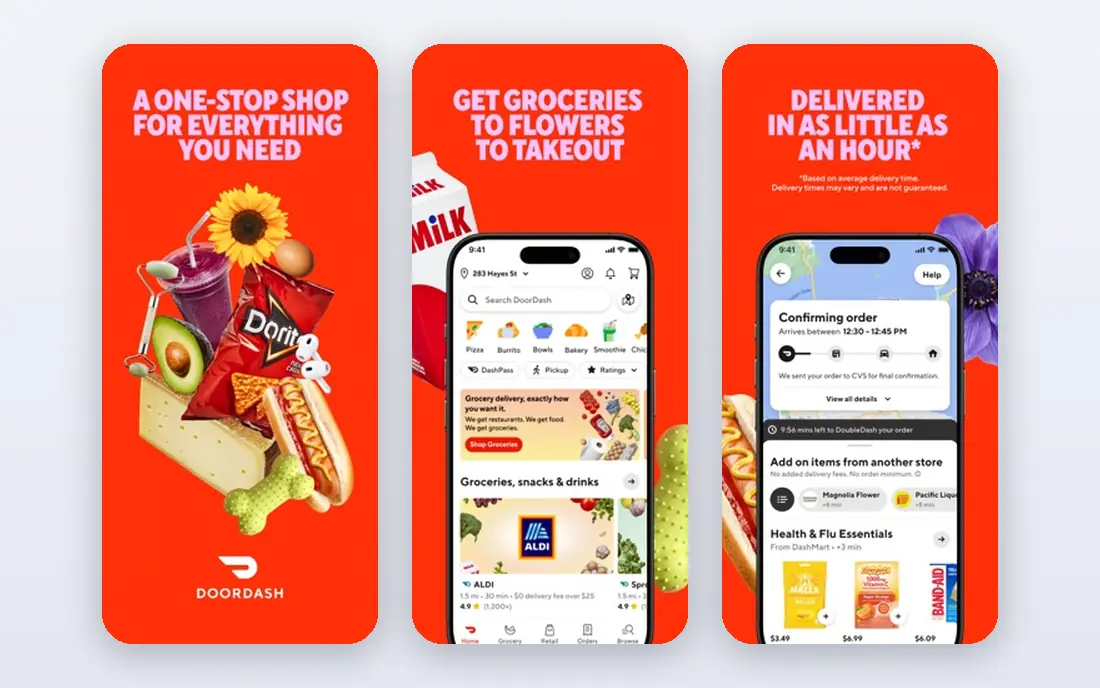
DoorDash is the closest rival to Uber Eats for sushi, and in many suburbs it lists restaurants that other apps miss. Its sushi search works well, with filters for price, rating, and delivery time, and you can add groceries, drinks, or dessert from nearby stores to the same order in some areas. DashPass, its subscription, waives delivery fees on many orders above a minimum, which helps frequent orderers.
Without a pass, fees can still surprise you at checkout, especially on small orders. DoorDash also depends on the restaurant for packaging and freshness, so check recent reviews that mention cold rice, warm fish, or leaking containers before you order raw fish from a new place. When the restaurant is good, DoorDash is a reliable way to get it home.
- Very wide coverage
- Strong sushi search and filters
- DashPass cuts delivery fees
- Fees add up without a pass
- Quality varies by restaurant
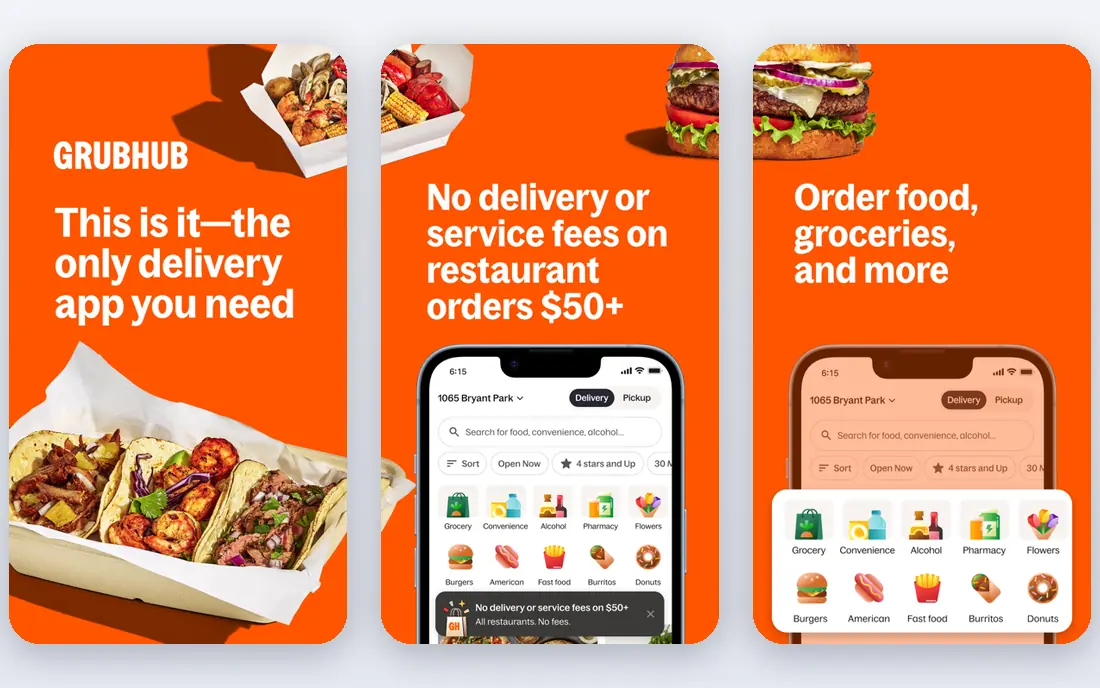
Grubhub has been listing restaurants longer than most apps here, and that history shows in its sushi range in larger cities. Deals, free delivery offers, and perks appear often, and group ordering makes it easy for an office or family to split a large sushi order without passing one phone around. The app also shows clear delivery estimates before you commit.
Coverage is the weak spot. In some smaller cities and suburbs, Grubhub lists fewer sushi restaurants than DoorDash or Uber Eats, so you may find only a couple of options. Fees also vary, so the deal that looks best on the home screen may not be the cheapest total. Use Grubhub when it has your preferred restaurant and a live deal, and compare the checkout total with another app.
- Long restaurant history
- Frequent deals and perks
- Group ordering
- Coverage is thinner in some cities
- Fees vary by restaurant
Seamless is best known in New York, where it has a deep list of sushi restaurants, from neighborhood shops to higher-end omakase counters that offer delivery sets. Ordering is simple, with saved addresses, past orders, and clear delivery times, and it draws on the Grubhub restaurant network, so many listings overlap. For a New Yorker who orders sushi often, it feels familiar and fast.
Outside the New York area, Seamless adds little over Grubhub, and its feature set is narrower than DoorDash or Uber Eats. There is no strong reason to pick it if you live elsewhere, but in its home city it remains a solid, no-fuss way to order sushi. Check whether your preferred restaurant is listed here with a lower fee than on a larger app before you default to another service.
- Strong New York restaurant list
- Simple ordering
- Part of the Grubhub network
- Limited outside the New York area
- Fewer features than larger apps
Caviar focuses on a smaller, curated list of restaurants, which suits sushi lovers who want quality over sheer choice. You are more likely to find a well-regarded sushi bar offering delivery sets here than a long list of generic options, and the ordering flow is clean and simple. Since Caviar is part of DoorDash, delivery logistics and coverage benefit from that larger network.
The trade-off is range and price. Caviar lists fewer restaurants than DoorDash or Uber Eats, and its premium lean means average order totals run higher. It is the app to open when you want a special sushi dinner and are willing to pay for it, rather than the app for a quick, cheap roll on a weeknight. Check the restaurant list in your area first, since coverage varies by city.
- Curated higher-end restaurants
- Clean ordering flow
- Now part of DoorDash
- Smaller restaurant list
- Premium options cost more
Fantuan is a delivery app built around Asian food, and that focus shows in its sushi listings. In cities where it operates, you will find Japanese and pan-Asian restaurants that larger apps sometimes miss, including smaller shops with authentic menus and lower prices. You can also add Asian groceries, bubble tea, and snacks to an order, which is handy for a full Japanese meal at home.
Coverage is the limit. Fantuan does not operate everywhere, so check your city before you rely on it. In areas where it does operate, it is often the best place to find a sushi restaurant that feels closer to a local Japanese shop than a generic delivery listing. Compare its menu prices with a larger app, since the same restaurant can price differently across platforms.
- Strong Asian restaurant range
- Competitive prices
- Grocery and bubble tea add-ons
- Coverage limited to certain cities
- App quality varies by area
HungryPanda is another Asian-focused delivery app, with a strong presence in cities with large Asian communities. Its sushi range leans toward Japanese and pan-Asian restaurants, and promotions appear often, which can bring the total below a larger app for the same order. The app also covers Asian groceries in some areas, so a sushi order can sit alongside pantry items.
As with Fantuan, coverage decides everything. If HungryPanda operates in your city, it is worth checking before you order, especially for authentic Japanese restaurants. If it does not, the larger apps remain your best bet. Read recent restaurant reviews inside the app, since the same shop can perform differently across delivery platforms depending on packaging and courier handling.
- Asian restaurant focus
- Frequent promotions
- Grocery delivery in some areas
- City coverage is limited
- Sushi range depends on local restaurants
ChowNow works differently from the apps above. Instead of a marketplace with its own couriers, it lets you order direct from a restaurant's own ordering page or app, with the restaurant handling delivery or pickup. That often means lower menu prices, since the restaurant keeps more of the order, and it is a good way to support an independent sushi shop you already like.
The catch is delivery itself. Because the restaurant arranges it, delivery times, fees, and range depend on that shop, not on ChowNow, and some restaurants offer pickup only. ChowNow is best when you already know the restaurant you want and it offers direct ordering. Search for your favorite sushi shop by name and see if it offers direct ordering before you pay marketplace fees elsewhere.
- Orders go direct to the restaurant
- Often lower menu prices
- Supports independent shops
- Restaurants handle delivery themselves
- Coverage depends on each shop
How we picked these
We compared official app pages, restaurant coverage, and fee structures, and kept only apps that deliver sushi in the US in 2026. We favored apps with a real sushi restaurant range over general delivery apps with only a token listing, and we noted where coverage is limited so readers do not waste time on an app that does not serve their city. Prices for the apps themselves are free to download, while delivery fees and menu prices vary and are checked at checkout.
How to order sushi for delivery without regret
Freshness comes first with raw fish. Order from restaurants with recent reviews that mention fresh fish and good packaging, and avoid ordering raw sushi on a very long delivery route when a closer option exists. Eat sashimi and nigiri promptly when it arrives, keep it cool until you eat, and skip raw fish if the order arrives warm or smells off. Cooked rolls, tempura rolls, and vegetarian rolls travel better if delivery will take a while.
Compare the final total across two apps before you pay. Delivery fees, service fees, tips, and menu markups all change the real price, and the cheapest menu can produce the priciest checkout. A subscription pass only saves money if you order often enough to cover its monthly cost, so count your orders before you subscribe. For a special occasion, a curated app or a direct order from a trusted sushi bar is often worth the extra cost over the cheapest available roll.
When to pick each type of app
Pick a large marketplace app for the widest choice and fastest delivery. Pick an Asian-focused app for authentic Japanese restaurants in cities where they operate. Pick direct ordering for a favorite local shop, especially if you order from it often. Pick a curated app for a premium set or omakase-style delivery. Keeping two apps on your phone covers most situations without paying for passes on all of them.
Frequently asked questions
Which sushi delivery app is best overall?
Uber Eats and DoorDash are the best overall picks for most US readers, because they list the most sushi restaurants and deliver in the most places. Between them, the better choice is the one that lists your preferred restaurant with the lower final total. Check both before a first order from a new restaurant.
Is it safe to order raw sushi for delivery?
Raw sushi from a reputable restaurant with good packaging is a normal delivery order, but freshness matters more than with cooked food. Order from places with strong recent reviews, eat the fish promptly on arrival, and keep it cool until then. If the order arrives warm, damaged, or smelling off, do not eat the raw items and contact the restaurant or app.
Why is sushi more expensive on delivery apps?
Menu prices on apps can sit above in-store prices, and delivery fees, service fees, and tips add to the total. Restaurants also pay commission to marketplace apps, which can push menu prices up. Direct ordering through a service such as ChowNow can be cheaper for the same restaurant, since the shop keeps more of the order.
Do sushi delivery apps offer subscriptions?
Yes. DoorDash offers DashPass and Uber Eats offers Uber One, both of which cut delivery fees on many orders. A pass pays off only if you order often enough, so count your monthly orders and check the minimum order rules before subscribing. Occasional orderers usually save more by comparing checkout totals app by app.
Can I get omakase delivered?
Some higher-end sushi restaurants offer omakase-style sets and DIY kits for delivery, especially through curated apps and direct ordering. These sets cost more than standard rolls and may need advance ordering. Check the restaurant listing for set menus, pickup windows, and any notes about eating the set promptly.
What should I do if my sushi order arrives late or damaged?
Contact the app or restaurant through the order screen promptly and describe the problem plainly, with photos if the packaging is damaged. Most apps offer a refund or credit for items that arrive in poor condition. For raw fish that arrived warm or late, err on the side of not eating it and ask for a refund for those items.
Sources
See where you really rank - block by block
ProMapRanker scans Google Maps across a grid of your service area. Simple monthly plans from $19, white-label on every plan.
Start freeKeep reading
 free alternatives to grok imagine
Free Alternatives to Grok Imagine in 2026
We compared the best free alternatives to grok imagine for image generation, from fast daily credits to design tools, so you can create without paying.
Read → best tools for instagram content creation
Best Tools for Instagram Content Creation in 2026
Compare the best tools for Instagram content creation, from Canva and CapCut to Later and Buffer, on design, video, planning, scheduling, and price in 2026.
Read → best tool to split pdf files
Best Tool to Split PDF Files in 2026
We compared the best tool to split pdf files on split modes, file limits, privacy and price, so you can split a PDF cleanly and keep every page in one go.
Read →