 ProMapRanker
Best Study Apps for Young Children in 2026

Key takeaways
- Khan Academy Kids and PBS Kids Games are the strongest free starting points, with no subscription needed for their core content.
- ABCmouse and Reading Eggs offer the most structured paths, which suits families who want lessons in a set order rather than open play.
- Duolingo ABC and Starfall work best as focused reading practice alongside a broader app, not as a full curriculum on their own.
- Safety note: keep the app on a parent device where possible, check for ads and in-app purchases before handing over a tablet, and set short, regular sessions rather than long stretches of screen time.
Quick comparison
| Pick | Great for | Pricing starts at | Free tier | |
|---|---|---|---|---|
 Khan Academy Kids | Free all-round early learning | Free | Yes | Visit |
 ABCmouse | A structured full curriculum | $14.99 per month | Free trial | Visit |
 Duolingo ABC | Early phonics and letter practice | Free | Yes | Visit |
 Homer | Personalized reading and math paths | See website | Free trial | Visit |
 Reading Eggs | Phonics, reading, and spelling practice | See website | Free trial | Visit |
 Starfall | Learn to read basics | Free | Yes | Visit |
 PBS Kids Games | Free games with familiar characters | Free | Yes | Visit |
 Prodigy Math | Game based math practice | Free | Yes | Visit |
The best study apps for young children
Young children learn best in short bursts, with clear sounds, pictures, and repetition. The apps below cover reading, math, and general early learning for ages around 2 to 8, and we note where each one fits best.
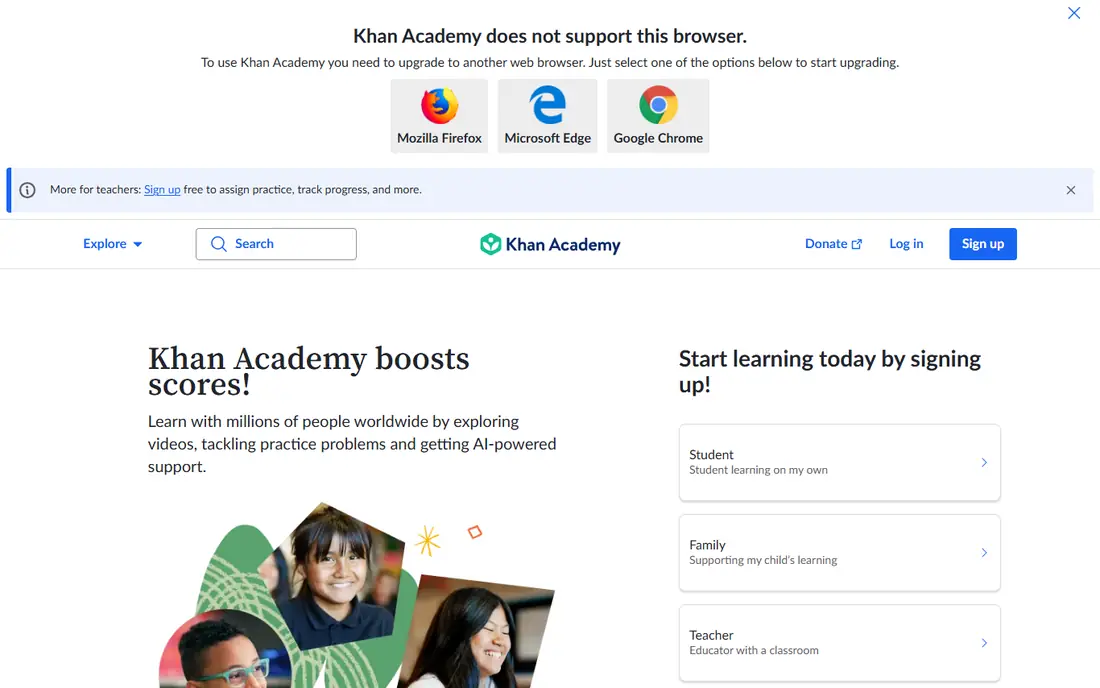
Khan Academy Kids is our first suggestion for most families, mainly because it costs nothing and still covers a wide range. Children follow stories, songs, and games that build letter sounds, counting, shapes, and early social skills. The app is made for ages 2 to 8, so a preschool child and an early grade school child can both find suitable activities.
The honest catch is depth in one subject. A child who needs intensive reading help may benefit from adding a focused phonics app, and parents who want detailed reports may find the tracking basic. For everyday practice, though, the mix of subjects and the absence of ads make it hard to beat.
- Completely free with no ads
- Covers reading, math, and social skills
- Friendly characters guide children through activities
- No web version for full use
- Progress tracking is simpler than paid rivals
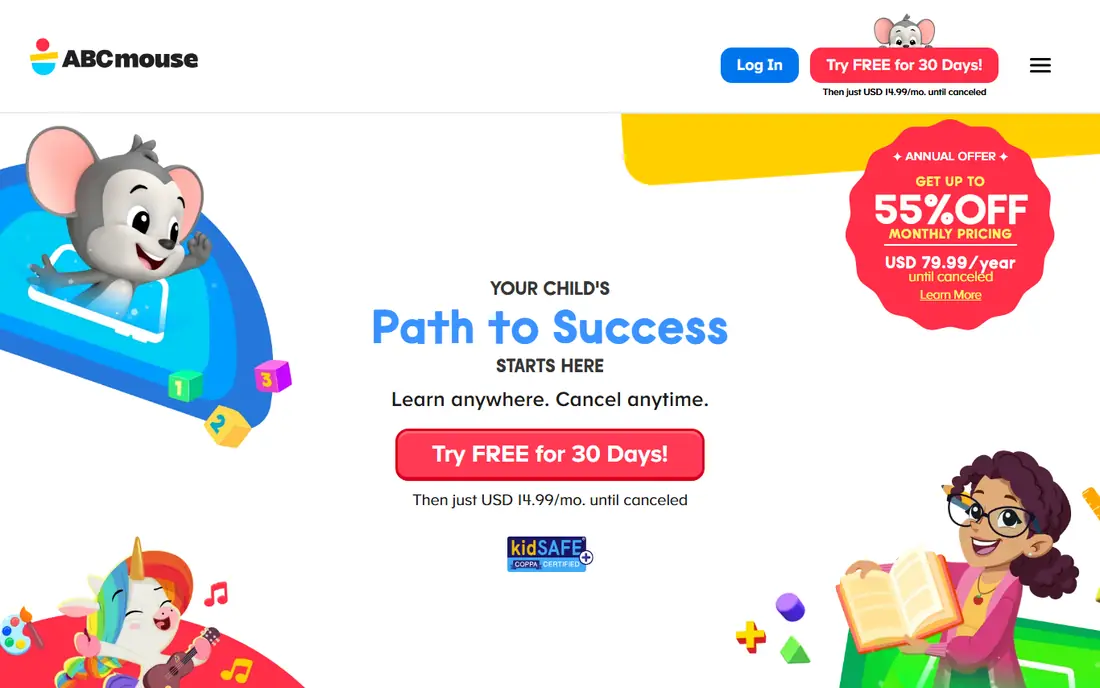
ABCmouse suits families who want one place for most early learning subjects. Its guided path moves children through levels in reading, math, science, art, and music, with games, songs, and books along the way. Parents can set up profiles for more than one child, which helps in households with siblings close in age.
The trade-off is price and choice. At $14.99 per month, it is a real subscription commitment, and some children may prefer a simpler app with fewer options on screen. If your child likes a clear path and you want coverage across subjects, the structure is the point, and it does the job well.
- Large library across reading, math, science, and art
- Step by step learning path for ages 2 to 8
- Printable activities for offline practice
- Monthly cost adds up over a year
- The large library can feel busy for some children
Duolingo ABC takes the short lesson style Duolingo is known for and applies it to early reading. Children trace letters, match sounds, and read simple words in brief activities that fit well before school or after homework. It is a good fit for a child who is just starting to connect letters with sounds.
It does not try to teach math or science, so treat it as a reading companion rather than a complete study app. That narrow focus is also its strength, because sessions stay short and the goal stays clear. Pair it with a broader free app if you want coverage beyond reading.
- Free with no subscription for the core app
- Short lessons focused on letters and sounds
- Cheerful design that suits short sessions
- Reading only, not a full curriculum
- Best for ages 3 to 6, so older children outgrow it fast
Homer starts by asking about a child age and interests, then builds a path from reading and math activities that match that profile. The mix includes stories, songs, and games, which helps children who lose interest when every session looks the same. It is aimed at younger learners, roughly preschool through early grade school.
Parents should check the current price on the vendor site, since offers change, and use the trial to see if the personal path suits their child. Some children will love the tailored route, while others may prefer the open choice in a free app. As a paid option, it earns its place through the personal touch rather than sheer volume.
- Learning path adapts to the child age and interests
- Covers reading, math, and creativity
- Stories and songs keep sessions lively
- Full access needs a paid plan
- Pricing varies by offer and platform, so check before signing up
Reading Eggs is built around one job, which is helping children learn to read with confidence. Its lessons move step by step through phonics, sight words, and comprehension, with games and rewards to keep motivation up. A companion area covers early math for younger children, but reading remains the core.
Families who already have a general learning app may find Reading Eggs a useful second app for reading alone. The subscription is the main drawback, so use the trial to test whether your child responds to its lesson style. When the style clicks, the steady progression is easy for parents to follow.
- Structured phonics lessons with games and rewards
- Reading and spelling practice in one place
- Progress reports for parents
- Paid subscription for full access
- Less coverage of math and other subjects
Starfall has been used in classrooms and homes for years, and its strength is simplicity. Children learn letter sounds, then move to short words and stories, with songs and clear pronunciation throughout. The free learn to read section alone gives many families enough practice to start with.
The full membership adds more math, songs, and stories, and the site keeps its plain style rather than chasing flashy graphics. Some children may find that calm look less exciting, but for early readers it can be a plus, since there is less on screen to distract from the words. It is a solid, low cost choice for reading foundations.
- Free learn to read section
- Simple, calm design with little distraction
- Songs and stories support letter sounds
- Membership needed for the full library
- Design looks plain next to newer apps
PBS Kids Games collects learning games tied to PBS Kids shows, which gives children familiar faces and a gentle tone. Games cover early reading, counting, science, and problem solving, and parents can feel comfortable about the source, since PBS Kids is a nonprofit educational brand. There are no subscriptions or in-app purchase traps in the core app.
The weakness is structure. Children pick games freely, so progress depends on what they choose, and some games teach more than others. Use it as a fun, free supplement to a structured app, or as the main app for a child who learns best through play and choice.
- Completely free
- Games feature characters children already know
- Covers reading, math, science, and problem solving
- Games vary in learning depth
- No structured curriculum path across subjects
Prodigy Math turns math practice into an adventure game, where answering questions correctly helps a child progress in the game world. Questions adapt to the child level, which helps avoid work that is far too easy or far too hard. It is aimed at grade school children, so it fits the older end of the young children range better than preschoolers.
Parents should know that the free game is usable, while the paid membership adds pets, rewards, and extras that children often notice. Set expectations before starting, and check the parent dashboard for progress. For a child who resists worksheets, the game format can turn regular practice into something they ask for.
- Free core game with math questions built into play
- Adapts difficulty to the child level
- Teachers can set assignments
- Paid membership adds extras that children may ask for
- Game elements can distract from math for some children
How we picked these
We compared official product pages, app store listings, and pricing pages for apps aimed at ages 2 to 8, and we kept only apps that are still available and actively offered in October 2026. We looked for a mix of free and paid options, coverage across reading and math, and clear information about age range and ads. Where a price could not be confirmed from a vendor page, we wrote See website rather than guessing.
What to check before you pay
Start free, then add one paid app at most
Free apps cover a large share of early learning, so try Khan Academy Kids and PBS Kids Games first. Add a paid app only when you see a clear gap, such as structured phonics or a full curriculum path, and use the trial period to test it.
Match the app to the age and the skill
A preschool child needs letter sounds, counting, and play, while a second grader needs reading fluency and math facts. Check the stated age range, watch one session with your child, and drop any app that feels too easy, too hard, or too busy.
Safety and screen time notes
Keep sessions short, ideally in the range of 10 to 20 minutes for younger children, and use the app together when you can. Check privacy settings, turn off in-app purchases where possible, and prefer apps that state they have no ads for children. If an app asks for personal details beyond what is needed for a profile, skip it and choose a simpler option.
Frequently asked questions
What is the best study app for young children overall?
Khan Academy Kids is the best free starting point for most families, since it covers reading, math, and social skills at no cost and with no ads. ABCmouse is the stronger paid choice when you want a structured curriculum across subjects. Try the free app first, then add a paid one only if you need its structure.
Are there good free study apps for young children?
Yes, Khan Academy Kids, Duolingo ABC, PBS Kids Games, and the free parts of Starfall and Prodigy Math all offer real learning without a subscription. Free does not always mean complete, so a free app may cover reading well but leave math thin. Combine two free apps to cover both subjects if you want to avoid paying.
What age are these study apps for?
Most apps on this list target ages 2 to 8, with Duolingo ABC and Homer aimed more at ages 3 to 6 and Prodigy Math aimed at grade school children. Always check the age guidance in the app store listing, and watch how your child responds. A child who finds an app too easy or too hard will not stick with it, whatever the stated range says.
Is ABCmouse worth the price?
ABCmouse can be worth it for families who want one structured program across reading, math, science, and art, and who will use it several times a week. At $14.99 per month, the cost adds up, so it makes less sense if your child only uses it once in a while. Use the trial and the free basic option, where offered, to judge before committing.
How much screen time is right for study apps?
Short, regular sessions work better than long ones for young children, and many experts suggest keeping total recreational screen time limited for preschoolers. A 10 to 20 minute learning session, followed by play, reading a paper book, or outdoor time, is a sensible pattern. Sit with your child when you can, talk about what they learned, and treat the app as one tool among many.
Sources
See where you really rank - block by block
ProMapRanker scans Google Maps across a grid of your service area. Simple monthly plans from $19, white-label on every plan.
Start freeKeep reading
 zoom alternatives
Best Zoom Alternatives in 2026
Compare Zoom alternatives in 2026, with free meeting limits and prices, so you can pick the best alternative to Zoom for your team, class, or community.
Read → which software is best for remote work
Which Software Is Best for Remote Work in 2026
Answering which software is best for remote work, we compare Slack, Zoom, Asana, Notion, Teams and more, with pricing and honest tradeoffs in 2026 now.
Read → which ai tool is best for content writing
Which AI Tool Is Best for Content Writing in 2026
Wondering which ai tool is best for content writing? We compare ChatGPT, Claude, Jasper, Grammarly, and more on price, quality, and best use in 2026 now.
Read →