 ProMapRanker
Best Study Apps for Kids in 2026


Free early learning, ages 2 to 8 · Pricing starts at: Free
Key takeaways
- Khan Academy Kids is our free pick for ages 2 to 8, because it has no ads and no in-app purchases.
- Khan Academy is the free pick for older kids, with a full curriculum from early math to high school topics.
- Epic suits families that want a large book library, with thousands of books and audiobooks for ages 4 to 12.
- Prodigy Math suits kids who need motivation for math, because practice sits inside a game they want to play.
- Check age range, ads, and in-app purchases before installing, because a good lesson can be undone by constant upsells.
Quick comparison
| Pick | Great for | Pricing starts at | Free tier | |
|---|---|---|---|---|
| Khan Academy Kids | Free early learning, ages 2 to 8 | Free | Yes | Visit |
 Khan Academy | Free curriculum for older kids | Free | Yes | Visit |
 ABCmouse | Structured curriculum, ages 2 to 8 | $14.99 per month | No | Visit |
 Epic | Large book library | $13.99 per month | No | Visit |
 Duolingo ABC | Phonics and early reading | Free | Yes | Visit |
 Prodigy Math | Gamified math practice | Free | Yes | Visit |
 PBS Kids Games | Free playful learning | Free | Yes | Visit |
 ScratchJr | First coding and storytelling | Free | Yes | Visit |
 Reading Eggs | Research-backed phonics | See website | Free trial | Visit |
The best study apps for kids
Study apps work best when they match a child age and subject, not when they promise everything at once. The apps below cover reading, math, science, coding, and language, with clear age guidance for each.
Khan Academy Kids is the safest first install for a young child. It covers early reading, math, writing, and social and emotional skills through games, books, and activities, and it does so without ads or in-app purchases that can interrupt a lesson. Parents can create profiles for more than one child, and the app adapts activities to the child level.
The limit is age. Khan Academy Kids is built for ages 2 to 8, so a child who outgrows it should move to the main Khan Academy app for older math, science, and reading work. For the early years, though, no paid app beats a free, ad-free curriculum this complete.
- Fully free with no ads and no in-app purchases
- Reading, math, writing, and social skills in one app
- Developed with early childhood experts
- Content ends around age 8, so older kids need the main Khan Academy app
- No offline library as large as Epic
- Parent reports are simpler than paid apps
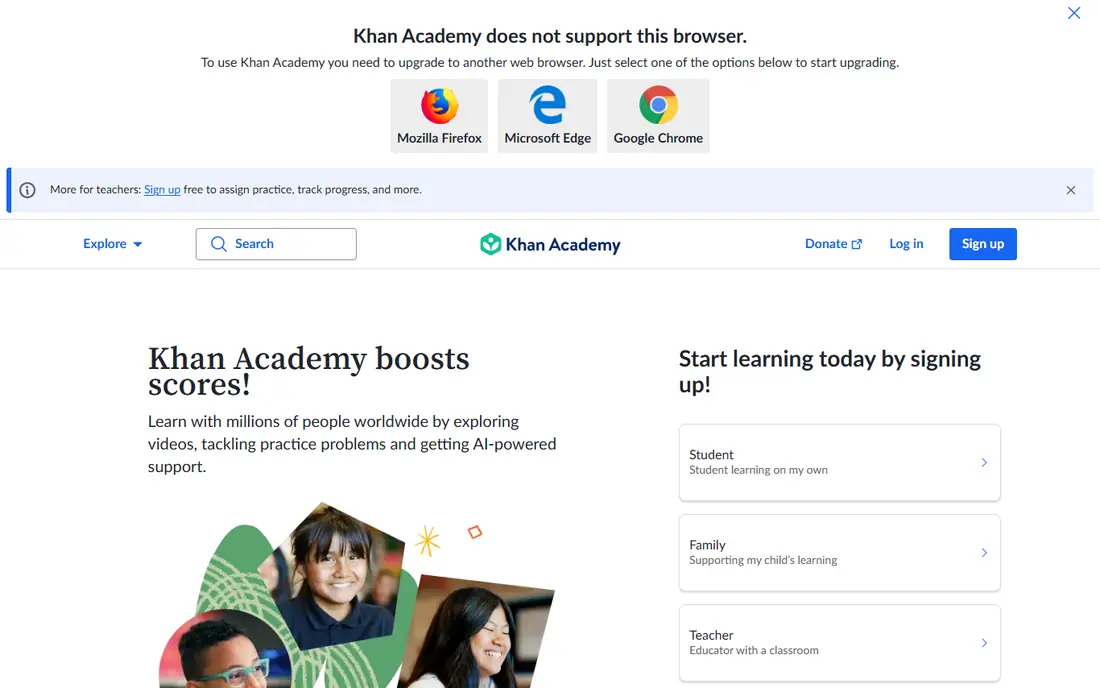
Khan Academy is the free backbone for older kids. It covers math from early grades through algebra, geometry, and statistics, plus science, history, reading, and test preparation, with videos, practice exercises, and quizzes that track progress. Teachers can assign work and parents can follow mastery by topic, which helps a child who is behind or ahead in school.
The catch is motivation. Khan Academy is less game-like than Prodigy, so a child who needs game rewards may need a parent to set short goals and celebrate progress. As a free, complete curriculum, though, it is the strongest single resource for school-age learning.
- Full free curriculum from early math to high school
- Practice, videos, and quizzes in one place
- Teacher and parent dashboards
- Less game-like than Prodigy or ABCmouse
- Self-paced work needs parent or teacher support
- Some subjects are deeper than others
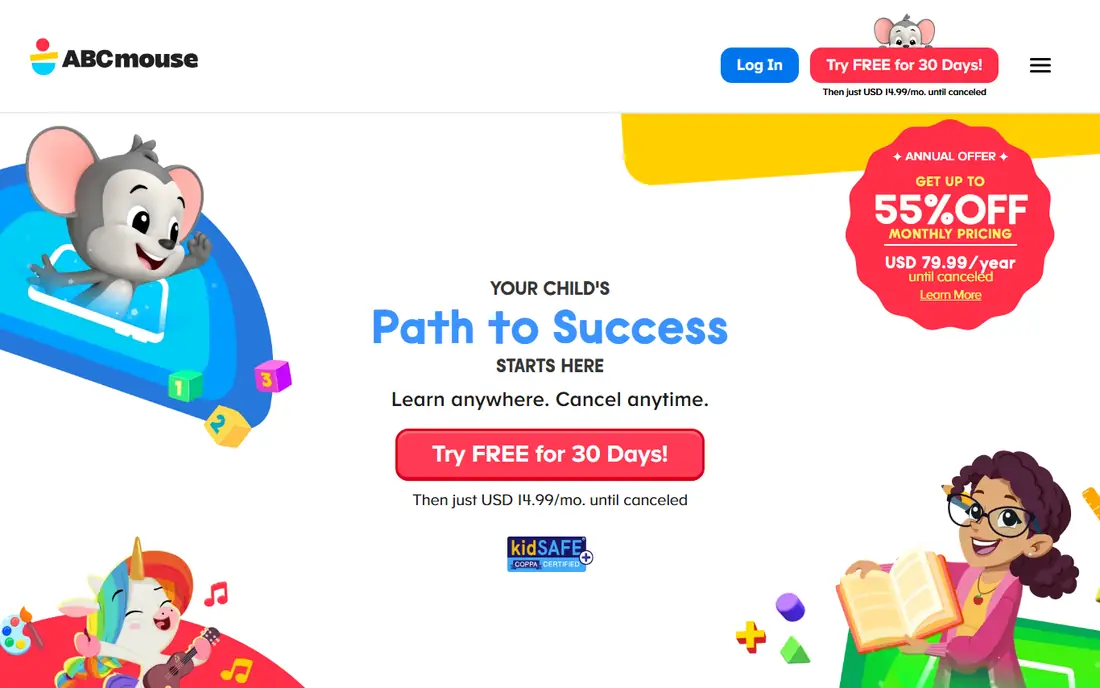
ABCmouse suits families that want a structured path rather than a set of separate games. A child follows a learning path through reading, math, science, art, and music, with activities that build in order and a ticket system that rewards progress. Parents get reports on what a child has completed and where extra practice may help.
The trade-off is price and feel. ABCmouse costs $14.99 per month or $45 per year on the website in recent listings, and some kids find the structured path more school-like than Khan Academy Kids or PBS Kids Games. Try the free version or a short trial first, and keep it only if the child actually follows the path.
- Step-by-step learning path across reading, math, science, art, and music
- Thousands of activities for ages 2 to 8
- Progress tracking for parents
- Paid subscription at $14.99 per month or $45 per year on the website in recent listings
- Can feel school-like for play-first kids
- Older kids outgrow it quickly
Epic is the bookworm pick. It gives kids a library of books, audiobooks, and videos, with read-to-me options for younger readers and offline downloads for car trips and flights. Up to four child profiles let siblings share one subscription without mixing reading levels, and quizzes and badges add light motivation.
The limit is scope. Epic is a reading library, not a math or science curriculum, so it pairs best with Khan Academy or Prodigy rather than replacing them. If a child already reads through a school Epic account, check the home terms before paying for a second subscription.
- Large library of books and audiobooks for ages 4 to 12
- Read-to-me and offline downloads
- Up to four child profiles
- Paid at $13.99 per month or $84.99 per year in recent listings
- Reading only, not a full curriculum
- School use terms differ from home use
Duolingo ABC takes the short-lesson style of Duolingo and applies it to early reading. Kids practice letters, sounds, and words through tracing, matching, and short stories, with lessons that fit a few minutes at a time. The app is free and ad-free, which makes it easy to recommend next to Khan Academy Kids.
The catch is range. Duolingo ABC teaches reading, not math, science, or writing in full, so it works as a reading supplement rather than a complete study app. For a child learning to read, though, it is one of the clearest free phonics tools available.
- Free, ad-free phonics lessons
- Short lessons that suit young attention spans
- Offline use for many lessons
- Reading only, not a full curriculum
- Best for ages 3 to 8, so older kids need Duolingo itself
- No parent dashboard as deep as ABCmouse
Prodigy Math turns math practice into a game where correct answers help a child battle, collect pets, and explore a world. Questions adapt to the child level and align with school standards, so practice follows classroom topics rather than random sums. A free parent account shows progress and can set goals for a child.
The honest weakness is upselling. Paid memberships add game pets, items, and features that kids may ask for, and some parents find those prompts distracting during practice. The core math game is free and useful on its own, so set expectations about purchases before a child starts playing.
- Math practice inside a role-playing game
- Standards-aligned questions
- Free parent account with progress reports
- Paid membership adds game items that can distract from math
- Some parents find upsells pushy
- Science and English need selected memberships
PBS Kids Games is the free, low-pressure pick for preschool and early elementary kids. Games feature characters from PBS Kids shows, and they cover math, reading, science, art, and social skills in short, playful sessions. There is no subscription, and parents can trust the content source, which is a nonprofit public media organization.
The limit is structure. PBS Kids Games does not offer a full learning path like ABCmouse, and it does not track mastery like Khan Academy. Use it for playful practice and screen time that still teaches, and pair it with a curriculum app for school progress.
- Free games with familiar PBS characters
- Math, reading, science, and social skills
- No subscription needed
- Games are shorter and less structured than a curriculum
- Progress tracking is thinner than paid apps
- Content suits younger kids best
ScratchJr introduces coding without reading long instructions. Kids snap colorful blocks together to make characters move, talk, and interact, which teaches sequencing, cause and effect, and storytelling at the same time. The app is free, runs on the device, and has no purchases, so a child can explore without upsells.
The catch is age and depth. ScratchJr suits ages 5 to 7, and older kids will quickly want the full Scratch platform for larger projects. For a first coding experience, though, ScratchJr is the gentlest and most creative starting point in this list.
- Free with no purchases
- Block coding for ages 5 to 7
- Kids create stories and games by snapping blocks together
- Best for ages 5 to 7, so older kids need Scratch itself
- No full curriculum
- Projects stay simple compared with later coding tools
Reading Eggs suits families that want a focused reading program with a clear path. A placement test sets the level, lessons build phonics skills step by step, and a library of books lets kids practice what they learn. Parent reports show lesson progress and reading level over time.
The trade-off is cost and repetition. Reading Eggs is a paid app after its trial, and some kids find the lesson format repetitive after many weeks. Try the trial with a real reading goal, such as a set number of lessons per week, and keep it only if reading progress is visible.
- Structured phonics lessons with games and books
- Placement test sets the starting level
- Parent reports track reading progress
- Paid subscription after the trial
- Lessons can feel repetitive for some kids
- Full price varies by plan and region, so check the site
How we picked these
We compared official app pages, app store listings, and recent 2026 parent guides that re-checked prices against vendor sites and store listings in September and October 2026. We favored apps that operate today, state an age range, and describe ads and purchases plainly. We did not claim hands-on testing, and we used See website where a price varied by platform or region.
How to choose a study app for your child
Age and subject matter more than a star rating, so match the app to the child in front of you.
Start with age, then subject
Ages 2 to 4 suit Khan Academy Kids and PBS Kids Games. Ages 5 to 7 suit Duolingo ABC, ScratchJr, and ABCmouse. Ages 8 to 12 suit Khan Academy, Epic, Prodigy, and Reading Eggs. A mismatch in age is the most common reason a good app gets ignored.
Check ads and purchases before the first lesson
Open the app settings, check for ads, and decide whether in-app purchases are allowed on the device. A free app with constant upsells can cost more attention than a paid app with a clean lesson flow.
Keep sessions short and regular
Short, regular sessions beat long weekend sessions for young kids. A goal of 15 to 20 minutes, a few days a week, builds a habit without turning study time into a battle over screen time.
Pair an app with books, play, and conversation
No app replaces a teacher, a parent, books, play, or real conversation. Use apps to support schoolwork and reading, and keep time for outdoor play, drawing, and talking about what a child learned.
Frequently asked questions
What is the best free study app for kids?
Khan Academy Kids is the best free study app for ages 2 to 8, because it is free, ad-free, and covers reading, math, and social skills. For older kids, the main Khan Academy app is the best free curriculum pick.
What age is ABCmouse best for?
ABCmouse is best for ages 2 to 8, with a structured path across reading, math, science, art, and music. Kids older than 8 usually need Khan Academy, Epic, or Prodigy for school-level work.
Is Prodigy Math really free?
The core Prodigy Math game and parent account are free, with standards-aligned math practice inside the game. Paid memberships add game items and features, but they are not needed for the core math practice.
Which study app is best for reading?
Epic is best for reading volume, with a large library for ages 4 to 12. Duolingo ABC is best for early phonics, while Reading Eggs suits families that want a structured phonics program with placement and progress reports.
How much screen time is right for study apps?
Short, regular sessions of 15 to 20 minutes, a few days a week, work well for young kids, with longer sessions only as a child gets older and schoolwork requires it. Pair app time with books, play, and conversation, and set a device limit that the whole family can follow.
Sources
See where you really rank - block by block
ProMapRanker scans Google Maps across a grid of your service area. Simple monthly plans from $19, white-label on every plan.
Start freeKeep reading
 zoom alternatives
Best Zoom Alternatives in 2026
Compare Zoom alternatives in 2026, with free meeting limits and prices, so you can pick the best alternative to Zoom for your team, class, or community.
Read → which software is best for remote work
Which Software Is Best for Remote Work in 2026
Answering which software is best for remote work, we compare Slack, Zoom, Asana, Notion, Teams and more, with pricing and honest tradeoffs in 2026 now.
Read → which ai tool is best for content writing
Which AI Tool Is Best for Content Writing in 2026
Wondering which ai tool is best for content writing? We compare ChatGPT, Claude, Jasper, Grammarly, and more on price, quality, and best use in 2026 now.
Read →