 ProMapRanker
Best Streaming Platform for Gaming in 2026

Key takeaways
- Twitch still offers the largest gaming audience, while YouTube Live offers the best long-term value because streams stay searchable as videos.
- Kick offers a higher subscription share for streamers, while TikTok LIVE offers fast discovery through its feed, especially for mobile games.
- New streamers should expect slow growth anywhere, and multistreaming plus short clips often help more than picking one platform alone.
- Trovo and DLive closed in 2026, so older lists that still recommend them are out of date, and streamers should avoid building a channel there.
Quick comparison
| Pick | Great for | Pricing starts at | Free tier | |
|---|---|---|---|---|
 Twitch | Largest gaming audience | Free | Yes | Visit |
 YouTube Live | Searchable streams and long-term videos | Free | Yes | Visit |
 Kick | Higher subscription share | Free | Yes | Visit |
 TikTok LIVE | Fast discovery for mobile and short-form fans | Free | Yes | Visit |
 Facebook Gaming | Friends and community groups | Free | Yes | Visit |
 Rumble | Smaller competition and video plus live | Free | Yes | Visit |
 Discord | Private streams for friends and communities | Free | Yes | Visit |
 Steam Broadcasting | Zero-setup streams for Steam friends | Free | Yes | Visit |
 Owncast | Self-hosted streams you control | Free | Yes | Visit |
The best streaming platform for gaming
A gaming streaming platform should help viewers find you, help you earn when you grow, and keep your streams stable at good quality. The nine platforms below cover large audiences, fast discovery, community streaming, and self-hosted control, and all of them are free to start streaming on.
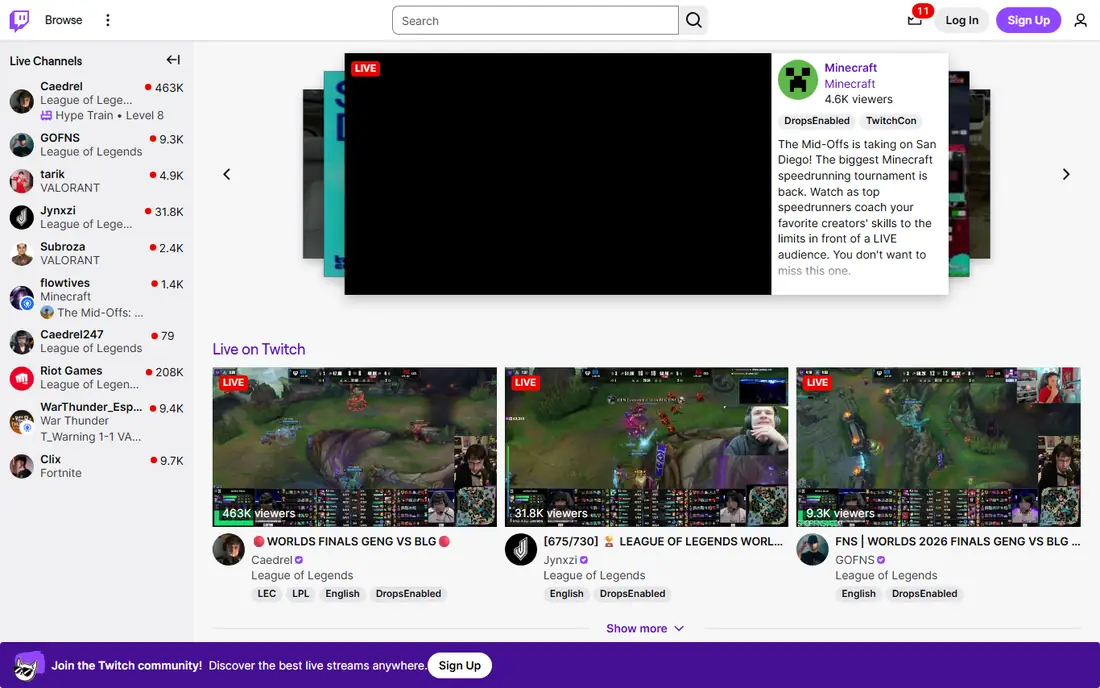
Twitch remains the home of live gaming for most viewers. Categories, tags, raids, clips, and chat culture make it easy for viewers to find a game they love and stay for the streamer. Eligible streamers can earn through subscriptions, bits, and ads, with higher tiers and partner programs for larger channels.
Discovery is the honest catch. Category pages sort largely by viewer count, so a new channel with few viewers sits near the bottom. New streamers should plan to grow through clips, social posts, community events, and consistent schedules, not through Twitch browse alone. For maximum gaming reach, Twitch still leads, even if growth takes time.
- Largest dedicated gaming audience and category system
- Subscriptions, bits, and ads for eligible streamers
- Strong chat, clips, and community tools
- Hard for new streamers to be found, since top channels dominate category lists
- Past broadcasts expire after a limited period
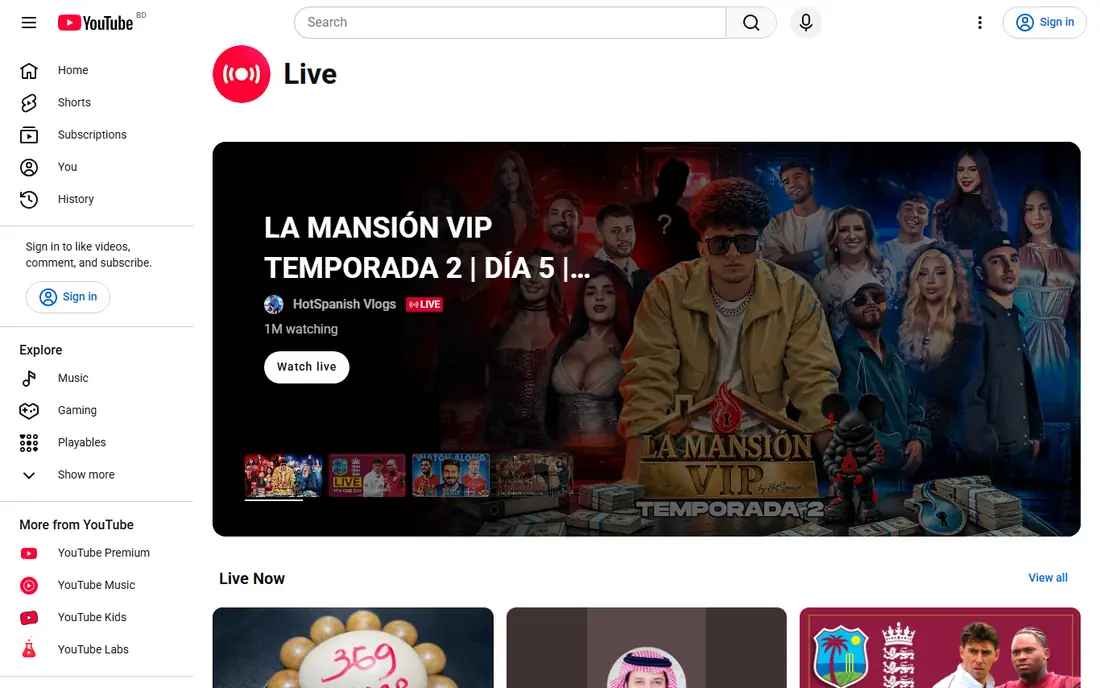
YouTube Live offers something Twitch does not: lasting value. A live stream becomes a video that viewers can find through search and recommendations for months or years, which helps a channel grow between streams. Super Chat, memberships, and ads give eligible creators several earning routes, and highlights can be cut from the same stream.
The trade is focus. YouTube serves every video type, so gaming streams compete with vlogs, music, and news for attention, and the recommendation system favors watch time and click appeal. Mobile streaming also has eligibility rules, including channel verification and subscriber thresholds that change over time. For streamers who want a lasting library, YouTube Live is the strongest pick.
- Streams stay as searchable videos after going live
- Super Chat, memberships, and ads for eligible channels
- Huge general audience beyond gaming
- Gaming discovery competes with all video types
- Monetization thresholds apply before some features open
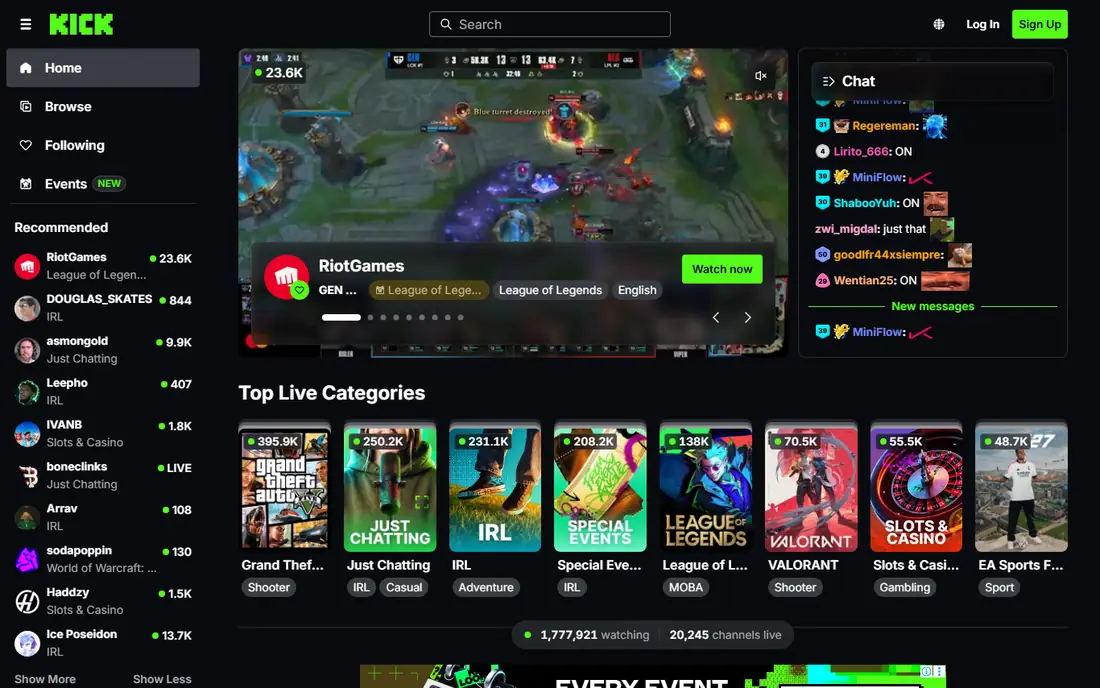
Kick attracts streamers with its payout terms. Subscription revenue share for streamers is higher than the standard Twitch split, which matters for channels with loyal paying viewers. Category competition is also lower, so a new streamer can appear higher in a game list than on Twitch at the same viewer count.
Audience size remains smaller, so total viewers and sponsorship opportunities may lag behind larger platforms. Streamers should also review Kick community rules and advertiser policies before committing, since public debate about moderation continues. For streamers who value payout share and a less crowded start, Kick is worth testing alongside a larger platform.
- Streamers keep a high share of subscription revenue
- Lower category saturation than Twitch for new channels
- Simple account setup
- Smaller audience than Twitch or YouTube
- Content moderation and brand safety concerns have drawn public criticism
TikTok LIVE suits streamers who already make short videos. The feed can push a live stream to viewers who never followed you, which gives new creators a discovery path that Twitch browse rarely offers. Mobile games, chats, and fast, visual streams fit the format well, and viewer gifts provide an earning route for eligible creators.
Long-term value is thin. A TikTok live session does not become a searchable video library like YouTube, and follower and age thresholds gate live access for new accounts. TikTok works best as a discovery and community tool beside a main platform, where clips drive viewers to longer streams elsewhere.
- For You feed can surface new streamers fast
- Strong for mobile games and short, lively streams
- Gifts from viewers for eligible creators
- Live access usually requires age and follower thresholds
- Streams have little long-term search value
Facebook Gaming, now largely part of Facebook Live, suits streamers whose audience already lives on Facebook. Friends, pages, and groups can share a stream with one tap, and Stars tipping plus subscriptions give eligible creators earning options. For local communities, family-friendly groups, and casual mobile games, that social reach is a real advantage.
The platform no longer centers gaming as strongly as it once did, and discovery leans on your social network rather than a gaming category system. Streamers without an existing Facebook following may grow slower here than on Twitch or YouTube. If your community already gathers on Facebook, streaming there keeps the audience close.
- Built-in audience from friends, pages, and groups
- Stars tipping and subscriptions for eligible creators
- Easy sharing to social feeds
- Gaming focus has narrowed over time
- Discovery depends on social graph more than game categories
Rumble offers live streaming plus video uploads, which suits creators who want both formats without managing two accounts. Gaming competition is lower, so a new streamer can stand out more easily, and creator program and tipping features give early earning paths. The platform also appeals to creators who want an alternative to larger video sites.
Gaming reach is the limit. Rumble audience for games stays far smaller than Twitch or YouTube, and viewers looking for a specific game may not think of Rumble first. Treat Rumble as a secondary home or a backup channel, and check its community rules to make sure your content and audience fit the platform culture.
- Free live and video uploads in one account
- Fewer gaming streamers competing for attention
- Creator program and tipping options
- Gaming audience is much smaller than Twitch or YouTube
- Community and moderation culture differs from gaming-first platforms
Discord Go Live is not a rival to Twitch for public growth, but it excels for private and community streams. A streamer can share gameplay to friends, a server, or a small group with almost no setup, while voice channels keep conversation natural. That makes Discord ideal for practice streams, community game nights, coaching sessions, and friends-only play.
Public discovery does not exist here in the Twitch sense, and Discord offers no streamer subscription or ad program for live gaming. Use Discord to build community and test content, then stream publicly on Twitch, YouTube, or Kick when you want a wider audience. Many successful streamers use Discord as the community hub beside a public platform.
- Free screen sharing and Go Live for servers and friends
- Voice channels keep community talk close to streams
- No public discovery pressure
- Not a public streaming platform, so growth comes from outside
- No built-in streamer monetization like subscriptions or ads
Steam Broadcasting is the simplest way to share gameplay. If you play on Steam, friends can watch your session from your profile or the game page without you installing streaming software for a basic stream. That zero-setup path suits casual sessions, game testing with friends, and community events inside a game.
Growth and earnings are not the point here. The audience stays close to your Steam friends and the game community, and there is no subscription, bits, or ad program for broadcasters. For public streaming careers, Steam Broadcasting works as a practice and community tool, not as a main platform.
- Built into Steam with no extra software for basic streaming
- Friends can watch directly from your profile or game page
- Easy for casual play sessions
- Audience limited mainly to Steam friends and game pages
- No streamer monetization program like Twitch or YouTube
Owncast gives streamers full control. You host the software on your own server, set your own rules, brand the page, and keep chat under your own moderation. That independence appeals to creators who dislike platform policy changes, demonetization risk, or algorithm shifts, and to communities that want a private home.
Running a server is real work. You pay for hosting and bandwidth, you handle updates and security, and you must bring your own audience, since Owncast has no browse page full of viewers. For independent creators with technical skills and an existing community, Owncast offers freedom that no large platform can match.
- Free open source software you host yourself
- Full control over rules, chat, and branding
- No platform algorithm deciding who sees you
- You must run a server and handle bandwidth
- Audience must come from your own promotion, since there is no built-in discovery
How we picked these
We compared official platform pages, creator help pages, and current streaming guides for gaming platforms live in October 2026, and we favored platforms with real live streaming, a current audience, and a clear earning or community route. We excluded Trovo, which shut off live streaming on June 30, 2026, and DLive, which closed in April 2026, even though older lists still name them. We did not claim hands-on testing, and we described monetization in general terms where thresholds vary by region and program.
How to choose a streaming platform for gaming
Start with your goal. If you want the largest gaming audience, start with Twitch. If you want lasting videos, start with YouTube Live. If you want payout share, test Kick. If you want fast discovery, test TikTok LIVE. Many streamers now stream on two platforms at once and cut highlights for short-form feeds, which spreads risk if one platform changes rules.
Grow beyond the browse page
No platform will grow a new channel alone. Post clips, join game communities, keep a regular schedule, and use Discord or a group to keep viewers between streams. Check each platform age rules, follower thresholds, and monetization requirements before promising earnings, and read chat moderation tools carefully, since a safe chat keeps viewers longer than any overlay.
Check the tech before you go live
Test upload speed, encoder settings, and stream quality on your own connection, and record a test stream to check audio levels and chat readability. A stable, clear stream with good audio beats a high-resolution stream that buffers. Also confirm whether multistreaming is allowed under each platform partner or affiliate terms you accept.
Frequently asked questions
What is the best streaming platform for gaming?
Twitch leads for gaming audience size, YouTube Live leads for lasting video value, and Kick leads for subscription share. The best platform depends on whether reach, library value, payout, or discovery matters most to you.
What is the best platform for live streaming games as a new streamer?
YouTube Live and Kick suit many new streamers, since YouTube offers search discovery and Kick offers less category saturation. TikTok LIVE can also help new streamers through feed discovery, though it works best beside a main long-form platform.
Which platform is best for streaming games and earning money?
Twitch, YouTube Live, and Kick offer the clearest earning routes through subscriptions, tips, gifts, Super Chat, and ads for eligible creators. Earnings depend on audience size, eligibility thresholds, and region, so check current program rules on each platform site.
What are the best platforms to stream on besides Twitch?
YouTube Live, Kick, TikTok LIVE, Facebook Gaming, and Rumble are the main alternatives, with Discord and Owncast serving community and self-hosted needs. Many streamers use two platforms together rather than relying on one alone.
What is the best streaming platform for new streamers?
Kick and YouTube Live often suit new streamers best, for lower saturation and search value respectively, while TikTok LIVE suits new mobile streamers. Expect slow early growth anywhere, and use clips and community posts to bring viewers to your streams.
Is Facebook Gaming still a good platform for gaming?
Facebook Gaming can still work if your audience already uses Facebook pages and groups, since sharing is easy and Stars tipping exists for eligible creators. Streamers without a Facebook following may grow faster on Twitch, YouTube, or Kick.
Sources
See where you really rank - block by block
ProMapRanker scans Google Maps across a grid of your service area. Simple monthly plans from $19, white-label on every plan.
Start freeKeep reading
 which software is best for pdf page removal
Which Software Is Best for PDF Page Removal in 2026
Find which software is best for pdf page removal, from free online tools to desktop editors, with page controls, privacy, safety, and pricing compared.
Read → when i work alternatives
Best When I Work Alternatives in 2026
Looking for when i work alternatives? We compare 8 scheduling apps for hourly teams, covering pricing, free plans, time clocks and the best fit for business.
Read → the best tool for keyword analysis
The Best Tool for Keyword Analysis in 2026
Find the best tool for keyword analysis with our 2026 comparison of 10 keyword analysis software tools on data depth, difficulty scores and price today.
Read →