 ProMapRanker
Best Software Testing Company in 2026

Key takeaways
- QA Wolf suits teams that want managed end-to-end automation with tests they can keep.
- Testlio and Applause suit companies that need real devices, real users, and global coverage.
- Qualitest, now QualityAI, and Cigniti suit large enterprises that need scale across many systems.
- QASource and TestFort suit mid-market teams that want dedicated QA engineers or regulated-industry experience.
- Global App Testing suits fast crowdtesting for web and mobile releases, with a focus on real-world conditions.
- Always compare quotes on the same scope, device matrix, and coverage definition, since headline rates hide different levels of service.
Quick comparison
| Pick | Great for | Pricing starts at | Free tier | |
|---|---|---|---|---|
 QA Wolf | Managed end-to-end automation | See website | Free trial | Visit |
 Testlio | Global device and payment testing | See website | No | Visit |
 Applause | Real-world crowdtesting | See website | No | Visit |
 Qualitest | Enterprise quality engineering | See website | No | Visit |
 QASource | Dedicated QA teams | See website | No | Visit |
 TestFort | Regulated-industry QA | See website | No | Visit |
 Global App Testing | Fast crowdtesting at scale | See website | No | Visit |
 Cigniti Technologies | Enterprise digital assurance | See website | No | Visit |
The best software testing company options
These eight firms all test software for clients, but their models differ: managed automation, crowdtesting, dedicated teams, and enterprise programs. Pick the model first, then the firm.
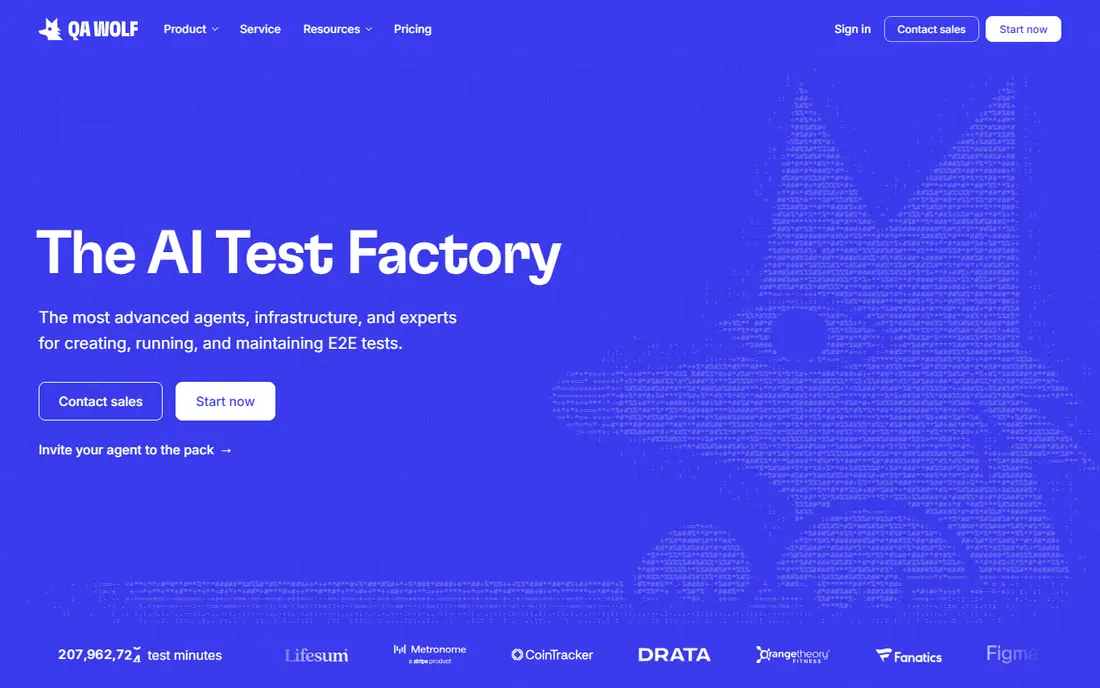
QA Wolf, founded in 2019 and based in Seattle, is the most narrowly focused firm on this list: it maps important workflows, builds automated end-to-end tests, runs the suite in parallel, investigates failures, and maintains tests as the application changes. Its Coverage as a Service model promises 80% plus test coverage, with 24-hour failure investigation and a zero-flake guarantee in vendor material. A self-serve platform option with usage-based pricing, reported at 1 cent per AI credit and 15 cents per runner minute, now sits alongside the managed service, with web test runs reported at 1 dollar and mobile or desktop runs at 2 dollars.
The key advantage is ownership: tests are written in open-source Playwright or Appium code and can be exported, so you are not locked into a proprietary language. The trade-off is scope: QA Wolf concentrates on end-to-end automation, so ask how exploratory testing, accessibility, performance, security, and API coverage will be handled. For a team whose releases stall on flaky regression suites, QA Wolf is our pick.
- Managed coverage with test maintenance
- Tests export as Playwright or Appium code
- Parallel runs with failure investigation
- Focused on end-to-end tests
- Exploratory, accessibility and performance work need separate arrangements
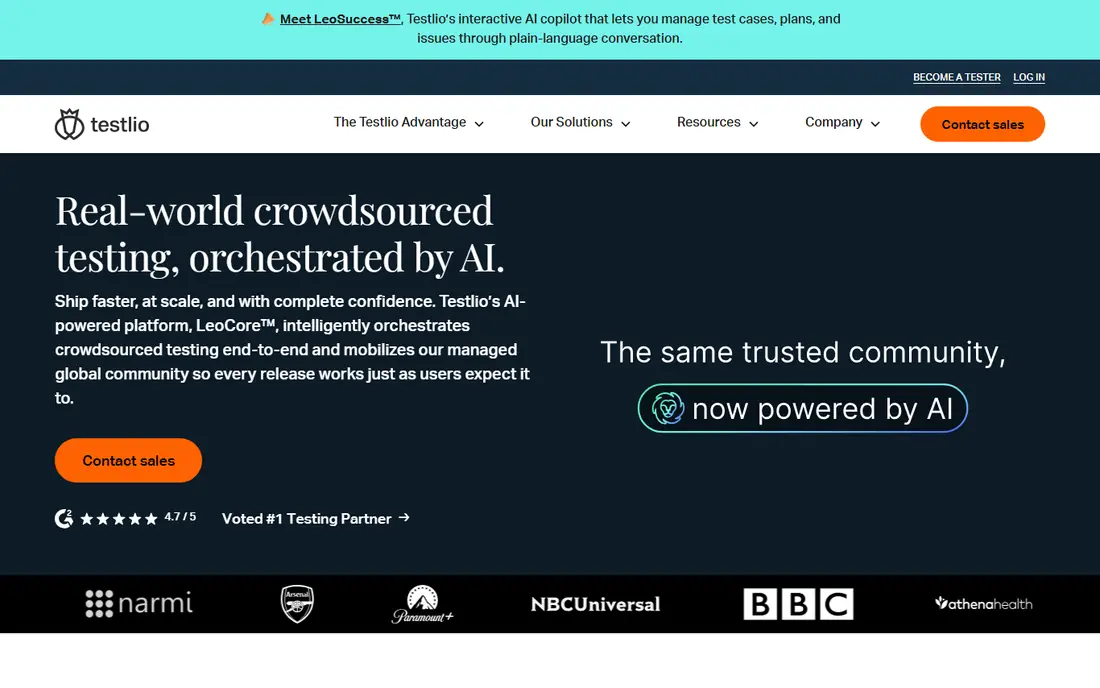
Testlio, founded in 2012 and headquartered in Austin, Texas, runs managed crowdsourced testing through a network of testers in more than 150 countries, combined with a platform and dedicated QA leadership. Services include functional, exploratory, regression, API, accessibility, payment, localization, and usability testing, plus AI testing that checks model outputs and bias. Reported coverage includes 600,000 plus devices, 800 plus payment methods, and 100 plus languages, with an AI matching platform called LeoCore that assigns testers and analyzes results.
Clients pay a subscription for the platform plus a flexible consumption fund that shifts with priorities, and one directory lists a 75,000 dollar minimum project size. That model suits enterprises and mobile-first companies with global users, but it prices out small teams. For a streaming, retail, or mobile app that must work on many devices, networks, and payment methods worldwide, Testlio is a leading choice.
- Testers in 150 plus countries
- 600,000 plus devices reported
- Managed QA with dedicated leads
- Minimum project size reported at 75,000 dollars
- Subscription plus consumption model needs careful scoping
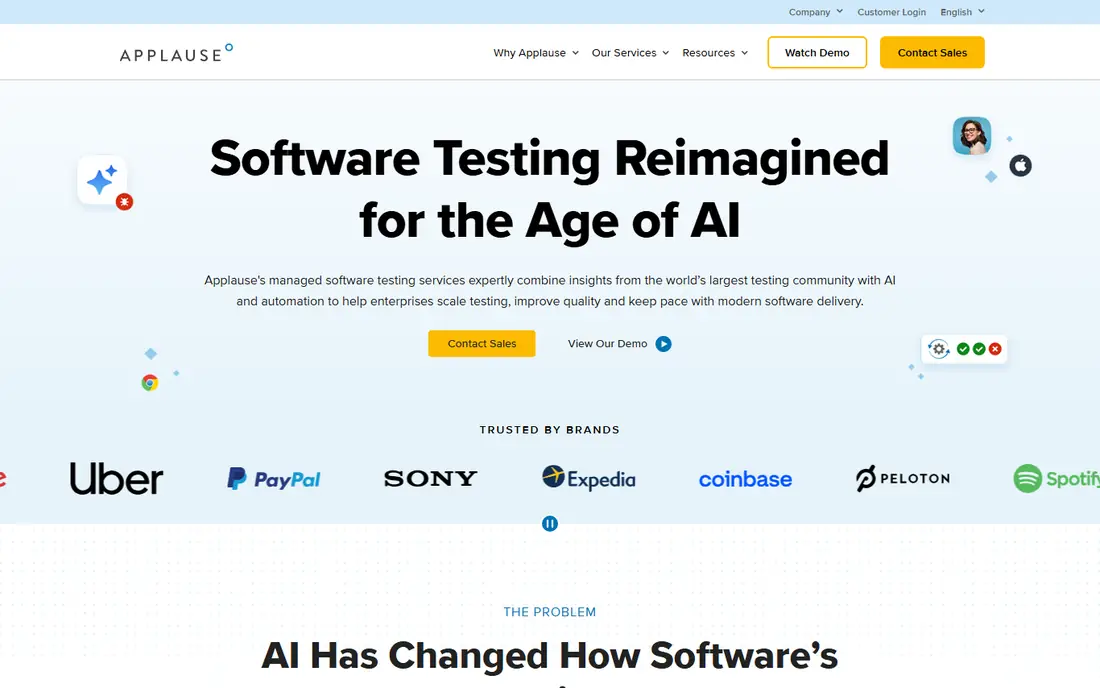
Applause, founded in 2007 in the United States, is a crowdtesting pioneer that tests digital products with real users on real devices in real locations, rather than in lab conditions. Its community covers more than 200 countries and territories, with functional, usability, localization, and accessibility testing, plus payment and device coverage, managed through an enterprise platform and delivery team. Test execution can run around the clock, which suits overnight results before a release.
Pricing is not published: Applause states that contracts are tailored to complexity, solution mix, and scale, with pilot programs leading to annual engagements or multi-year partnerships. Third-party deal data puts typical annual contract values from 50,000 dollars to 300,000 dollars or more, which confirms this is an enterprise buy. For a brand whose reputation depends on how an app feels to real customers in real places, Applause is a strong pick, but start with a pilot and a clear success measure.
- Global community in 200 plus countries and territories
- Real devices and real conditions
- 24/7 test execution
- No published pricing tiers
- Annual contracts typically suit larger budgets
Qualitest, founded in 1997, is one of the largest independent quality engineering firms, operating across the United States, United Kingdom, India, Romania, Israel, Argentina, Mexico, Switzerland, and Portugal. Its services span functional and non-functional testing, AI-powered quality engineering and test automation, cloud and data assurance, IoT and XR testing, cybersecurity, performance testing, and accessibility assurance. In June 2026 the company rebranded as QualityAI, so you may see both names in current material; they refer to the same firm.
The firm positions itself as an independent assurance provider, separate from the teams that build the software, and it has been named a Leader in Everest Group quality engineering assessments, with proprietary accelerators for test data and AI testing. That scale suits enterprises with complex programs across many systems and industries, from finance and healthcare to telecom and retail. For a large enterprise that needs independent assurance at scale, Qualitest belongs at the top of the shortlist.
- Large independent quality engineering firm
- AI assurance and data assurance
- Strong analyst recognition
- Enterprise scale and pricing suit large programs best
- Rebrand to QualityAI can confuse shortlists
QASource, based in Pleasanton, California, with delivery teams in India, provides dedicated QA teams for companies that want testing capacity without hiring in-house. Services include automation testing, manual testing, mobile app testing, API testing, security testing, load and performance testing, QA consulting, Salesforce testing, and AI testing, with a methodology built around training, dedicated teams, and close communication with client developers. Reported hourly rates sit in the 25 to 49 dollar range in directory listings, with team sizes reported from around 1,000 to more than 1,800 engineers across sources.
The model suits mid-market companies and startups that need a stable QA team that learns their product over time, rather than one-off test cycles. The honest catch is that directory figures for size and rates vary, so confirm the actual team, seniority, and commercial terms in the proposal. For a company that wants an embedded QA team at a mid-market price, QASource is a practical pick.
- Dedicated teams that integrate with client developers
- Broad service range
- AI-led QA focus
- Hourly rates and team sizes vary across sources
- Enterprise scale differs from larger rivals
TestFort, founded in the early 2000s with teams in Ukraine, the United States, and Europe, focuses on manual, exploratory, and automated testing for regulated and compliance-heavy industries, including fintech, healthcare, and ecommerce. Services cover manual and automation testing, security testing, API testing, UX testing, and AI-enhanced testing, including testing AI systems themselves and using AI inside testing. Reported certifications include ISO 27001 and CMMI Level 3, with clients reported in fintech and European banking.
Directory listings put hourly rates at 25 to 49 dollars with a 5,000 dollar minimum project size, which makes TestFort accessible to mid-sized companies as well as enterprises. The trade-off is scale: TestFort is smaller than Qualitest or Cigniti, so very large multi-system programs may need a bigger partner. For a regulated product where security, compliance, and careful manual testing matter as much as automation, TestFort is a strong fit.
- Strong fintech and regulated-industry experience
- ISO 27001 and CMMI Level 3 reported
- Manual plus automation plus security and API testing
- Hourly rates in the 25 to 49 dollar range
- Minimum project size reported at 5,000 dollars
Global App Testing provides crowdtesting for web and mobile products, using testers on real devices in real conditions to find functional, usability, and compatibility issues before release. The model suits product teams that release often and need fast feedback across devices, operating systems, and locations, with structured bug reports that developers can act on without a long handover. It is a testing service rather than a test-management tool, so the value lies in tester coverage and report quality.
Pricing is quote-based, which means you need to scope test cycles, device coverage, and tester profiles before comparing costs. The catch is depth: crowdtesting finds real-world issues well, but it does not replace a quality engineering program for automation strategy, performance, or security. For a mobile or web team that needs quick, broad, real-device coverage ahead of a release, Global App Testing is a useful option.
- Crowdtesting on real devices
- Fast turnaround for web and mobile
- Structured bug reports
- Quote-based pricing
- Less suited to deep enterprise quality engineering programs
Cigniti Technologies, founded in 1998 and headquartered in Hyderabad, India, with its United States base in Irving, Texas, is a large independent quality engineering and software testing company. It offers functional, performance, security, and automation testing, plus agile testing, compatibility testing, and digital assurance across banking, healthcare, retail, and other enterprise industries, with AI-driven testing as a growing focus. Directory listings report more than 2,000 employees and a 50,000 dollar minimum project size.
The firm suits enterprises undergoing digital transformation that need testing across many systems, with process maturity reflected in CMMI and ISO certifications reported in company material. The trade-off is the same as with other large firms: minimums and enterprise process suit larger programs, while small teams may find a smaller partner faster and cheaper. For a large enterprise that wants a single quality engineering partner across platforms, Cigniti is a credible final pick.
- Large independent quality engineering firm
- AI-driven testing
- Strong banking and healthcare experience
- Minimum project size reported at 50,000 dollars
- Enterprise focus suits larger programs best
How we picked these
We compared official service pages, company profiles, and public reviews for software testing companies operating in October 2026, and we kept only firms that truly deliver testing services to clients. We favored firms with a clear model, real coverage or delivery strengths, and a track record in their segment, and we mixed managed automation, crowdtesting, dedicated teams, and enterprise providers. Where directory figures conflicted on rates, size, or minimums, we wrote See website or flagged the conflict instead of publishing one figure as certain.
How to hire a testing company
A testing company succeeds or fails on the brief you give it. Write the brief before you take sales calls, and give every shortlisted firm the same one.
Define scope, devices, and coverage in writing
List the platforms, devices, operating systems, browsers, and geographies that matter, plus the test types you need: functional, regression, API, performance, security, accessibility, or localization. Define coverage in measurable terms, such as workflows covered or test cases maintained, because vague coverage promises cannot be checked. Ask who owns test code, where it lives, and what happens to it if you leave.
Compare the same quote from three firms
Give each firm the same application access, device matrix, and timeline, then compare proposed team, test strategy, reporting, timelines, and total cost. Check references from similar companies, and ask how failures are investigated and how flaky tests are handled. A cheap quote that excludes failure investigation or maintenance will cost more over a year than a fuller quote.
Start with a pilot, then scale
Run a small paid pilot on a real release: a test cycle, a set of automated flows, or a device sweep. Judge report quality, communication speed, defect accuracy, and how well the team learns your product. Scale only if the pilot meets the success measures you set in advance, and keep the option to bring testing in-house or switch firms if it does not.
Frequently asked questions
What is the best software testing company?
The best software testing company depends on your model. QA Wolf suits managed automation, Testlio and Applause suit global crowdtesting, Qualitest and Cigniti suit large enterprises, and QASource and TestFort suit dedicated or regulated-industry teams. Shortlist three firms, give them the same brief, and compare team, strategy, reporting, and total cost.
What are the top software testing companies in the USA?
Top software testing companies with a United States presence in this list include QA Wolf in Seattle, Testlio in Austin, Applause, Qualitest with United States operations, QASource in California, and Cigniti with its United States base in Irving, Texas. TestFort and Global App Testing also serve United States clients through global delivery teams. Location matters less than team quality, time-zone overlap, and device coverage for your users.
What are the best software QA companies for startups?
Startups usually do better with smaller minimums and flexible models: QASource and TestFort offer dedicated teams at mid-market rates, while QA Wolf platform pricing suits teams that can build tests themselves. Testlio and Applause minimums suit larger budgets, so startups should ask about pilot pricing before assuming a fit. Start with a pilot, and only scale once report quality proves out.
How much does a software testing company cost?
Most software testing companies price by quote, based on scope, team size, test cycles, device coverage, and contract length. Directory figures for firms here range from 25 to 49 dollars per hour for some providers to minimum project sizes from 5,000 dollars to 75,000 dollars across sources. Get written quotes for the same scope from three firms, and include maintenance and failure investigation in the total.
Should I hire a testing company or build an in-house QA team?
Hire a testing company when you need coverage fast, global devices, or specialist skills you cannot hire quickly, and build in-house when testing is a permanent core need with steady volume. Many companies do both: an external firm for automation, crowdtesting, or surge coverage, plus an in-house lead who owns quality strategy. Whichever route you take, keep test code and reporting under your control.
Sources
See where you really rank - block by block
ProMapRanker scans Google Maps across a grid of your service area. Simple monthly plans from $19, white-label on every plan.
Start freeKeep reading
 best rank tracking software
Best Rank Tracking Software in 2026
Searching for the best rank tracking software? We compare 8 tools for daily keyword tracking, local rankings, client reports, and competitor checks in 2026.
Read → best platform for ecommerce website
Best Platform for Ecommerce Website in 2026
Find the best platform for ecommerce website builds in 2026. We compare Shopify, WooCommerce, BigCommerce, Wix and more on price, fees and scale for stores.
Read → best math apps
Best Math Apps in 2026: 8 Apps Compared
Find the best math apps for homework, revision, and deeper study in our 2026 comparison of 8 free and paid solvers, courses, and visual tools for students.
Read →