 ProMapRanker
Best Platform for Ecommerce Website in 2026

Key takeaways
- Shopify is the best all-round platform for most new stores, with a large app ecosystem, strong checkout and managed hosting.
- WooCommerce suits WordPress sites and owners who want full control and no platform subscription, at the cost of maintenance.
- BigCommerce suits growing stores that want built-in features and no extra gateway fee, while Wix and Squarespace suit small, design-led shops.
- Total cost includes apps, payment fees and your time, so compare the cheapest selling plan, not just the headline monthly price.
Quick comparison
| Pick | Great for | Pricing starts at | Free tier | |
|---|---|---|---|---|
 Shopify | Most online stores | $39 per month | Free trial | Visit |
 WooCommerce | WordPress stores | Free | Yes | Visit |
 BigCommerce | Growing and B2B stores | $39 per month | Free trial | Visit |
 Wix eCommerce | Small design-led shops | $29 per month | No | Visit |
 Squarespace Commerce | Design-led brands | $25 per month | Free trial | Visit |
 Ecwid by Lightspeed | Adding a shop to a site | Free | Yes | Visit |
 Big Cartel | Artists and makers | Free | Yes | Visit |
 PrestaShop | Self-hosted open-source stores | Free | Yes | Visit |
The best platform for ecommerce website
A platform choice lasts years, so weigh hosting, checkout, apps, payment fees and migration cost, not just the first month's price.

Shopify is the default pick for most new stores, and the reason is reduced friction. Hosting, security, updates and checkout are managed, so a small team can launch, sell on social channels and in person, and scale without hiring a developer for routine maintenance. The app store covers shipping, reviews, subscriptions, email and almost any other function a growing store needs.
Pricing starts with a Starter plan at $5 per month for social and link selling, while a full online store starts at Basic, reported at $39 per month, with higher tiers at $105 and $399 per month and Shopify Plus for enterprise. A short free trial plus a low-price introductory period has been offered in the past, so check the current trial terms on the pricing page before signing up.
The main costs beyond the subscription are apps and payment fees. Using Shopify Payments avoids an extra transaction fee, while third-party gateways add a percentage per sale, and a handful of paid apps can double the monthly bill. Budget for those extras from the start, and audit apps quarterly, since unused apps are the most common hidden Shopify cost.
- Managed hosting and security
- Large app ecosystem
- Strong checkout and sales channels
- 24-7 support
- Extra transaction fee on third-party gateways
- App costs add up
- Starter plan at $5 per month does not include a full online store
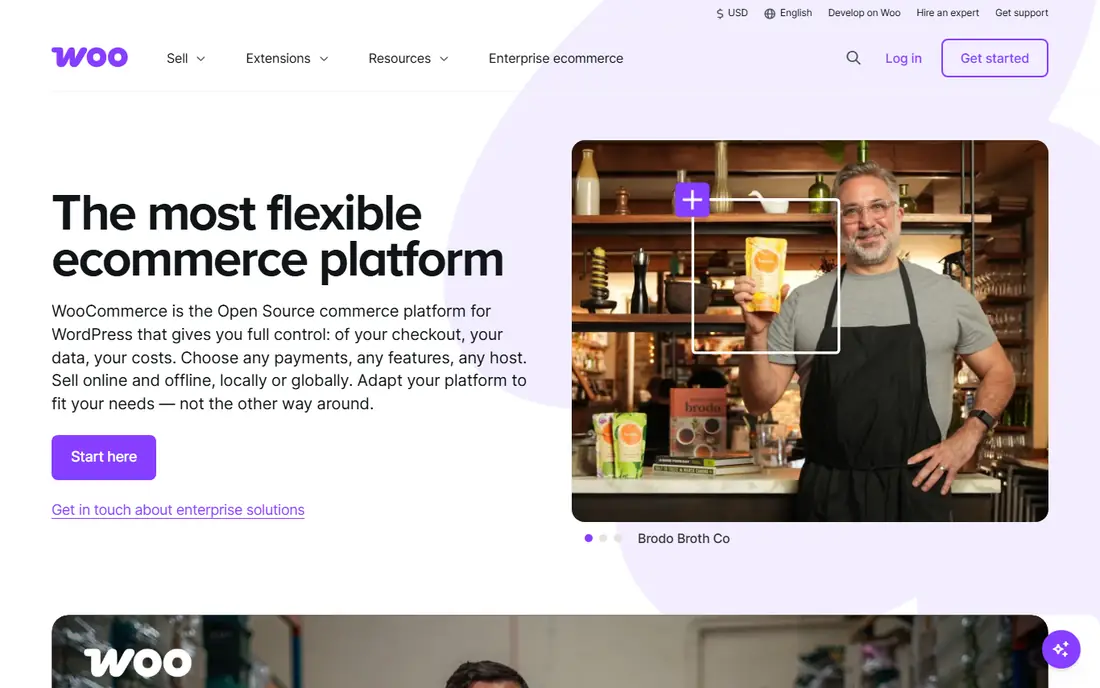
WooCommerce turns a WordPress site into a shop, and it suits owners who already run WordPress or who value ownership above convenience. The plugin itself is free, you own your data and design, and you can choose any host, theme or payment gateway without platform lock-in. For content-led stores that rely on search traffic, that control over SEO and site structure is a real advantage.
The cost is responsibility. You pay for hosting, a domain, security and maintenance, either in money or in time, and premium themes and extensions for payments, shipping, subscriptions or bookings add up. Total cost for a small store can still undercut a hosted plan, but larger stores may find hosting and extension costs approaching a hosted subscription.
WooCommerce fits WordPress-savvy teams and owners with technical help. If you have no developer and no wish to learn hosting, Shopify or BigCommerce will launch faster and with fewer ongoing tasks. If control, content and portability matter most, WooCommerce is the strongest open-source pick here.
- Free plugin with no platform subscription
- Full control over data, design and hosting
- Huge WordPress plugin ecosystem
- You handle hosting, updates and security
- Costs shift to hosting and paid extensions
- Setup takes longer than hosted platforms
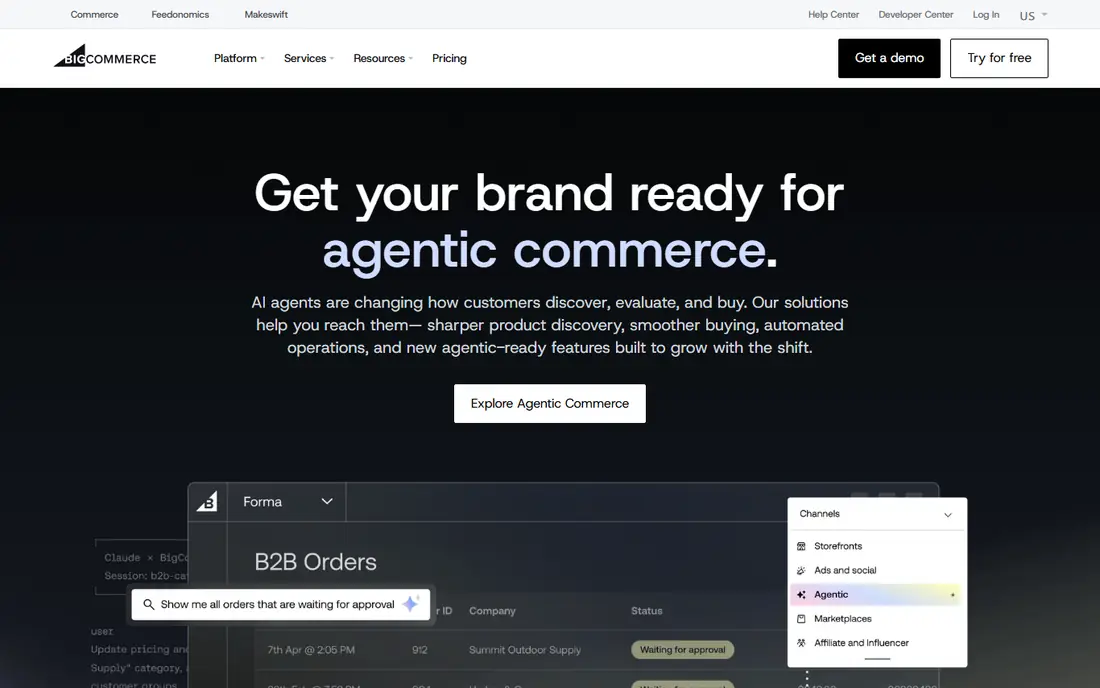
BigCommerce is the strongest hosted alternative to Shopify for growing stores. It charges no additional transaction fee whichever payment gateway you use, which becomes a meaningful saving at higher volumes, and its built-in features for catalogs, promotions, shipping and B2B cover ground Shopify often handles through paid apps.
Pricing starts at $39 per month for Standard, with higher tiers for larger stores and a free trial, reported at 15 days in some comparisons. Check the current trial and plan thresholds on the pricing page, since BigCommerce ties plan levels to annual online sales, and crossing a threshold can require an upgrade.
The trade is ecosystem size and design ease. BigCommerce has fewer apps and themes than Shopify, and making a store look distinctive can take more effort. For a growing store that values built-in power and predictable payment costs over the largest app catalog, BigCommerce is a compelling pick.
- No extra transaction fee on any gateway
- Strong built-in features reduce app reliance
- B2B tools for larger catalogs
- Annual sales thresholds can force plan upgrades
- App ecosystem is smaller than Shopify
- Design flexibility needs more work
Wix eCommerce suits small businesses where the website matters as much as the shop. The drag-and-drop builder makes it easy to create a distinctive site without code, and commerce features for products, payments, shipping and orders sit inside the same builder. For a local shop, maker or service business adding a small store, that simplicity is the main draw.
Selling plans start at $29 per month in recent comparisons for the cheapest plan that can sell online, which is higher than a basic Wix site plan, so compare commerce plans, not site plans, when budgeting. A free site plan exists, but it does not include full ecommerce checkout, so it should not be counted as a free selling tier.
Wix is weaker at scale, with a smaller app ecosystem and fewer advanced commerce features than Shopify or BigCommerce. For a small catalog and a design-led site, it is an excellent fit. For a store planning rapid catalog growth, complex promotions or B2B sales, a dedicated commerce platform will age better.
- Easy drag-and-drop design
- Commerce added to a full website builder
- Good for small catalogs and local businesses
- Weaker at scale than Shopify or BigCommerce
- Smaller app ecosystem
- Selling plans start higher than basic site plans
Squarespace Commerce suits brands where visual identity leads the sale. Templates are polished, photography-led and consistent, and the platform combines a shop with blogging, portfolios and appointment booking, which helps creatives, photographers and small brands tell a story around products. Setup is straightforward, and the 14-day trial lets you test the design before paying.
Pricing for commerce starts at $25 per month in recent comparisons for the cheapest selling plan, with higher tiers for advanced commerce features. Check the pricing page for transaction fees, since some lower plans add a fee per sale that higher plans remove, and that fee changes the true cost for a busy store.
Squarespace trails Shopify and BigCommerce on app depth, advanced promotions and large catalog handling, so it fits small catalogs better than large ones. For a design-led brand with a focused product range, its templates and simplicity outweigh that gap. For a large or fast-growing catalog, Shopify or BigCommerce will offer more headroom.
- Polished templates and strong visual design
- Commerce, blogging and portfolios in one platform
- 14-day trial
- Smaller app ecosystem
- Commerce features trail Shopify at scale
- Transaction fee applies on some lower plans
Ecwid suits owners who already have a website and do not want to rebuild it. You add a shop widget or storefront to an existing site, blog or social page, and Ecwid handles products, checkout and orders, while your existing site keeps its design and content. That makes it ideal for a business that wants to test selling before committing to a full platform migration.
The free tier covers a small catalog, with paid plans from about $5 per month in some comparisons for starter selling, and higher tiers for more products and features. Check the current plan limits, since free product counts and feature gates change, and confirm whether your site platform supports the Ecwid embed cleanly.
Ecwid's design control is lighter than Shopify or Squarespace, and advanced commerce features sit on higher tiers, so it is not the best pick for a large standalone store. For adding selling to an existing site quickly, with minimal rebuild cost, it is the most practical option here.
- Free tier for a small catalog
- Adds a shop to an existing website, blog or social page
- No need to rebuild your site
- Paid plans from about $5 per month for starter selling in some comparisons, higher for full features
- Design control is lighter than a full platform
- Advanced features need higher tiers
Big Cartel is built for artists, makers and small brands who want a simple shop without platform complexity. Setup is fast, the storefront is clean, and the free plan covers up to 5 products, which is enough to test selling or to run a tiny shop for prints, merch or handmade goods. Paid plans from about $15 per month add more products and features.
The limits are clear and should be respected. Big Cartel lacks the app ecosystem, advanced shipping, subscription and B2B tools of larger platforms, and it is not built for a large catalog or complex promotions. A maker who outgrows 5 products will soon need a paid plan, and a maker who outgrows Big Cartel's feature set will need to migrate.
For a small creative shop, that simplicity is a virtue. You spend time making and listing, not configuring apps. For a store with growth plans beyond a small catalog, start on Shopify, WooCommerce or BigCommerce instead, and avoid a migration later.
- Free plan for up to 5 products
- Simple setup for artists and makers
- Paid plans from about $15 per month in some comparisons
- Limited features for larger stores
- Small app ecosystem
- Not built for complex catalogs or B2B
PrestaShop is the open-source alternative for owners who want a self-hosted store without WordPress. The software is free, you control hosting and data, and the module marketplace covers payments, shipping, marketing and marketplace features. It is especially strong in European markets, where its payment, tax and language handling fit local needs well.
Costs shift, as with WooCommerce, to hosting, paid modules, themes and maintenance, either through your own time or a developer. Setup takes longer than a hosted platform, and updates, security and backups are your responsibility, so budget for that work from the start.
PrestaShop fits technical teams and European merchants who want open-source control without WordPress. For a non-technical owner, Shopify or BigCommerce will launch faster. For a team that values self-hosting and module choice, PrestaShop is a credible, long-standing open-source platform.
- Free open-source software with no platform subscription
- Strong in European markets
- Large module marketplace
- You pay for hosting, modules and maintenance
- Setup and updates need technical skill
- Support comes from community and partners
How we picked these
We compared official pricing pages, feature pages and recent ecommerce platform comparisons, and we kept only platforms that are live, usable for a real online store in 2026, and cover a distinct need, from hosted simplicity to open-source control. We favored a mix of hosted, open-source, design-led and add-on options, so different store sizes and skills can find a fit. We did not claim hands-on testing of every platform, and we note where prices are reported from comparisons, since plan prices and trial terms change.
What total cost really includes
Add four costs before you compare platforms: the monthly plan, payment processing and any extra gateway fee, paid apps or modules, and your time for setup and maintenance. A free plugin with paid hosting and extensions can cost as much as a hosted plan, while a hosted plan with many paid apps can double its headline price.
Next, check checkout and migration costs. A platform with a high-converting checkout can outweigh a cheaper monthly plan if it lifts completed orders, and a platform that makes export hard raises the cost of leaving later. Export a product sample, test checkout on mobile, and read the plan thresholds before you commit.
Finally, match the platform to your next two years, not just launch week. A small design-led shop fits Wix, Squarespace or Big Cartel. A content-led store fits WooCommerce. A growing direct-to-consumer brand fits Shopify or BigCommerce. An existing site that needs selling fast fits Ecwid. Picking for the store you will have in two years avoids the most expensive mistake: a mid-growth migration.
Frequently asked questions
What is the best platform for an ecommerce website for beginners?
Shopify is the best beginner pick for most stores, since hosting, checkout and support are managed and the app ecosystem covers most needs. Wix and Squarespace are easier for small design-led shops, while WooCommerce suits beginners who already use WordPress.
Is WooCommerce really free?
The WooCommerce plugin is free, but a store still needs hosting, a domain, security and often paid extensions for payments, shipping or subscriptions. Total cost depends on hosting quality and which extensions you need, so compare that total with a hosted plan.
Which ecommerce platform has the lowest fees?
It depends on volume and gateway choice. BigCommerce charges no extra gateway fee, WooCommerce charges no platform fee, and Shopify avoids an extra fee when you use Shopify Payments. Compare processing fees, gateway fees and app costs together, not just the monthly plan.
What is the best online shop software for a small business?
Shopify suits most small businesses that want a full store, Wix and Squarespace suit small design-led shops, and Ecwid suits a business adding a shop to an existing site. Big Cartel suits artists with a tiny catalog, while WooCommerce suits WordPress-based small businesses.
Can I migrate from one platform to another later?
Yes, but migration takes work, since products, customers, orders, redirects and design rarely move perfectly. Export data early, test redirects, and pick a platform with headroom for growth to reduce the chance of a second migration.
Do I need a developer to run an online store?
Not on hosted platforms like Shopify, BigCommerce, Wix or Squarespace, where hosting and updates are managed. Open-source platforms like WooCommerce and PrestaShop benefit from technical help for hosting, security and custom features, though many small stores run them with a good host and careful updates.
Sources
See where you really rank - block by block
ProMapRanker scans Google Maps across a grid of your service area. Simple monthly plans from $19, white-label on every plan.
Start freeKeep reading
 best rank tracking software
Best Rank Tracking Software in 2026
Searching for the best rank tracking software? We compare 8 tools for daily keyword tracking, local rankings, client reports, and competitor checks in 2026.
Read → best math apps
Best Math Apps in 2026: 8 Apps Compared
Find the best math apps for homework, revision, and deeper study in our 2026 comparison of 8 free and paid solvers, courses, and visual tools for students.
Read → best live sports streaming services
Best Live Sports Streaming Services in 2026
Best live sports streaming services compared for NFL, soccer, boxing and more, with monthly prices, channels, DVR and free trials to help you choose well.
Read →