 ProMapRanker
Best Shopify Apps for Ecommerce in 2026

Key takeaways
- Klaviyo and Judge.me give a new store a strong start, since both offer a free tier and cover email and reviews.
- Reviews, loyalty and upsells do different jobs, so judge each app on one job rather than on a long feature list.
- Free plans usually cap contacts, orders or sends, so check the limit you will hit first at your current volume.
- Page builders and support tools pay off only when a theme page or an inbox is already causing lost sales.
- Our pick for most small stores is Klaviyo for email, Judge.me for reviews and Smile.io for loyalty, added one at a time.
Quick comparison
| Pick | Great for | Pricing starts at | Free tier | |
|---|---|---|---|---|
 Klaviyo | Email and SMS marketing | Free | Yes | Visit |
 Judge.me | Product reviews on a budget | Free | Yes | Visit |
 Yotpo | Reviews and loyalty at scale | Free | Yes | Visit |
 Loox | Photo and video reviews | See website | Free trial | Visit |
 Privy | Popups and email capture | Free | Yes | Visit |
 Smile.io | Loyalty points and referrals | Free | Yes | Visit |
 PageFly | Custom landing pages | Free | Yes | Visit |
 Gorgias | Customer support tickets | $10 per month | Free trial | Visit |
 Lucky Orange | Heatmaps and session replays | Free | Yes | Visit |
The best shopify apps for ecommerce
These nine apps cover the jobs that matter most after a store opens: bringing shoppers back, proving that products work, and turning a visit into an order. We compared official feature pages, pricing pages and Shopify App Store listings, and we left out apps that duplicate a job already covered well here.
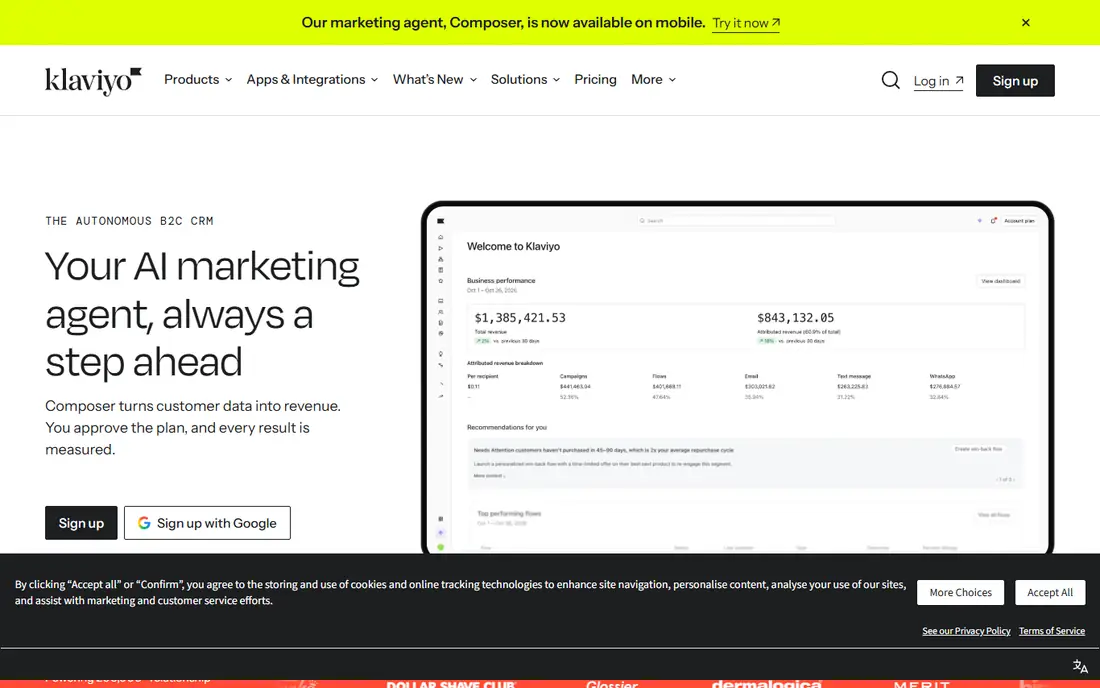
Klaviyo is the email and SMS tool most growing Shopify stores reach for first, and the reason is practical rather than flashy. It lets a store send different messages to new visitors, past buyers and people who left a cart behind, instead of sending the same blast to everyone. That kind of targeting matters more as a list grows, because a small list can be managed by hand while a large list cannot.
The catch is cost and complexity. A free tier covers up to 250 contacts, which suits a new store, but the bill climbs as contacts and sends grow, so price the plan at the list size you expect in six months. A store that only needs a simple newsletter may find a lighter tool easier, but a store that plans to run several automated flows will get more value here.
- Strong segmentation
- Useful abandoned cart and welcome flows
- Connects email, SMS and review data
- Costs rise with list size
- Setup takes time for a first-time user
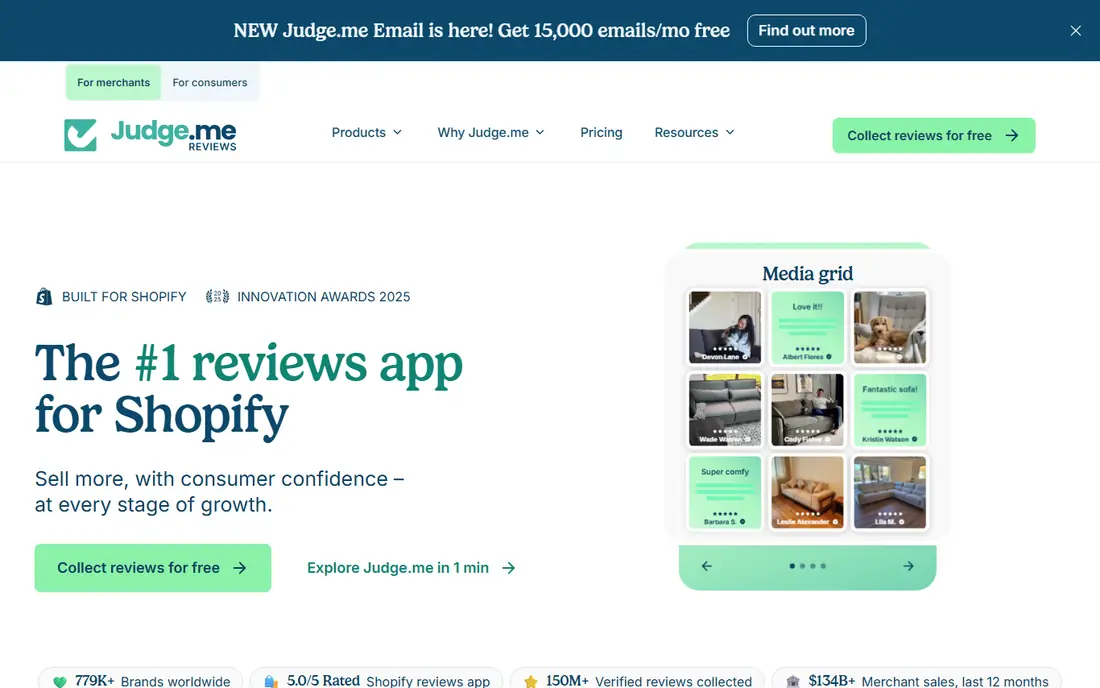
Judge.me stands out because its free plan does not cap the number of reviews a store can collect, which is rare in this group. A new store can gather star ratings, written reviews and customer photos without paying, and then show them on product pages where shoppers look for proof before buying. Review request emails and a range of display widgets come with the app, so setup is straightforward.
The paid plan, at $15 per month according to its pricing page, adds features such as coupons, referrals and wider syndication. The trade-off is that Judge.me looks less polished out of the box than Yotpo or Loox, and a brand that wants heavily styled galleries may need extra design work. For a store watching costs, that is a fair trade for unlimited reviews.
- Free plan includes unlimited reviews
- Photo and video reviews
- Google Shopping syndication on paid plans
- Design options are plainer than some rivals
- Advanced features need the paid plan
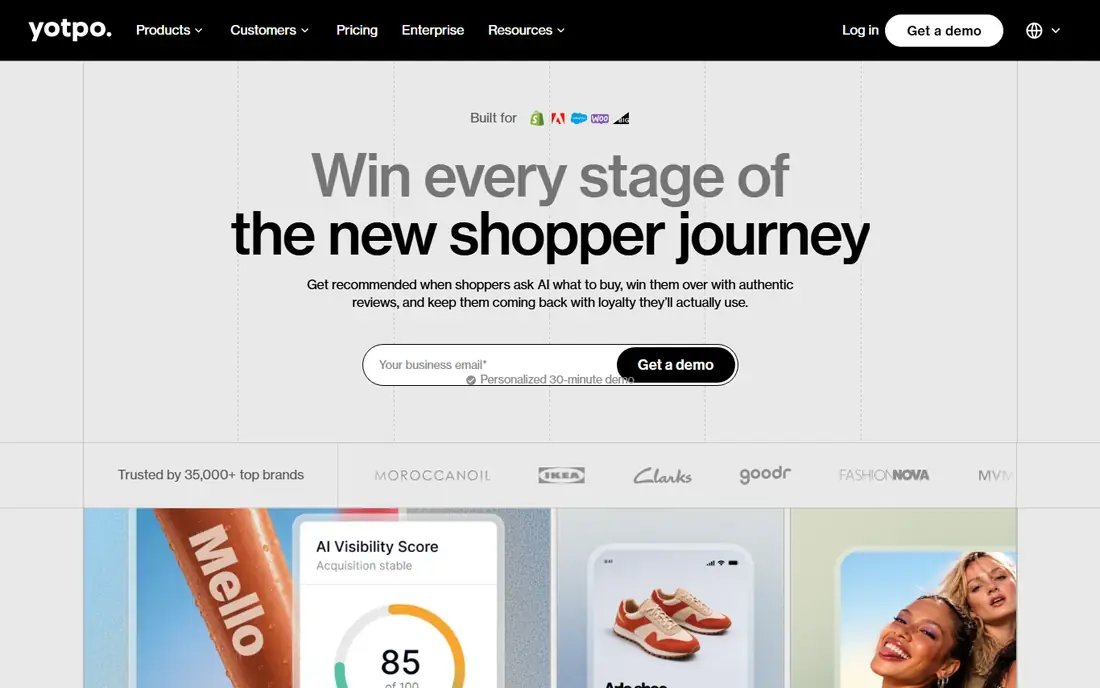
Yotpo suits a store that has outgrown single-purpose tools and wants reviews, loyalty and SMS in one place. Sharing one customer profile across those tools means a loyalty reward, a review request and an SMS offer can all draw on the same purchase history. Its Google Seller Ratings feature also helps larger stores that run paid search, since star ratings can appear in ads.
The downside is price. The free tier covers up to 50 orders per month, and the plans that add photo and video reviews, shoppable galleries and deeper customisation cost far more. A small store should start on the free tier or with Judge.me, and move to Yotpo only when order volume and marketing spend make the combined platform worth it.
- Google Seller Ratings on higher plans
- Loyalty, SMS and subscriptions share one customer profile
- Strong syndication
- Full features get expensive
- Free tier is limited to 50 orders per month
Loox is built around one idea: a review with a photo sells better than a star rating alone. It asks buyers to share photos and videos, rewards them with a discount for doing so, and then displays that visual proof in carousels and galleries on product pages. For fashion, beauty, home goods and other visual categories, that gallery can do more work than a block of text reviews.
Order-based pricing is the catch. As monthly orders rise, the plan cost rises with them, so a fast-growing store should check the tier it will land on rather than the entry price. Loox also overlaps with Judge.me and Yotpo, so install it only if photo reviews are the main gap in your store.
- Photo-led review displays
- Discount incentives for photo reviews
- Clean product page widgets
- Pricing scales with orders
- Free tier limits are tighter than Judge.me
Privy does a narrow job well: turning visitors into email subscribers before they leave. A store can set up a welcome popup with a discount, a banner for a sale, or a cart-saving offer in a short time, without touching theme code. That list then feeds email tools such as Klaviyo, which makes Privy a useful first step for a store with traffic but few subscribers.
Restraint matters here. Too many popups, or a popup on every page, will push shoppers away and undo the benefit. Use one clear offer, show it once per visit where possible, and measure signups against bounce and checkout completion before adding more.
- Fast popup and banner setup
- Welcome discounts and cart-saving offers
- Simple email list growth
- Aggressive popups can annoy shoppers if overused
- Advanced targeting needs paid plans
Smile.io is the easiest loyalty starting point for a small Shopify store. The free plan covers points for purchases, referrals and basic rewards, which is enough to test whether repeat buyers respond to a points program at all. Setup is guided, and shoppers can see their balance and rewards without a separate account system.
Higher plans add VIP tiers, points expiry and store credit rewards, but those features cost a lot more, with Growth at $199 per month. A store should only pay for tiers and expiry once repeat purchase data shows that loyal buyers are a real share of revenue. Until then, the free plan gives a fair test at no cost.
- Free plan covers up to 200 orders per month
- Points, referrals and basic branding included
- Simple setup
- VIP tiers and points expiry need higher plans
- Analytics are thin on lower plans
PageFly helps when a theme page cannot carry a campaign, a hero product or a seasonal offer the way a store wants. Its drag-and-drop builder and templates let a merchant lay out a landing page, a product page or a section without editing theme code. That is useful for a sale, a product launch or a page built around one product story.
The warning is speed. Every page builder adds code, so test page speed before and after publishing, and keep the number of heavy sections low. The free plan covers one published page or section, with paid plans from $24 per month, so a store with one campaign page can start free and pay only when it needs more.
- Drag-and-drop page building
- Many templates
- No theme code needed for most pages
- Extra code can slow pages if overused
- Free plan covers one published page or section
Gorgias is the support tool to consider when Shopify Inbox stops coping. It pulls email, live chat and social messages into one inbox and shows order details beside each ticket, so an agent can answer a shipping or refund question without switching tabs. Automation rules can tag, route and close common tickets, which helps during sales peaks.
Pricing starts at $10 per month for 50 tickets, so a store with low ticket volume should compare that cost with the free Shopify Inbox first. Gorgias earns its place when ticket volume, channels or response-time goals make a single shared inbox a real need rather than a nice extra.
- Email, chat and social tickets in one inbox
- Shopify order data shown beside tickets
- Automation rules save time
- Per-ticket pricing can rise at peak times
- Small stores may manage fine with Shopify Inbox
Lucky Orange answers a question that sales reports cannot: where do shoppers get stuck. Heatmaps show which parts of a page attract clicks and which parts get ignored, while session replays let a merchant watch a real visit and spot a confusing button, a broken form or a slow checkout step. That evidence beats guessing when a page converts poorly.
The limit is time and volume. Replays are only useful if someone watches them and acts on what they show, and the free tier caps sessions. Use it on one problem page at a time, such as the checkout or a top product page, and fix the friction you find before moving to another page.
- Heatmaps show where shoppers click and stall
- Session replays reveal checkout friction
- Free tier for small stores
- Replays need time to review well
- Data is limited on the free tier
How we picked these
We compared official feature pages, pricing pages and Shopify App Store listings for apps that work directly with Shopify and cover a distinct store job. We favoured apps with a free tier or trial, a clear pricing page, and a track record on the App Store, and we kept one strong option per job instead of listing several near-identical apps. Prices noted here come from vendor pricing pages and App Store listings checked in October 2026, and they can change, so check the listing before installing.
What to install first, and what to skip for now
Start with the job that is losing you money today. If traffic arrives but few visitors subscribe, install Privy first. If shoppers visit product pages but do not buy, add Judge.me or Loox for proof. If past buyers never return, test Smile.io. Add Klaviyo once you have a list worth segmenting, and add Gorgias once support volume makes a shared inbox necessary.
Keep the app count low
Each app adds code, cost and a settings page to maintain. A store with ten apps that each do one small job is harder to run than a store with four apps that each do one important job. Review installed apps every few months, remove anything unused, and check page speed after each install.
Price at your real volume
Free tiers cap contacts, orders, sends or sessions, and paid tiers follow those counts. Before paying, estimate orders, contacts and tickets for the next six months and find the tier that covers that volume. An app that looks cheap at entry level can cost several times more at your real volume, while an app with a higher entry price may stay flat.
Test one change at a time
Install one app, set it up properly, and watch the metric it should move, such as signup rate, review count, repeat purchase rate or ticket response time. If the metric does not move in a few weeks, the problem may be the offer, the page or the traffic, not the tool. Changing three apps at once makes it hard to know what helped.
Frequently asked questions
What is the best shopify app for a new store?
Start with Klaviyo for email and Judge.me for reviews, since both offer free tiers and cover the two jobs a new store needs most: staying in touch and showing proof. Add Privy if you need email capture, and add other apps only when a clear gap appears.
Are shopify best ecommerce platforms the same as Shopify apps?
No. Shopify itself is the ecommerce platform that hosts the store, while apps add single jobs such as email, reviews, loyalty or support. Think of the platform as the shop building and the apps as the fittings inside it, chosen to suit how you sell.
Do I need a paid plan to get value from these apps?
Not at first. Most apps here offer a free tier that covers a small store, and a free tier is the right place to test whether a feature helps. Pay when you hit a limit that matters, such as contacts, orders or tickets, rather than paying for features you have not used yet.
How many Shopify apps should a small store install?
Four to six well-chosen apps usually cover email, reviews, capture, loyalty, pages and support for a small store. More apps add cost and page weight, so remove any app that has not earned its place after a fair test period.
Can Klaviyo and Smile.io work together?
Yes. Smile.io can sync loyalty data into Klaviyo segments, so a store can send different offers to loyal buyers, new buyers and lapsed buyers. Check the integration settings on both sides before relying on it, since some loyalty features are limited to higher Smile.io plans.
Is Yotpo worth it for a small store?
Yotpo can be worth it once order volume, paid search and loyalty needs justify a combined platform, but most small stores will get better value from Judge.me for reviews and Smile.io for loyalty. Move to Yotpo when managing separate tools costs more time than the combined price saves.
Sources
See where you really rank - block by block
ProMapRanker scans Google Maps across a grid of your service area. Simple monthly plans from $19, white-label on every plan.
Start freeKeep reading
 wpforms alternatives
Best WPForms Alternatives in 2026
We compare 9 wpforms alternatives for WordPress forms, with free and paid options, current pricing notes, and honest limits for small business sites in 2026.
Read → windows task scheduler alternatives
Best Windows Task Scheduler Alternatives in 2026
Looking for Windows Task Scheduler alternatives? We compare 9 schedulers for Windows and cross-platform work, from free tools to enterprise automation.
Read → which ai video service is best
Which AI Video Service Is Best in 2026
which ai video service is best? We compare 10 legitimate AI video services on price, avatars, editing and output quality to help you pick the right tool.
Read →