 ProMapRanker
Best SEO Ranking Tool in 2026


Free baseline data from Google · Pricing starts at: Free
Key takeaways
- Google Search Console is the free baseline, and it shows real clicks and queries from Google itself.
- Semrush and Ahrefs cost more because they add keyword research, backlinks, and audits next to rank tracking.
- SE Ranking gives the largest entry keyword allowance in this list, with 2,000 keywords on its Core plan.
- Dedicated trackers such as AccuRanker and Wincher suit teams that mainly need clean daily position data.
- Start with your keyword count and update frequency, then pick the tool that fits that list without paying for extras you will not use.
Quick comparison
| Pick | Great for | Pricing starts at | Free tier | |
|---|---|---|---|---|
| Google Search Console | Free baseline data from Google | Free | Yes | Visit |
 Semrush | All-in-one SEO, content, and PPC research | $139 per month | Free trial | Visit |
 Ahrefs | Backlink research and competitor analysis | $29 per month | Yes | Visit |
 SE Ranking | Daily tracking with a large keyword allowance | $129 per month | Free trial | Visit |
 Moz Pro | Small teams learning SEO | See website | Free trial | Visit |
 AccuRanker | Agencies needing large, accurate daily data | $249 per month | Free trial | Visit |
 Wincher | Simple rank tracking for small teams | $49 per month | Free trial | Visit |
 Mangools | Low-cost keyword research and rank tracking | See website | Free trial | Visit |
The best seo ranking tools
Ranking tools answer a simple question: where does a page sit in search results today, and is it moving up or down. The tools below cover that job in different ways, from a free Google tool to full suites and focused trackers.
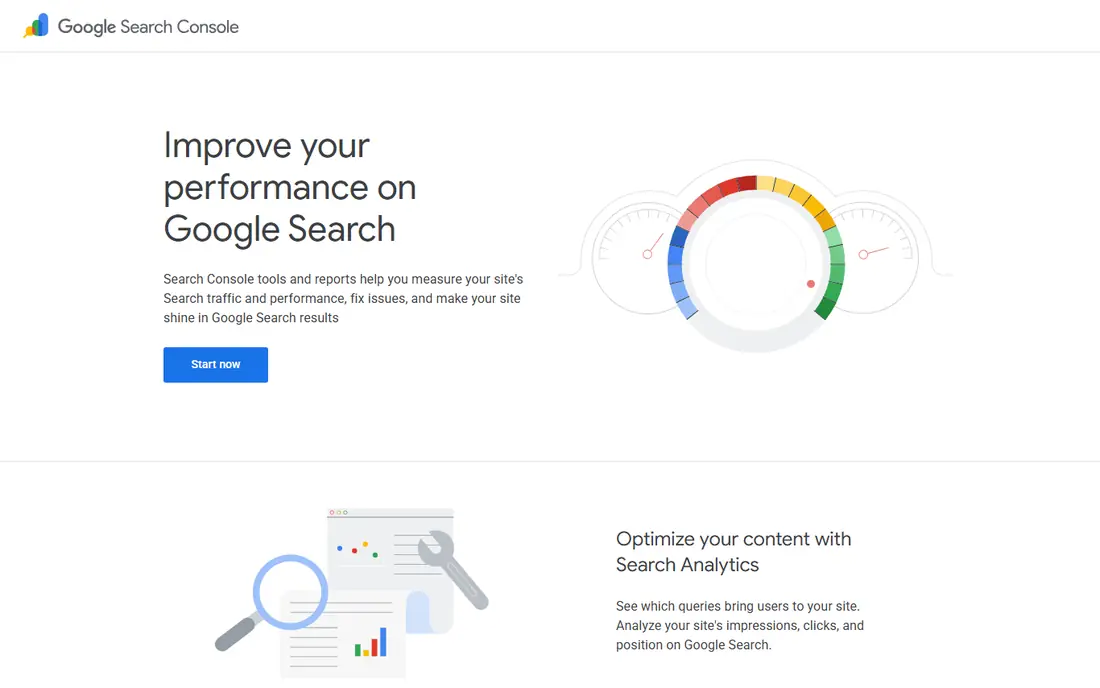
Every SEO workflow should start here, because this is first-party data rather than an estimate from a third party. Search Console shows average position, clicks, impressions, and click-through rate for queries and pages, and it keeps up to 16 months of performance history. It also flags indexing problems, mobile usability issues, and pages that Google cannot crawl, which makes it useful for fixing problems before they hurt rankings.
The honest catch is scope. Search Console does not track competitors, it does not cover Bing or other search engines in the same way, and it does not give a single daily rank for a keyword in the way a dedicated tracker does. We use it as the truth check next to a paid tool, not as a replacement for one when a team needs competitor tracking or client reporting.
- Real click and impression data from Google
- Shows the exact queries that bring traffic
- No subscription cost
- Google data only
- No competitor rank tracking
- Reports can lag behind live results
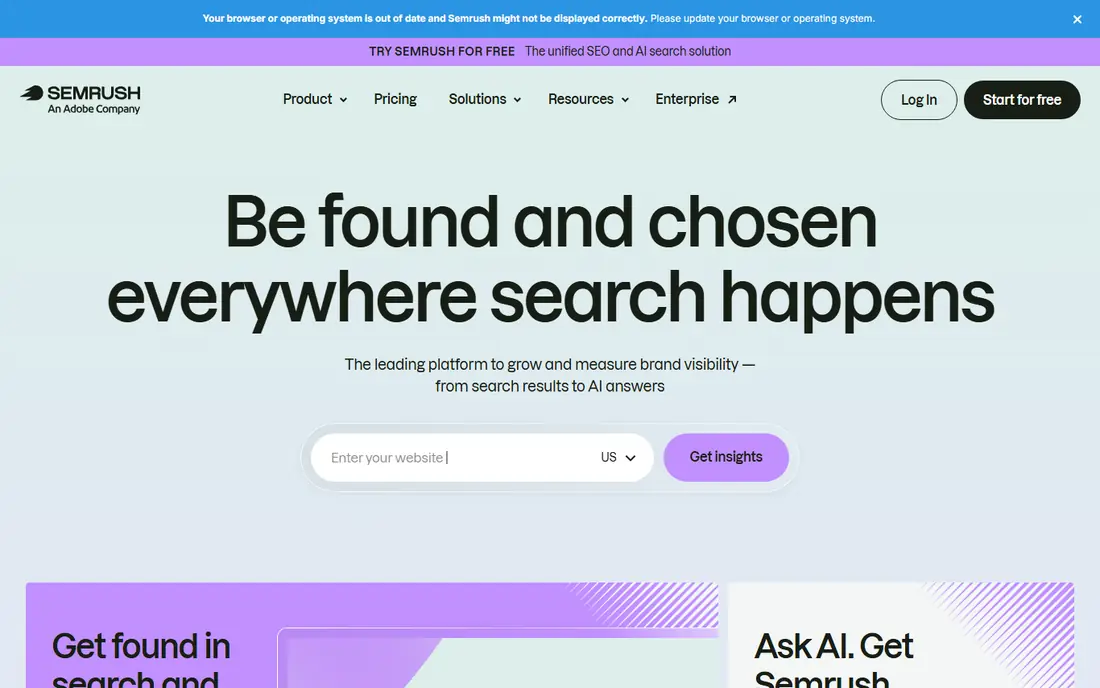
Semrush is the pick for teams that want rank tracking inside a much larger toolkit. Position Tracking follows keywords daily, groups them by tag or location, and pairs the movement with competitor visibility, so a drop can be checked against a rival page in the same dashboard. The same subscription adds keyword research, backlink analysis, site audits, and on-page suggestions, which means fewer separate tools to pay for.
The trade-off is cost and complexity. At $139 per month for the SEO plan, with 500 keywords in Position Tracking at that level, a small site with a short keyword list may pay for far more than it uses. Beginners should start with one project and a tight keyword list, and add projects only when reporting actually needs them.
- Position Tracking with daily updates
- Large keyword and competitor databases
- Site audits and content tools in the same plan
- Entry price is high for a solo site owner
- The interface can feel crowded at first
- Keyword limits apply on the entry plan
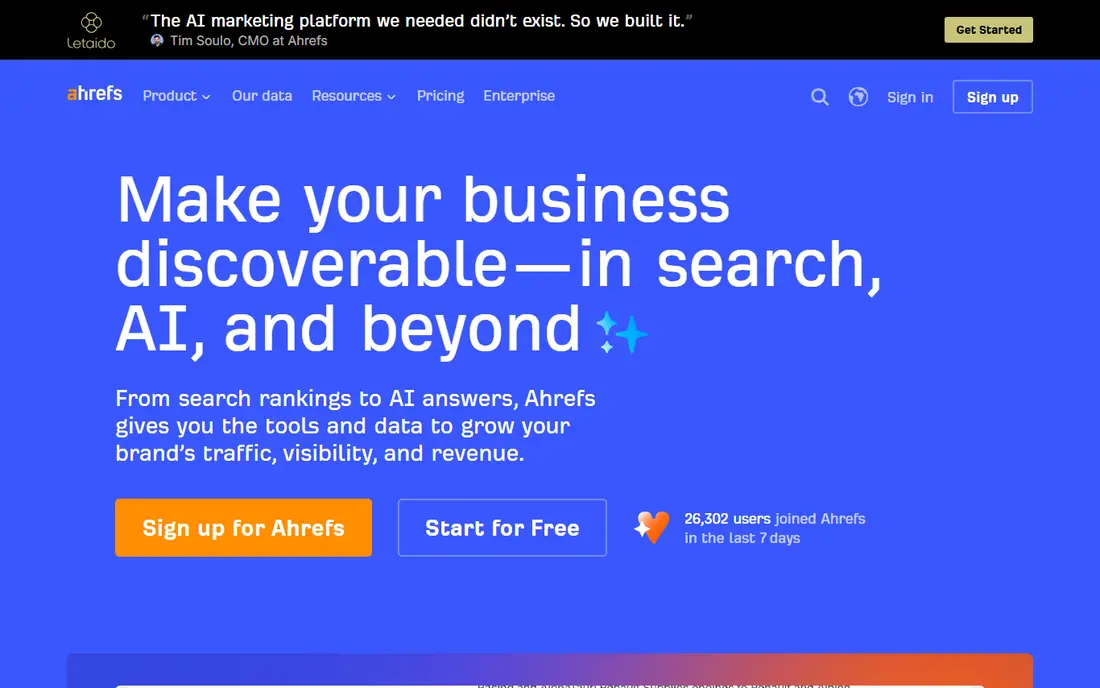
Ahrefs built its name on backlinks, and that strength still shapes why people choose it for rankings. Rank Tracker shows position history, search visibility, and traffic estimates, while Site Explorer explains which links and pages sit behind a competitor ranking. For a team that plans link building or content gaps, that pairing is hard to match.
The catch is that the lowest-priced Starter plan is a starting point, not a full agency setup, and tracked keyword counts rise with higher tiers. Check the current plan page before buying, and compare the tracked keyword allowance with the size of the list you actually maintain. If backlinks are not a priority, a cheaper dedicated tracker may give cleaner daily rank data for less money.
- Deep backlink index
- Strong keyword research
- Rank Tracker is included in paid plans
- Full rank tracking allowances grow with price
- The cheapest plan is limited
- Learning the full toolset takes time
SE Ranking stands out on value at the entry tier, because Core includes 2,000 keywords tracked daily, plus audits and research tools in the same plan. That allowance suits agencies and multi-location businesses that track many local terms, service pages, and blog posts without splitting them across projects. Reporting is clean enough to send to clients, and white-label options help agencies present the data under their own brand.
The honest limit is that SE Ranking is a full platform, so a user who only wants a simple rank list may find more menus than needed. It is also not the cheapest option in absolute terms, even though the per-keyword cost compares well. We would shortlist it first for teams with keyword lists in the hundreds or thousands.
- 2,000 keywords on the Core plan with daily updates
- Audits and research included
- White-label reporting for agencies
- Entry price is still a real monthly cost
- Some advanced features sit on higher tiers
- The breadth can distract from simple tracking
Moz Pro has long been the friendly on-ramp to paid SEO data. Rank tracking is straightforward, campaign reports are easy to read, and Domain Authority gives teams a shared shorthand for comparing site strength, even though it is a Moz metric and not a Google score. For a small business owner who wants to follow a modest keyword set and understand the basics, that clarity matters.
The weakness is scale. Entry allowances are smaller than some rivals, and teams that grow into heavy link research will likely outgrow Moz Pro or pair it with another tool. Treat it as a solid first paid tool, and re-check the allowance when the keyword list grows past a few hundred terms.
- Clear rank tracking and reporting
- Domain Authority metrics are widely understood
- Guided recommendations for beginners
- Keyword allowances are smaller than SE Ranking at entry level
- Backlink data is thinner than Ahrefs
- Pricing changes, so check the current page
AccuRanker is a specialist, not a suite, and that focus is the point. It tracks large keyword sets daily, with tagging and segmentation that let agencies slice data by client, location, device, or landing page. API access and integrations help teams push rank data into dashboards they already use, rather than rebuilding reports by hand.
The price makes the audience clear. At $249 per month for the Professional tier, it is built for agencies and larger in-house teams, not for a solo blogger tracking 50 terms. Small teams should look at Wincher or Mangools first, and move to AccuRanker when keyword volume and reporting demands justify the cost.
- Daily updates built for large keyword sets
- Tagging, segmentation, and API access
- Fast and focused rank reports
- High entry price
- No broad keyword research suite at this price
- Overkill for a single small site
Wincher appeals to people who want rank tracking and little else. The dashboard centers on positions, movement, and competitors for a chosen keyword set, without asking the user to learn audits, PPC tools, or content modules. That simplicity keeps weekly reporting fast, and the $49 per month Basic entry point is easier to justify for a small business.
The limit is breadth. Wincher does not replace a research suite, so teams that also need deep backlink data or site audits will need another tool or a higher-tier plan elsewhere. For rank tracking alone, though, it is one of the cleanest options in this list.
- Straightforward daily tracking
- Lower entry price than the big suites
- Clean reports without extra clutter
- Smaller feature set than Semrush or SE Ranking
- Fewer research tools
- Keyword limits apply by plan
Mangools, through SERPWatcher and KWFinder, gives solo users a gentle way into paid SEO data. The interface is clear, keyword research is easy to follow, and rank tracking shows movement without a steep learning curve. Bloggers and small sites often find it enough to follow their main pages and posts.
The catch is update frequency and scale. Lower tiers track fewer keywords and update less often than daily, so check the current plan details before relying on it for fast-moving terms. It is a strong budget pick, not a replacement for an agency-grade tracker.
- Friendly interface for beginners
- SERPWatcher tracks daily or weekly ranks by plan
- KWFinder covers keyword research in the same suite
- Lower keyword allowances on the Basic plan
- Weekly updates on lower tiers
- Less depth for large agencies
How we picked these
We compared official pricing pages, feature pages, and app and platform documentation, and we cross-checked allowances and update frequency against recent independent comparisons published in 2026. We favored tools that are still sold and supported in October 2026, that track Google rankings in the United States, and that state their keyword limits plainly. We did not claim hands-on testing, and we left prices as See website where vendor pages conflicted or where a plan had changed recently.
What to check before you pay
A ranking tool is only useful if it matches the size of the job and the way you report results.
Match the keyword allowance to your real list
Count the keywords you actually track, including local variants and service pages, then add room to grow. A tool with 200 keywords looks cheap until the list passes that limit in the first month. Agencies should count across clients, not per client, because most plans pool the allowance.
Decide how often you need updates
Daily tracking suits competitive terms and client reporting, while weekly tracking can be enough for a slow-moving local site. Do not pay for daily updates on hundreds of terms if you only review reports once a month.
Check location and device tracking
Local businesses need city-level tracking, and many sites now get most traffic from mobile. Confirm that the plan covers the locations and devices you report on, because those options sometimes sit on higher tiers.
Keep Search Console in the mix
Paid tools estimate rankings from their own crawls, while Search Console reports what Google actually showed. When the two disagree, use Search Console for clicks and queries, and use the paid tool for competitor movement and history.
Frequently asked questions
What is the best free SEO ranking tool?
Google Search Console is the best free option, because it reports real Google clicks, impressions, and average position for your own site. It does not track competitors, so pair it with a paid tracker if competitor ranks matter to your reporting.
How many keywords should a small business track?
Most small businesses do well with 50 to 200 keywords covering services, locations, and main blog topics. Tracking thousands of terms adds cost without adding decisions, so start narrow and expand only when a new page or location needs coverage.
Is Semrush or Ahrefs better for rank tracking?
Semrush suits teams that want rank tracking next to content, PPC, and audit tools in one subscription. Ahrefs suits teams that put backlink research first and want rank data alongside that research. Both track ranks well, so the wider toolkit should decide the choice.
Do free SEO ranking tools give daily updates?
Some free tiers and trials show recent positions, but daily updates for a large list are usually a paid feature. Check the plan page for update frequency, because a weekly update can miss a short-lived ranking change.
Can one tool replace Google Search Console?
No, and we would not drop Search Console even with a paid tool in place. Search Console gives first-party click data and indexing alerts that third-party trackers cannot replace, and it costs nothing to keep running.
Sources
See where you really rank - block by block
ProMapRanker scans Google Maps across a grid of your service area. Simple monthly plans from $19, white-label on every plan.
Start freeKeep reading
 zoom alternatives
Best Zoom Alternatives in 2026
Compare Zoom alternatives in 2026, with free meeting limits and prices, so you can pick the best alternative to Zoom for your team, class, or community.
Read → which software is best for remote work
Which Software Is Best for Remote Work in 2026
Answering which software is best for remote work, we compare Slack, Zoom, Asana, Notion, Teams and more, with pricing and honest tradeoffs in 2026 now.
Read → which ai tool is best for content writing
Which AI Tool Is Best for Content Writing in 2026
Wondering which ai tool is best for content writing? We compare ChatGPT, Claude, Jasper, Grammarly, and more on price, quality, and best use in 2026 now.
Read →