 ProMapRanker
Best SEO Competitor Analysis Tool in 2026

Key takeaways
- Semrush is our pick for most teams because it covers keyword gaps, backlink gaps, traffic research and rank tracking in one suite.
- Ahrefs is the strongest choice when backlink and content gap research matters most.
- SpyFu is the best value pick for competitor keyword and paid search history on a smaller budget.
- Similarweb is best for top-down traffic and channel research, rather than day-to-day keyword tracking.
- Check plan limits before you buy, since competitor reports, tracked keywords and seats can change the real cost fast.
Quick comparison
| Pick | Great for | Pricing starts at | Free tier | |
|---|---|---|---|---|
 Semrush | All-in-one competitor research | See website | Free trial | Visit |
 Ahrefs | Backlink and content gap research | See website | Free trial | Visit |
 Moz Pro | Familiar metrics and easy onboarding | See website | Free trial | Visit |
 SpyFu | Competitor keywords and ads history | See website | Free trial | Visit |
 Similarweb | Traffic and channel benchmarking | See website | Free trial | Visit |
 SE Ranking | Budget all-in-one competitor research | See website | Free trial | Visit |
 Majestic | Backlink quality and history | See website | No | Visit |
 Serpstat | Budget competitor research and audits | See website | Free trial | Visit |
 Ubersuggest | Beginners and solo site owners | See website | Free trial | Visit |
The best SEO competitor analysis tools
A good competitor analysis tool answers three questions. What keywords do rivals rank for that you do not. Where do their links come from. And where does their traffic come from. The tools below answer those questions in different ways, so the best pick depends on whether you need depth, breadth or a low price.
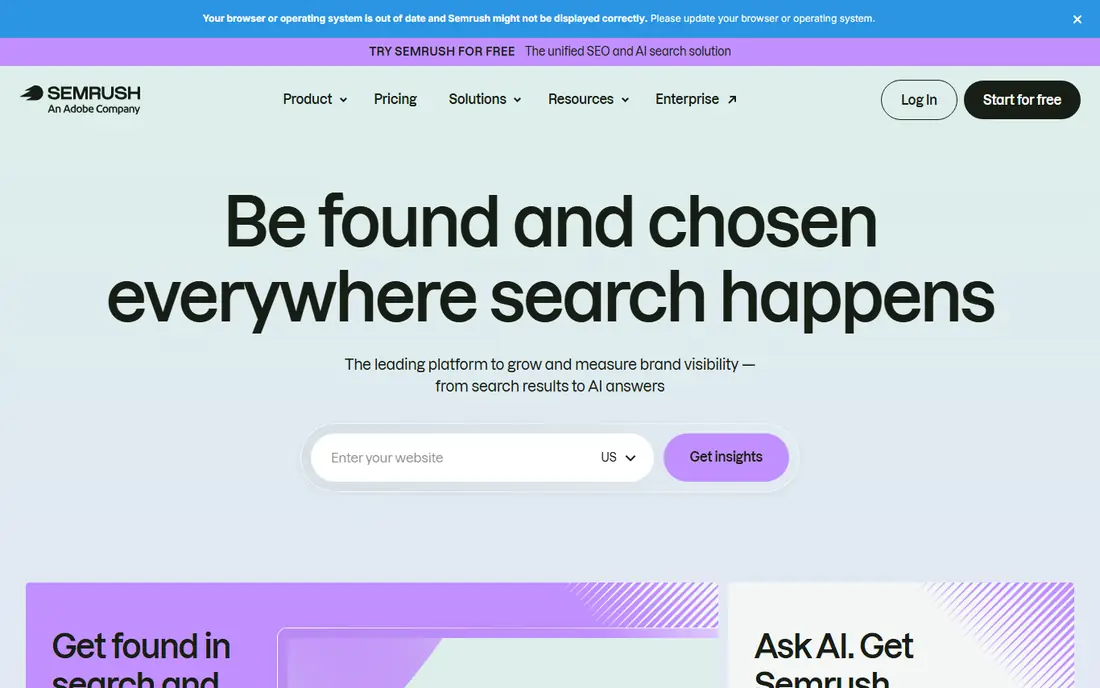
Semrush is the most complete competitor research suite on this list. Its Keyword Gap tool shows keywords your rivals rank for that you miss, while Backlink Gap shows linking sites that point to rivals but not to you. Traffic Analytics adds an estimate of where rival traffic comes from, which helps you judge whether a competitor is winning through search, social, referral or paid channels.
The cost is the honest catch. Entry plans cover a limited set of projects and reports, and extra seats and higher limits add up. Beginners may also feel lost in the sheer number of reports. For a team that does competitor research weekly, though, Semrush covers the most jobs in one login.
- Keyword Gap and Backlink Gap tools
- Traffic Analytics
- Broad rank tracking and site audit tools
- Price rises fast with seats and limits
- Interface can feel large for beginners
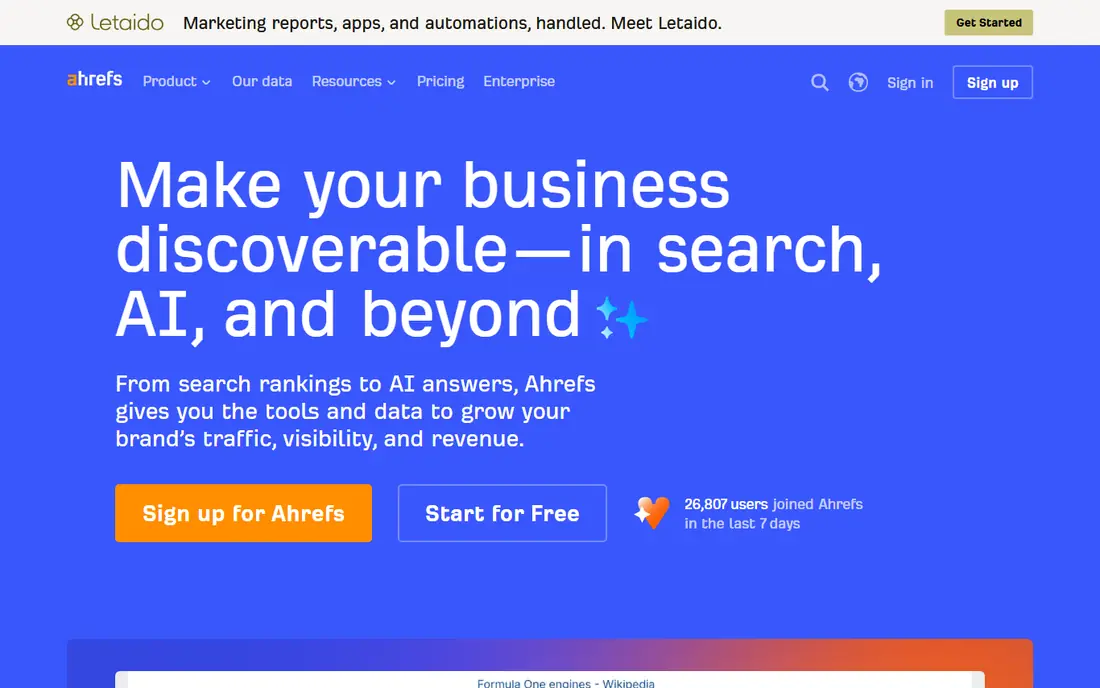
Ahrefs is the link research leader for many SEOs. Site Explorer lets you study a rival domain page by page, see its top pages and anchors, and trace where its links come from. Content Gap then shows keywords that several rivals rank for while your site does not, which gives a clear content brief rather than a vague list of ideas.
Ahrefs is not the cheapest option, and its entry tier is more limited than its full plans. If your main job is link building and content gaps, that depth is worth paying for. If you mainly need rank tracking and basic competitor keywords, a cheaper all-in-one tool may cover you.
- Large backlink index
- Site Explorer for rival pages
- Content Gap for missing keywords
- Higher price for full plans
- Some entry tiers are limited for heavy research
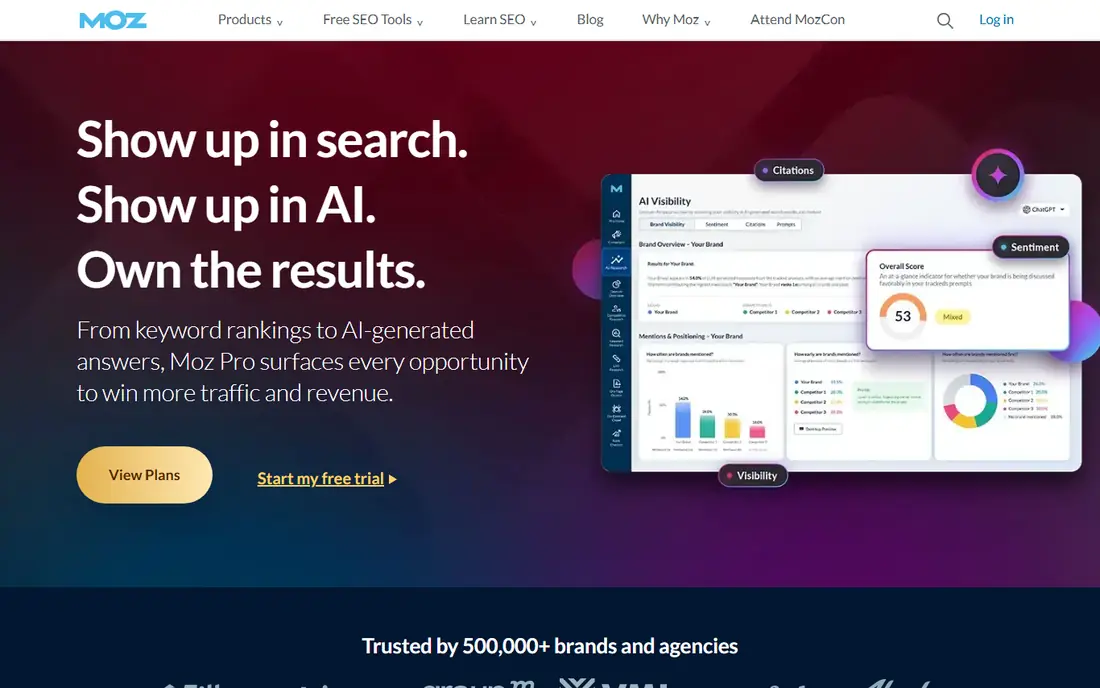
Moz Pro is a comfortable choice for teams that want familiar metrics and a gentler learning curve. Domain Authority gives a quick shorthand for rival strength, while Keyword Explorer, Link Explorer and rank tracking cover the core competitor workflow. Its guides and community resources also help newer SEOs learn the method behind the numbers.
The limit is depth in some areas. Its link index does not always match Ahrefs for niche or international sites, and larger teams will need higher tiers for more projects and seats. For small teams and solo marketers who want a clear, reliable suite, Moz Pro remains a solid pick.
- Domain Authority and Page Authority metrics
- Clear rank tracking
- Good learning resources
- Backlink index is smaller than Ahrefs for some niches
- Higher tiers needed for larger teams
SpyFu is built for a specific job: seeing what your rivals have ranked for and advertised over time. You can trace a competitor's keyword history, view its ad copy and landing pages, and spot which terms it has defended for years versus tested briefly. That history is useful for both SEO and paid search planning.
It is not a full traffic intelligence platform, and its estimates should be treated as directional rather than exact. For budget-conscious teams that want competitor keyword research without paying for a large suite, SpyFu offers strong value. Pair it with a rank tracker if you need daily position monitoring.
- Long competitor keyword and ad history
- Clear PPC research
- Lower price than large suites
- Traffic estimates are less deep than Similarweb
- Interface feels dated in places
Similarweb answers a different question from the tools above. Instead of starting with a keyword, it starts with a market. You can compare rival sites by estimated visits, traffic sources, audience geography and referral channels, which helps you see whether a rival wins through search, social, email or direct visits. That top-down view is valuable for strategy and investor-style market checks.
The trade-off is price and granularity. Full access is often quote-based, and small sites may not get the same depth of data as large, well-trafficked rivals. Use Similarweb for market benchmarking, and pair it with Semrush or Ahrefs for page-level keyword and link work.
- Strong traffic source and audience data
- Good market benchmarking
- Useful for larger markets
- Pricing is often quote-based for full access
- Less suited to small site keyword tracking
SE Ranking is a strong middle option for teams that want most of the suite without the top-tier price. It covers competitor keyword research, backlink checks, rank tracking and site audits, with reporting tools that suit agencies and small teams. Its pricing structure is easier to understand than some rivals, which helps when you need to justify a subscription.
Depth is where it gives ground. Its backlink index and traffic estimates are useful but not as deep as Ahrefs or Similarweb for large-scale research. For most small and mid-size sites, that trade is fine, and the savings can fund content or link work instead.
- Competitor research, rank tracking and site audit in one tool
- Clearer pricing than large suites
- Good agency features
- Backlink and traffic data are less deep than leaders
- Some limits need checking on higher plans
Majestic is a specialist. Its Trust Flow and Citation Flow scores help you judge link quality, not just link count, and its historical index lets you trace how a rival link profile grew over time. That makes it a powerful second tool for link builders and for auditing a site before outreach or a partnership.
It is not a full competitor suite. You will still need another tool for keyword gaps, rank tracking and content research. If links are your main job, Majestic earns its place beside Ahrefs or Semrush. If you need one tool for everything, look elsewhere.
- Trust Flow and Citation Flow metrics
- Deep historical link data
- Useful link maps
- Focused on links, not a full SEO suite
- No free plan for full research
Serpstat packs a lot into a lower-priced suite, with competitor keyword research, backlink analysis, rank tracking and site audits. It suits freelancers and small teams who need a broad toolset and do not want to pay for enterprise features they will never use. Its batch analysis tools can also speed up work across many domains.
Data depth is the limit to check. Coverage is stronger in some countries and niches than others, so test it on your actual rivals during the trial. If your market is well covered, Serpstat is a capable budget alternative to the big suites.
- Keyword, backlink and audit tools in one place
- Lower entry price than large suites
- Useful for smaller teams
- Data depth varies by country and niche
- Interface takes time to learn
Ubersuggest is the gentlest entry point on this list. It gives a clear overview of a rival domain, its top keywords and top pages, plus keyword ideas and a basic site audit, without a steep learning curve. For a solo site owner or a small business owner doing occasional competitor checks, that simplicity is a real benefit.
Depth is limited. Its data does not match the large suites for competitive niches, and free use is capped by daily searches. Treat Ubersuggest as a starting tool or a supplement, and move to Semrush, Ahrefs or SE Ranking when competitor research becomes a weekly job.
- Simple competitor overviews
- Low entry price
- Easy to learn for beginners
- Shallower data than Semrush or Ahrefs
- Daily search limits on free use
How we picked these
We compared official pricing pages, feature descriptions and plan limits for SEO tools still available in October 2026, favoring tools with real competitor keyword, backlink or traffic research rather than simple rank checkers. We included large suites, budget suites and specialists, and we noted where a tool is strong in one area but light in another. Prices change often, so check the vendor site for current plans and limits before you buy.
How to use a competitor analysis tool well
Start with a short rival list, not the whole market. Pick three to five direct competitors: sites that rank for the same keywords and serve the same audience. Run a keyword gap report first, since it gives the clearest content brief. Then check backlink gaps for outreach targets, and use traffic data only as a directional guide, not as an exact count.
Keyword gaps, links and traffic
A keyword gap is most useful when you group results by intent. Informational gaps suggest blog and guide content. Commercial gaps suggest product and comparison pages. Link gaps are most useful when you filter for relevant, high-quality sites rather than chasing every linking domain. Traffic data helps you see which channels a rival leans on, but it should not replace your own analytics.
Limits, seats and reporting
Check four limits before you subscribe. How many competitor domains can you research each month. How many keywords can you track. How many seats are included. And whether reports can be shared with clients or colleagues. Those limits decide the real cost far more than the headline monthly price.
Avoiding common mistakes
Do not copy a rival page word for word, and do not chase every keyword a rival ranks for. Some rival rankings come from brand strength, paid links or pages you should not imitate. Use competitor data to find gaps and ideas, then build better, original pages for your own audience.
Frequently asked questions
What SEO tool is best for competitor analysis?
Semrush is the best all-in-one choice for most teams, since it covers keyword gaps, backlink gaps, traffic research and rank tracking. Ahrefs is best for link and content gap depth, SpyFu is best for budget keyword and ad history, and Similarweb is best for market traffic benchmarking.
What are the best tools for competitive analysis on a budget?
SpyFu, SE Ranking, Serpstat and Ubersuggest all offer competitor research at lower prices than the large suites. SpyFu is strongest for keyword and ad history, SE Ranking is the most complete budget suite, and Ubersuggest is simplest for beginners.
What are the best SEO competitor analysis tools for backlinks?
Ahrefs and Majestic lead for backlink research. Ahrefs gives the broadest site and content gap workflow, while Majestic adds Trust Flow, Citation Flow and deep historical link data. Many link builders use both together.
Can I do competitor analysis with a free tool?
Yes, for basic checks. Several tools offer free trials or limited free tools, and Ubersuggest allows limited free searches. For ongoing competitor research, a paid plan is usually needed, since free tiers cap reports, keywords and history.
How often should I check competitors?
For most sites, a monthly competitor check is enough, with a deeper review each quarter. Check more often if you work in a fast-moving niche, if a rival launches new pages, or if your rankings drop suddenly. Daily checks rarely add value unless you track a small set of money keywords.
Is traffic data from competitor tools exact?
No. Traffic estimates are modeled from panels, search data and other signals, so treat them as directional. Use them to compare rivals and spot channel shifts, and use your own analytics for exact numbers on your own site.
Sources
See where you really rank - block by block
ProMapRanker scans Google Maps across a grid of your service area. Simple monthly plans from $19, white-label on every plan.
Start freeKeep reading
 free kahoot alternatives
Free Kahoot Alternatives in 2026
We compared free Kahoot alternatives for classrooms, training and large groups, checking free plans, player limits and game modes to help you pick a tool.
Read → best website build apps
Best Website Build Apps in 2026
Compare the best website build apps in 2026 for service businesses, stores, and portfolios, from Wix and Squarespace to Webflow today, with full pricing.
Read → best tools for content creation and social media management
Best Tools for Content Creation and Social Media Management in 2026
We compared the best tools for content creation and social media management, checking scheduling, design, video and pricing for creators and small teams.
Read →