 ProMapRanker
Best Running Apps for Beginners in 2026

Key takeaways
- Nike Run Club is our pick for most new runners because guided runs and training plans cost nothing and need no premium tier.
- Strava suits beginners who stay motivated by friends, routes, and shared progress, while its deeper analysis sits behind a subscription.
- A walk-run plan matters more than advanced stats at the start, so Couch to 5K style apps beat feature-heavy trackers for total beginners.
- Runkeeper, MapMyRun, and adidas Running all cover free GPS tracking well, with coaching and extra analysis moving to paid tiers.
- Runna is the strongest paid coaching step after a first 5K, but its monthly price is hard to justify before you know you enjoy running.
Quick comparison
| Pick | Great for | Pricing starts at | Free tier | |
|---|---|---|---|---|
 Nike Run Club | Free coaching | Free | Yes | Visit |
 Strava | Social motivation | Free | Yes | Visit |
 Runkeeper | Simple tracking with plans | Free | Yes | Visit |
 MapMyRun | Route discovery | Free | Yes | Visit |
 adidas Running | Multi-sport tracking | Free | Yes | Visit |
 Couch to 5K by Zen Labs | Walk-run beginners | Free | Yes | Visit |
 Zombies, Run 5K Training | Story-driven beginners | Free | Yes | Visit |
 Runna | Paid personal plans | $19.99 per month | Free trial | Visit |
 Garmin Coach | Garmin watch owners | Free | Yes | Visit |
The best running apps for beginners
Starting to run is mostly about showing up three times a week and building slowly. The right app gives you a clear next run, audio cues so you do not stare at your phone, and a record of progress you can actually read. The nine apps below cover free coaching, social motivation, walk-run plans, and one paid coaching upgrade for later.
Nike Run Club is unusual in this category because there is no upsell waiting behind the good features. Guided runs talk you through pace, form, and mindset, and training plans cover distances from 5K upward without a subscription screen. For a beginner, that removes the usual question of which feature is free and which one costs money each month.
Tracking covers the basics well, with distance, pace, splits, and elevation, plus a full run history to show progress over weeks. The trade-off is depth. Runners who later want training load charts or detailed performance analysis will outgrow the app, and plan availability is not identical in every country. As a free starting point with real coaching, though, it is hard to beat, and our pick for most people is Nike Run Club.
- Guided runs and training plans with no premium tier
- Clean GPS tracking with pace and splits
- Challenges and run history included
- Analysis is lighter than paid rivals
- Training plan availability varies by country
- A Nike account is required
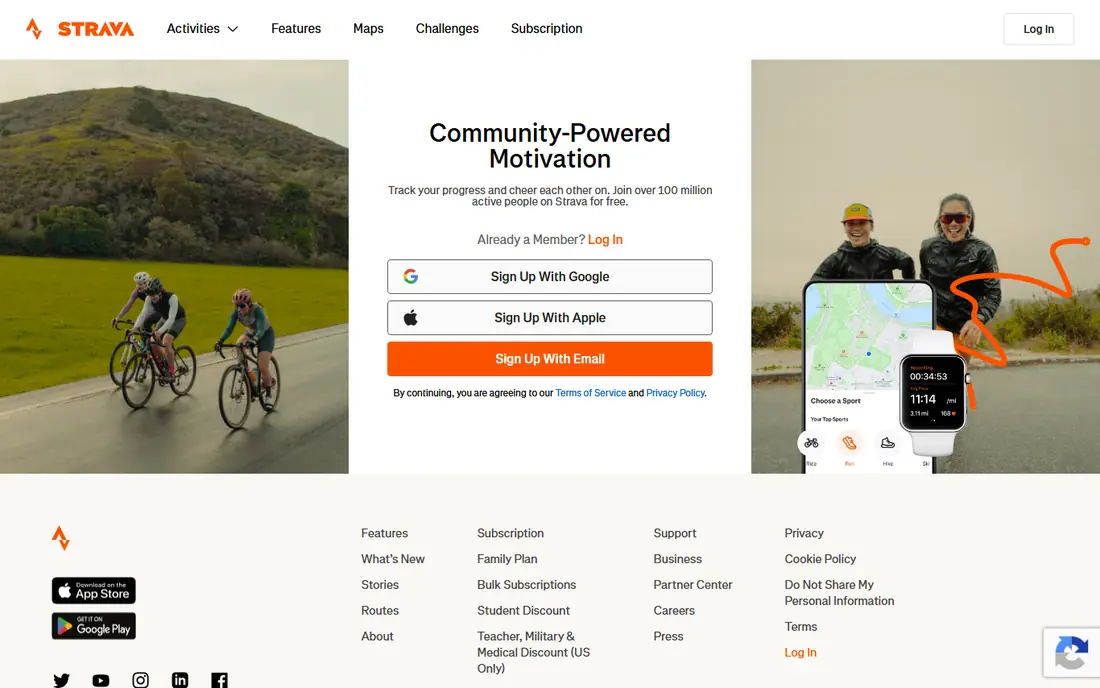
Strava works best for beginners who need other people in the loop. Friends can give kudos, comment on a first 5K, and share routes that are already proven by local runners.
The free tier covers GPS tracking, an activity feed, basic stats, and top segment results. Premium, at $11.99 per month or $79.99 per year, adds fuller leaderboards, training logs, route tools, and safety features. New runners do not need those extras on day one, and the free tier is enough to log runs and stay connected.
- Large running community and route ideas
- Kudos and comments keep new runners accountable
- Reliable GPS tracking on phone and watch
- Full segment leaderboards and deeper analysis need Premium at $11.99 per month
- Social feed can feel competitive
- Route planning extras sit behind paywall
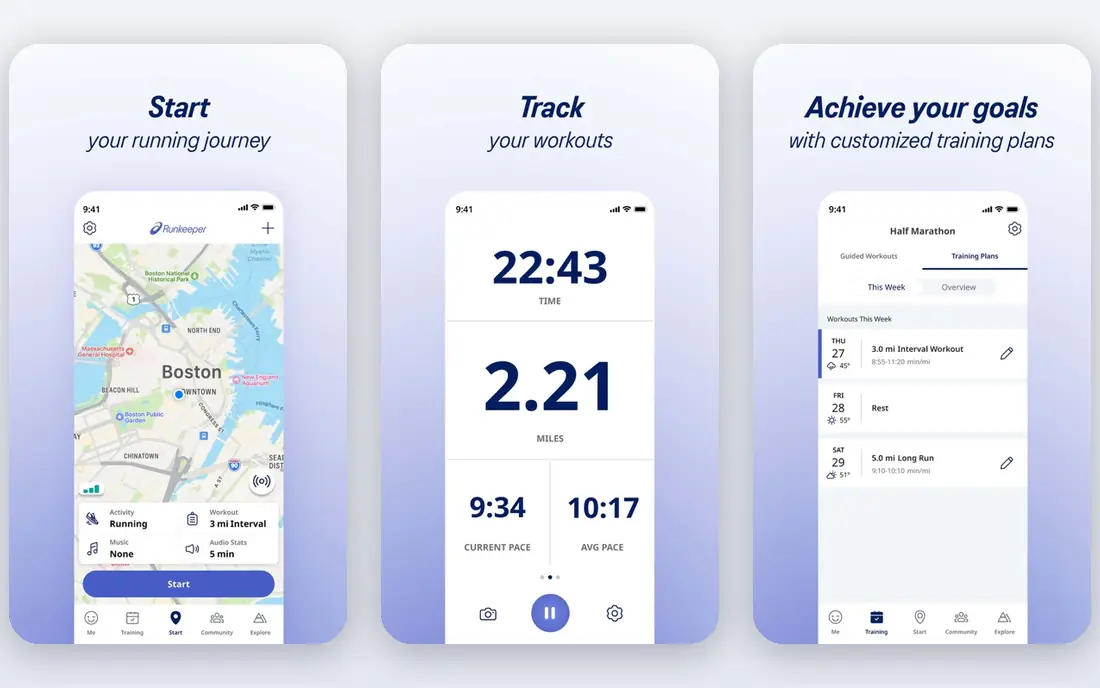
Runkeeper has survived by doing the basics without fuss. Start a run, hear audio cues for pace and distance, and finish with a clear summary and a full history. Custom goals let beginners aim for a distance, a time, or a weekly habit, and the app stays out of the way during the run itself.
Free tracking is solid, but personalized training plans sit in Runkeeper Go, priced at $9.99 per month or $39.99 per year. That makes Runkeeper a good free tracker first and a paid coaching app second, which is the opposite order from Nike Run Club. If you like the layout and want a plan later, the upgrade is reasonably priced. If coaching is the main draw from the start, begin with a free coaching app and switch only if you miss Runkeeper's tracking style.
- Straightforward GPS tracking and audio cues
- Custom goals and training plans
- Syncs with Apple Watch and other wearables
- Paid Runkeeper Go is needed for personalized plans at $9.99 per month
- Interface feels plainer than Nike Run Club
- Social features are thinner than Strava
MapMyRun appeals to beginners who want to explore rather than repeat the same loop. Community routes show distance and elevation before you leave home, which helps new runners avoid a surprise hill in the last mile. Tracking, challenges, and friend connections cover the usual motivation tools, and the app works on phone and watch.
Ads in the free version are the main annoyance, and premium pricing is handled in-app, so check the current store listing before subscribing. Route quality also varies, since community routes are only as good as the person who mapped them. For runners who get bored easily, the route library is a genuine reason to pick this app.
- Large library of community routes
- GPS tracking with pace, distance, and calories
- Challenges and friends for accountability
- Free version includes ads
- Premium features require an in-app subscription
- Some routes need local knowledge to judge safety
Formerly known as Runtastic, adidas Running suits beginners who do more than run. One app can log a run, a walk, and a bike ride, which helps people building general fitness rather than chasing a race time. Audio feedback during runs, training plans, and community challenges give new runners structure without a steep learning curve.
The paid tier is the usual catch, with premium features sold through the app store rather than a single public web price, so confirm the cost in your store before paying. Running-only users may also find extra sport options and challenges add clutter. If your week mixes running with walking and cycling, the all-in-one log is convenient. If you only run, a simpler app will feel cleaner.
- GPS tracking across running, walking, cycling, and more
- Audio coach cues and training plans
- Community challenges and live tracking options
- Premium is sold in-app and pricing varies
- Some coaching features sit behind the paid tier
- Interface can feel busy for running-only users
For a total beginner, this is the app that answers the only question that matters, which is what to do on run one. The 8-week plan alternates walking and running in short intervals, then lengthens the running portions week by week. An audio coach calls the switches, so you can leave the phone in a pocket and focus on breathing and footing.
The plan structure is trusted because it is gradual, but the free tier does not cover the whole program in every listing, and reviewers note that later workouts can require a subscription. Treat the first week as a free trial of the method, and check what the paid pass opens up before week two. Once you finish the 5K, move to Nike Run Club or Runna for a next goal.
- Gradual 8-week walk-run build
- Audio coach tells you when to walk and run
- Simple plan for people starting from no running base
- Later workouts may require a paid pass
- Scope ends at 5K, so you need a next app after
- Watch support varies by device
Some beginners quit because running feels dull, and Zombies, Run 5K Training tackles that exact problem. You play Runner 5, a new recruit at a survivor outpost, and each workout advances a story written for audio. The 8-week training plan uses the same walk-run logic as other beginner plans, but the mission format gives you a reason to press start on a gray morning.
Subscriptions open all workouts for unlimited play, listed at $5.99 per month or $34.99 per year in app store listings, so the free download is a taste rather than the full season. The story also splits opinion, since some runners love the drama and others find it distracting. If plain beeps and pace calls bore you, this app may keep you consistent longer than a plainer tracker.
- Audio story makes walk-run sessions entertaining
- 8-week plan built for beginners
- Own music plays alongside the story missions
- Full story access requires a subscription at $5.99 per month
- Zombie chase feature can stress some new runners
- Story style will not suit everyone
Runna is the app to consider after you can already run for 30 minutes without stopping. Plans adapt to your goal, available days, and current fitness, and each workout carries target paces that sync to your watch. Strength, mobility, and Pilates-style sessions sit alongside the running, which helps beginners who need more than mileage alone.
Price is the barrier. Runna costs $19.99 per month or $119.99 per year, with a combined Strava and Runna bundle at $149.99 per year, and free access covers only the first week of a plan plus basic recording. Since June 2026, its beginner plans have also been part of the paid subscription rather than free in full. That makes Runna a poor first download, but a strong second step when a structured race plan matters more than saving money.
- Personalized plans for 5K through marathon
- Workouts sync to Garmin, Apple Watch, and other watches
- Strength and mobility sessions included
- Full access needs a subscription after the trial
- Beginner plans moved to paid access in 2026
- Price is high for a first running app
Garmin Coach is the quiet bargain in this list, but only if you already own the hardware. Compatible Garmin watches offer free adaptive plans from real coaches, with workouts that adjust when you miss a session or run faster than expected. There is no monthly coaching fee, and the plan lives on your wrist, so you do not need to carry a phone for cues.
The limit is obvious. Without a Garmin watch, this option does not exist, and buying a watch just for free coaching rarely makes financial sense for a beginner. If a Garmin watch is already on your wrist, start here before paying for any coaching app. If not, start free with Nike Run Club and revisit Garmin Coach only when a watch is already in your plans.
- Free adaptive training plans for 5K, 10K, half marathon, and marathon
- Plans adjust to completed workouts
- No subscription for the coaching itself
- Requires a compatible Garmin watch
- Setup happens through Garmin Connect
- Plan choice is narrower than Runna
How we picked these
We compared official app pages, pricing pages, and app store listings, plus current beginner guides, for apps live in October 2026. We kept apps that a true beginner can use on a phone, with GPS tracking or a walk-run plan as a core feature, and we checked whether coaching and plans sit on the free tier or behind a subscription. Where pricing is sold only in-app, we said so rather than printing a web price that does not exist.
How to start without burning out
Pick one app, one plan, and three days a week. Walk-run intervals count as running, and a slow pace that lets you talk in short sentences is the right pace for most early runs. Add no more than a small increase in weekly time, rest between run days, and stop for sharp pain rather than pushing through it. A tracker cannot tell the difference between normal soreness and an injury, so use it for pacing and history, not as a medical guide.
Shoes matter more than stats. Wear running shoes that fit well, dress for the weather, and carry water on warm days or longer runs. Run in daylight or lit areas when you can, tell someone your route for longer outings, and use a phone or watch with location sharing if your app offers it. Consistency beats speed in the first two months, and a missed week is not a failed plan.
What to look for in a beginner plan
A good beginner plan uses walk-run intervals, three runs a week, and a rest day between sessions. It should build total time slowly, include at least one easier week, and end with a clear goal such as a continuous 30-minute run or a 5K event. Be wary of plans that jump from short jogs to long runs in a single week, or that prescribe paces far faster than a comfortable conversational effort.
Free versus paid, in plain terms
Free tracking plus a free walk-run plan covers the first 5K for most people. Paid coaching earns its price when you want a race plan, watch-synced workouts, and adjustments after missed sessions. Before paying, use the trial fully, check the cancellation steps in your app store account, and set a reminder before the trial ends.
Frequently asked questions
What is the best free running app for beginners?
Nike Run Club is the strongest free choice because guided runs and training plans carry no premium tier. Strava, Runkeeper, and MapMyRun also offer useful free GPS tracking, but their deeper coaching or analysis sits behind subscriptions. Start free, and pay only when a specific paid feature solves a problem you actually have.
What is the best app to start running from scratch?
A walk-run app such as Couch to 5K by Zen Labs fits runners starting from no running base, since it alternates short runs with walking breaks over eight weeks. Zombies, Run 5K Training uses the same walk-run logic inside a story format. Once you can run continuously, Nike Run Club or Garmin Coach gives you a next plan.
What is the best beginner running app without a watch?
Nike Run Club, Strava, Runkeeper, and MapMyRun all track runs with phone GPS and audio cues, so no watch is required. Couch to 5K apps also work from a phone in a pocket or armband. A watch adds wrist cues and heart rate data later, but it is not needed to start.
Is Strava good for beginner runners?
Yes, if social motivation helps you. The free tier logs runs, shows friends' activity, and offers route ideas, which suits beginners who like accountability. Deeper analysis, full leaderboards, and some route tools need Premium. Beginners who dislike comparison should adjust privacy settings and follow only encouraging runners.
Is Runna worth it for beginners?
Runna is worth considering after a first 5K, when a personalized race plan and watch-synced workouts matter. At $19.99 per month, it is expensive as a first app, and its beginner plans now sit behind the subscription. New runners should finish a free walk-run plan first, then use the trial to judge whether the structure keeps them consistent.
How many times a week should a beginner run?
Three runs a week with rest days between sessions suits most beginners, and a walk-run plan built on that pattern is a safe starting point. Add a short walk on rest days if you want more movement without extra running stress. If pain persists, or running feels unsafe for a health reason, speak to a clinician before continuing.
Sources
See where you really rank - block by block
ProMapRanker scans Google Maps across a grid of your service area. Simple monthly plans from $19, white-label on every plan.
Start freeKeep reading
 free alternatives to grok imagine
Free Alternatives to Grok Imagine in 2026
We compared the best free alternatives to grok imagine for image generation, from fast daily credits to design tools, so you can create without paying.
Read → best tools for instagram content creation
Best Tools for Instagram Content Creation in 2026
Compare the best tools for Instagram content creation, from Canva and CapCut to Later and Buffer, on design, video, planning, scheduling, and price in 2026.
Read → best tool to split pdf files
Best Tool to Split PDF Files in 2026
We compared the best tool to split pdf files on split modes, file limits, privacy and price, so you can split a PDF cleanly and keep every page in one go.
Read →