 ProMapRanker
Best Robotics Companies in 2026


Mobile inspection and warehouse robots · Pricing starts at: See website
Key takeaways
- FANUC, ABB Robotics, KUKA and Universal Robots lead industrial and collaborative factory automation, while Boston Dynamics leads mobile inspection work.
- Agility Robotics and Figure AI focus on humanoid robots for warehouse and factory tasks, and both are still mainly sold through enterprise agreements.
- iRobot is the clear consumer pick here, with home cleaning robots that need no factory integration or specialist setup.
- Most industrial robots are priced by quote, so treat any public price as a starting point and ask for a full installed cost before deciding.
Quick comparison
| Pick | Great for | Pricing starts at | Free tier | |
|---|---|---|---|---|
| Boston Dynamics | Mobile inspection and warehouse robots | See website | No | Visit |
 ABB Robotics | Large factory automation programs | See website | No | Visit |
 FANUC | High volume industrial production | See website | No | Visit |
 KUKA | Automotive and aerospace automation | See website | No | Visit |
 Universal Robots | Small and midsize factory cobots | See website | No | Visit |
 iRobot | Home robot vacuums and mops | See website | No | Visit |
 Agility Robotics | Humanoid warehouse handling | See website | No | Visit |
 Figure AI | Humanoid factory work | See website | No | Visit |
The best robotics companies
We compared industrial leaders, cobot makers, mobile robot builders, humanoid developers and one consumer brand, so you can match the company to the job rather than to the hype.
Boston Dynamics is best known for Spot, a four legged robot that walks inspection routes, climbs stairs and carries cameras and sensors into places that are dull, dirty or hard to reach. Stretch unloads boxes from trucks and containers, which suits warehouses with heavy manual unloading work. Atlas, its humanoid, has moved into early commercial deployment, but buyers should treat it as a developing program rather than a shelf product.
The catch is access and cost. Boston Dynamics sells to companies, not to home buyers, and pricing depends on the robot, the sensors and the support package. If you need a mobile robot for inspection or unloading, start with a site trial and a clear list of the routes and tasks it must handle.
- Proven mobile robots in real sites
- Spot, Stretch and Atlas cover different jobs
- Strong software for inspection routes
- Enterprise pricing by quote
- Humanoid Atlas is still early in commercial rollout
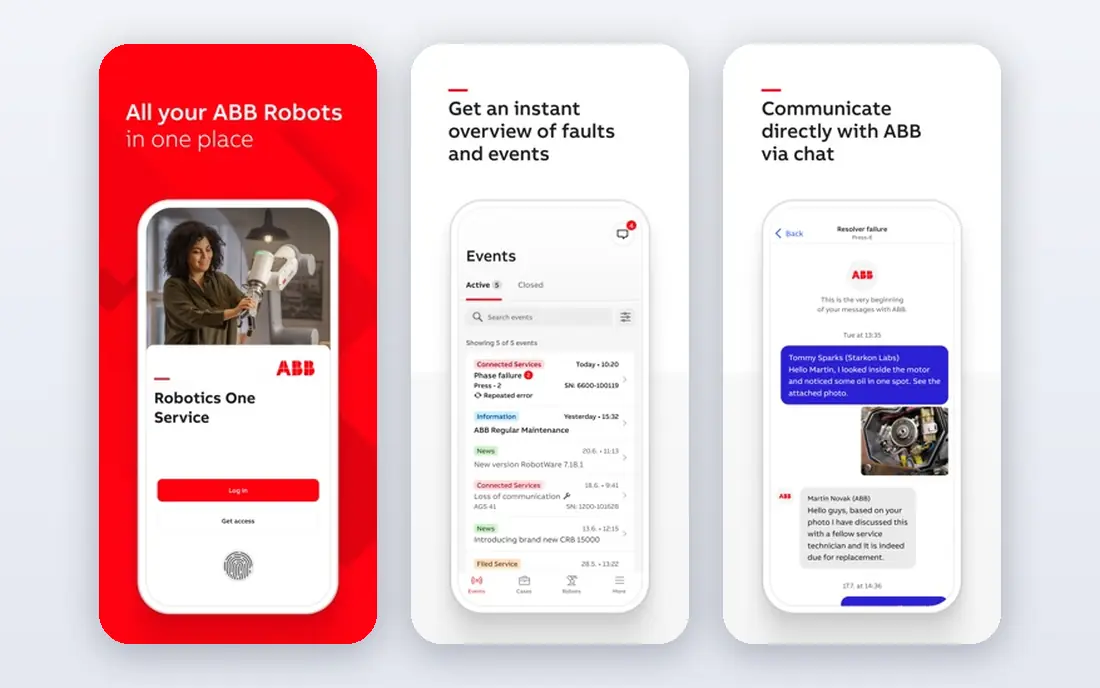
ABB Robotics covers industrial arms, collaborative robots, autonomous mobile robots and software such as RobotStudio for simulation and programming. That breadth matters for a factory that wants one vendor across welding, handling, palletizing and machine tending. Its robots appear in automotive, electronics, logistics and food production, so integrators know the hardware well.
For a smaller shop, the range can be a lot to sort through, and you will usually work with ABB or a local integrator to size the cell, the safety setup and the tooling. Ask for a simulation of your own parts before signing, since cycle time on your parts is the number that matters.
- Very broad industrial and cobot range
- RobotStudio simulation software
- Global service network
- Pricing by quote
- Portfolio can feel complex for a first robot
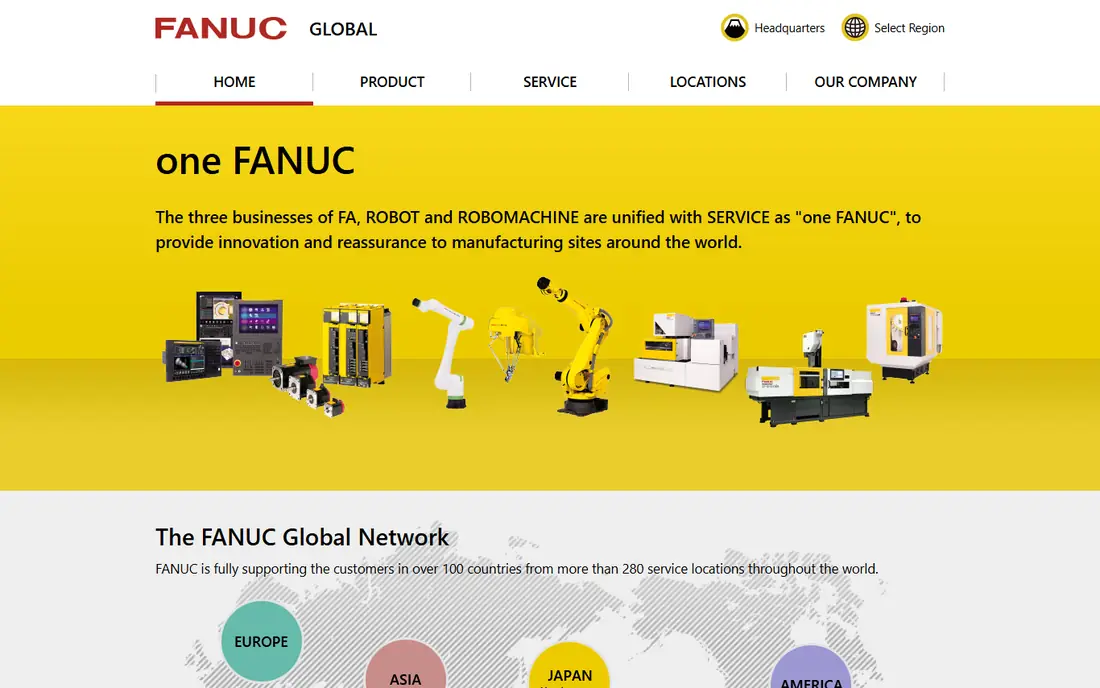
FANUC is one of the largest industrial robot makers in the world, with more than a million robots installed across many industries. Its lineup runs from compact collaborative models in the CRX series to large, heavy payload arms for car bodies and press work. If your plant runs long shifts and needs uptime above all else, FANUC is a natural shortlist pick.
The trade off is that FANUC shines most in high volume, repeatable work. A job shop with short runs and frequent changeovers may get more flexibility from a cobot vendor. Either way, get a quote that includes integration, safety fencing where needed, grippers and training, since the arm alone is only part of the cost.
- Huge installed base worldwide
- Known for reliability in car and electronics plants
- Broad range from small arms to heavy payload robots
- Pricing by quote
- Best value shows up in larger, steady production runs
KUKA, part of the Midea Group, builds industrial robots and collaborative robots used heavily in automotive plants, aerospace work and electronics production. Its robots handle welding, assembly, handling and machining support, and its software helps plan cells before any metal is cut. Buyers who already run KUKA lines often stay with the brand because staff training and spare parts carry over.
Smaller buyers should be ready for an integrator led sale. KUKA robots are serious factory equipment, and the project will involve safety review, cell design and commissioning. That is normal for this class of machine, but it is not a quick online purchase.
- Deep strength in automotive lines
- Industrial robots and cobots in one catalog
- Strong simulation and planning tools
- Pricing by quote
- Enterprise focus means less hand holding for very small buyers
Universal Robots helped make collaborative robots normal in smaller factories. Its UR arms handle machine tending, pick and place, packaging, screwdriving and quality checks, and they are programmed through a pendant interface that most technicians can learn without a robotics degree. The partner ecosystem adds grippers, vision and application kits, so a common job can go live faster than a custom industrial cell.
The limits matter too. Cobots are not a match for very heavy parts or the fastest cycle times, and risk assessment still decides how close people can work to the arm. For light to medium work in a small or midsize plant, Universal Robots is our pick for most first time buyers.
- Cobots that work beside people without full fencing in many setups
- Large ecosystem of grippers and software
- Easier programming than many industrial arms
- Payload and speed limits suit lighter work
- Pricing still runs through partners and quotes
iRobot is the only consumer company on this list, and that is the point. Its Roomba vacuums and Braava mops clean homes on a schedule, map rooms, avoid many obstacles and, on higher models, empty themselves into a base station. If you want a robot you can buy today and run tonight, iRobot is the practical choice.
Model choice is where buyers slip up. A basic Roomba cleans well but lacks the mapping and obstacle handling of the top models, and self emptying bases add cost and size. Check the exact model page for mapping, mop lifting, battery life and base type, and buy the features you will actually use.
- Roomba and Braava are widely sold and supported
- App control, scheduling and mapping on most models
- Clear model ladder from basic to self emptying
- Higher end models cost a lot
- Features vary sharply between models
Agility Robotics builds Digit, a bipedal humanoid designed to move totes in warehouses and logistics sites. Digit has logged commercial work with logistics operators, including tote movement at GXO sites, which puts it ahead of many humanoid rivals on real deployment rather than demo video. Its software, Agility Arc, helps manage fleets and workflows.
This is not a general purpose home robot and not a cheap purchase. Digit fits warehouses with repeatable tote flows and the staff to run a robotics program. If your site does not have that volume, a mobile robot or a fixed automation line will likely pay back sooner.
- Digit is built for tote handling and warehouse workflows
- Real commercial deployments with logistics customers
- Robots as a service option in some deals
- Enterprise only
- Humanoid handling still suits a narrow set of tasks
Figure AI builds humanoid robots aimed at factory and warehouse work, with an emphasis on AI that helps the robot handle varied parts and tasks. Its robots have been tested and used in BMW factory settings across successive generations, which is a meaningful signal in a field full of lab demos. For a large manufacturer planning a multi year automation program, Figure is worth a serious conversation.
For everyone else, Figure is a company to watch rather than a product to buy this month. Availability runs through enterprise deals, pricing is not public, and the task range is still growing. Ask for a task specific pilot on your own line before judging what a humanoid can do for you.
- Figure humanoids have done factory work with BMW
- Strong focus on AI driven manipulation
- Fast development pace
- Enterprise agreements only
- Still early in broad commercial rollout
How we picked these
We compared official company pages, product lineups, deployment reports and pricing pages, and we kept only companies with real robots shipping or deployed in customer sites in 2026. We left out pure software firms and firms whose robots exist only as announcements, since a buyer cannot use an announcement. Where a company prices by quote, we wrote See website rather than guessing a number.
What to check before you choose a robotics company
Start with the task, not the robot. Write down the part weight, cycle time, floor layout, safety rules and the staff who will run the machine. A cobot suits light, varied work beside people. A large industrial arm suits heavy, fast, repeatable work behind guarding. A mobile robot suits inspection and transport across a site. A humanoid suits a narrow set of handling jobs where a human shape helps, and it is still the least proven option for most buyers.
Budget for the full cell
The robot arm or body is only one line in the bill. Add grippers, vision, safety equipment, integration, programming, training and maintenance. Ask each vendor for a total installed cost and a cycle time measured on your parts, not on a demo part. For consumer robots, the equivalent check is simpler: compare the exact model, the base station and the consumables such as bags and filters.
Plan for support and safety
Check service coverage in your region, spare parts lead time and who trains your team. For factory robots, insist on a formal risk assessment and a safety plan before the robot runs near people. For home robots, check app support, warranty length and how the company handles maps and camera data in its privacy policy.
Frequently asked questions
What is the best robotics company overall?
There is no single winner, since the best robotics companies serve different jobs. FANUC and ABB lead large industrial programs, Universal Robots leads smaller cobot work, Boston Dynamics leads mobile inspection, and iRobot leads home cleaning.
What is the best robotic company for a small factory?
Universal Robots is our pick for most small factories, because its cobots are easier to program and deploy than large industrial arms and its partner ecosystem covers common jobs. Check payload, reach and cycle time against your parts before buying.
Which is the best robotics company for humanoid robots?
Agility Robotics and Figure AI are the two names with the most credible commercial work in 2026, with Digit in warehouse tote handling and Figure robots in BMW factory settings. Both sell through enterprise deals, so expect a pilot rather than an online order.
What is the best robot company for home use?
iRobot is the best robot company for home use in this list, with Roomba vacuums and Braava mops sold widely and supported through its app. Pick the model by mapping, self emptying and mop features, not by the brand name alone.
How much does an industrial robot cost?
Most industrial robot makers price by quote, so the honest answer is that it depends on the arm, tooling, safety setup and integration. Ask for a total installed price and a cycle time on your own parts, and compare that total across vendors rather than comparing arm prices alone.
Sources
See where you really rank - block by block
ProMapRanker scans Google Maps across a grid of your service area. Simple monthly plans from $19, white-label on every plan.
Start freeKeep reading
 which software is best for pdf page removal
Which Software Is Best for PDF Page Removal in 2026
Find which software is best for pdf page removal, from free online tools to desktop editors, with page controls, privacy, safety, and pricing compared.
Read → when i work alternatives
Best When I Work Alternatives in 2026
Looking for when i work alternatives? We compare 8 scheduling apps for hourly teams, covering pricing, free plans, time clocks and the best fit for business.
Read → the best tool for keyword analysis
The Best Tool for Keyword Analysis in 2026
Find the best tool for keyword analysis with our 2026 comparison of 10 keyword analysis software tools on data depth, difficulty scores and price today.
Read →