 ProMapRanker
Best Rideshare Apps for Drivers in 2026

Key takeaways
- Uber Driver and Lyft Driver are the two main platforms where most US rideshare driving happens, and they set the rules for trips, pay and support.
- Gridwise, Hurdlr, Everlance and Stride help with the business side, including mileage, expenses, earnings tracking and tax records.
- Mystro, Solo and Para help drivers manage multiple apps, compare offers or find extra gig work, but they do not replace the platforms themselves.
- This guide is based on publicly reported factors, not a verified ranking, and pay and availability vary by city, time and platform terms.
Quick comparison
| Pick | Great for | Pricing starts at | Free tier | |
|---|---|---|---|---|
 Uber Driver | Driving on the largest rideshare platform | Free | Yes | Visit |
 Lyft Driver | Driving on a major US platform | Free | Yes | Visit |
 Gridwise | Earnings, mileage and demand insights | Free | Yes | Visit |
 Hurdlr | Mileage and expense tracking for drivers | Free | Yes | Visit |
 Stride | Free mileage tracking and tax help | Free | Yes | Visit |
 Everlance | Mileage and expense reports | Free | Yes | Visit |
 Mystro | Managing multiple driver apps at once | See website | Free trial | Visit |
 Solo | Gig work planning and earnings tools | Free | Yes | Visit |
 Para | Offer details for delivery and rideshare drivers | Free | Yes | Visit |
The best rideshare apps for drivers
We present this as a guide based on publicly reported factors, not a verified ranking of driver pay. No pay figures are claimed here, because rates, bonuses and costs vary by city, vehicle, time of day and platform policy. Use the platforms for trips, and use the support apps to keep clearer records of miles, expenses and earnings across apps.
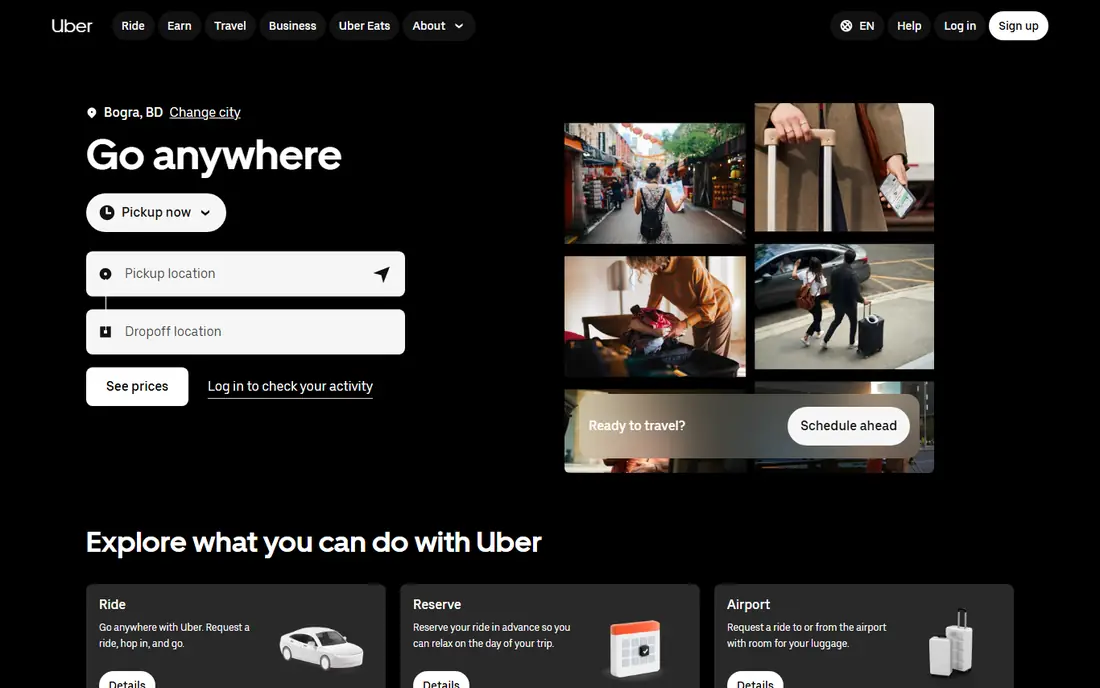
Uber Driver is the starting point for most new rideshare drivers because rider demand is broad in many cities. The driver app shows trip requests, navigation, rider details and an earnings summary, and you choose when to go online. That scale can mean shorter waits between trips in busy areas, though quiet times and markets still vary a lot.
The catch is that Uber sets trip terms, and those terms change. Check your city terms, vehicle requirements and local rules before you rely on driving income, and keep your own mileage and expense records rather than relying only on the platform summary at tax time.
- Large rider demand in many US cities
- In-app navigation, trip details and earnings view
- Flexible hours
- Pay and bonuses vary by market and policy
- Driver support and deactivation rules are a common complaint

Lyft Driver is the main alternative platform for US drivers, and many drivers run both Uber and Lyft to reduce idle time. The app offers ride requests, navigation, scheduled rides in supported markets and an earnings view, with flexible online hours. Driving on two platforms can smooth quiet periods, but it also means learning two sets of rules and support routes.
We would compare Lyft demand in your own city, not nationally, because coverage differs by market. Test both apps on similar shifts, track your own miles and costs, and decide from your own records which platform fits your area and schedule.
- Major US rider base
- Scheduled rides and in-app earnings tools
- Option to drive alongside Uber
- Coverage is thinner than Uber in some markets
- Pay, bonuses and policies vary by city
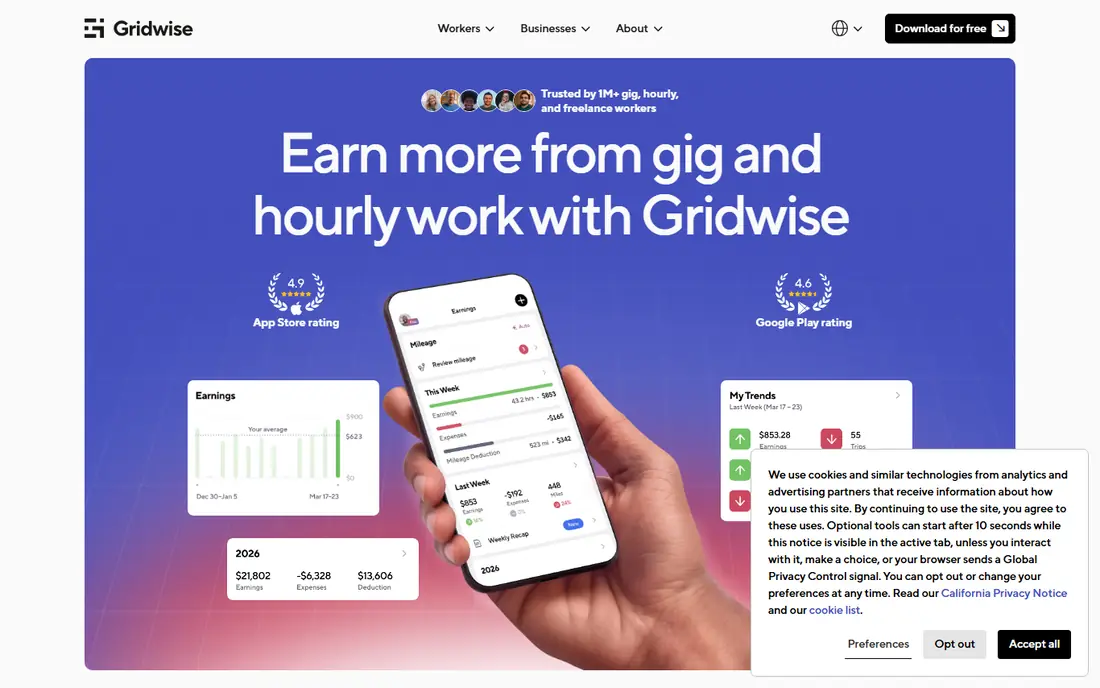
Gridwise is built for drivers who work across several gig apps. It pulls earnings together, tracks mileage automatically, and shows demand insights, airport queue information and earnings per mile and per hour breakdowns. That combined view helps you see whether a shift was worthwhile after fuel and time, not just what the platform paid.
The free tier covers core mileage, earnings and trip history, with Premium listed at $9.99 per month or $107.99 per year in vendor comparisons. Treat demand forecasts as planning help, not a guarantee, and test the app on a short shift before relying on it for a full day.
- Earnings dashboard across gig platforms
- Automatic mileage tracking
- Demand and airport queue insights
- Premium features cost extra
- Demand insights are estimates, not a promise of trips
Hurdlr focuses on the record-keeping side of driving. It tracks mileage automatically, logs expenses and income, and produces reports that help at tax time. For a driver who treats driving as self-employed work, clean mileage and expense records are often worth more than a demand forecast.
A free tier is available, with Premium listed at $7.99 per month or $59.99 per year in comparisons, and a higher Pro tier for more features. If your main pain is tax paperwork, start with Hurdlr or Stride and compare the reports each one produces from your own trips.
- Automatic mileage tracking
- Expense and income tracking
- Tax reports for self-employed drivers
- Premium plan needed for full features
- Bank sync and advanced reports sit on paid tiers
Stride is the free-first pick for mileage and tax records. Its app tracks miles and expenses at no charge, and its health insurance marketplace helps gig workers compare plans, which is a real need for drivers without employer coverage. The simplicity is a strength if you only want clean records without a subscription.
The limit is depth. Stride does not offer the same multi-platform earnings dashboard or demand insights as Gridwise, and its tracking is more basic than a paid tracker. For many part-time drivers, free and simple is the right trade. For full-time multi-app drivers, a paid tool may save more time.
- Free mileage and expense tracking
- Health insurance marketplace
- Simple reports for gig workers
- Feature set is simpler than paid trackers
- No gig platform earnings integration like Gridwise
Everlance tracks mileage automatically and turns trips and expenses into reports you can share with an accountant or use at tax time. It works for rideshare drivers and for other self-employed work, so it suits a driver who also does delivery or freelance jobs. Trip detection and categorisation reduce manual entry.
The free tier is limited, with comparisons noting only 30 automatic trips per month, which is not enough for an active driver. Premium is listed at $8 per month or $69.99 per year, with Premium Plus higher for bank syncing. Check your monthly trip count before choosing the free tier.
- Automatic mileage tracking
- Expense categorisation and reports
- Works for rideshare and other self-employed work
- Free tier limits automatic trips per month
- Premium needed for full tracking
Mystro is built for drivers who run Uber and Lyft at the same time. It helps manage app switching so you can accept a request on one platform without missing work on another, and it reduces the manual toggling that distracts from driving. That workflow matters most for drivers in busy markets who regularly switch apps.
We list the starting price as See website because Mystro presents current pricing through its own site and app store listing, and third-party figures vary. If you drive on one platform only, you will get little from it. If you multi-app daily, test it on a short shift first.
- Auto-switching between driver apps
- Helps reduce missed requests
- Designed for multi-app drivers
- Current pricing and availability need checking on the vendor site
- Value depends on how many apps you run
Solo helps gig workers find work and plan earnings across platforms, including rideshare and delivery. It brings job discovery, earnings tracking and planning tools into one app, which helps a driver who mixes rideshare with delivery or other gigs. Seeing several kinds of work in one place can fill quiet rideshare hours.
The catch is local availability. Gigs and features vary by city, so test Solo in your own market before relying on it. Use it as a planning layer on top of Uber and Lyft, not as a replacement for the platforms that actually send you trips.
- Gig job discovery and planning tools
- Earnings and expense views
- Built for gig workers across platforms
- Available gigs vary by city
- Some advanced tools need a paid plan
Para gives drivers more detail about gig offers before they accept, which helps with decisions about distance, pay and time. That extra detail is useful when an offer looks good at first glance but involves a long pickup or a low-value return trip. Drivers who compare offers carefully can avoid trips that cost more in time and fuel than they return.
Coverage varies by platform and city, and offer data depends on what each platform shares. Treat Para as a decision aid, not a source of guaranteed pay, and check whether it supports the platforms you drive for in your city.
- Shows fuller offer details for gig work
- Helps compare trips before accepting
- Driver-focused tools
- Coverage varies by platform and city
- Offer data depends on platform access
How we picked these
We compared official platform pages, driver app listings and public comparisons of mileage, expense and multi-app tools. We included the two main US driver platforms plus support apps for mileage, expenses, earnings and offer comparison, because driving well involves both finding trips and keeping business records. We did not rank pay, because pay varies by city, time, vehicle and platform policy, and we did not invent pay figures.
How to use these apps together
Start with one platform, Uber Driver or Lyft Driver, and learn its trip flow, support route and local rules. Add one mileage tracker, such as Gridwise, Hurdlr, Stride or Everlance, and run it on every shift so your tax records are complete. That pair covers trips and records, which are the two jobs every driver needs.
Then add only the tool that solves your next problem. If you multi-app, test Mystro. If you mix delivery and rideshare, test Solo or Para. If health coverage is your gap, look at Stride marketplace options. Avoid running five tracking apps at once, because duplicate tracking drains your phone and creates conflicting records. Pick one tracker, one planning tool, and the platforms themselves, and review your own weekly miles, costs and earnings to judge what is working.
Frequently asked questions
What is the best app for rideshare drivers?
Uber Driver and Lyft Driver are the platforms that provide trips, while Gridwise is a strong support pick for earnings and mileage. The best combination is a platform plus one reliable mileage tracker.
What is the best rideshare app for drivers who drive for both Uber and Lyft?
Running both Uber Driver and Lyft Driver is common, and Mystro can help manage switching between them. Test multi-app driving carefully, and follow each platform rules about accepting trips.
Do I need a mileage tracker if the platform shows earnings?
Yes, for tax and cost records. Platform earnings do not show your full miles, fuel and other costs in the same way. A tracker such as Stride, Hurdlr, Gridwise or Everlance gives you a cleaner record for tax time.
Can these apps increase my pay?
No app can promise higher pay, because rates and demand vary by city and time. Support apps can help you choose better shifts, avoid costly trips and keep better records, which can improve net results over time.
Is driving for Uber or Lyft full-time work?
It can be, but income, costs and benefits vary widely, and drivers are generally independent contractors. Check local rules, vehicle costs, insurance and tax duties before relying on driving as your main income.
Sources
See where you really rank - block by block
ProMapRanker scans Google Maps across a grid of your service area. Simple monthly plans from $19, white-label on every plan.
Start freeKeep reading
 wpforms alternatives
Best WPForms Alternatives in 2026
We compare 9 wpforms alternatives for WordPress forms, with free and paid options, current pricing notes, and honest limits for small business sites in 2026.
Read → windows task scheduler alternatives
Best Windows Task Scheduler Alternatives in 2026
Looking for Windows Task Scheduler alternatives? We compare 9 schedulers for Windows and cross-platform work, from free tools to enterprise automation.
Read → which ai video service is best
Which AI Video Service Is Best in 2026
which ai video service is best? We compare 10 legitimate AI video services on price, avatars, editing and output quality to help you pick the right tool.
Read →