 ProMapRanker
Best Review Request Software for Law Firms in 2026
Direct answer
Birdeye is my top pick for law firms because it handles multi-channel review requests, keeps client communication in one inbox, and works well for firms that want requests tied to case milestones. Pricing is quote-based, so check its pricing page. Grade.us is a strong budget-friendly option for smaller practices that want simple email and SMS request campaigns, and NiceJob fits firms that prefer a light, automated follow-up flow.
I compared these tools from vendor documentation and public sources, reading their feature pages, help centers and published guides. I did not run hands-on tests, so treat this as a fit-and-features comparison rather than a lab report. For a law firm, the deciding factors are usually timing, channel mix and how the tool handles monitoring after the request goes out.
Key takeaways
- Law firms need review requests timed to case closure, not a generic drip that lands while a matter is still open.
- Tools that send requests by SMS and email together tend to fit client communication better than email-only platforms.
- Review monitoring matters as much for firms as sending requests, because a single negative review can affect local search visibility.
- Keep requests neutral and never filter or gate clients by asking only happy ones for feedback.
- Check that the tool links to your Google Business Profile listing directly and does not route reviews through an intermediate page.
Quick comparison
| Pick | Great for | Pricing starts at | Free tier | |
|---|---|---|---|---|
 Birdeye | Requests plus a shared client inbox | See website | Not stated | Visit |
 Grade.us | Small practices that want simple campaigns | See website | Free trial | Visit |
 NiceJob | Light automated follow-up for small firms | See website | Free trial | Visit |
 Podium | Firms that want texting and reviews together | See website | Not stated | Visit |
 ReviewTrackers | Monitoring reviews across many profiles | See website | Not stated | Visit |
 Broadly | Small local service businesses | See website | Not stated | Visit |
 Whitespark | Local SEO teams managing citations and reviews | See website | No free plan | Visit |
The best review request software for law firms compared
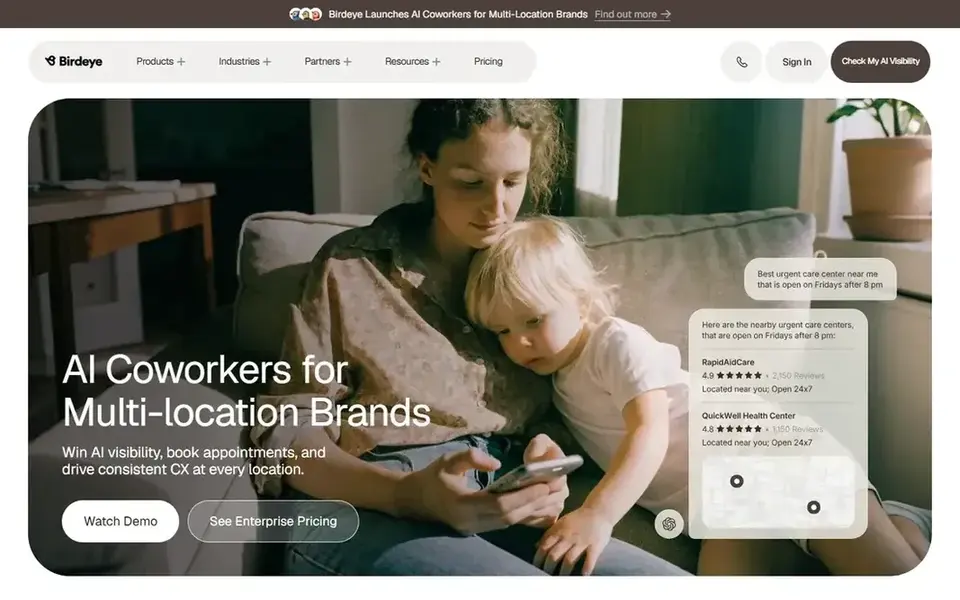
Birdeye is a reputation and customer experience platform built around sending review requests and managing the replies that follow. For a law firm with several offices or practice groups, the appeal is that requests, messages and review responses sit in one place. A managing partner can see what is going out under the firm's name without chasing individual attorneys.
For review requests, the workflow starts with a contact record, usually a client at the point a matter closes. You trigger a request by email or text, and the platform tracks whether the client opened it and whether a review appeared. Because law firms often have long matters, the ability to schedule requests from a case-management trigger rather than a fixed calendar is useful.
The limits are mostly about scale and budget. A solo attorney sending a handful of requests a month will find the setup heavier than needed, and pricing is quote-based, so you need a sales conversation before you know the cost. Skip it if you want a self-serve tool you can start using today.
- Multi-channel review requests
- unified inbox for messages and reviews
- works across multiple office locations
- Quote-based pricing
- more features than a small firm may need
Grade.us is a review management tool aimed at small and mid-sized businesses, and it suits a law practice that wants to send requests without a long implementation. You set up a campaign, add client contacts, and the tool sends requests on a schedule you choose. It also monitors incoming reviews so you see new ones in one dashboard.
For a law firm, the practical value is in the campaign builder. You can create a request that goes out after a closing letter, keep the wording neutral, and link directly to your Google Business Profile. The tool also lets you route clients to different review sites, which helps if your firm wants Google reviews as the priority but keeps a secondary profile active.
The trade-off is depth. If your firm has multiple offices and wants detailed reporting by location or practice area, Grade.us will feel basic. It is a reasonable starting point for a solo or small firm, less so for a regional practice with a marketing team.
- Straightforward email and SMS request campaigns
- review monitoring included
- simple reporting
- Automation is less advanced than larger suites
- fewer integrations
NiceJob focuses on making review requests easy to run without much setup. You import contacts, choose a template, and the platform handles the follow-up. For a small law firm, that means a paralegal or office manager can send requests after matter closure without learning a complex system.
The tool fits firms that want a steady trickle of reviews rather than a heavy reputation program. Requests can go by email or text, and the platform tracks responses. It also offers a way to display reviews on your website, which helps a firm show client feedback on practice-area pages.
The limits show up when a firm grows. Reporting by office or attorney is thin, and the automation options are narrower than what a larger suite offers. A firm with several locations and a marketing lead will likely outgrow it.
- Simple automation
- review requests by email and text
- easy setup for small teams
- Limited multi-location reporting
- fewer advanced workflow options
Podium is known for text messaging and review requests in one platform. A law firm that already communicates with clients by text will find the request flow natural: a conversation ends, and the request goes out in the same thread. That continuity matters for clients who prefer short messages over email.
For review requests, Podium lets you send a link to your Google Business Profile and track whether the client followed through. The inbox keeps client messages and review notifications together, which helps a front desk stay organized. Firms that handle a lot of intake questions by text tend to get more out of it.
The main caution is that Podium is a messaging platform first. If you only want review requests, you are paying for a broader product. Pricing is quote-based, so the sales process decides whether it fits your budget.
- Strong text messaging workflow
- review requests tied to conversations
- inbox for client messages
- Quote-based pricing
- review features are part of a broader messaging product
ReviewTrackers is built around listening to reviews rather than sending requests. It pulls reviews from Google and other sites into one dashboard, tags them by sentiment and lets you respond from a single place. For a law firm with multiple attorneys and office locations, that oversight is valuable.
Review requests are supported, but they are not the core of the product. A firm that wants a monitoring-first tool with request capability will find it useful; a firm that wants a request engine with monitoring attached may prefer a different tool. The reporting is the strength here, especially for a managing partner who wants a monthly view of client sentiment.
The limits are the reverse of Birdeye's: strong listening, lighter request automation. Pricing is quote-based, so small firms should confirm the cost before committing.
- Broad review monitoring
- sentiment analysis
- reporting across locations
- Request features are secondary
- quote-based pricing
Broadly is aimed at local service businesses and covers review requests, messaging and a simple inbox. A small law practice can use it to ask clients for reviews after a matter closes and to keep client texts in one place. The setup is lighter than an enterprise reputation suite.
For law firms, the useful part is the request flow tied to a contact record. You can send a request by text or email and see whether a review arrives. The web chat option also helps capture intake questions from your website, though it is a separate function from reviews.
The limits are integration depth and reporting. A firm with a case management system that needs a native connection may find Broadly too simple. It fits a small practice that wants one tool for basic client communication and reviews.
- Review requests by text and email
- simple inbox
- web chat option
- Fewer integrations
- less depth for multi-office firms
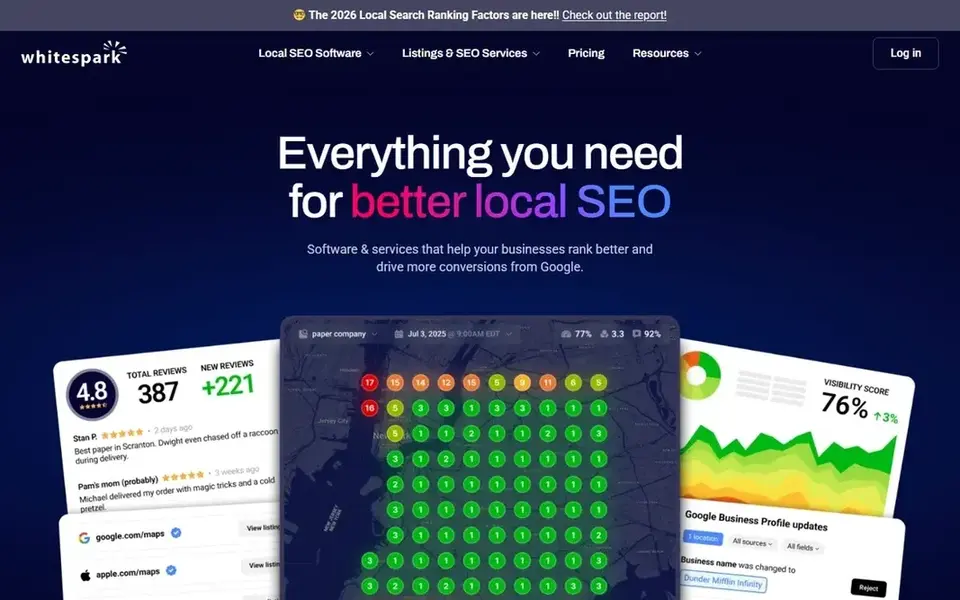
Whitespark is a local SEO toolkit rather than a client communication platform. It covers citation building, local rank tracking and review monitoring, which makes it a fit for a law firm that works with an agency or has an in-house marketer focused on local search. The review side is about seeing what is published, not running a full request campaign.
For review requests, Whitespark is best used alongside a dedicated request tool. It helps you track where reviews appear and how your Google Business Profile performs, but it will not replace a platform that sends requests and manages replies. A firm that wants one system for everything should look elsewhere.
The limits are clear: no client inbox, no texting workflow, and request automation is basic. It suits a firm with an SEO-focused team or an agency relationship, not a practice that wants a single tool for client communication.
- Strong local SEO focus
- review monitoring and citation tools
- useful for agencies
- Not a client messaging platform
- request automation is basic
How I chose
I chose these tools by reading vendor documentation, help center articles and public feature pages, then matching each one to how a law firm actually works. The key questions were whether requests can be timed to case closure, whether the tool sends by text and email, whether it monitors reviews after they appear, and whether it links directly to a Google Business Profile. I did not run hands-on tests, so the comparison reflects published capabilities and fit rather than measured performance.
I also weighed limits. A tool that is strong for a multi-office firm may be too heavy for a solo attorney, and a simple request tool may lack the reporting a managing partner wants. I left out platforms that only handle one channel or that route reviews through an intermediate page, because that adds friction for clients and can conflict with Google's guidelines. The result is a shortlist for different firm sizes rather than a single ranking.
What to check before you buy
- Confirm the tool sends requests by both text and email, since legal clients often prefer one channel over the other.
- Check that requests can be triggered at case closure or another milestone, not only on a fixed calendar.
- Make sure the review link goes directly to your Google Business Profile and does not ask clients to filter their feedback first.
- Ask whether the platform monitors and lets you respond to reviews from one dashboard, including across multiple offices.
- Review how contacts are imported and whether the tool connects to your case management or intake system.
- Confirm pricing terms in writing, because several of these tools are quote-based and the published page may not show the full cost.
Frequently asked questions
What is the best review request software for law firms?
Birdeye is my top pick for firms that want requests and client messaging in one place. Grade.us suits small practices that want simple campaigns, and NiceJob fits firms that prefer light automation. The right choice depends on firm size, number of offices and whether you need monitoring alongside requests.
Can law firms ask clients for Google reviews?
Yes, a law firm can ask clients for reviews as long as the request is neutral and does not pressure the client or offer an incentive. Do not ask only happy clients or filter feedback before it reaches Google. Follow your state bar's advertising rules as well, since some jurisdictions have specific guidance on client testimonials.
Should review requests go out by text or email?
Both have a place. Text requests tend to get faster responses from clients who already communicate that way, while email suits clients who prefer a written record. A tool that supports both lets you match the channel to the client rather than forcing one method.
How soon after a case closes should a firm send a review request?
Send it soon after the matter closes, while the experience is fresh, but after the client has received the closing communication. A short delay of a few days is common. The important part is timing the request to case closure rather than a generic monthly drip.
Do review request tools help local search rankings?
Reviews are one of many signals that can affect how a law firm appears in local search and on Google Maps. A steady flow of genuine reviews helps your profile look active, and responding to them shows engagement. No tool guarantees rankings, so treat review software as one part of a broader local SEO effort.
Sources
See where you really rank - block by block
ProMapRanker scans Google Maps across a grid of your service area. Simple monthly plans from $19, white-label on every plan.
Start freeBrowse all guides
← Best Review Request Software for Landscapers in 2026Best Review Request Software for Plumbers in 2026 →
 best review request software for contractors
Best Review Request Software for Contractors in 2026
A contractor-focused comparison of review request software for 2026, covering SMS and email invites, follow-ups, review monitoring and Google policy limits.
Read → best review request software for car dealerships
Best Review Request Software for Car Dealerships in 2026
A practical guide to review request software for car dealerships in 2026, covering how each tool fits service visits, sales handoffs and multi-rooftop teams.
Read → best review request software for auto repair shops
Best Review Request Software for Auto Repair Shops in 2026
A practical guide to the best review request software for auto repair shops in 2026, compared from vendor documentation and public sources.
Read → local seo for optometrists and eye doctors
Local SEO for Optometrists and Eye Doctors
A local SEO guide for optometrists and eye doctors: Google Business Profile setup, reviews, and eye exam booking and insurance-focused SEO.
Read → local seo ranking report metrics
Local SEO Ranking Report Metrics: A Glossary for Clients
A plain-English glossary of local SEO ranking report metrics so clients understand every number.
Read → local seo for med spas
Local SEO for Med Spas: Booking More Clients From Local Search
A med spa local SEO guide: GBP, before-after photos, reviews, and geo-grid tracking to book more clients.
Read →More in Local SEO & Google Maps · All guides A to Z by date · Latest guides