 ProMapRanker
Best Resume Parsing Software in 2026

Key takeaways
- Affinda, DaXtra and Textkernel lead for enterprise and staffing use, with broad language coverage and ATS integrations.
- RChilli and HireAbility suit teams that need taxonomy enrichment or configurable output for their own ATS.
- Hirize and Superparser offer faster, lower-cost entry points for smaller hiring teams and HR tech builders.
- Klippa suits teams that also need to parse scanned or low-quality documents.
- Always test a parser on your own resume formats, since accuracy varies more by layout than by vendor claims.
Quick comparison
| Pick | Great for | Pricing starts at | Free tier | |
|---|---|---|---|---|
 Affinda | Recruitment workflows beyond parsing | See website | No | Visit |
 DaXtra | Staffing and recruitment agencies | See website | No | Visit |
 Textkernel | Enterprise multilingual parsing | See website | No | Visit |
 RChilli | Taxonomy enrichment and ATS links | See website | No | Visit |
 HireAbility | Configurable output schemas | See website | No | Visit |
 Hirize | Fast integration with matching | See website | No | Visit |
 Superparser | Transparent small-scale pricing | $40 per month | Yes | Visit |
 Klippa | Scanned and low-quality documents | See website | No | Visit |
The best resume parsing software
We compared official feature pages, pricing pages and public reviews to find resume parsers that are live in October 2026 and that turn unstructured resumes into structured candidate data.
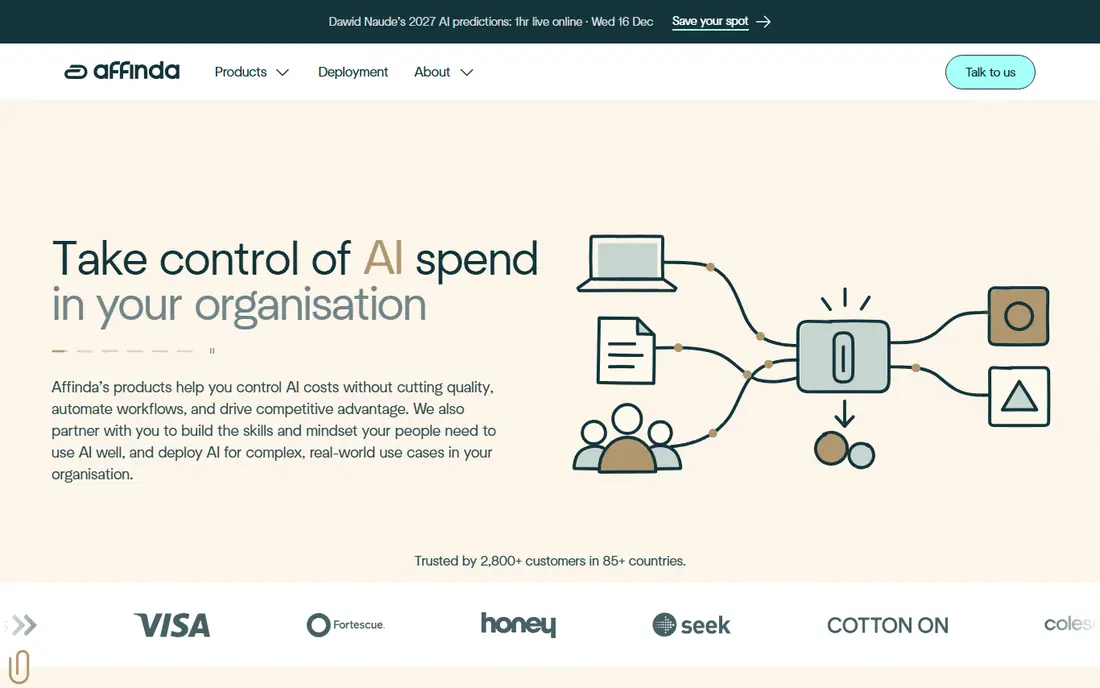
Affinda parses resumes into structured profiles with work history, education, skills and contact details, and it supports many languages and resume formats. Beyond parsing, it offers job description parsing, candidate matching, redaction and summarization, which helps recruitment teams move from intake to shortlist in one workflow. Its API also integrates with ATS, HRIS and job board systems.
The pricing detail to check is units. Affinda charges by page in pay-as-you-go plans, so a two-page resume costs more than a one-page resume. Test with your real document mix and ask for a volume quote before committing.
- Broad language coverage
- Many customizable fields
- Job description parsing and matching tools
- Pricing is volume-based and can rise with document length
- Enterprise features need a higher plan
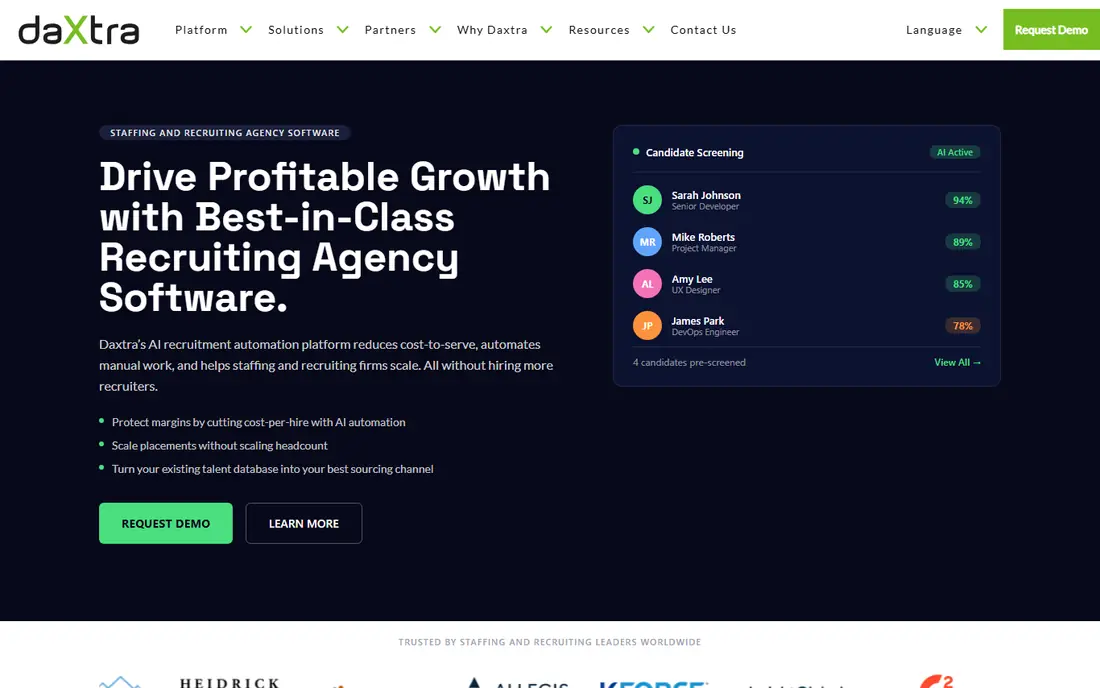
DaXtra is a long-established parser for staffing and recruitment agencies, with integrations across major ATS and CRM platforms. It extracts structured candidate data from resumes in many languages and formats, and it supports high-volume intake for agencies that process thousands of applications. That staffing focus shows in its workflow options and support for agency use cases.
The main friction is sales-led pricing and setup. Smaller teams may find the onboarding heavier than a self-serve API, but agencies with steady volume usually benefit from the depth of integration.
- Long track record in staffing
- Broad ATS integrations
- Multilingual parsing
- Pricing is sales-led
- Setup can take time for custom workflows
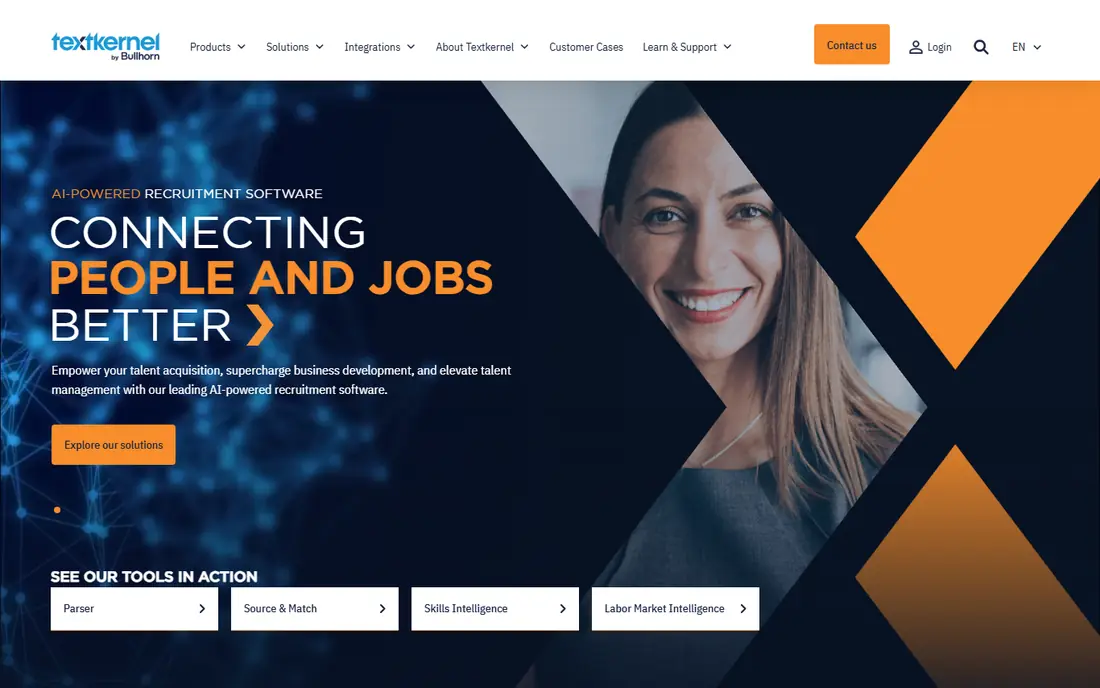
Textkernel serves enterprise recruiting and HR tech teams that need accurate parsing across languages and regions. Its parser extracts structured data and enriches it with skills and job taxonomies, which helps matching and search inside large candidate databases. It integrates with ATS platforms and HR systems used by large employers.
Textkernel is not the cheapest entry point, and pricing is quoted by sales. For teams hiring across several countries or languages, that enterprise depth is often worth the sales cycle.
- Enterprise multilingual parsing
- Strong taxonomy and skills data
- ATS and HR tech integrations
- Pricing is sales-led
- Best suited to larger hiring volumes
RChilli parses resumes and enriches the result with taxonomy data, so skills and job titles are normalized for search and matching. It integrates with ATS platforms and cloud marketplaces, including Salesforce and Oracle environments, which helps HR tech teams embed parsing without building it from scratch. Its credit-based pricing also suits teams with variable volume.
Plan credit use carefully, since credits are consumed per parse and enrichment options affect cost. Test RChilli on your own resume mix, especially for non-standard layouts and non-English documents.
- Credit-based pricing
- Taxonomy enrichment
- Broad ATS and marketplace integrations
- Credit model needs volume planning
- Advanced features vary by plan
HireAbility appeals to HR tech builders and ATS vendors that need parsing output in a specific shape. Its configurable schemas let teams define which fields to extract and how they map into their own database, rather than accepting a fixed output. Per-parse pricing also falls as volume rises, which helps growing platforms.
The trade-off is technical setup. HireAbility is built for developers and product teams, so non-technical recruiters may need engineering help to get full value. For teams building or extending an ATS, that configurability is the main reason to choose it.
- Configurable output fields
- Per-parse pricing that falls with volume
- ATS integrations
- Pricing is sales-led for larger packages
- Interface is more technical than consumer tools
Hirize combines resume parsing with candidate matching, so teams can parse a resume and see how it fits a job description in one step. Its credit-based pricing and API-first setup make it easy for smaller HR tech teams to trial and integrate quickly. That speed is useful for startups building a hiring product.
The limit is scale and proof. Hirize has a smaller enterprise footprint than the leaders here, so large teams should run a head-to-head accuracy test on their own resumes before switching. For smaller teams, the combined parsing and matching is a practical advantage.
- Credit-based pricing
- Matching included
- Fast API setup
- Smaller vendor footprint than DaXtra or Textkernel
- Matching quality varies by role
Superparser is the clearest small-scale option here, with published plans and free monthly credits for testing. It parses resumes into structured data through a simple API, which suits indie HR tools, small agencies and teams that only need a few hundred parses a month. Transparent pricing removes the sales call that enterprise parsers require.
The trade-off is depth. Superparser does not match the taxonomy, language coverage or enterprise integrations of Affinda, DaXtra or Textkernel. For low-volume, straightforward parsing, that trade is often fine.
- Published pricing and free credits
- Simple API
- Suitable for small hiring volumes
- Smaller feature set than enterprise parsers
- Taxonomy depth is lighter
Klippa is a document extraction platform that also parses resumes, with a strength in scanned and low-quality documents that trip up simpler parsers. Teams that receive photos, scans or poorly formatted resumes may get cleaner results here than from a parser tuned only for clean PDFs. It also extracts data from other document types, which helps teams with mixed intake.
Klippa is not a pure resume parser, so its resume-specific taxonomy and matching features are narrower than RChilli or Textkernel. Use it where document quality is the main problem, and pair it with an ATS for matching and workflow.
- Handles scanned and low-quality documents
- Pay-as-you-go and subscription options
- Document extraction beyond resumes
- Pricing is quoted by volume
- Resume-specific features are narrower than specialist parsers
How we picked these
We compared official feature pages, pricing pages and public reviews for resume parsers that are live in October 2026. We kept only tools that extract structured candidate data from resumes, and we mixed enterprise parsers with lower-cost APIs so different volumes can compare fairly. Where vendors do not publish pricing, we wrote See website rather than repeating third-party estimates as fact.
What to check before you buy
Start with your own resumes. Build a test set that includes clean PDFs, Word files, scanned pages, non-English resumes and unusual layouts, then run the same set through each shortlisted parser. Score accuracy on names, work history dates, skills and education, not just on whether a parse succeeds.
Then check units and integrations. Some vendors charge per page, some per parse and some per credit, so the cheapest headline price may not be cheapest for your document mix. Confirm ATS integration, data handling and retention terms, and how the parser handles personal data, since resumes contain sensitive information. Finally, confirm output format: a parser that maps cleanly into your ATS will save more time than one with slightly higher raw accuracy but awkward output.
Data handling also deserves a direct question during procurement. Ask how long resumes are stored, whether parsed data is used to train shared models, and how a candidate can request deletion. Clear answers on those points matter as much as raw accuracy, since hiring data is sensitive and retention rules vary by employer and jurisdiction.
Also check whether the parser preserves original documents alongside structured output. Recruiters often need to open the original resume during interviews, and a system that only stores parsed fields can slow that step. A clean link back to the source file keeps both speed and context.
Frequently asked questions
What is the top rated resume parsing software?
Affinda, DaXtra and Textkernel are the most established enterprise options, while RChilli and HireAbility suit ATS builders. The best pick depends on volume, languages and whether you need matching as well as parsing.
How much does resume parsing software cost?
Pricing varies by unit: some vendors charge per page, some per parse and some per credit. Superparser publishes a $40 per month starter plan, while enterprise parsers quote by volume and sales call.
Does resume parsing work on scanned resumes?
It depends on the parser and scan quality. Klippa and enterprise parsers with OCR handle scans better, but accuracy still falls on poor scans, so test with your own documents.
Can a resume parser integrate with my ATS?
Yes, most tools here offer APIs and ATS integrations. Confirm your specific ATS, field mapping and data retention terms during a trial, since integration depth varies.
Is resume parsing accurate enough to replace manual review?
No, parsing should speed up intake and search, not replace human review. Recruiters should still check parsed data before shortlisting, especially for dates, titles and skills.
Sources
See where you really rank - block by block
ProMapRanker scans Google Maps across a grid of your service area. Simple monthly plans from $19, white-label on every plan.
Start freeKeep reading
 wpforms alternatives
Best WPForms Alternatives in 2026
We compare 9 wpforms alternatives for WordPress forms, with free and paid options, current pricing notes, and honest limits for small business sites in 2026.
Read → windows task scheduler alternatives
Best Windows Task Scheduler Alternatives in 2026
Looking for Windows Task Scheduler alternatives? We compare 9 schedulers for Windows and cross-platform work, from free tools to enterprise automation.
Read → which ai video service is best
Which AI Video Service Is Best in 2026
which ai video service is best? We compare 10 legitimate AI video services on price, avatars, editing and output quality to help you pick the right tool.
Read →