 ProMapRanker
Best Reputation Management Software for Bagel Shops in 2026
Direct answer
Grade.us is my top pick for bagel shops because it focuses on getting reviews and managing them in one place, which fits a counter-service business with a steady stream of regulars. It has no free plan stated, so check its pricing page before you commit. Trustmary is worth a look if you want to show reviews on your own site, and Synup fits shops that also need their Google Business Profile and directory listings kept tidy.
I put this comparison together from vendor documentation and public sources, not from hands-on testing. I looked at what each tool says it does, how it fits a small food business, and where the limits show up in the docs. A bagel shop has specific needs: fast review requests, clean listings, and a way to see local rankings. The tools below cover those needs in different ways.
Key takeaways
- A bagel shop lives on repeat customers and quick searches like "bagel near me", so review volume and reply speed matter more than a large feature list.
- Review request tools that work over email and SMS fit counter staff who cannot ask every customer in person.
- Google Business Profile accuracy, including hours, menu links and photos, drives both calls and walk-ins.
- Local rank tracking shows whether you appear in the map pack for neighbourhood searches, not just whether you have reviews.
- Keep every request and reply inside Google's review policies: no incentives for positive reviews and no filtering out unhappy customers.
Quick comparison
| Pick | Great for | Pricing starts at | Free tier | |
|---|---|---|---|---|
 Grade.us | Review requests and replies | See website | Not stated | Visit |
 Trustmary | Displaying reviews on your site | See website | Free plan | Visit |
 Synup | Listings plus review monitoring | See website | Not stated | Visit |
 Localo | Google Business Profile management | See website | Free trial | Visit |
 SE Ranking | Local rank tracking | See website | Free trial | Visit |
 CallTrackingMetrics | Tracking calls from customers | See website | Free trial | Visit |
 Places Scout | Grid-based local rank checks | See website | Free trial | Visit |
The best reputation management software for bagel shops compared
Grade.us is a review management tool built around asking customers for reviews and handling the replies. For a bagel shop, that maps well to the daily rhythm: someone buys a dozen, pays at the counter, and later gets a short request to leave a review. The tool is aimed at small and mid-sized local businesses rather than large multi-location chains, which suits a single shop or a small group.
In practice, you would set up a request that goes out after a purchase, point it at your Google Business Profile listing, and route replies into one dashboard. That means the owner or manager can answer a weekend review on Monday without hunting through email. Monitoring covers the main review sites, so a mention on Yelp or Facebook does not slip past. For a shop where the owner is often on the floor, having one place to see and answer reviews saves time.
The limit is scope. Grade.us is about reviews, not about fixing your hours across twenty directories or tracking map-pack positions. If you want one tool for listings, reviews and rank tracking together, you will need to pair it with something else or pick a broader platform. Shops that only want reviews handled well can stop here.
- Review request campaigns by email and SMS
- a single inbox for replies
- review monitoring across major sites
- No free plan stated
- fewer listing-management features than full local SEO suites
Trustmary is built around collecting reviews and putting them in front of people who visit your website. A bagel shop with an online menu or catering page can use it to show real customer comments next to the order form, which helps someone deciding whether to book a platter for the office. It pulls from review sources and turns them into display widgets.
For reputation work, the useful part is the loop: collect a review, then show it where it counts. A shop that takes catering orders benefits because a stranger weighing a large order sees proof that other people liked the bagels and the service. The free plan lets a small shop try the display side before paying.
The limits are on the management side. Trustmary is not the tool for cleaning up directory listings or tracking where you rank in Google Maps. If your main problem is that your website does not show any reviews, it fits. If your main problem is unanswered reviews and wrong hours, look at the review and listing tools instead.
- Collects reviews and shows them as widgets on your website
- supports several review sources
- a free plan to start
- Review display is the core strength, so listing management is limited
- widget setup needs some web access
Synup handles business listings and reviews together, which matters for a bagel shop that opens early and closes early. If your hours are wrong on a directory, someone shows up at the wrong time and leaves a bad review. Synup keeps the core details consistent across directories and gives you a place to watch reviews.
The workflow suits an owner who has one shop now and might add a second location. You update hours, holiday closures and menu links once, and the listings follow. Reviews come into the same dashboard, so replies do not require a separate login. For a shop that also runs catering, consistent listings help people find the right phone number.
The trade-off is setup effort. Listing tools take time to connect and verify, and a single-location shop may find that work heavier than the payoff. Shops that mostly need review requests should start with a review-focused tool and add listings later.
- Manages business listings across many directories
- monitors and supports replies to reviews
- fits multi-location shops
- No free plan stated
- more setup than a single review tool
Localo is a local marketing tool centred on the Google Business Profile. For a bagel shop, the profile is often the first thing a customer sees: photos of the case, hours, the menu link, and the reviews. Localo helps you work on that profile and check where you show up for local searches.
The practical use is keeping the profile active. A shop can post updates about a new flavour, check that the hours are right before a holiday, and see whether it appears for searches around the neighbourhood. That routine matters more for a food business than a long list of advanced features.
The limits are depth. Localo is not a full review management platform, and its listing reach is narrower than the large directories tools. If your reviews are already handled and you want profile work plus local rank checks, it is a reasonable fit. If you need review requests at scale, pair it with a review tool.
- Focused on Google Business Profile tasks
- local rank checks
- simple interface for small businesses
- Narrower than full SEO suites
- review features are basic compared with dedicated review tools
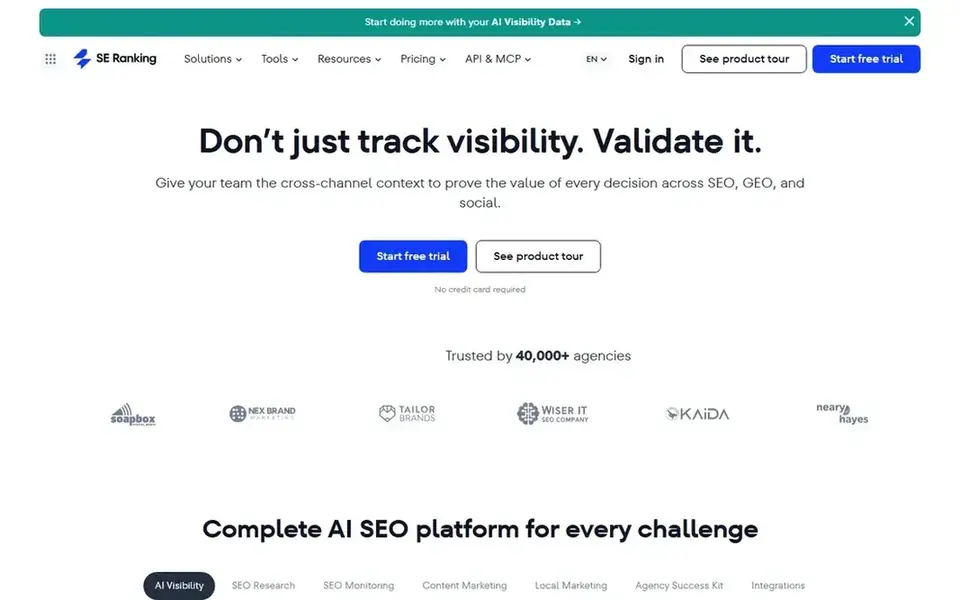
SE Ranking is an SEO platform with local rank tracking built in. For a bagel shop, the value is seeing whether you appear in the map results when someone nearby searches for bagels or breakfast. That tells you if profile work and reviews are moving the needle.
The workflow is straightforward: set the searches you care about, set the area around the shop, and check the reports over time. A shop competing with two other bagel places on the same street can see which searches it wins and which it loses. The wider platform also covers site audit and keyword research if you run a website with a menu and catering pages.
The limit is that reviews are not the centre of the product. You get rank data and SEO tools, not a review request engine. Shops that want to understand their map visibility alongside other SEO work will get value; shops that only want reviews answered should look elsewhere.
- Tracks local rankings
- includes site audit and keyword tools
- reports are easy to read
- Local SEO is one module in a larger platform
- review management is not the core focus
CallTrackingMetrics tracks phone calls so you know where they come from. A bagel shop takes catering calls and large orders by phone, so knowing whether a call came from the Google profile, a directory or an ad helps you spend time and money in the right place.
The reputation angle is indirect but real. When a customer calls to ask about a catering order and the call is handled well, that often turns into a review. Tracking those calls lets you see which channels produce the conversations that lead to reviews and repeat orders. It also helps you spot missed calls, which are a common source of quiet complaints.
The limits are clear: this is call tracking, not review management. It will not request reviews or reply to them. A shop with a heavy phone order business can use it alongside a review tool, but it should not be the only reputation tool in the stack.
- Tracks which marketing drives phone calls
- call recording and routing
- works with ads and listings
- Not a review management tool
- call tracking adds a number customers must dial
Places Scout is a local rank tracking tool that shows where a business appears across a grid of points around its location. For a bagel shop, that answers a specific question: do people two blocks away see you in the map results, or only people standing outside the door?
The grid view is useful for a food business because customers search from nearby. If you rank well at the shop but poorly a few streets over, that points to profile and review work in those areas. Competitor tracking shows which nearby shops appear where, which helps you judge whether a new review push is working.
The limits are practical. Places Scout is a desktop tool with more settings than a small shop needs, and it does not handle review requests or replies. It suits an owner or marketer who wants detailed local rank data and will use it. A shop that just wants reviews answered should skip it.
- Grid-based rank tracking around a location
- competitor tracking
- detailed local reports
- Desktop-oriented with a steeper learning curve
- not a review request tool
How I chose
I compared these tools using vendor documentation and public sources, and I did not run hands-on tests. That means I looked at what each vendor says the product does, which features are documented, and how those features map to the daily work of a bagel shop: review requests after a counter sale, replies to weekend reviews, accurate hours and listings, and a way to see local map visibility. I did not rely on review scores or user counts, because those change and are hard to verify.
I also weighed the limits. A tool that does reviews well but ignores listings is fine for a single shop that only needs reviews, but not for an owner planning a second location. I kept the list to products that are currently operating and have a real official site. Where a vendor does not state a free plan clearly, I said so rather than guessing. The goal is a short list you can check against your own shop's needs, not a ranking of everything on the market.
What to check before you buy
- Confirm the tool can request reviews by email and SMS, since counter staff cannot always ask in person.
- Check that replies to Google reviews can be handled from one inbox, including on busy weekend mornings.
- Make sure the tool follows Google's review policies: no incentives for positive reviews and no filtering out unhappy customers.
- See whether business hours, holiday closures and menu links can be updated across directories from one place.
- Ask whether local rank tracking covers the area around your shop, not just the city as a whole.
- Check how the tool handles multiple locations if you plan to open a second shop, and whether pricing changes with locations.
Frequently asked questions
Do bagel shops really need reputation management software?
A bagel shop depends on nearby customers who search for breakfast and bagels, and reviews and profile details shape whether they choose you. Software helps by sending review requests after a sale, keeping replies in one place, and catching wrong hours on directories. A shop with steady regulars can still benefit, because new customers check reviews before a first visit.
What is the difference between review management and listing management?
Review management covers asking for reviews, monitoring them across sites, and replying. Listing management covers the business name, address, phone, hours and links across directories. Many tools do one well and the other lightly. A bagel shop usually needs reviews first, then listings, especially if it has more than one location or takes catering orders.
Can I ask customers for reviews without breaking Google's rules?
Yes, if you ask everyone the same way and do not offer anything in return for a positive review. Do not filter out unhappy customers or send requests only to people you expect to praise you. Replying to negative reviews politely is allowed and useful. Tools that promise review gating or incentives should be avoided, because those practices go against Google's guidelines.
How often should a bagel shop check its reviews?
Check at least a few times a week, and reply to new reviews within a couple of days. A weekend rush can produce several reviews at once, so a Monday review session works for many shops. Software that puts all reviews in one inbox makes this quick. Faster replies show other customers that the shop pays attention.
Is local rank tracking useful for a single-location bagel shop?
It can be, because map results vary by location. A shop may appear for searches a block away but not several streets over. Grid-based tracking shows that difference, which helps you judge whether profile updates and review work are helping. If you only want reviews handled, rank tracking is optional and can wait.
Sources
See where you really rank - block by block
ProMapRanker scans Google Maps across a grid of your service area. Simple monthly plans from $19, white-label on every plan.
Start freeBrowse all guides
← Best Local SEO Tools for Sealcoating Companies in 2026Best Reputation Management Software for Bike Rental Shops in 2026 →
 best local seo tools for juice bars
Best Local SEO Tools for Juice Bars in 2026
A practical guide to the best local SEO tools for juice bars in 2026, covering listings, reviews, rank tracking and Google Business Profile management.
Read → best local seo tools for horseback riding stables
Best Local SEO Tools for Horseback Riding Stables in 2026
A practical guide to the best local SEO tools for horseback riding stables in 2026, covering listings, reviews, rank tracking and Google Business Profile.
Read → best local seo tools for home organizers
Best Local SEO Tools for Home Organizers in 2026
A practical guide to the best local SEO tools for home organizers in 2026, covering GBP management, reviews, rank tracking and citations.
Read → why is my google maps ranking dropping
Why Is My Google Maps Ranking Dropping? Diagnosing Sudden Drops
Lost Maps rankings overnight? Learn the most common reasons rankings drop and a step-by-step diagnostic checklist to recover.
Read → google map pack ranking factors
Google Map Pack Ranking Factors: What Actually Moves the Needle
The real Google Map Pack ranking factors and how to prioritize them for faster local wins.
Read → geo grid heatmap seo
Geo-Grid Heatmap SEO: How to Read Your Local Ranking Heatmap
Learn how to read a geo-grid heatmap: what green, orange, and red mean and where to focus your SEO.
Read →More in Local SEO & Google Maps · All guides A to Z by date · Latest guides