 ProMapRanker
Best Local SEO Tools for Home Organizers in 2026
Direct answer
Localo is my top pick for home organizers because it puts Google Business Profile management, local rank checks and review requests in one place, which suits a one-person organizing business that serves a single metro area. It has a free trial, so you can test the workflow before paying. Synup fits organizers who manage listings across several service areas, and Grade.us fits those who want review requests to run on autopilot after every closet or garage project.
I compared these tools from vendor documentation and public sources rather than hands-on tests. I looked at what each one does for a service business that works inside homes, serves a defined set of towns, and depends on the map pack for leads. The order reflects fit for that workflow, not overall product size.
Key takeaways
- Home organizers rank on a small set of suburb-level searches, so a tool that tracks grid-level map positions matters more than a broad national rank tracker.
- Google Business Profile work is the core of local SEO for this trade, because most clients find an organizer through the map pack rather than the organic list.
- Review requests sent after a completed project convert well, since organizing clients are usually happy and willing to describe the before-and-after.
- Listing consistency across directories matters when you serve several towns, because a wrong phone number on one directory can send calls to a competitor.
- No tool replaces photos of finished pantries and garages, service-area pages for each town, and a profile that follows Google's guidelines.
Quick comparison
| Pick | Great for | Pricing starts at | Free tier | |
|---|---|---|---|---|
 Localo | GBP management and local rank checks | See website | Free trial | Visit |
 Synup | Multi-area listing management | See website | Not stated | Visit |
 Grade.us | Review requests after each project | See website | Free trial | Visit |
 SE Ranking | Local rank tracking by grid | See website | Free trial | Visit |
 CallTrackingMetrics | Tracking calls from map and ads | See website | Free trial | Visit |
 Places Scout | Deep local rank reports | See website | Not stated | Visit |
 BrightLocal | Citation building and local audits | See website | Free trial | Visit |
The best local SEO tools for home organizers compared
Localo is a local SEO platform built around Google Business Profile work. For a home organizer, that focus matches the job: your profile is the storefront, and the posts, photos, categories and service areas on it decide whether you show up when someone searches "closet organizer near me". The dashboard keeps profile tasks and local rank data together instead of spreading them across three subscriptions.
In daily use, you would schedule posts about finished projects, watch how your profile ranks across a grid of points around your service area, and send review requests after a job wraps. The grid view is the useful part for an organizer working one side of a city, because it shows whether you appear in the suburbs you actually drive to, not just at a single central point.
The limits are practical. If you only serve one town and post to your profile by hand, the extra modules may be more than you need. Organizers with a large multi-city territory or a team will get more from it than a solo operator with a tight radius.
- Google Business Profile posting and monitoring in one dashboard
- grid-based local rank tracking
- review request tools built in
- Some modules overlap for a solo organizer
- less useful if you already run a full SEO suite
Synup is a listings and local presence platform. It fits a home organizing business that has grown into several branches or covers a wide region and needs the same name, address and phone details to appear correctly everywhere. When you serve five towns, a wrong phone number on a directory listing costs you calls from the town you just started advertising in.
The workflow is straightforward: you connect your business details, the platform pushes them to directories, and you monitor for changes and duplicates. Review monitoring sits alongside, so you can see what clients say on sites beyond Google. For an organizer who has added a second crew and a second service area, that central control saves a lot of manual checking.
Skip it if you run a one-person business in one town. The value comes from volume and multiple locations, and a smaller organizer will pay for capacity they never use.
- Manages listings across many directories from one place
- supports multiple locations or service areas
- review monitoring alongside listings
- Priced and structured for businesses with more locations
- overkill for a single-town organizer
Grade.us is a review management tool. For home organizers it fits a specific moment: the client has just walked into a finished pantry, is delighted, and will happily leave a review if asked at the right time. The tool automates that ask by email or text and follows up with people who do not respond the first time.
The practical workflow is to add each completed project as a contact, trigger a request a day or two later, and route happy clients to your Google profile. Over a season of garage and closet jobs, that builds a steady stream of reviews, which is one of the strongest signals for map pack placement in a local trade.
Its limit is scope. It does not post to your Google Business Profile, track rankings or fix citations. If reviews are your main gap, it is a focused fix; if you need a full local presence tool, pair it with something else.
- Automated review request campaigns
- supports multiple review sites
- simple client follow-up flow
- Review-focused, so it does not manage your profile
- needs a clean client list to work well
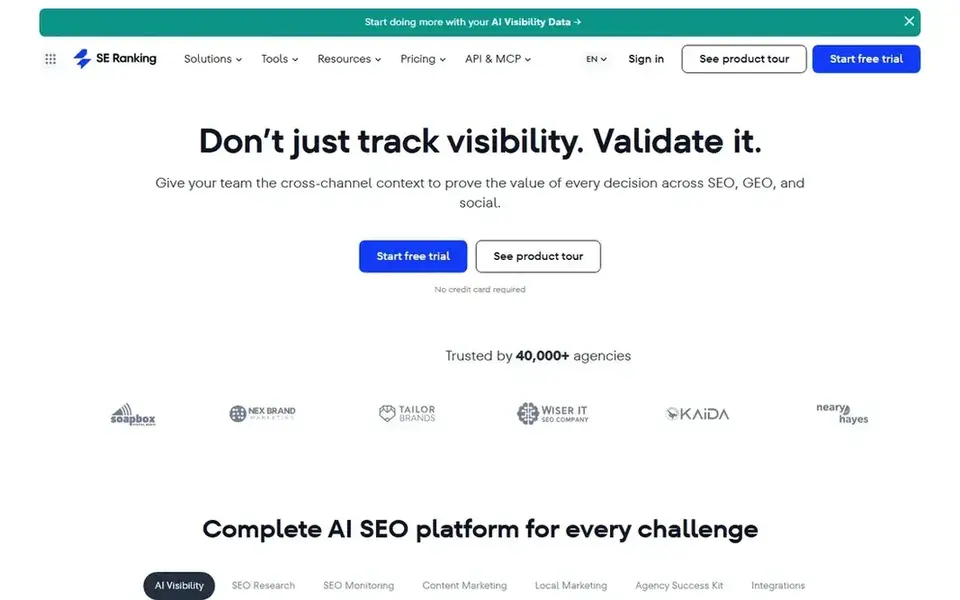
SE Ranking is an SEO platform with a local rank tracking module. It suits a home organizer who wants to know exactly where the business appears on the map for searches like "home organizer [town]" across a set of points, and how that changes week to week. The grid view shows the pattern, so you can see whether you are strong near your base and weak on the far side of the metro.
The workflow is to set your keyword list around the services you actually sell, such as pantry organizing, garage organizing and moving unpacking, then track them by location. Competitor tracking shows which local organizers hold the top spots and where they are weak. Reports are clean enough to share if you work with a marketing helper.
The downside is that you are buying a full SEO suite for a local job. If you only want map positions, a dedicated local tracker may be simpler. Organizers who also run a blog or service-area pages will use more of it.
- Local rank tracking with map grid views
- competitor tracking
- reporting that suits client-facing agencies
- Local features sit inside a larger SEO suite
- more setup than a single-purpose tracker
CallTrackingMetrics is a call tracking platform. Home organizers get a lot of first contact by phone, often from the map pack, and this tool shows which calls came from the profile, which from a paid ad and which from a directory listing. That answers a question most organizers guess at: where the next client actually came from.
In practice you assign tracking numbers to your profile and campaigns, route calls to your mobile, and review recordings or summaries later. If you run ads in one town and rely on the map pack in another, the split becomes clear within a few weeks, and you can shift effort toward what works.
The limits are operational. You need to decide how many numbers to use and keep them consistent with your listings, and some organizers find the extra step annoying. Skip it if you rarely take calls and mostly book through a form.
- Tracks calls from Google Business Profile and ads
- call recording and routing
- ties calls to marketing source
- Needs a deliberate number setup
- call tracking adds a step to your phone workflow
Places Scout is a desktop local SEO tool aimed at agencies and consultants. It fits a home organizer who works with a marketing consultant, or an organizer who has turned into a small agency serving other home service businesses. The rank grid reports are detailed and let you compare your map positions against competitors point by point.
The workflow is to run a scan for your service keywords across a radius, export the report, and use it to decide where to push citations, reviews or profile posts. Because it runs on the desktop, it suits someone who sits down for a monthly review rather than checking daily.
Its limit is weight. It is not a quick daily dashboard, and a solo organizer who wants a simple check on one town will find it heavy. It pays off for consultants and multi-location operations.
- Detailed local rank tracking across grid points
- competitor and citation analysis
- desktop reporting for agencies
- Desktop software with a learning curve
- more analysis than a solo organizer usually needs
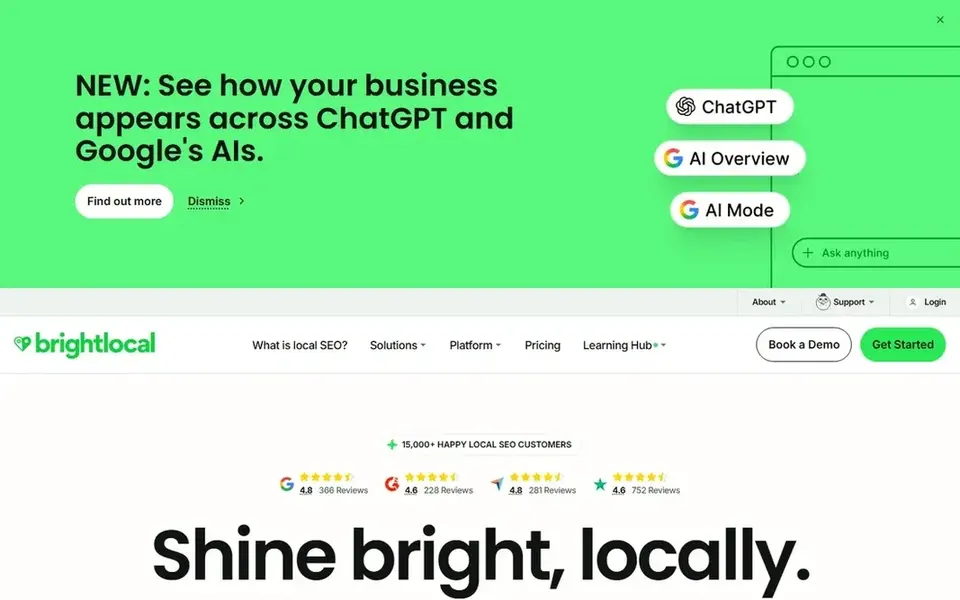
BrightLocal is a local SEO platform best known for citation building and local audits. For a home organizer, it answers a specific need: making sure your business details are correct on the directories that matter, and finding duplicates or wrong numbers that split your presence. That matters more once you serve several towns and your address or phone has changed.
The workflow is to run an audit, submit or fix listings, and repeat the check a few times a year. The review and rank tools sit in the same account, so you can see the effect of cleanup on visibility. It is a sensible starting point for an organizer who has never done citation work.
The limit is that citations are a foundation, not the whole job. Photos, profile posts, reviews and service pages still do the heavy lifting. Organizers who expect citations alone to move rankings will be disappointed.
- Citation building and cleanup
- local audit reports
- review and rank tools in one place
- Citation work is one part of local SEO
- needs ongoing attention to stay clean
How I chose
I built this list from vendor documentation, public product pages and published feature descriptions, not from hands-on testing. I did not run trials on every tool or measure results for any business. The comparison is about fit: which tool matches how a home organizer actually gets clients, which is mostly through the map pack, phone calls and word of mouth in a defined set of towns.
I weighed three things. First, whether the tool handles Google Business Profile work, since that is where local searches for organizers resolve. Second, whether it supports the review and citation basics that keep a small service business visible. Third, whether the pricing structure and complexity suit a one-person or small-team operation rather than a national brand. Tools built for large multi-location chains are included only where they make sense for an organizer who has grown.
I also noted limits honestly. A review tool will not fix your rankings, a rank tracker will not write your profile posts, and a citation service will not photograph a finished pantry. The list is meant to help you pick one or two tools that close your biggest gap, not to sell a full stack to a solo organizer.
What to check before you buy
- Confirm the tool supports Google Business Profile management, including posts, photos, categories and service areas, since that is where most organizer leads start.
- Check whether local rank tracking uses a grid around your service area rather than a single city-center point, because organizers usually work across several towns.
- Ask how review requests are sent and whether the tool follows Google's review policies, including no gating and no incentives.
- Look at citation coverage for the directories that matter in home services, and whether duplicate cleanup is included.
- Match the plan size to your real footprint: one town, several towns, or multiple crews with separate profiles.
- Read the cancellation and export terms so you can leave with your client list, review history and reports if you switch tools.
Frequently asked questions
Do home organizers really need local SEO tools?
Most organizers get clients from the map pack and from referrals, so profile management, reviews and citation accuracy matter. A tool helps you keep those consistent without checking each directory by hand. If you serve one small town and post to your profile weekly, a single tool may be enough.
Which tool is best for getting more Google reviews?
Grade.us is the most focused option here because review requests and follow-ups are its main job. Localo and BrightLocal also include review features alongside other local work. Whichever you choose, ask every client after a finished project and never offer anything in exchange for a review.
Can these tools help me rank in several towns?
Yes, but the tool is only half of it. You need a service-area page for each town, a profile that reflects where you actually work, and citations that match. Synup and BrightLocal help with listing consistency, while SE Ranking and Places Scout show where you appear across a grid.
Do I need call tracking as a home organizer?
Only if you want to know which calls come from the map pack versus ads or directories. CallTrackingMetrics answers that question, but it adds a number setup step. If you mostly book through a contact form or referrals, you can skip it and put the budget into reviews and profile work.
Is a free plan enough to start?
Free trials let you test the workflow, but most of these tools expect a paid plan for ongoing use. Start with one tool that fixes your biggest gap, run it for a few months, and add another only when you have a clear reason. Avoid stacking subscriptions you will not open.
Sources
See where you really rank - block by block
ProMapRanker scans Google Maps across a grid of your service area. Simple monthly plans from $19, white-label on every plan.
Start freeBrowse all guides
← Best Local SEO Tools for Cheer Gyms in 2026Best Local SEO Tools for Horseback Riding Stables in 2026 →
 best local seo tools for appliance stores
Best Local SEO Tools for Appliance Stores in 2026
A practical guide to the best local SEO tools for appliance stores in 2026, covering listings, reviews, rank tracking and GBP management.
Read → best local seo tools for antique stores
Best Local SEO Tools for Antique Stores in 2026
A practical guide to the best local SEO tools for antique stores in 2026, covering listings, reviews, rank tracking and Google Business Profile work.
Read → best local seo software for smart home installers
Best Local SEO Software for Smart Home Installers in 2026
A practical guide to the best local SEO software for smart home installers, covering listings, reviews, rank tracking and GBP management tools.
Read → local seo for hearing aid clinics
Local SEO for Hearing Aid Clinics
A local SEO guide for hearing aid clinics: Google Business Profile setup, reviews, and insurance and trust-focused local SEO.
Read → local seo for painting contractors
Local SEO for Painting Contractors
A local SEO guide for painting contractors: GBP photos, service areas, and ranking against bigger competitors.
Read → google maps pin ranking
Google Maps Pin Ranking: Why Your Pin Sits Where It Does
Understand what determines your pin's position on Google Maps and how it shifts based on where the searcher stands.
Read →More in Local SEO & Google Maps · All guides A to Z by date · Latest guides