 ProMapRanker
Best Local SEO Software for Smart Home Installers in 2026

Listing management for service-area businesses · Pricing starts at: See website
Direct answer
Advice Local is my top pick for smart home installers because it handles listing management across the directories that matter for a service-area business, and pricing is quote-based, so you check its pricing page for a custom quote. If reviews are your weak spot, look at GatherUp for review requests. If you want to see how you rank in the local map pack, SE Ranking covers rank tracking well.
I put this comparison together from vendor documentation and public sources rather than hands-on testing. My aim was to match each tool to how a smart home installer actually works: a small service area, jobs booked by phone or form, and a reputation built on finished installations. I looked at what each tool does, where it stops, and whether it fits a one or two-van business as well as a growing team.
Key takeaways
- Smart home installers compete in a small local radius, so map pack visibility and accurate listings matter more than broad content SEO.
- Listing management tools fix inconsistent name, address and phone data across directories, which is a common problem for installers who move or add service areas.
- Review request software helps you collect honest feedback from customers after an installation, which supports your Google Business Profile.
- Local rank tracking shows whether you appear for searches like "smart home installer near me" in the specific towns you serve.
- No single tool covers everything, so most installers pair one core tool with a lighter second option.
Quick comparison
| Pick | Great for | Pricing starts at | Free tier | |
|---|---|---|---|---|
| Advice Local | Listing management for service-area businesses | See website | Not stated | Visit |
 GatherUp | Review requests after installations | See website | Free trial | Visit |
 SE Ranking | Local rank tracking in the map pack | See website | Free trial | Visit |
 Localo | Google Business Profile management | See website | Free trial | Visit |
 Signpost | Review and marketing automation for local services | See website | No free plan | Visit |
 Synup | Multi-location listing and reputation management | See website | Not stated | Visit |
 CallTrackingMetrics | Tracking calls from install enquiries | See website | Free trial | Visit |
The best local SEO software for smart home installers compared
Advice Local is a listing management platform. It is aimed at businesses that need their name, address, phone number and hours to match everywhere customers look, from Google to the smaller directories that still feed local search. For a smart home installer who covers several towns and maybe works from a home base, that consistency is the foundation everything else sits on.
The workflow suits installers because you can set your service areas and business categories once and push corrections out rather than editing each directory by hand. When you add a new town to your coverage or change your phone number, you update it in one place. That reduces the mismatched details that confuse both customers and search engines.
The limit is that Advice Local is a listings tool first. If your main problem is collecting reviews or tracking rankings, you will want a second tool. It also suits businesses that are comfortable with a quote-based sales process rather than a self-serve signup.
- Manages listings across many directories
- built for local and multi-location businesses
- supports service-area business setups
- Quote-based pricing needs a sales conversation
- not a review-first tool
GatherUp is a customer feedback and review management tool. It fits smart home installers well because the natural moment to ask for a review is right after you finish a job and the customer is happy with the new setup. The tool sends that request by email or text and collects the responses in one place.
In practice you would connect it to your job records or add customers manually, then trigger a request a day or two after installation. It also monitors reviews that mention your business so you can respond. This supports your Google Business Profile without any of the practices Google discourages, like offering incentives for positive reviews only.
The downside is that GatherUp does nothing for your directory listings or map rankings directly. It also depends on you having a reliable list of finished jobs. If you install a handful of systems a week, that is manageable; if you are just starting out, you may wait until you have steady volume.
- Automates review request emails and texts
- brings feedback into one dashboard
- supports review monitoring
- Focused on reviews, not listings
- needs a steady flow of completed jobs to be useful
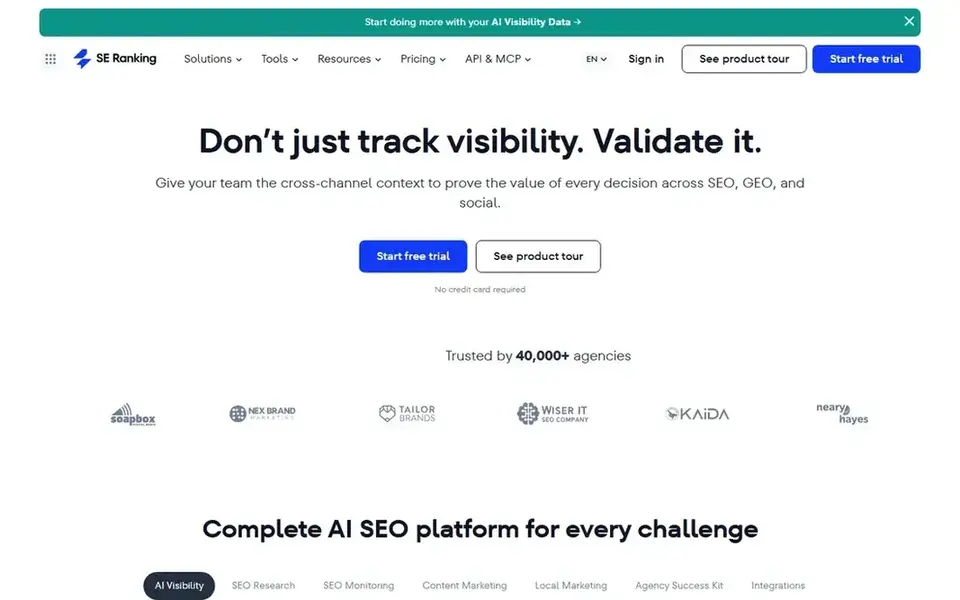
SE Ranking is an SEO platform with a local rank tracking component. It lets you check where your business appears for searches in specific locations, which matters for an installer who wants to know whether they show up in the map pack for a town they cover but do not have an office in.
For a smart home installer, the useful part is setting up keywords like "smart home installer" plus each town or suburb, then watching position over time. You can see whether listing fixes or review growth move the needle. The reporting is clear enough to share with a marketing partner.
The downside is that SE Ranking is a full SEO suite, so you pay for features like backlink analysis and site auditing that a small installer may never open. If you only want local rank tracking, a narrower tool could be a better fit.
- Tracks local rankings by location
- includes a broader SEO toolkit
- reports you can share with clients or partners
- More features than a small installer needs
- local tracking is one part of a larger suite
Localo is a Google Business Profile management tool. It walks you through the tasks that affect how your profile performs, such as filling in categories, services, photos and posts, and it tracks how complete your profile is. For a smart home installer, a well-built profile is often the single biggest lever on local visibility.
The workflow is task-based, which suits an installer who does not want to learn an SEO dashboard. You work through the checklist between jobs, add photos of finished installations, and keep your services and service areas current. That routine keeps the profile active without much effort.
The limit is scope. Localo centres on Google rather than the wider set of directories, so it will not fix inconsistencies on other sites. It is best for an installer who wants a focused GBP tool and is willing to handle listings separately.
- Focused on Google Business Profile tasks
- simple task lists and guidance
- designed for local businesses
- Narrower than a full listing platform
- fewer directory integrations
Signpost is a marketing automation tool for local service businesses, with review requests at its core. It is built around the pattern of a completed job followed by a request for feedback, which maps closely to how smart home installers work: a booked installation, a finished job, then a happy customer.
You can use it to send review requests, follow up with customers who have not responded, and keep your contact list organised for repeat business like upgrades or additional rooms. That combination of reviews and light marketing fits a small installer who wants one tool rather than several.
The main limit is that Signpost is not a listings manager, so your directory data is handled elsewhere. It also has no free plan, which means committing before you see results. Installers with very low job volume may find the value harder to justify early on.
- Automates review requests and follow-ups
- built for local service businesses
- combines reviews with marketing messages
- No free plan
- less depth on directory listings
Synup combines listing management with review and reputation tools. It is aimed at businesses with one or more locations, and it works for service-area businesses that want their details consistent across directories while also keeping an eye on reviews.
For a smart home installer who is growing into a second team or a second base, Synup gives a single view of each location's listings and reviews. You can correct business details, respond to feedback, and see how each area is performing. That structure helps when the business stops being a one-person operation.
The downside is weight. A single installer with one service area may find the platform larger than needed, and the pricing is not published, so you need to ask. It is a better fit once you have multiple locations or a marketing person managing the account.
- Manages listings and reviews together
- supports multiple locations
- reporting for each location
- Can be more than a small installer needs
- pricing is not published
CallTrackingMetrics is a call tracking platform. Smart home installers often get enquiries by phone, and this tool shows which source produced each call, whether that is your Google Business Profile, a directory, a paid ad or organic search. That tells you where to spend your effort.
The workflow involves setting up tracking numbers for different sources and routing calls to the right person. You can record calls for quality and see which towns or campaigns generate real enquiries rather than wrong numbers. For an installer deciding whether a directory listing or a local ad is worth it, that data is useful.
The limit is that call tracking sits alongside local SEO rather than replacing it. It will not fix your listings or collect reviews. It also adds setup work and a monthly cost, so it makes most sense once you have enough call volume to learn something from the data.
- Tracks which marketing source produced a call
- records and routes calls
- works with forms and ads as well
- Not a listings or review tool
- adds a layer of setup
How I chose
I compared these tools from vendor documentation and public sources, not from hands-on testing. I started with the jobs a smart home installer actually needs to get done: keeping business details consistent across directories, collecting honest reviews after installations, and seeing whether the business appears in local search for the towns it covers. Tools that only solved one of those jobs were kept in the list but marked as a single-purpose option.
I also weighed fit and limits. A one-van installer and a growing team with two bases need different levels of complexity, so I noted where a platform is likely to be more than a small business needs. I avoided tools whose main selling point is broad content SEO, because local visibility for installers depends more on listings, reviews and the Google Business Profile than on blog posts. Where pricing is quote-based or unpublished, I said so rather than guessing.
What to check before you buy
- Confirm the tool supports service-area businesses, since many smart home installers work from a home base rather than a shopfront customers visit.
- Check how many directories it covers and whether the ones that matter in your region are included.
- Ask whether review requests can be sent automatically after a completed job, and make sure the tool follows Google's review policies.
- Test whether local rank tracking lets you set the specific towns and suburbs you serve, not just a single city.
- Check how easy it is to add a new service area when you expand coverage.
- Ask about contract length and cancellation terms before you commit, especially for quote-based plans.
Frequently asked questions
Do smart home installers need local SEO software at all?
Not strictly, but it helps. A complete and accurate Google Business Profile, consistent directory listings and a steady flow of honest reviews do most of the work. Software makes those tasks faster and less error-prone, especially when you cover several towns. If you only serve one small area and have time to manage your profile by hand, you can start there.
What is the most important local SEO task for an installer?
Keeping your Google Business Profile accurate and active is usually the highest-value task. That means correct categories, services, service areas, hours and photos of finished work. Consistent listings across directories support that profile. Reviews from real customers reinforce it. Content marketing matters less for a business whose customers search with immediate intent.
Can I use review software to ask only happy customers for reviews?
You should not filter customers by expected sentiment. Ask every customer for honest feedback and let them decide what to write. Review gating, where you screen out unhappy customers before they reach Google, goes against Google's policies. A tool like GatherUp or Signpost can automate the request, but the request should go to all completed jobs.
How do I track rankings for a service-area business?
Set up rank tracking with the towns and suburbs you actually serve, then check positions for searches like "smart home installer" plus each place name. SE Ranking and similar tools let you do this by location. Watch the trend over weeks rather than days, and tie changes to listing fixes or review growth so you know what worked.
Do I need call tracking on top of local SEO software?
Only if phone enquiries are a big part of your business and you want to know which source produced them. CallTrackingMetrics shows whether calls come from your profile, a directory or an ad. If most of your leads arrive through forms or messages, you can skip it and put the budget into listings or reviews instead.
Sources
See where you really rank - block by block
ProMapRanker scans Google Maps across a grid of your service area. Simple monthly plans from $19, white-label on every plan.
Start freeBrowse all guides
← Best Local SEO Software for Pond Builders in 2026Best Local SEO Tools for Antique Stores in 2026 →
 best local seo software for pet photographers
Best Local SEO Software for Pet Photographers in 2026
A practical guide to the best local SEO software for pet photographers in 2026, comparing listing, review, rank tracking and call tracking tools.
Read → best local seo software for learning centers
Best Local SEO Software for Learning Centers in 2026
A practical guide to the best local SEO software for learning centers in 2026, covering listings, reviews, rank tracking and GBP management.
Read → best local seo software for kitchen supply stores
Best Local SEO Software for Kitchen Supply Stores in 2026
A practical guide to the best local SEO software for kitchen supply stores in 2026, covering listings, reviews, rank tracking and call tracking.
Read → ranking in google maps
Ranking in Google Maps: A Beginner's Roadmap
A beginner's roadmap to ranking in Google Maps without the SEO jargon.
Read → digital marketing local business
Digital Marketing Local Business: A Complete Guide
Everything you need to know about digital marketing local business: what it is, why it matters for local SEO, and exactly how to act on it.
Read → local seo for pest control
Local SEO for Pest Control Companies: More Jobs From Maps
A pest control local SEO guide: service-area GBP, reviews, and geo-grid tracking to book more jobs.
Read →More in Local SEO & Google Maps · All guides A to Z by date · Latest guides