 ProMapRanker
Best Remote IoT Management Software in 2026

Large fleets already running on AWS · Pricing starts at: See website
Key takeaways
- AWS IoT Device Management and Azure IoT Hub suit large fleets already inside those clouds, with bulk registration and fleet indexing.
- ThingsBoard is the strongest open option for telemetry, rules, and dashboards, with a free cloud tier for small fleets.
- Balena and Particle solve different problems: Balena for containerized Linux fleets, Particle for connected products with cellular built in.
- SocketXP stands out for secure remote access to devices behind NATs and firewalls, starting at $20 per month for small businesses.
- Always test over-the-air updates on a small device group first, because a failed fleet-wide update is hard to undo remotely.
Quick comparison
| Pick | Great for | Pricing starts at | Free tier | |
|---|---|---|---|---|
| AWS IoT Device Management | Large fleets already running on AWS | See website | No | Visit |
 Azure IoT Hub | Enterprises inside the Microsoft ecosystem | See website | No | Visit |
 ThingsBoard | Open telemetry, rules, and dashboards | Free | Yes | Visit |
 Balena | Containerized Linux device fleets | $109 per month | Free trial | Visit |
 Particle | Connected products with cellular built in | See website | Free trial | Visit |
 Losant | Low-code fleet automation | See website | Free trial | Visit |
 Cumulocity IoT | Industrial fleets at scale | See website | No | Visit |
 SocketXP | Secure remote access to devices | $20 per month | Free trial | Visit |
 Blynk | Small connected product projects | See website | Yes | Visit |
 Soracom | Cellular-first fleet operations | See website | No | Visit |
The best remote IoT management platforms
Remote IoT management software enrolls devices, pushes configuration and updates, monitors health, and records who changed what, all from one control plane. We compared official feature pages, pricing pages, and public documentation for each platform below.
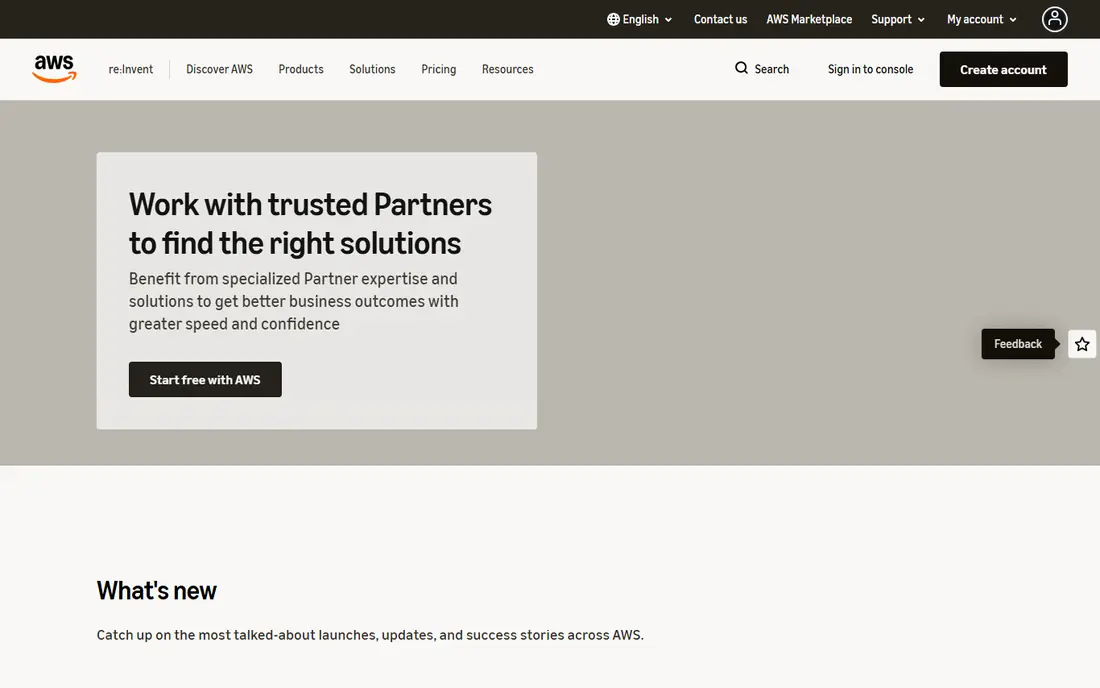
AWS IoT Device Management handles onboarding, organizing, monitoring, and remotely managing large device fleets inside AWS. Fleet indexing lets teams search devices by attributes and state, while jobs roll out firmware and configuration changes to groups, with progress tracking and failure handling. For a team already storing telemetry in AWS, that native fit removes integration work.
The cost model needs attention, since billing spans messages, connections, jobs, and related services rather than a single per-device fee. Smaller teams may find the console and IAM setup heavy for a modest fleet. AWS IoT suits cloud-centered enterprises best, especially where fleets number in the thousands and data already flows into AWS analytics.
- Bulk device registration and fleet indexing
- Remote actions and jobs for updates
- Deep integration with AWS analytics and storage
- Usage-based pricing across many meters
- Interactive remote access may need extra tooling
- Learning curve for teams new to AWS
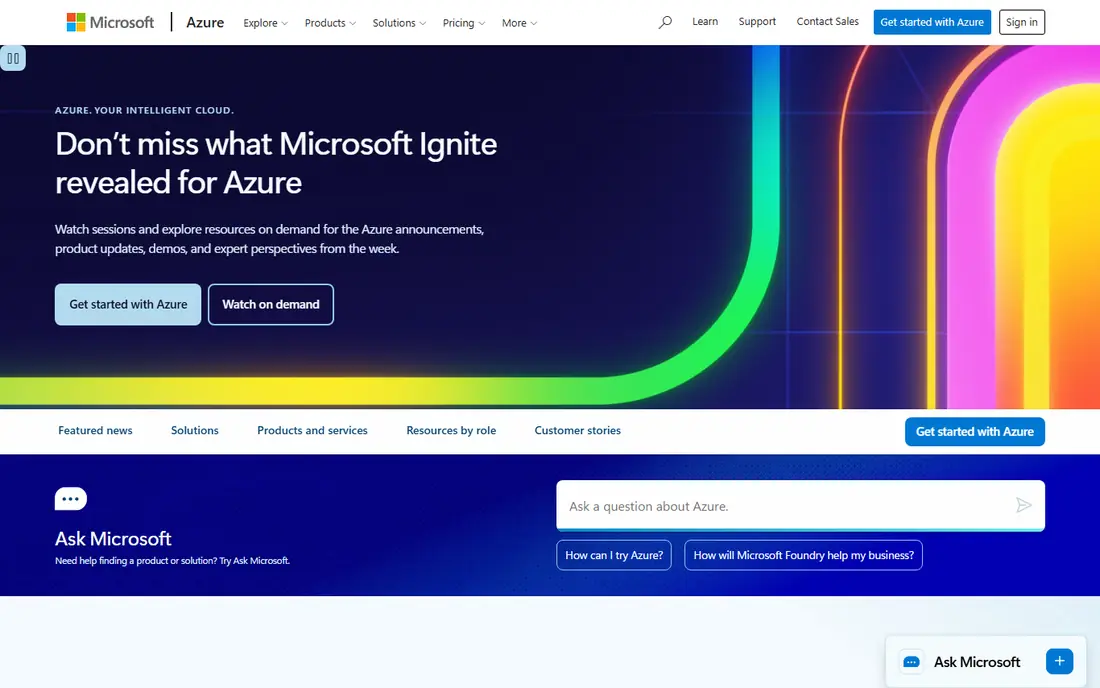
Azure IoT Hub provides bi-directional communication between IoT applications and devices, with provisioning, twin-based state management, and device lifecycle control. Digital twins mirror each device's reported and desired state, which makes remote configuration and monitoring more predictable. Integration with Azure services covers analytics, machine learning, and storage without extra plumbing.
Pricing is tiered by daily message quotas, so teams must estimate message volume honestly or face throttling and upgrades. Smaller organizations may find setup complex, and the value is greatest inside Azure. For a Microsoft-centered enterprise, IoT Hub is the natural hub for fleet operations.
- Secure bi-directional device communication
- Device provisioning and lifecycle control
- Integration with Azure analytics and machine learning
- Tiered pricing by daily message quotas
- Setup can be complex for smaller organizations
- Strongest inside Azure
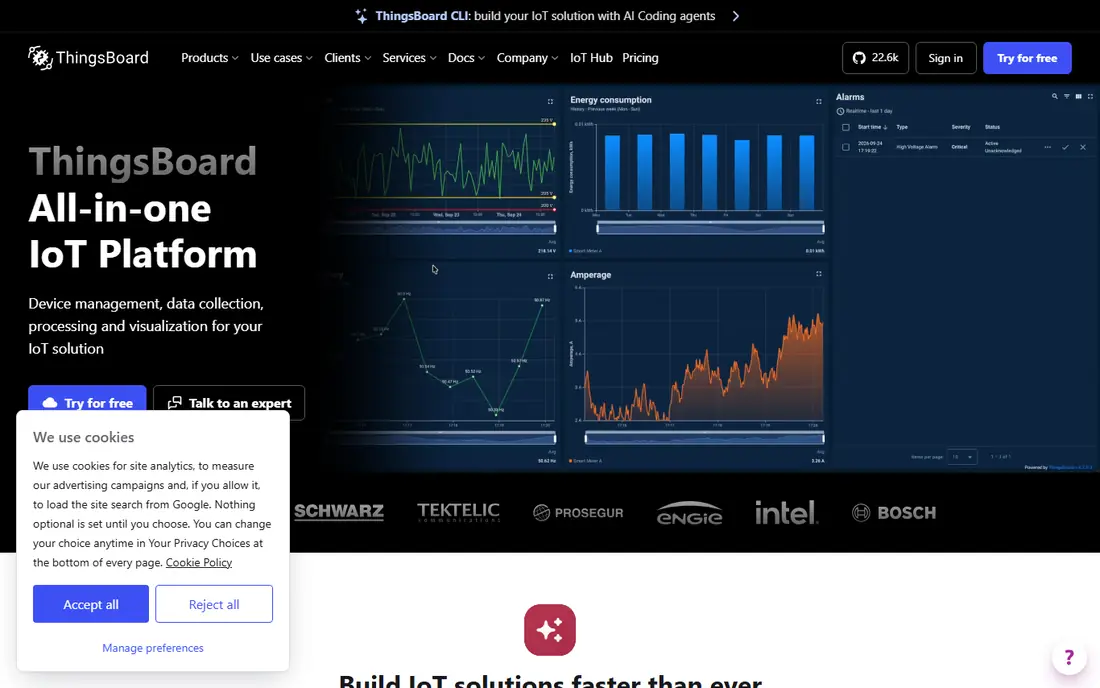
ThingsBoard is an open IoT platform for device management, telemetry collection, rule processing, and visualization. Its rule engine can trigger alerts, transform data, and send commands, while the dashboard builder gives operators live views of fleet health. An IoT Gateway service connects legacy and industrial protocols to the platform, which suits factories and buildings with mixed hardware.
The free cloud tier covers 5 devices and 1 million data points a month, and paid cloud plans start at $49 per month for the Prototype tier. Self-managed licensing changed with version 4.4 in September 2026 to a Business Source License, with free production use up to 100 devices on one server. Teams that want to own their stack and can run the infrastructure will get strong value here.
- Rule engine and dashboard builder
- Broad protocol support including MQTT, CoAP, HTTP, and LwM2M
- Free cloud tier for small fleets
- Self-hosting at scale needs database and messaging infrastructure
- Gateway is a separate component to maintain
- Licensing changed with version 4.4
Balena is built for fleets of Linux devices running containerized applications, such as single-board computers in kiosks, signage, and industrial gateways. Devices run balenaOS, a host operating system designed for containers, and teams push application updates, check status, view logs, and manage fleets through balenaCloud. The built-in VPN gives remote access even when devices sit behind firewalls.
That container model is a poor fit for tiny microcontrollers, where a lighter platform works better. Pricing starts at $109 per month for balenaCloud, which prices out hobby projects but suits commercial fleets. Teams shipping Linux-based products at scale will find Balena one of the most mature options for reliable fleet updates.
- Container-based fleet updates with balenaOS
- Remote access through built-in VPN
- OpenBalena option for self-hosting
- Built for Linux devices, not microcontrollers
- Starting price of $109 per month
- Container approach adds overhead on tiny devices
Particle combines hardware, cellular connectivity, and a cloud platform for companies building connected products, from commercial equipment to smart devices. Its platform covers device onboarding, over-the-air firmware updates, fleet health, and data routing, with cellular plans that simplify connectivity for products deployed in the field. That end-to-end approach shortens time to market for product teams.
The trade-off is commitment to the Particle ecosystem, including its hardware and data plans. Pricing varies by device seats and data tiers, and larger fleets move to quoted plans. If you build your own hardware or need a hardware-neutral platform, ThingsBoard or a hyperscaler may fit better. If you want a product platform that just works, Particle is a strong pick.
- Integrated hardware, cellular connectivity, and cloud
- Over-the-air updates
- Device management for commercial products
- Pricing spans device seats and data tiers
- Hardware lock-in is a consideration
- Enterprise features are quoted
Losant is a low-code IoT platform focused on event-driven fleet automation. Its visual workflow engine lets teams build logic that reacts to device data, triggers alerts, runs commands, and integrates with business systems, with traceability for each workflow run. That suits smart campuses, industrial OEMs, and operations teams that need automation without writing every integration by hand.
Pricing is based on enterprise resource units and is not published, so comparison shopping takes a sales conversation. Smaller fleets with simple needs may find ThingsBoard or Blynk cheaper and faster. Teams that need governed, auditable automation across a large fleet will get the most from Losant.
- Visual workflow builder for fleet automation
- Strong APIs and traceability
- Good fit for campuses and industrial OEMs
- Enterprise resource-unit licensing is hard to compare
- Pricing not published
- Smaller fleets may find it oversized
Cumulocity IoT, part of Software AG, is designed for operations teams managing large, distributed device fleets in manufacturing and heavy industry. It covers device onboarding, remote monitoring, software updates, and analytics, with support for industrial protocols such as MQTT, REST, OPC UA, and Modbus. Brownfield assets with older protocols are a particular strength.
Pricing is enterprise license and usage-based, with no published starting point, and rollout usually involves integration work. Small teams should look elsewhere. Industrial operators with thousands of assets across sites, who need lifecycle management and analytics in one platform, are the right audience.
- Full device lifecycle management
- Remote monitoring and analytics
- Broad industrial protocol support including OPC UA and Modbus
- Enterprise license and usage pricing
- Implementation is a project
- Overkill for small fleets
SocketXP focuses on the problem many fleet teams hit first: reaching a device that sits behind a NAT or firewall. It provides secure remote access, device management, monitoring, and over-the-air updates, with separate price plans for small businesses starting from $20 per month and volume discounts for enterprises. Cloud and on-premises deployment options cover teams with data residency needs.
SocketXP is less of a full analytics platform than ThingsBoard or Cumulocity, so teams needing heavy data processing should pair it with other tools. For remote access and management as the core job, especially for small and mid-size fleets, it is a practical and affordable pick.
- Remote access to devices behind NATs and firewalls
- Device management, monitoring, and OTA updates
- Cloud and on-premises options
- Smaller vendor than hyperscalers
- Feature depth varies by plan
- Enterprise pricing uses volume discounts
Blynk lets teams build mobile apps and web dashboards for connected products without building the whole stack. It covers device connection, telemetry display, remote control, and user management, which makes it popular for prototypes, smart home products, and small commercial fleets. A free plan lets teams test the approach before paying.
Large industrial fleets with strict governance, audit, and protocol needs will outgrow Blynk, and should weigh Cumulocity or a hyperscaler instead. For a product team shipping its first connected device, or a small fleet that needs an app quickly, Blynk offers one of the fastest paths to a working product.
- Fast app and dashboard building for connected products
- Free plan for getting started
- Good fit for prototypes and small fleets
- Less suited to very large industrial fleets
- Advanced features sit on paid plans
- Governance features are lighter than enterprise platforms
Soracom is a cellular IoT platform for fleets where connectivity itself is the hard part, such as asset trackers, logistics sensors, and remote equipment. Its API-driven provisioning, SIM management, and connection health tools let teams activate, monitor, and remediate cellular devices at scale, with global multi-carrier coverage. That cellular-first design is its main strength.
Teams whose devices mostly use Wi-Fi or wired networks will gain less from Soracom, since the value sits in cellular management. Pricing depends on SIMs and data usage, so model your data per device carefully. For cellular-first operations, Soracom is one of the most focused options in this list.
- API-driven cellular provisioning
- Connection health monitoring
- Global multi-carrier coverage for trackers and sensors
- Cellular-centric, so Wi-Fi and wired fleets gain less
- Pricing spans SIMs and data usage
- Platform depth varies by use case
How we picked these
We compared official feature pages, pricing pages, and public documentation, and we checked that each platform is still sold and supported in October 2026. We favored platforms that cover enrollment, configuration, over-the-air updates, monitoring, and access control, rather than pure analytics tools. We also excluded Google Cloud IoT Core, which Google discontinued, since teams choosing a platform today need one that is still maintained. We did not claim hands-on testing, and prices marked See website reflect vendors that do not publish a starting price.
What to check before you buy
Start with your connectivity reality. A platform built for Wi-Fi fleets will disappoint on cellular trackers, and a cellular platform adds little for wired factory gear. List your device types, networks, and protocols, then confirm each shortlisted platform supports them natively rather than through a custom gateway you must maintain.
Test updates on a small group before any fleet-wide rollout. Check rollback behavior, update scheduling, and what happens when a device loses power mid-update. Those failure cases decide whether a platform is safe for remote gear you cannot easily visit. Also confirm security basics: per-device credentials, encrypted transport, role-based access, and audit logs for every remote action.
Finally, model the full bill. Some platforms charge per device, some per message or data point, and some by SIM and data usage, so the same fleet can cost very different amounts. Run a pilot with real devices and real data volumes for at least a month, and get the vendor to price your full fleet in writing before signing.
Frequently asked questions
What is the best remote IoT management platform?
There is no single winner, because the best pick depends on your fleet. AWS IoT and Azure IoT Hub suit large cloud-centered fleets, ThingsBoard suits open telemetry and dashboards, Balena suits Linux container fleets, and SocketXP suits secure remote access. Match the platform to your device types and connectivity first.
What is the best remote IoT device management platform for small fleets?
ThingsBoard is a strong starting point, with a free cloud tier for 5 devices, and SocketXP starts at $20 per month for small businesses. Blynk also offers a free plan for small connected product projects. All three let you test with real devices before paying for scale.
Which remote IoT management platform supports over-the-air updates?
AWS IoT, Azure IoT Hub, ThingsBoard, Balena, Particle, and SocketXP all support over-the-air firmware or software updates, though the exact method varies by device type. Always test updates on a small device group first, and confirm rollback behavior before a fleet-wide rollout.
Do I need cloud or on-premises IoT device management?
Cloud platforms are easier to deploy and scale, while on-premises deployment suits teams with strict compliance, data residency, or network requirements. SocketXP and ThingsBoard offer on-premises options alongside cloud plans, and Airbyte-style self-hosting is not the norm in this category. Choose based on where your data must live, not only on price.
What is the best IoT remote device management software for cellular fleets?
Soracom fits cellular-first operations best, with API-driven SIM provisioning and connection health monitoring. Particle also bundles cellular connectivity with its product platform. If your fleet mixes cellular and Wi-Fi devices, check that the platform handles both without separate tooling.
Sources
- https://aws.amazon.com
- https://azure.microsoft.com
- https://thingsboard.io
- https://www.balena.io
- https://www.particle.io
- https://www.losant.com
- https://www.cumulocity.com
- https://www.socketxp.com
- https://www.blynk.io
- https://www.soracom.io
- https://www.socketxp.com/iot/best-iot-device-management-platforms/
- https://gitnux.org/best/remote-iot-management-software/
See where you really rank - block by block
ProMapRanker scans Google Maps across a grid of your service area. Simple monthly plans from $19, white-label on every plan.
Start freeKeep reading
 wpforms alternatives
Best WPForms Alternatives in 2026
We compare 9 wpforms alternatives for WordPress forms, with free and paid options, current pricing notes, and honest limits for small business sites in 2026.
Read → windows task scheduler alternatives
Best Windows Task Scheduler Alternatives in 2026
Looking for Windows Task Scheduler alternatives? We compare 9 schedulers for Windows and cross-platform work, from free tools to enterprise automation.
Read → which ai video service is best
Which AI Video Service Is Best in 2026
which ai video service is best? We compare 10 legitimate AI video services on price, avatars, editing and output quality to help you pick the right tool.
Read →