 ProMapRanker
Best Real Estate Investing Software in 2026


Hands-off diversified real estate funds · Pricing starts at: $10 minimum investment
Key takeaways
- Fundrise and Groundfloor suit beginners best, with $10 minimums and diversified funds or short-term loans.
- Arrived and Roofstock suit investors who want property-level exposure, with Arrived offering shares from $100 and Roofstock offering whole rental homes.
- DealMachine and PropStream suit active investors who source deals themselves, with data, lists, and outreach tools for $99 per month.
- Stessa and RentRedi suit landlords who already own rentals, with bookkeeping, rent collection, and tenant tools.
Quick comparison
| Pick | Great for | Pricing starts at | Free tier | |
|---|---|---|---|---|
| Fundrise | Hands-off diversified real estate funds | $10 minimum investment | Yes | Visit |
 Arrived | Fractional shares in rental homes | $100 minimum investment | Yes | Visit |
 Roofstock | Buying whole single-family rental homes | See website | Yes | Visit |
 Groundfloor | Short-term real estate debt notes | $10 minimum investment | Yes | Visit |
 DealMachine | Driving for dollars and deal sourcing | $99 per month | Free trial | Visit |
 PropStream | Data-driven list building and analysis | $99 per month | Free trial (7 days) | Visit |
 Stessa | Rental bookkeeping and tax preparation | Free | Yes | Visit |
 RentRedi | Landlords who manage tenants and rent online | See website | Free trial | Visit |
The best real estate investing software
This is not financial advice, and real estate investing carries risk, including loss of capital and long periods when you cannot sell. Returns are never promised, and past results do not predict future results. The platforms below mix investment platforms, deal-sourcing software, and landlord tools, and we compared them on minimums, fees, liquidity, and the job each one actually does.
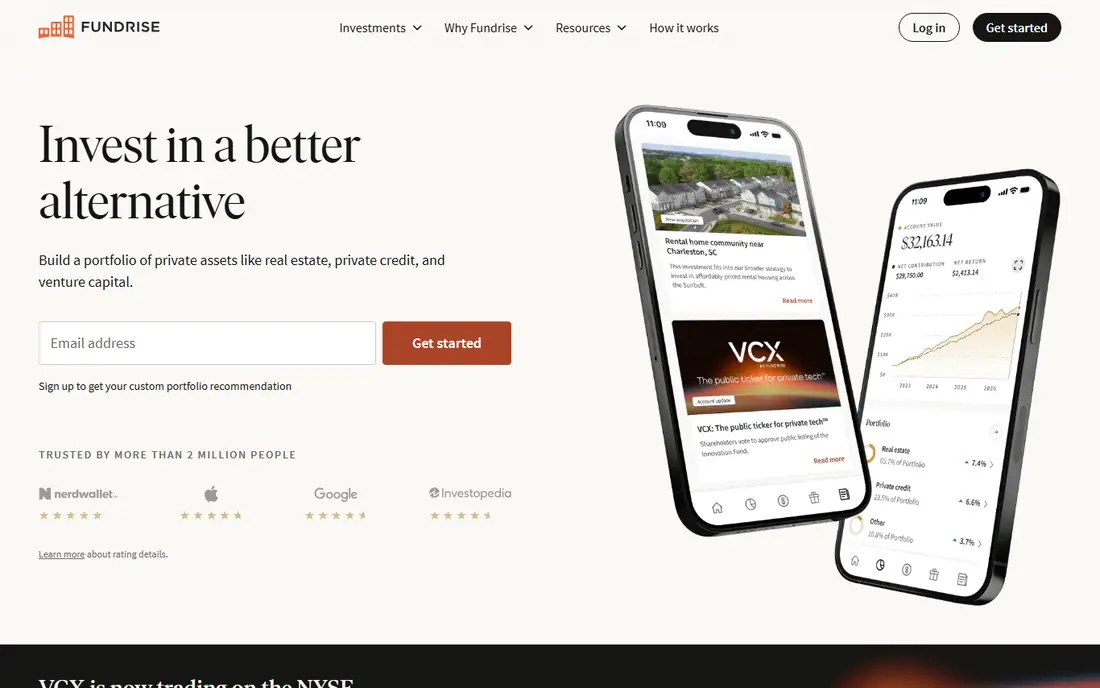
Fundrise suits investors who want real estate exposure without picking houses. A $10 minimum opens diversified funds that hold residential and commercial properties, and the platform handles acquisition, management, and reporting. Annual fees of about 1 percent, split between advisory and asset management, are disclosed on the platform, which helps a beginner compare costs with other funds.
Liquidity is the main limit. Redemptions run quarterly, can be limited or paused, and are not a promise of instant access to cash. Investors who may need the money soon should not treat Fundrise like a savings account. For long-term, hands-off exposure, it remains one of the simplest starting points.
- Low $10 minimum
- Diversified funds across many properties
- About 1 percent annual fees
- Redemptions are quarterly and can be limited
- Investors cannot pick single properties
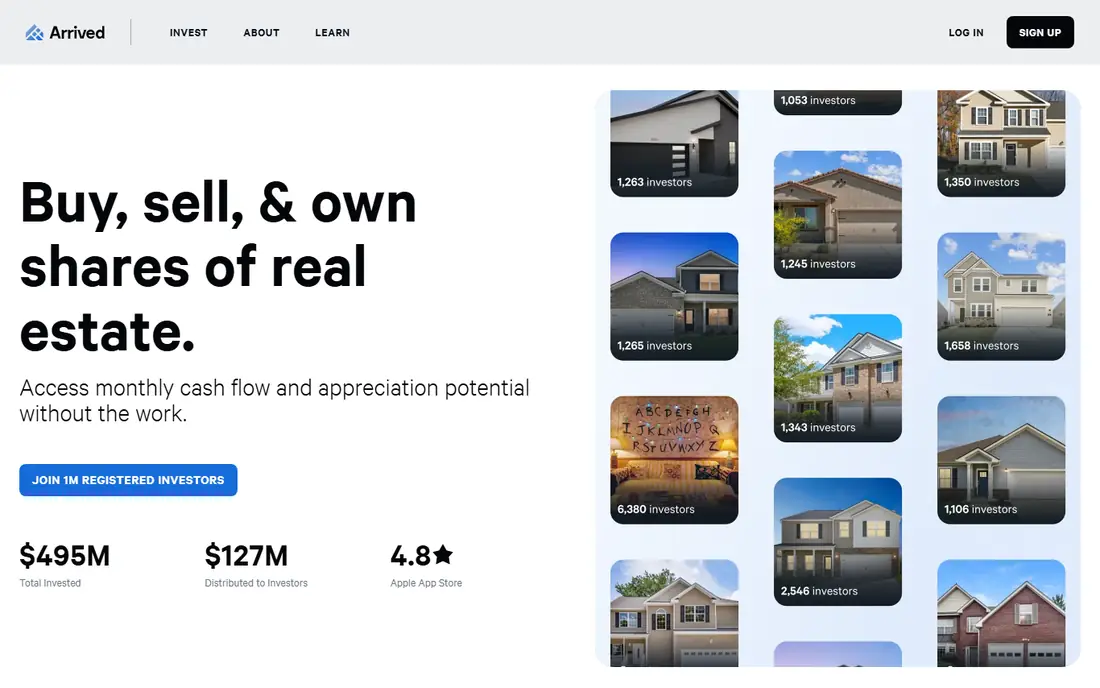
Arrived lets investors buy shares in specific rental homes instead of a pooled fund. Each listing shows the home, rent estimates, and costs, so an investor can judge one property at a time. A $100 minimum keeps the entry low, and quarterly distributions follow rental income after expenses, where applicable.
The hold period is the catch. Most homes are held for years, and selling early depends on secondary market windows rather than instant trading. Fees also stack across sourcing, management, and property costs, so read the offering documents for each home. For investors who like picking homes but not managing tenants, Arrived offers a clear middle path.
- Shares in single-family and vacation rentals from $100
- Property-level details for each home
- Secondary market windows
- Long hold periods for most homes
- Fees include sourcing and quarterly management charges
Roofstock serves a different investor: one who wants to own a whole rental home, often in another city. Listings cover tenant-occupied single-family homes, with inspection reports, valuation data, and rent history where available, which helps a remote buyer judge a property without flying to see it. Property management partners can handle day-to-day tenant work after purchase.
Capital need is the barrier. Buying a whole home costs far more than a fractional share, and returns depend on rent, vacancy, repairs, and local market moves. Roofstock One, its fractional product, has been closed to new investors at times, so check current availability before planning around it. For buyers ready for direct ownership, Roofstock is a useful marketplace.
- Marketplace for tenant-occupied rental homes
- Inspection and valuation data for listings
- Property management links
- Whole-home prices require large capital
- Returns depend on local rents and property condition
Groundfloor lets investors fund short-term real estate loans in small slices. A $10 minimum per loan lets an investor spread money across many projects, and loan terms often run months rather than years, which suits investors who dislike multi-year lockups. The platform charges no upfront fee to investors on most notes, with a fee on some portfolio products.
Risk still sits with the borrower. If a project stalls or a borrower fails to repay, an investor can face delays or losses, and notes cannot be sold early in the same way as a stock. Diversifying across many loans, and keeping position sizes small, matters more here than on any other platform in this guide.
- Low $10 minimum per loan
- Short terms of months rather than years
- No upfront investor fee on most notes
- Loans are locked until repayment
- Returns depend on borrower repayment and project completion
DealMachine owns the driving-for-dollars workflow. Drive a neighborhood, tap to add a distressed home, attach photos, and send mail from the same app, with a large property database and AI search behind it. Skip tracing uses data credits, and comps help an investor judge a price before making an offer. For investors who find deals on the street, no other tool on this list matches that field experience.
Team pricing is the drawback. Basic starts at $99 per seat per month, so a team of five pays far more than a solo investor, and CRM depth is thinner than in a full investor platform. Many users pair DealMachine with a separate CRM. As a deal-finding tool for active investors, it earns its price when it produces even a few extra leads each month.
- Best driving-for-dollars mobile app
- Large property database with many filters
- Built-in mail and skip tracing credits
- Per-seat pricing grows with teams
- CRM features are thinner than full investor CRMs
PropStream suits desk-based investors who build lists and analyze deals. The database covers over 160 million property records, with filters for pre-foreclosures, tax liens, vacancies, and many other lead types, plus comps, rehab estimates, and demographic data. Ready-made lists help a new investor start without building complex filters from scratch.
Extra costs are the honest note. Skip tracing, document images, direct mail, and extra exports add to the $99 monthly base, and Connect features that bundle skip tracing sit on higher tiers or as an add-on. Data also needs verification against county records before an offer. For research depth at a flat monthly price, PropStream remains a leading choice.
- Huge property database with many filters
- MLS data, comps, and rehab calculators
- Ready-made lead lists
- Skip tracing and mail cost extra on lower tiers
- Plan tiers and add-ons need careful comparison
Stessa serves landlords who already own rentals and need clean books. Link bank accounts, track income and expenses by property, store documents, and generate tax-ready reports without a full accounting system. The free tier covers core bookkeeping, which suits a landlord with a few units who wants order at tax time.
Stessa does not sell investments, so it answers a different question from Fundrise or Arrived. Fuller features, including deeper reporting and automation, sit on paid plans from $12 per month. For a landlord who wants to know, at a glance, which property makes money and which one drains cash, Stessa is a practical and low-cost tool.
- Free tier for rental bookkeeping
- Income and expense tracking by property
- Tax-ready reports
- Paid features start at $12 per month for fuller tools
- Not an investment platform for buying properties
RentRedi covers the daily work of being a landlord. Tenants apply and pay online, landlords screen applicants, track maintenance requests, and manage leases from a mobile app. That online flow cuts checks, paper, and phone calls, which matters most for landlords with several units spread across a city.
Scale is the limit. Large property managers with hundreds of units may need a fuller platform with deeper accounting and staff controls. Pricing also varies by plan, so confirm the current rate before comparing it with Stessa or a full property manager. For independent landlords who want tenants, rent, and repairs in one app, RentRedi is a strong fit.
- Online rent collection and tenant screening
- Maintenance tracking
- Landlord mobile app
- Pricing must be confirmed on the vendor site
- Larger property managers may need a fuller platform
How we picked these
We compared real estate platforms and software that were open to investors or landlords in October 2026, using published minimums, fees, and feature lists. We favored platforms with clear disclosures on fees and liquidity, and we left out platforms that had paused new investment or frozen redemptions at the time of writing. We included both investment platforms and landlord tools, since both count as software for real estate investors.
What to check before you invest or buy software
Read the offering documents for any investment platform, including fees, hold periods, redemption rules, and tax reporting. A low minimum does not mean low risk, and a high advertised return does not mean that return will arrive. For deal software, trial the data in your own market, check how many leads it returns for your filters, and count skip tracing and mail costs on top of the subscription.
For landlord tools, test rent collection, screening, and maintenance flows with a real unit before moving all tenants across. Keep an emergency fund separate from investment money, and speak to a qualified adviser about tax and legal questions before committing larger sums.
Frequently asked questions
What is the best real estate investing software for beginners?
Fundrise suits most beginners, with a $10 minimum and diversified funds that need little day-to-day work. Groundfloor also starts at $10 for short-term loans, while Arrived suits beginners who want to pick single rental homes from $100. Start small, and learn how fees and liquidity work before adding more money.
What is the best software for real estate investors who find their own deals?
DealMachine leads for driving for dollars, while PropStream leads for desk-based list building and analysis. Many active investors use one of these as a lead source, then manage deals in a CRM or landlord tool. Compare the data in your market during the trial, since coverage varies by county.
What are the best real estate investing apps for passive income?
Fundrise, Arrived, and Groundfloor all offer income-oriented options, through fund distributions, rental shares, or loan repayments. None of these payments are promised, and each platform carries different risks and lockup periods. Treat advertised yields as targets to verify, not as fixed income.
Are REIT apps a good way to invest in real estate?
REIT-style funds, including Fundrise funds, give diversified exposure without owning a property, and they suit investors who want hands-off access. They still carry market and property risk, and private funds can limit redemptions. Public REIT shares trade like stocks and offer more liquidity, but prices can fall with the wider market.
How much money do I need to start investing in real estate?
You can start with $10 on Fundrise or Groundfloor, or $100 on Arrived for a fractional rental share. Buying a whole home through Roofstock needs far more capital, plus reserves for repairs and vacancy. Start with an amount you can leave invested for years, and build up only as you learn the risks.
Sources
See where you really rank - block by block
ProMapRanker scans Google Maps across a grid of your service area. Simple monthly plans from $19, white-label on every plan.
Start freeKeep reading
 best resource management software
Best Resource Management Software in 2026
We compared the best resource management software for scheduling, capacity and utilization, with current pricing and free trials, to help teams choose well.
Read → best reporting tools
Best Reporting Tools in 2026
Compare the best reporting tools for dashboards, scheduled reports, and business insights, from Power BI and Tableau to Looker Studio for every team size.
Read → best remote support software
Best Remote Support Software in 2026
Looking for the best remote support software? We compare 9 tools on price, security, session controls, and fit for helpdesks, MSPs, and small teams in 2026.
Read →