 ProMapRanker
Best Reading Comprehension Apps in 2026

Key takeaways
- The best reading comprehension apps pair leveled texts with questions that check understanding, not just reading speed.
- Epic offers the largest children's library for independent reading, while Raz-Kids pairs leveled books with quizzes for every book.
- Reading Eggs and Starfall suit structured practice, with step-by-step lessons and phonics support.
- Khan Academy Kids and CommonLit are strong free options, with Khan Academy Kids best for younger children and CommonLit best for grades 3 to 12.
- For 3rd graders, look for age-appropriate content, clear privacy controls and a way for a parent or teacher to review progress.
Quick comparison
| Pick | Great for | Pricing starts at | Free tier | |
|---|---|---|---|---|
 Epic | Large children's book library | $13.99 per month | Yes | Visit |
 Raz-Kids | Leveled books with quizzes | See website | No | Visit |
 Reading Eggs | Structured reading lessons | See website | Free trial | Visit |
 Khan Academy Kids | Free early learning | Free | Yes | Visit |
 ABCmouse | Early learning activities | See website | Free trial | Visit |
 Starfall | Phonics and early reading | $35 per year | Yes | Visit |
 CommonLit | Free passages and questions | Free | Yes | Visit |
 Newsela | Nonfiction at many levels | See website | Yes | Visit |
 HOMER | Personalised early reading | See website | Free trial | Visit |
The best reading comprehension apps
Reading comprehension means more than sounding out words. A child who can read a passage aloud may still struggle to retell it, answer questions about it or explain what a character wanted. The apps below help with that second step, by pairing texts at the right level with questions, vocabulary help and progress checks. We compared official feature and pricing pages for apps live in October 2026. For children's apps, check the privacy policy before sign-up: confirm what data is collected, whether ads appear, and whether a parent account controls the child profile. This guide covers the best app for reading comprehension for younger readers, and the best reading apps for 3rd graders in particular.
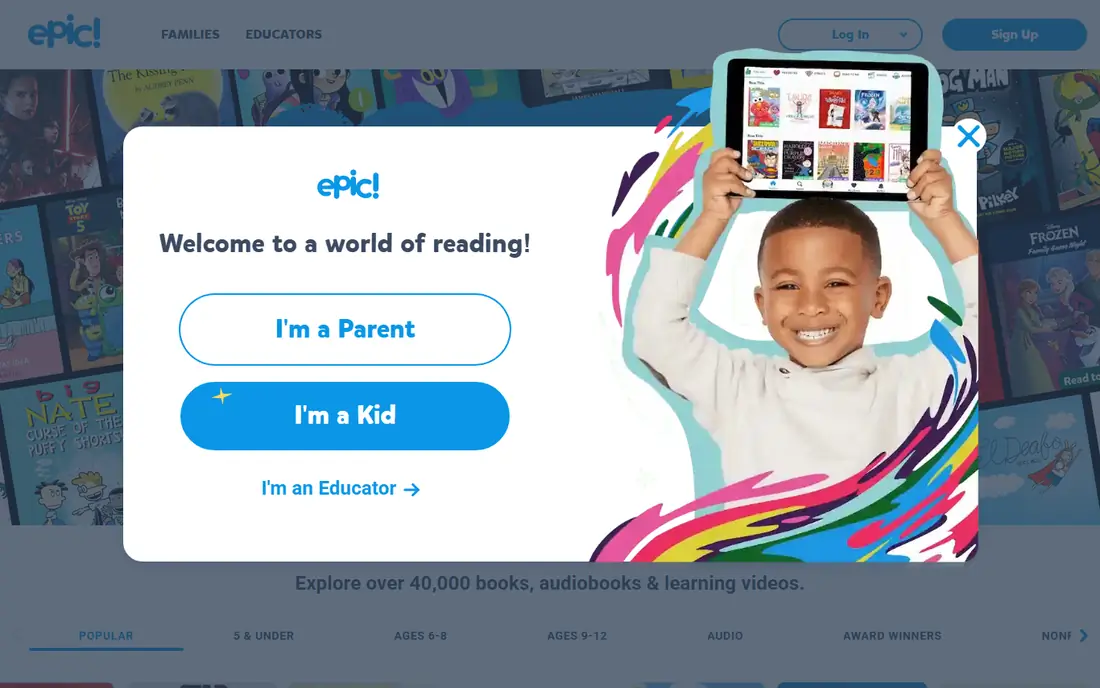
Epic suits avid young readers who need choice. The library covers picture books, chapter books and nonfiction, so a 3rd grader can move from short stories to longer books without switching apps. Read-To-Me and audiobook options help when a child wants to hear a tricky passage first, then read it alone. Quizzes and badges add motivation, though the depth of comprehension questions varies by title.
The free tier is limited to a small daily allowance, so regular readers will need a paid plan. Parents should also check reading levels, because a large library means some books will be too easy or too hard. For families that want breadth and independent choice, Epic is a strong starting point.
- Very large library of children's books and audiobooks
- Read-To-Me support
- Offline reading on mobile
- Free tier is limited
- Comprehension support varies by book
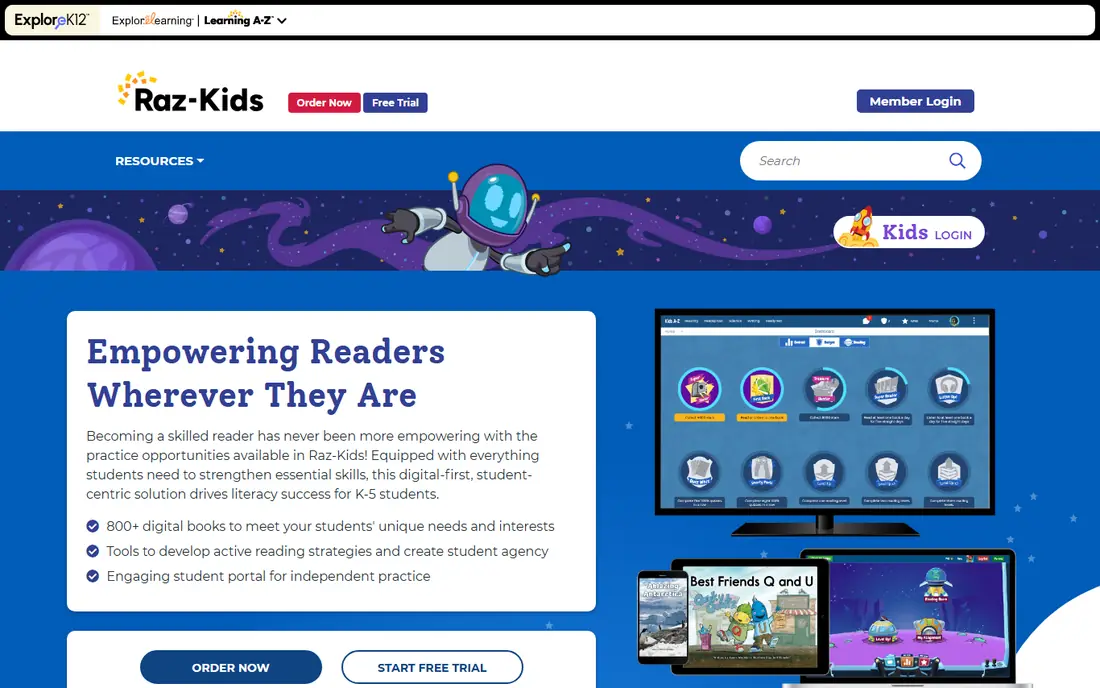
Raz-Kids is built for leveled reading practice. Children read books matched to their level, listen to a narration, record themselves reading, and then answer a comprehension quiz. That loop gives teachers a clear view of whether a child understood the text, not just whether they finished it. The level system helps a 3rd grader progress in small, manageable steps.
The main limit is access. Raz-Kids is primarily a classroom product, priced per classroom, so families may only get access through a school. That makes it less useful as a standalone home purchase. If your child's school already uses it, it is one of the most focused comprehension tools in this list.
- Leveled eBooks across many reading levels
- Comprehension quiz for every book
- Listen, read and record modes
- Mainly sold for classrooms
- Individual family access is limited
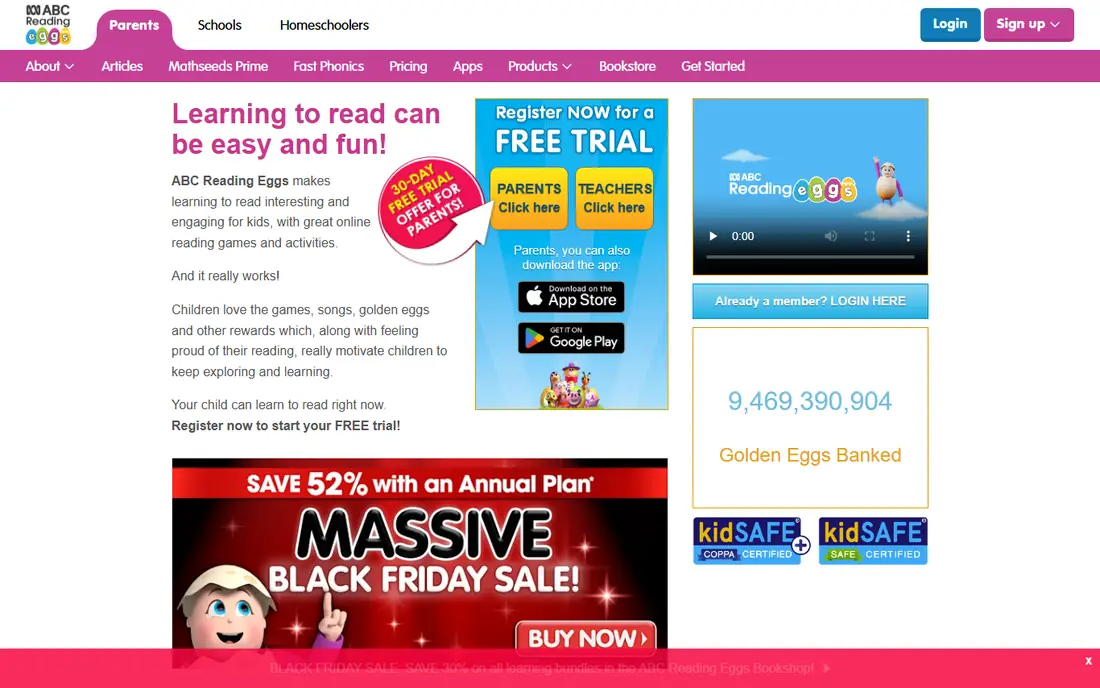
Reading Eggs suits children who need structure rather than just a library. Lessons build phonics, sight words and comprehension in order, with short stories, activities and quizzes along the way. A map shows progress, which helps children see how far they have come and helps parents spot where practice is needed. The programme covers a wide age range, from early readers to older primary children.
Full access requires a paid subscription, and the style is clearly aimed at younger learners, so a confident older reader may outgrow it. For a 3rd grader who still needs systematic practice, Reading Eggs offers a clearer path than browsing a large library alone.
- Step-by-step lessons in phonics and comprehension
- Large digital book library
- Progress map for children and parents
- Paid subscription needed for full access
- Younger focus may feel simple for older readers
Khan Academy Kids is the best free option for younger children. It offers reading activities, stories, phonics games and early comprehension tasks without ads or in-app purchases, which makes privacy and cost simple for parents. The activities are playful and short, which suits short daily practice sessions.
The age range is the limit. Khan Academy Kids is designed for ages 2 to 8, so a 3rd grader near the top of that range may need a more advanced app alongside it. For families starting reading practice, or for younger siblings, it is an excellent no-cost choice.
- Completely free with no ads
- Reading activities, stories and phonics games
- Suitable for younger children
- Age range tops out around age 8
- Less depth for older primary readers
ABCmouse covers reading as part of a broader early learning programme. Children follow a learning path through books, games, songs and activities, with reading woven into other subjects. That variety keeps younger children engaged, and the path structure gives parents a sense of progress.
Because ABCmouse covers many subjects, it is less focused on reading comprehension than Raz-Kids or CommonLit. It is also aimed at ages 2 to 8, so older primary children may find it too simple. For a younger child who needs reading plus general early learning, ABCmouse is a good all-round option.
- Wide range of reading, maths and science activities
- Books and games for ages 2 to 8
- Clear learning path
- Broad curriculum means less focus on comprehension alone
- Paid subscription for full access
Starfall suits early readers who need phonics practice in a calm, uncluttered app. It teaches letter sounds and blending step by step, then moves into simple books and activities. The free content covers a useful amount, and the paid membership adds more at a low yearly price. The simple design helps children focus on words rather than animations.
Starfall is less focused on deeper comprehension questions than Raz-Kids or Newsela, so it works best as a foundation tool. A 3rd grader who reads fluently but struggles to explain a text will need a quiz-focused app as well. For building decoding skills, Starfall remains a reliable and affordable choice.
- Systematic phonics for early readers
- Free content alongside a low-cost membership
- Simple, calm design
- Design feels basic compared with newer apps
- Comprehension depth is lower than quiz-focused tools
CommonLit is the strongest free option for 3rd graders and older students who need real comprehension practice. It offers passages in fiction and nonfiction, with questions that ask students to find evidence, explain ideas and discuss themes. Teachers and parents can search by grade, theme and reading level, which makes it easy to match a passage to a child's needs.
CommonLit is web focused and less game-like than Epic or Reading Eggs, so some children may need adult encouragement to use it regularly. It also works best when an adult reviews answers with the child, rather than leaving practice entirely unsupervised. For structured, free comprehension work from 3rd grade upward, CommonLit is hard to beat.
- Free high-quality passages for grades 3 to 12
- Comprehension questions and teacher tools
- Searchable by grade and theme
- Web focused rather than a game-style app
- Best with teacher or parent guidance
Newsela helps children practise comprehension with real-world nonfiction. The same article can appear at several reading levels, so a 3rd grader and an older student can discuss the same news story at a level that fits each reader. Quizzes and writing prompts check understanding and encourage children to explain what they read.
School features and the full library sit behind paid plans, though a free tier offers a useful sample. Article depth varies, and some topics will interest children more than others. For families and schools that want nonfiction practice alongside story books, Newsela adds a valuable balance.
- Current nonfiction articles at multiple reading levels
- Quizzes and writing prompts
- Teacher assignment tools
- Full school features need a paid plan
- Article depth varies by topic
HOMER builds a personalised path from a child's age, interests and reading level, then offers stories and activities that match that path. That personal touch helps reluctant readers, because the content feels chosen for them rather than generic. Parents can track progress and see which skills a child is practising.
HOMER is aimed at early learners, so a confident 3rd grader may outgrow it sooner than Epic or CommonLit. Full access also needs a paid subscription after the trial. For a younger child, or a 3rd grader who needs confidence and personalised practice, HOMER is a friendly option.
- Personalised learning path based on a child's interests and level
- Stories, games and songs
- Progress tracking for parents
- Aimed at younger children
- Paid subscription for full access
How we picked these
We compared official feature and pricing pages for reading apps live in October 2026, and we kept only apps that include texts plus comprehension checks, quizzes or guided questions, not just a book library alone. We included free, classroom and paid options, because families and schools have different budgets. For children's apps, we also weighed privacy: we favoured apps with parent controls, clear data policies and no advertising in children's content, and we noted where a parent should check those settings.
How to choose a reading comprehension app
A good app should match the child's level and give an adult a way to see progress.
Match level, then add challenge
Start with an app that places the child at a comfortable level, then adds slightly harder texts over time. Raz-Kids and Reading Eggs handle levelling well, while Epic and Newsela need more adult help to pick the right level. If a child finishes books quickly but cannot retell them, choose a quiz-focused app such as Raz-Kids or CommonLit.
Check privacy and screen time together
Read the privacy policy for any children's app, confirm whether ads or in-app purchases appear, and use a parent account where one is offered. Set a daily practice limit, such as 15 to 30 minutes, and pair app time with paper books and conversation about the story. An app works best when an adult talks through answers, not when a child practises alone without feedback.
Use free apps before paying
Start with Khan Academy Kids for younger children and CommonLit for 3rd grade and above, then add a paid app only if you need a larger library or a structured programme. Trials help you test whether a child actually enjoys the app before a yearly subscription. A paid app that a child avoids is worse than a free app they use every day.
Frequently asked questions
What is the best app for reading comprehension?
For younger readers, Epic and Reading Eggs are strong all-round picks, while Raz-Kids is best for leveled books with quizzes. For 3rd graders and older, CommonLit offers free passages with strong comprehension questions. The best app depends on the child's age, level and whether a school already provides access.
What are the best reading apps for 3rd graders?
Epic, Raz-Kids, Reading Eggs, Newsela and CommonLit all suit 3rd graders, for different reasons. Epic gives choice, Raz-Kids gives levelling and quizzes, Reading Eggs gives structure, Newsela gives nonfiction, and CommonLit gives free, teacher-quality passages. Many families pair one library app with one quiz-focused app.
Are reading apps safe for children's data?
Safety varies, so check each app's privacy policy, parent controls and ad policy before sign-up. Khan Academy Kids is free with no ads, which simplifies privacy for younger children. For paid apps, use a parent account, limit personal details in a child profile, and review data settings regularly.
How much time should a child spend on a reading app?
Short, regular practice works best, often 15 to 30 minutes a day, paired with paper reading and conversation. Longer sessions do not always help, especially if a child is just tapping through activities. Talk about the story after a session to check understanding in a natural way.
Can a reading app replace a teacher or tutor?
No. An app can provide practice, levelling and instant feedback, but it cannot replace a teacher who listens to a child read, asks follow-up questions and adjusts instruction. Use apps as practice between lessons, and raise persistent struggles with a teacher or reading specialist.
Is Epic free for schools?
Epic offers free access for educators in some regions, while family plans are paid. Check the current educator offer on the Epic site, because terms vary by country and school type. Families without school access can use the free tier or a paid family plan.
Sources
See where you really rank - block by block
ProMapRanker scans Google Maps across a grid of your service area. Simple monthly plans from $19, white-label on every plan.
Start freeKeep reading
 wpforms alternatives
Best WPForms Alternatives in 2026
We compare 9 wpforms alternatives for WordPress forms, with free and paid options, current pricing notes, and honest limits for small business sites in 2026.
Read → windows task scheduler alternatives
Best Windows Task Scheduler Alternatives in 2026
Looking for Windows Task Scheduler alternatives? We compare 9 schedulers for Windows and cross-platform work, from free tools to enterprise automation.
Read → which ai video service is best
Which AI Video Service Is Best in 2026
which ai video service is best? We compare 10 legitimate AI video services on price, avatars, editing and output quality to help you pick the right tool.
Read →