 ProMapRanker
Best Protein Tracker App in 2026

Key takeaways
- MyNetDiary and Cronometer let users set protein targets by grams on a free plan, while MyFitnessPal and Lose It reserve gram targets for paid plans.
- MacroFactor suits athletes and serious macro trackers who want adaptive targets, but it has no free tier beyond a trial.
- Carb Manager suits low-carb eaters who want protein tracking inside a keto-friendly app, while Fitia suits users who want meal plans built around protein.
- This article is general information only, not medical or nutrition advice. Protein needs vary by person, so talk to a clinician or registered dietitian about your own target.
Quick comparison
| Pick | Great for | Pricing starts at | Free tier | |
|---|---|---|---|---|
 MyNetDiary | Protein tracking overall | Free | Yes | Visit |
 Cronometer | Verified foods and nutrient depth | Free | Yes | Visit |
 MacroFactor | Adaptive macro coaching | $71.99 per year | Free trial | Visit |
 MyFitnessPal | Largest food database | Free | Yes | Visit |
 Lose It | Simple tracking for beginners | Free | Yes | Visit |
 Carb Manager | Low-carb and keto protein tracking | Free | Yes | Visit |
 Yazio | Fasting plus macro tracking | Free | Yes | Visit |
 Fitia | High-protein meal plans | Free | Yes | Visit |
 Eat This Much | Meals planned around macros | Free | Yes | Visit |
The best protein tracker app
A good protein tracker does more than count calories. It should let you set a protein target in grams, log food quickly, and see protein per meal, not just per day. The apps below are all full nutrition trackers with strong protein features, and they differ in price, database quality, and coaching depth.
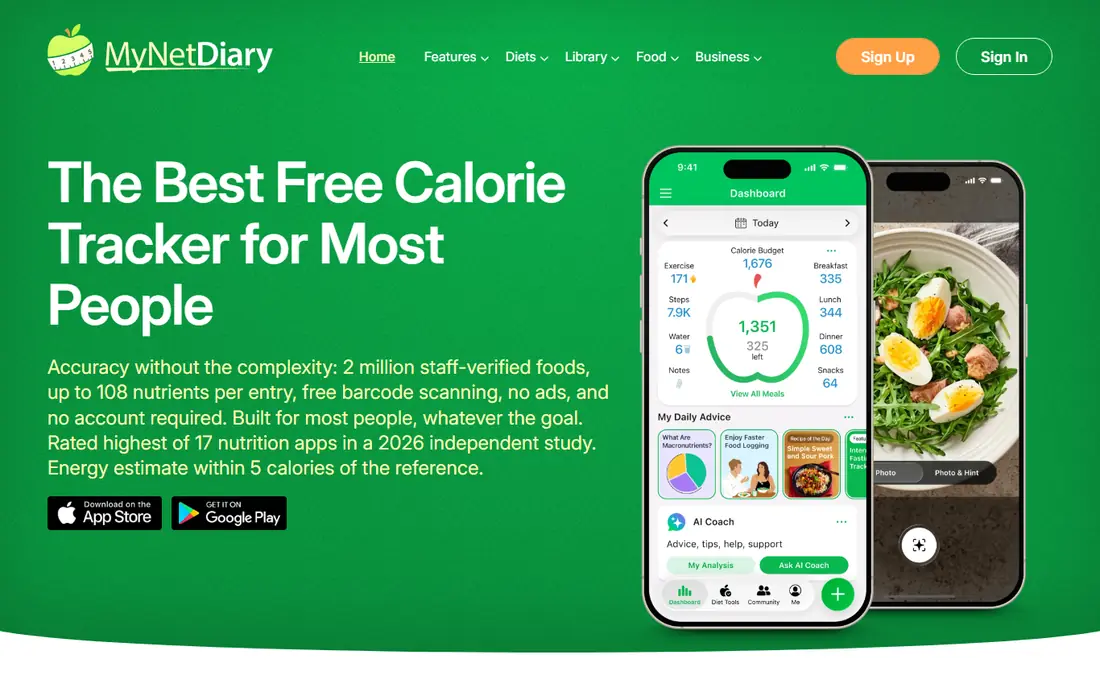
MyNetDiary is our pick for most protein trackers because it gets the core job right on the free plan. Users can set a protein target in grams or as a share of calories without paying, and the food database uses staff-verified entries, which reduces the odd errors that creep into purely user-submitted databases. Scanner and voice logging also keep daily entry quick.
Premium, around $59.99 per year, adds deeper analysis and extra features, but the free tier already covers daily protein tracking well. For a user whose main goal is hitting a protein target consistently, MyNetDiary offers the best balance of free features, accuracy, and ease of use.
- Gram-based protein targets on the free plan
- Verified food database
- Fast logging with scanner and voice entry
- Premium needed for the deepest analysis
- Database smaller than MyFitnessPal
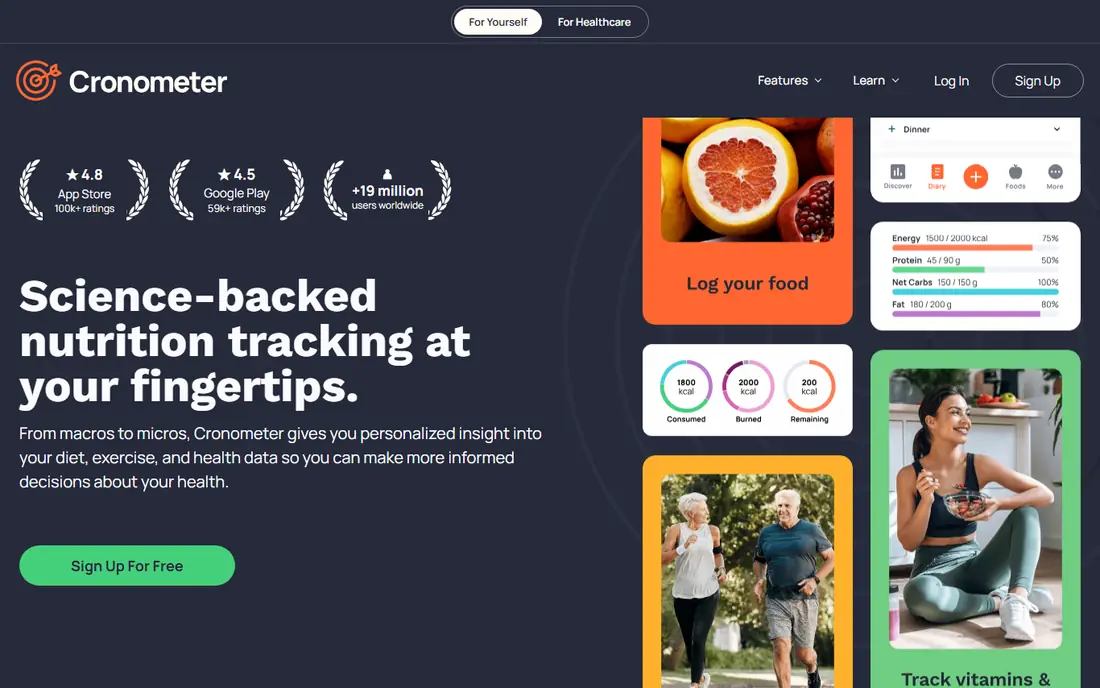
Cronometer suits users who care about data quality as much as protein totals. Its food entries draw on verified sources such as USDA and NCC data, and it tracks amino acids and micronutrients alongside macros, which helps users who want to see protein quality, not just total grams. Gram targets are available free, which is a real advantage over some rivals.
The interface is more detailed than a simple tracker, and logging can feel slower at first. Gold, around $59.99 per year, adds custom charts and a macro scheduler. For users who want precision and nutrient depth, Cronometer is worth the learning curve.
- Gram-based protein targets on the free plan
- Lab-verified food data
- Up to 95 nutrients tracked
- Logging can feel slower than lighter apps
- Gold needed for custom charts and scheduling
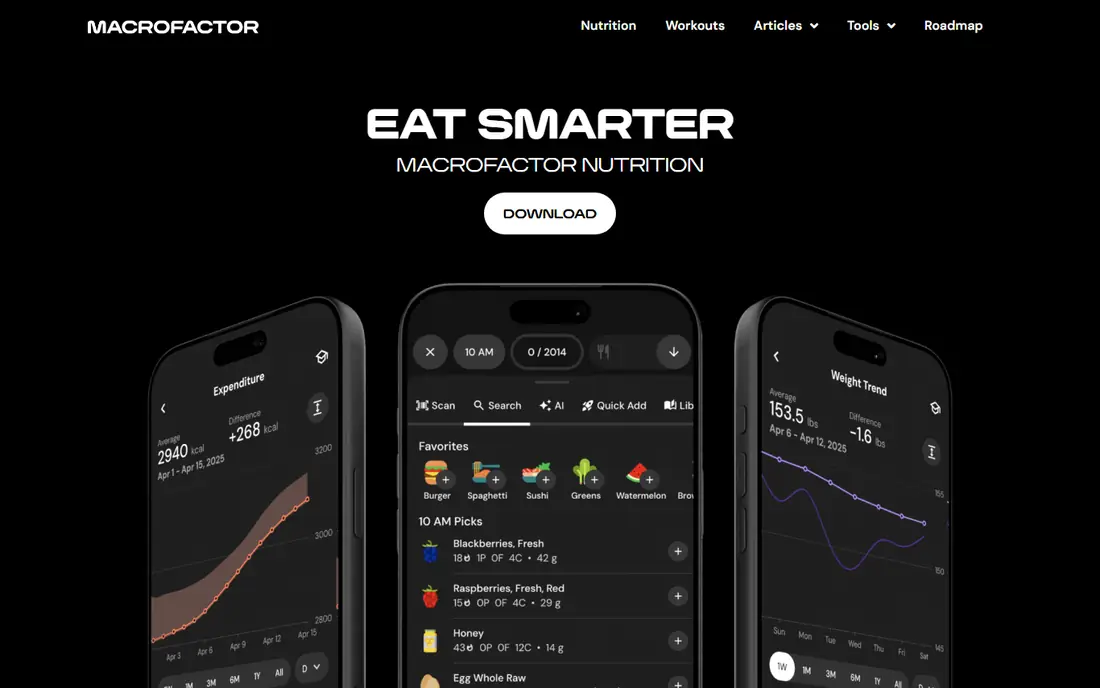
MacroFactor is the pick for athletes and serious macro trackers who want targets that adjust over time. Its algorithm recalculates energy expenditure from actual intake and weight changes, then adjusts protein and other macros, which saves manual recalculation during a cut or bulk phase. The food database is verified, and logging is fast.
There is no free tier, only a trial, and the annual price around $71.99 per year is higher than some rivals. MacroFactor earns that cost for users who train consistently and want coaching-style adjustments. Casual trackers will get enough from a free app.
- Adaptive targets based on intake and weight
- Verified food database
- Fast logging
- No free tier
- No recipe URL import
MyFitnessPal remains the most familiar tracker for many users, mainly because its food database is the largest in this list, with over 20 million entries reported in recent comparisons. That breadth makes it easy to find branded foods and restaurant items that smaller databases may miss. Device integrations are also broad.
The catch is that protein tracking in grams, a key feature for this topic, sits behind Premium, around $79.99 per year, and the barcode scanner is now Premium-only as well. User-submitted entries also vary in accuracy. MyFitnessPal suits users who value database breadth and familiarity, and who are willing to pay for gram targets.
- Very large food database
- Broad device integrations
- Familiar interface for many users
- Gram-based protein targets need Premium
- Barcode scanner now Premium-only
- User entries vary in accuracy
Lose It suits beginners who want protein tracking without a steep learning curve. The interface is clean, photo logging helps when a barcode is not handy, and challenges add a social element for users who like accountability. The free tier covers basic calorie and macro tracking.
Custom macro targets, including detailed protein goals, require Premium, around $79.99 per year in recent comparisons, though some older listings show lower prices, so check the app store listing before buying. For a beginner who wants simplicity first and may upgrade later, Lose It is a friendly start.
- Clean, beginner-friendly interface
- Photo logging
- Social challenges
- Custom macro targets need Premium
- Less nutrient depth than Cronometer
Carb Manager is the pick for low-carb and keto eaters who still want clear protein tracking. Daily protein targets are available on the free plan, and the app handles net carbs alongside protein, which matters for keto users who must balance both. Premium, around $39.99 per year, adds per-meal and day-of-week targets.
Users who eat a standard balanced diet may find the keto focus less relevant, though the core tracking still works. For a low-carb user, Carb Manager combines protein goals and carb control in one app, which avoids juggling two trackers.
- Protein targets available free
- Keto-friendly tracking
- Per-meal targets on Premium
- Best suited to low-carb eating
- Broader macro coaching is limited
Yazio suits users who combine intermittent fasting with protein tracking. Its fasting timer sits alongside a clean macro dashboard, so a user can see eating windows and protein intake in one place. Barcode scanning is free, which keeps logging quick.
Full macro detail and custom targets require Pro, around $47.90 per year in recent listings, so free users get a simpler view. Yazio is popular in Europe and has a smaller US food database than MyFitnessPal, though its interface is polished. For fasting plus protein tracking, it is a strong combined option.
- Clean macro dashboard
- Free barcode scanning
- Built-in fasting timer
- Full macro detail and custom targets need Pro
- Smaller US database than MyFitnessPal
Fitia suits users who want meal plans built around protein, not just a log. Its premium tier, around $59.99 per year, adds adaptive targets, auto meal plans, and AI-assisted logging by photo and voice. The food database is verified, which helps accuracy for planned meals.
The free tier covers basic tracking, but the meal-plan value sits behind Premium. Fitia is also a newer brand than MyFitnessPal or Cronometer, so users who prefer a long-established app may stick with those. For a user who wants plans that hit a protein target without manual meal math, Fitia is worth a trial.
- Verified food database
- AI photo and voice logging
- Adaptive targets and meal plans
- Premium needed for full plans
- Newer brand than the established trackers
Eat This Much takes a different route: instead of only logging what you ate, it builds meals designed to hit your protein, carb, and fat targets. That planning-first approach helps users who struggle with the daily question of what to eat to reach a protein goal. Grocery lists turn a plan into a shopping list.
Logging itself is simpler than in MyNetDiary or Cronometer, so users who want deep nutrient analysis may prefer those apps. The paid plan, around $5 per month in recent listings, adds fuller planning. For a user who wants protein-aware meal ideas rather than a detailed log, Eat This Much is a useful alternative.
- Automatic meal plans built to macro targets
- Grocery lists
- Flexible diet settings
- Tracking is simpler than dedicated loggers
- Paid plan needed for full planning
How we picked these
We compared official feature pages, app store listings, and public pricing comparisons checked in October 2026, and kept only apps that are live, still sold, and allow protein tracking by grams or clear macro targets. We favored a mix of free and paid options, verified databases, and different eating styles, and we left out single-purpose calculators that do not support daily food logging. Where a price could not be confirmed from a vendor or store listing, we used the most recent comparison figure and advise checking the listing before buying.
What to check before you buy
Start with whether gram-based protein targets are free or paid, since that single feature decides much of the value for this topic. MyNetDiary and Cronometer offer gram targets free, while MyFitnessPal and Lose It reserve them for Premium. Test logging for a full day before paying, including a home-cooked meal, a packaged food, and a restaurant item.
Next, check database accuracy for the foods you actually eat. A large database helps with branded items, while a verified database helps with accuracy. Finally, set a realistic target and review weekly, not daily, since one low-protein day matters less than the weekly pattern. This article is general information only, not medical or nutrition advice. If you have a health condition, are pregnant, or need a specific protein intake for medical reasons, talk to a clinician or registered dietitian.
Questions to ask on a trial
- Can you set a protein target in grams on the free plan?
- How quickly can you log a typical day of food?
- Does the app show protein per meal, or only a daily total?
Frequently asked questions
What is the best app to track protein intake?
MyNetDiary is our overall pick, since it offers gram-based protein targets free, a verified database, and fast logging. Cronometer suits users who want nutrient depth, MacroFactor suits athletes who want adaptive targets, and MyFitnessPal suits users who want the largest food database.
Can I track protein for free?
Yes. MyNetDiary, Cronometer, Carb Manager, and several other apps in this list allow protein tracking on a free plan. The main difference is whether gram targets, barcode scanning, and detailed reports are free or paid, so check those features before choosing.
How much protein should I eat per day?
Protein needs vary by body weight, activity, age, and health goals, so there is no single figure that fits everyone. General guidance often starts from body weight and training level, but individual needs differ. This article is general information only, not medical or nutrition advice, so ask a clinician or registered dietitian for a personal target.
Do I need Premium to set a protein goal in grams?
It depends on the app. MyNetDiary and Cronometer allow gram targets free, while MyFitnessPal and Lose It require Premium for gram-based custom macros. MacroFactor sets gram targets within its paid subscription. Check the free plan details before paying.
Is MacroFactor worth paying for?
MacroFactor is worth it for users who train consistently and want targets that adjust from real intake and weight data. Casual trackers who log a few days a week will usually get enough from a free app such as MyNetDiary or Cronometer.
Can protein tracking help with muscle gain?
Tracking helps you see whether you consistently reach your protein target, which supports training goals alongside sleep, progressive training, and total energy intake. An app alone does not build muscle, and results depend on training and overall diet, not logging alone.
Sources
See where you really rank - block by block
ProMapRanker scans Google Maps across a grid of your service area. Simple monthly plans from $19, white-label on every plan.
Start freeKeep reading
 wpforms alternatives
Best WPForms Alternatives in 2026
We compare 9 wpforms alternatives for WordPress forms, with free and paid options, current pricing notes, and honest limits for small business sites in 2026.
Read → windows task scheduler alternatives
Best Windows Task Scheduler Alternatives in 2026
Looking for Windows Task Scheduler alternatives? We compare 9 schedulers for Windows and cross-platform work, from free tools to enterprise automation.
Read → which ai video service is best
Which AI Video Service Is Best in 2026
which ai video service is best? We compare 10 legitimate AI video services on price, avatars, editing and output quality to help you pick the right tool.
Read →