 ProMapRanker
Best Prompt Management Tools in 2026


LangChain and LangGraph teams · Pricing starts at: $39 per seat per month
Key takeaways
- LangSmith, Langfuse and PromptLayer are the most direct prompt registries for developer teams, with versioning, labels and trace links.
- Braintrust, Helicone and Portkey suit teams that also need evaluation, observability or model routing alongside prompt storage.
- PromptHub and Humanloop suit smaller or mixed teams that want a visual prompt library without a full observability stack.
- Opik suits open-source teams that want to self-host prompt management, tracing and evaluation in one place.
Quick comparison
| Pick | Great for | Pricing starts at | Free tier | |
|---|---|---|---|---|
| LangSmith | LangChain and LangGraph teams | $39 per seat per month | Yes | Visit |
 Langfuse | Open-source prompt and tracing stack | $29 per month | Yes | Visit |
 PromptLayer | Visual prompt registry | $49 per month | Yes | Visit |
 Braintrust | Evaluation-led prompt iteration | $249 per month | Yes | Visit |
 Helicone | Gateway with prompt versions | $79 per month | Yes | Visit |
 PromptHub | Git-style prompt library | $12 per month | Yes | Visit |
 Portkey | Prompt library behind a gateway | See website | Yes | Visit |
 Humanloop | Enterprise prompt evaluation | See website | No | Visit |
 Opik | Self-hosted prompt management | $19 per month | Yes | Visit |
The best prompt management tools
Prompt management is the discipline of keeping prompts out of scattered code and chat logs. A good tool versions each prompt, labels what is live, links runs to results, and lets a team roll back when a change makes outputs worse. We compared official pricing and product pages for tools that do that job today, and we left out Flowise, which reached end of life on 31 August 2026 and should not be treated as a live option.
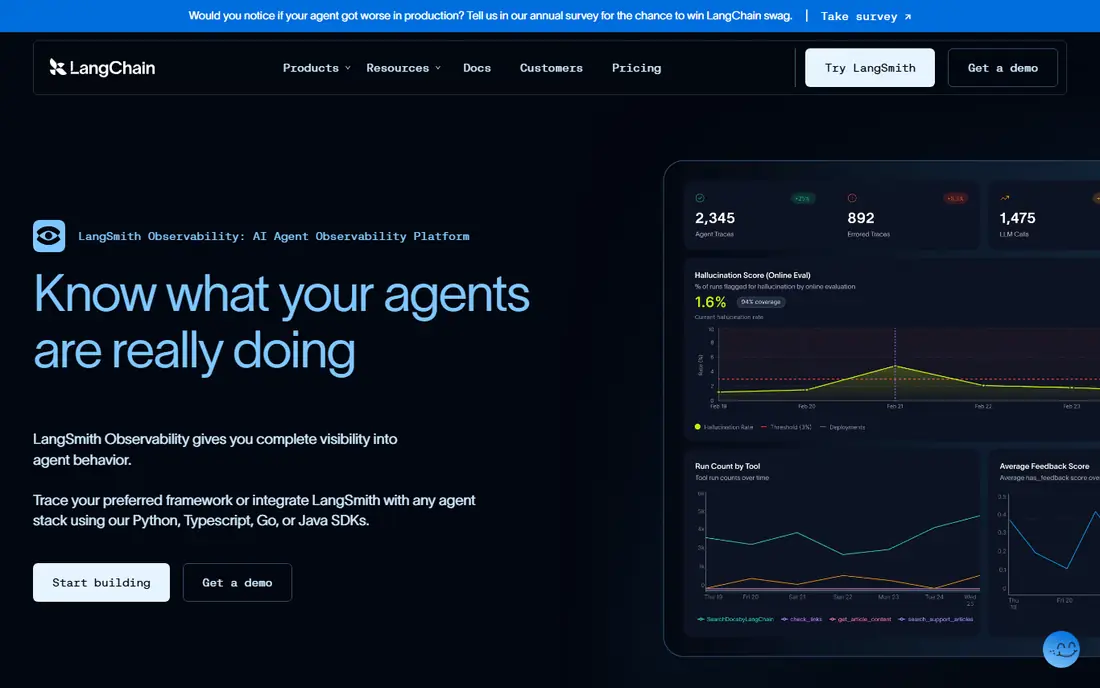
LangSmith suits teams already building with LangChain or LangGraph. Its Prompt Hub stores prompts with commits, diffs and named environments, so staging and production prompts stay distinct. Tracing and evaluation link each prompt version to real runs, which makes it easier to see whether a wording change helped or hurt.
The limit is ecosystem fit. Teams on other frameworks can still use LangSmith, but the tightest documentation and integrations sit with LangChain tools. The free tier covers a small number of traces and one seat, so a growing team should price seats and trace volume together.
- Prompt Hub with commits and environments
- Strong tracing and evaluation
- LangChain integration
- Deepest value inside the LangChain ecosystem
- Paid plan starts per seat
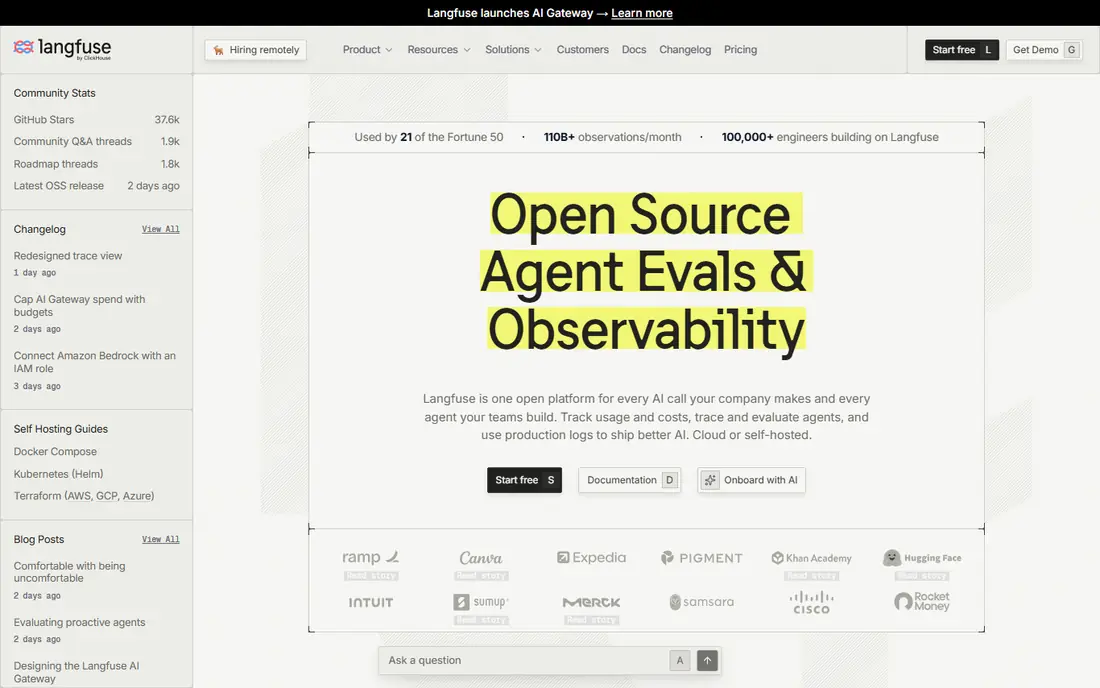
Langfuse is a strong pick for teams that want prompt management tied to observability without giving up control. Prompts carry versions, labels and variables, with client caching and fallback options, and traces link back to the prompt that produced them. Datasets and experiments support side-by-side testing of prompt variants.
Self-hosting is both a strength and a cost, since your team owns deployment, upgrades and backups. The cloud free tier is generous for a pilot, with a monthly unit allowance and a small seat count. For open-source teams, Langfuse is often the most balanced starting point.
- Open-source core with self-hosting
- Prompt versions, labels and fallbacks
- Tracing and datasets
- Self-hosting adds operational work
- Some governance controls vary by plan
PromptLayer gives non-technical collaborators a visual way to edit and review prompts. Versions show diffs, labels mark which prompt serves which traffic share, and request logs help debug a bad output by finding the exact prompt and response. That clarity helps product and domain experts take part without editing code.
The paid step from Pro to Team is large, so a mid-size team should check the Team price before planning around Pro limits. PromptLayer is also stronger on registry and logging than on full evaluation suites, so teams that need heavy scoring may pair it with another tool.
- Visual versioning with diffs
- Traffic-split labels
- Request logging and search
- Team plan is much higher priced
- Focus is registry and logging, not deep evaluation
Braintrust suits teams that judge prompts by scores, not by reading a few outputs. Prompt versions sit next to datasets, experiments and evaluations, so a team can test a change against a fixed set of cases and keep the result as evidence. That discipline matters once a prompt serves customers and a regression has real cost.
The starting price is high for a solo developer or tiny team, and the platform scope may exceed a simple registry need. For a product team with a clear evaluation habit, though, Braintrust turns prompt changes into a testable process rather than a guess.
- Prompt versions tied to experiments and scores
- Strong evaluation workflows
- Unlimited users on free tier
- Higher starting price
- Broader platform than a simple registry
Helicone is best known as an AI gateway and observability tool, but it also stores prompt versions and links them to requests, costs and latency. That combination helps teams that want one place to route model calls, watch spend and manage the prompts behind those calls. Self-hosting is available for teams with stricter control needs.
The trade-off is focus. A team that only wants a prompt library may find Helicone broader than needed, and Team pricing is a big step up from Pro. It fits best when gateway, monitoring and prompt versions belong in the same workflow.
- Open-source gateway
- Prompt versions with caching
- Cost and latency monitoring
- Prompt management sits inside a broader observability product
- Team pricing is higher
PromptHub keeps prompt management simple and affordable. It offers Git-style versioning, shared libraries and an API for deploying prompts to apps, with a free tier for public prompts and a low-priced Pro plan for private prompts. That price makes it an easy first registry for a small team or solo builder.
The free tier limit matters: private prompts need a paid plan, and request limits apply. PromptHub also has a smaller integration ecosystem than the larger observability platforms. For teams that want a clean prompt library without a full tracing stack, it is a sensible, low-cost choice.
- Low Pro price
- Git-style versioning
- Public and private prompts
- Smaller ecosystem than LangSmith or Langfuse
- Free tier has no private prompts
Portkey suits teams already routing model calls through a gateway and wanting a prompt library in the same place. Prompts carry versions and labels, and the gateway adds model choice, fallbacks and spend controls across providers. That setup helps teams that switch models without rewriting prompt code.
Pricing is not as simple to compare as a flat registry plan, since gateway usage and team features affect the total. Teams should confirm what prompt management costs at their request volume. Portkey fits best when routing and resilience matter as much as prompt storage.
- Prompt library with versions and labels
- Gateway across many models
- Fallback and routing options
- Pricing needs checking for team use
- Prompt features sit inside a gateway product
Humanloop targets enterprise teams that need review and evaluation controls around prompts. It supports versioning, testing and deployment workflows, with human-in-the-loop review where a person must approve a change before it ships. That control suits regulated or customer-facing use cases where a bad prompt has real consequences.
The lack of a free plan and published starting price makes it harder to trial on a small budget. Humanloop is best evaluated through a demo and a pilot tied to a real prompt workflow, with clear criteria for review speed and evaluation quality.
- Prompt versioning with human review flows
- Evaluation and deployment controls
- Enterprise focus
- No free plan listed
- Pricing is quote-based
Opik, from Comet, offers prompt management alongside tracing and evaluation, with an open-source core that teams can self-host. The cloud Pro price is low, and the free tier covers a small team with a monthly span allowance. That mix suits teams that want control without a large starting bill.
Self-hosting still needs care for upgrades, storage and access control. Opik also has a smaller community than LangSmith or Langfuse, so documentation and examples may be thinner for some frameworks. For open-source teams that value a low entry price, it is worth a pilot.
- Open-source evaluation and tracing
- Self-hosting option
- Low cloud Pro price
- Self-hosting adds operational work
- Smaller community than the largest platforms
How we picked these
We compared official pricing pages, product documentation and public feature lists, focusing on versioning, labels, environment separation, trace links, evaluation and rollback. We excluded Flowise because its repository was archived and it reached end of life on 31 August 2026. Prices marked See website are those where a vendor does not publish a simple starting rate for team use.
What to check before you buy
Separate staging from production
A prompt tool earns its keep when a bad edit cannot quietly reach customers. Check that staging and production prompts are distinct, that changes need review where it matters, and that rollback takes minutes, not a code release. If the tool cannot show which prompt version produced a given output, it is a library, not a management system.
Test with a fixed evaluation set
Pick a set of real inputs and expected outcomes before you change a prompt. Run each variant against that set and keep the scores with the version. A tool that links prompts, traces and scores makes this routine; a tool that only stores text leaves the hard part to you.
Watch for hidden volume costs
Free tiers often limit traces, requests, spans or seats, and paid plans step up sharply. Price your monthly request volume, seat count and retention needs together. For self-hosted tools, add the cost of running and maintaining the service itself.
Keep prompts and secrets apart
Prompts should not carry API keys, passwords or private customer data. Check access controls, audit logs and data retention, and keep sensitive values in a proper secrets store. A shared prompt library needs clear ownership, so one person can approve changes to customer-facing prompts.
Frequently asked questions
What are the best prompt management tools for developers?
LangSmith, Langfuse and PromptLayer are strong developer choices, with versioning, labels and trace links. The best prompt management tools software for a given team depends on framework, hosting preference and whether evaluation is also needed.
What is the best prompt management platform for non-technical teams?
PromptLayer and PromptHub offer visual, Git-style libraries that product and domain experts can use without editing code. Humanloop suits enterprise teams that need formal review before a prompt ships.
Do I need a prompt management tool if I only have a few prompts?
A small set can live in version-controlled code at first, but a registry helps once prompts change often, serve customers or need rollback. Start with a free tier and move to a paid plan when seats, volume or review controls become real needs.
How does prompt versioning work?
Each saved change creates a new version, often with a diff, a label and an environment tag. Your app fetches the labelled version, so you can test a new wording in staging, shift a share of traffic to it, and roll back to the prior version if scores fall.
What is the difference between prompt management and LLM observability?
Prompt management stores and ships prompt versions, while observability tracks requests, cost, latency and errors. Many tools in this guide do both, but a buyer should check which side is stronger, since a good tracer is not always a good registry.
Is Flowise still a good prompt management option?
No, not for a new project. Flowise reached end of life on 31 August 2026, with its repository archived, so we did not list it. Choose a live tool with active support and a clear roadmap instead.
Sources
See where you really rank - block by block
ProMapRanker scans Google Maps across a grid of your service area. Simple monthly plans from $19, white-label on every plan.
Start freeKeep reading
 wpforms alternatives
Best WPForms Alternatives in 2026
We compare 9 wpforms alternatives for WordPress forms, with free and paid options, current pricing notes, and honest limits for small business sites in 2026.
Read → windows task scheduler alternatives
Best Windows Task Scheduler Alternatives in 2026
Looking for Windows Task Scheduler alternatives? We compare 9 schedulers for Windows and cross-platform work, from free tools to enterprise automation.
Read → which ai video service is best
Which AI Video Service Is Best in 2026
which ai video service is best? We compare 10 legitimate AI video services on price, avatars, editing and output quality to help you pick the right tool.
Read →