 ProMapRanker
Best Product Launch Software in 2026


launch planning and roadmaps · Pricing starts at: See website
Key takeaways
- Product launch software covers three jobs: planning the launch, announcing it to users and rolling the release out safely.
- No single tool does all three well, so most teams pair a planning tool with a changelog tool and a rollout tool.
- LaunchNotes suits polished release announcements, while LaunchDarkly suits safe staged rollouts to users.
- Productboard helps teams decide what to launch, and Product Hunt helps a new product find its first audience.
- Our pick for most product teams is Productboard for planning, paired with LaunchNotes or AnnounceKit for announcements.
Quick comparison
| Pick | Great for | Pricing starts at | Free tier | |
|---|---|---|---|---|
| Productboard | launch planning and roadmaps | See website | Free trial | Visit |
 LaunchNotes | release announcements | $249 per month | No | Visit |
 LaunchDarkly | safe staged rollouts | Free | Yes | Visit |
 AnnounceKit | changelog and feedback | $49 per month | Free trial | Visit |
 Canny | feedback and roadmaps | $99 per month | Yes | Visit |
 Beamer | in-app announcements | See website | Free trial | Visit |
 Product Hunt | public product launches | Free | Yes | Visit |
 Aha | roadmaps and launch plans | See website | Free trial | Visit |
 ReleasePad | changelog from code changes | See website | Free trial | Visit |
The best product launch software
These tools cover launch planning, release announcements, user feedback and staged rollouts, which together make up a complete launch.
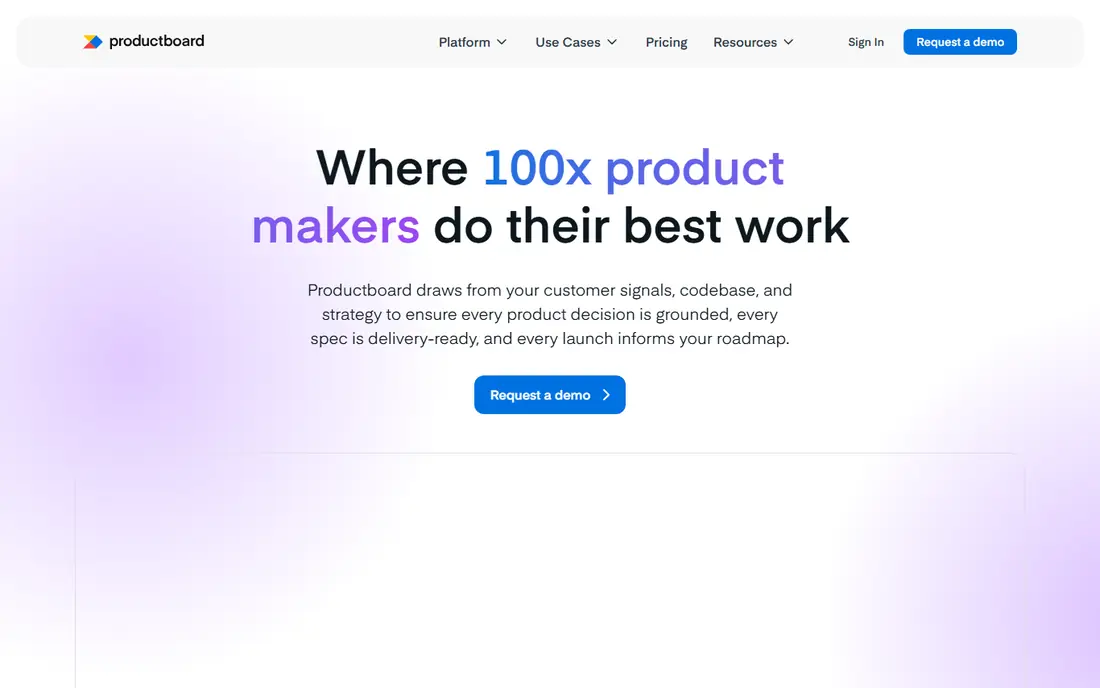
Productboard helps product teams decide what to launch and in what order, by pulling feedback from sales, support and users into one place and linking it to roadmap items. That central view stops launch plans being built on the loudest request in the room, and it gives marketing and sales a clear story about what is coming. Roadmaps can be shared with different audiences, so executives, sales and customers each see the right level of detail.
Pricing is by quote on many plans, which makes budgeting harder for a small team. Productboard also needs regular upkeep, since a feedback system that nobody curates quickly becomes a dumping ground. Use it when launch planning involves several teams and a real backlog of requests, not for a single release by one person.
- Feedback centralisation
- Roadmap planning
- Prioritisation tools
- Quote-based pricing on many plans
- Needs discipline to keep data clean
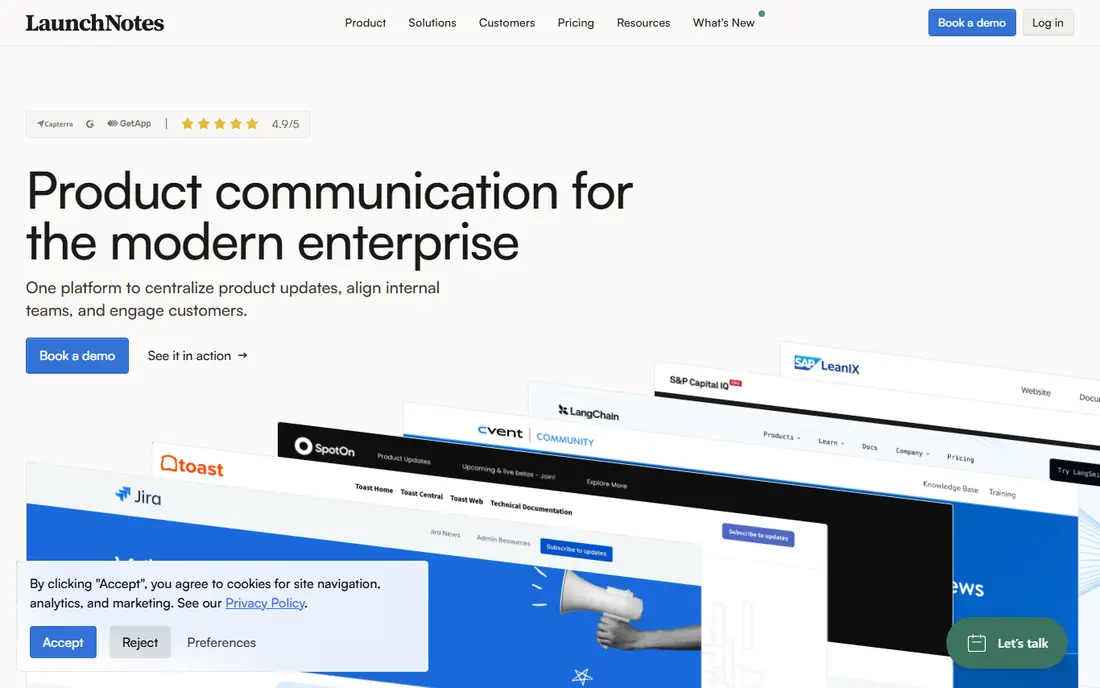
LaunchNotes is built for teams that want release announcements to look polished and reach the right users. It offers a branded announcement page, a roadmap, feedback collection, email digests and segmentation, so a launch can be aimed at specific customer groups rather than blasted to everyone. The widget and integrations help product marketing publish without waiting on engineering.
The price is the barrier. The Growth plan costs 249 dollars a month billed annually, covers one page and two team users, and there is no free plan, only a trial that starts with a sales demo. That makes LaunchNotes a poor fit for a startup that only needs a simple changelog. It suits established software companies where launch communication is a regular, visible job.
- Polished announcement pages
- Roadmaps and feedback
- Email digests and segmentation
- High entry price
- No free plan
- Only two seats on the entry plan

LaunchDarkly handles the rollout side of a launch, using feature flags to release a new feature to a small group, test it and roll it back if something goes wrong. That control turns a risky big-bang launch into a staged release, and its experimentation tools let teams compare versions with real users. A free Developer tier lets small teams and side projects start without a bill.
Pricing grows with usage, with paid plans based on service connections and monthly active users, so a fast-growing product should model costs before committing. It also needs engineering work to set up flags and rules, so it is not a marketing tool. Pair LaunchDarkly with a changelog tool, and you cover both the safe rollout and the announcement.
- Feature flags for staged rollouts
- Experimentation
- Free Developer tier
- Pricing grows with usage
- Needs engineering setup
AnnounceKit combines a changelog with feedback collection and multi-channel distribution, including an in-app widget, email, Slack and RSS. That breadth suits product and customer experience teams that want users to see what changed and react in the same place. At 49 dollars a month billed annually for its changelog plan, it is far more accessible than LaunchNotes for a small team.
There is no free plan, only a trial, and some advanced segmentation and analytics features sit on higher tiers. AnnounceKit still covers the core launch announcement job well, and its lower price makes it a sensible default when you need both a changelog and feedback without an enterprise budget.
- Changelog plus feedback in one tool
- Widget, email and Slack distribution
- Lower entry price
- No free plan
- Advanced features need higher tiers
Canny is feedback-first, with public idea boards where users vote on requests and a roadmap that shows what is planned, in progress and shipped. That transparency helps product teams explain launch choices and keeps users engaged between releases. A limited free plan lets a small team start collecting feedback before paying.
Announcement tools are more basic than LaunchNotes or AnnounceKit, and advanced segmentation and admin seats sit on the higher Business tier. Canny fits teams whose launch problem is deciding what to build next, rather than polishing the announcement itself. Pair it with a changelog tool if announcements need to reach users in-app and by email.
- Public idea boards
- Vote-driven roadmaps
- Changelog basics
- Advanced segmentation gated on higher tiers
- Announcement tools are basic
Beamer puts launch news where users already are, with an in-app changelog widget, a notification centre and segmentation that targets announcements by user group. That placement matters, since many users never read launch emails but will notice a badge inside the product. It also supports standalone announcement pages and feedback reactions, so teams can gauge response quickly.
Beamer is mainly an announcement tool, not a launch planner or a rollout system, so it pairs best with a roadmap tool like Productboard or Aha. Pricing varies by plan and is best confirmed on its pricing page. Choose Beamer when your main launch problem is getting existing users to notice and adopt a new feature.
- In-app changelog widget
- Segmentation
- Notification centre
- Pricing varies by plan
- Mainly an announcement tool, not a planner
Product Hunt is the public launch platform where makers post a new product, explain it and gather votes, comments and early users in a single day. For a new app, tool or service, that audience of early adopters is hard to reach any other way for free, and the discussion thread often surfaces useful feedback within hours. A strong launch can also bring press and investor attention.
It is a launch day, not a launch system. Product Hunt does not manage roadmaps, changelogs or staged rollouts, and ranking depends on votes, timing and community response, so results vary widely. Use it as the public moment for a new product, with your own changelog and rollout tools handling everything before and after that day.
- Large early-adopter audience
- Free to launch
- Feedback and discussion built in
- One big day, not ongoing launch management
- Ranking depends on votes and timing
Aha, written here without the exclamation mark in its brand name, offers detailed roadmaps and launch planning for product teams that need structure. Templates cover goals, releases, features and go-to-market tasks, and idea management links customer requests to planned work. That depth suits larger product organisations where several teams must agree on a launch date and scope.
Pricing is by quote on many plans, and the tool can feel heavy for a small team that only needs a simple roadmap. Aha is at its best when launch planning involves product, marketing, sales and support together, with dependencies to track. Smaller teams may prefer Productboard or Canny for a lighter planning setup.
- Detailed roadmaps
- Launch planning templates
- Idea management
- Pricing by quote on many plans
- Can feel heavy for small teams
ReleasePad takes a different route to launch announcements, reading a code repository and drafting changelog entries from real commits and pull requests. That approach suits engineering-led teams whose release notes should reflect what actually shipped, without product marketing rewriting history from memory. It offers a public changelog page, an in-app widget, analytics and webhooks for distribution.
It is newer and smaller than LaunchNotes or AnnounceKit, and its feedback tools are less deep than Canny. Teams that need a full launch program with segmentation, enterprise security and a dedicated account manager will find LaunchNotes a better fit. Teams that want accurate, low-effort release notes from engineering work will find ReleasePad a practical choice.
- Drafts changelogs from commits
- Public page and widget
- Analytics and webhooks
- Newer and smaller than rivals
- Less feedback depth than Canny
How we picked these
We compared official pricing pages, feature lists and public reviews, and kept only tools that are live in 2026 and cover a real part of a product launch: planning, announcement, feedback or staged rollout. We left out general project tools that are not built for launches, and we noted where pricing is by quote rather than inventing a figure. LaunchNotes pricing reflects its published Growth plan, while LaunchDarkly reflects its free Developer tier and paid Foundation plan.
How to run a product launch well
Split the launch into three jobs
Assign planning to a roadmap tool, announcements to a changelog tool and rollout to a feature flag tool, and name an owner for each. A launch fails when everyone assumes someone else is handling the announcement or the rollback plan.
Announce to segments, not to everyone
Target launch news by plan, role or usage, so free users, paying customers and internal teams each get the message that matters to them. A single blast to all users creates noise for people who cannot use the feature yet.
Plan the rollback before launch day
Agree in advance what metric triggers a pause, who can pull the feature and how users will be told. A staged rollout with a clear rollback plan turns a bad launch into a short incident instead of a public failure.
Frequently asked questions
Which product launch tool is best for a small team?
AnnounceKit is a strong product launch tool for a small team, because it combines a changelog, feedback and multi-channel distribution at 49 dollars a month billed annually. Canny suits teams that need feedback and roadmaps first, while Beamer suits teams that need in-app announcements. A small team should pick one announcement tool and one planning tool, not a full enterprise suite.
What are the best product launch tools for announcements?
LaunchNotes, AnnounceKit and Beamer are the best product launch tools for announcements, with LaunchNotes offering the most polished enterprise pages and AnnounceKit offering the best value for small teams. Beamer is best for in-app announcements that users see inside the product. Product Hunt covers the public launch day, but not ongoing announcements.
What are the best product launch platforms for roadmaps?
Productboard and Aha are the best product launch platforms for roadmaps, with Productboard favouring feedback-driven prioritisation and Aha favouring detailed release planning. Canny also offers vote-driven roadmaps for teams that want public feedback to shape priorities. The right pick depends on team size and how much planning structure you need.
Do I need feature flags for a product launch?
You need feature flags when a launch carries risk, such as a payment change, a new algorithm or a large user migration. LaunchDarkly lets you roll out to a small group, measure the result and roll back without a new deployment. For a simple content update or a small feature, a changelog announcement alone is usually enough.
Can Product Hunt replace a launch tool?
No, Product Hunt is a public launch moment, not a launch management system. It brings early adopters and feedback on launch day, but it does not plan roadmaps, write changelogs or control rollouts. Use Product Hunt alongside a changelog tool and, for software releases, a feature flag tool, so the launch continues after the votes fade.
Sources
- https://www.productboard.com
- https://launchnotes.com
- https://launchdarkly.com
- https://announcekit.com
- https://canny.us
- https://www.beamer.com
- https://www.producthunt.com
- https://www.aha.io
- https://www.releasepad.io
- https://www.releasepad.io/blog/releasepad-vs-launchnotes/
- https://tech-insider.org/launchdarkly-vs-unleash-vs-growthbook-2026/
See where you really rank - block by block
ProMapRanker scans Google Maps across a grid of your service area. Simple monthly plans from $19, white-label on every plan.
Start freeKeep reading
 wpforms alternatives
Best WPForms Alternatives in 2026
We compare 9 wpforms alternatives for WordPress forms, with free and paid options, current pricing notes, and honest limits for small business sites in 2026.
Read → windows task scheduler alternatives
Best Windows Task Scheduler Alternatives in 2026
Looking for Windows Task Scheduler alternatives? We compare 9 schedulers for Windows and cross-platform work, from free tools to enterprise automation.
Read → which ai video service is best
Which AI Video Service Is Best in 2026
which ai video service is best? We compare 10 legitimate AI video services on price, avatars, editing and output quality to help you pick the right tool.
Read →